Artwork
Chain of Alps from Grenoble to Chamberi
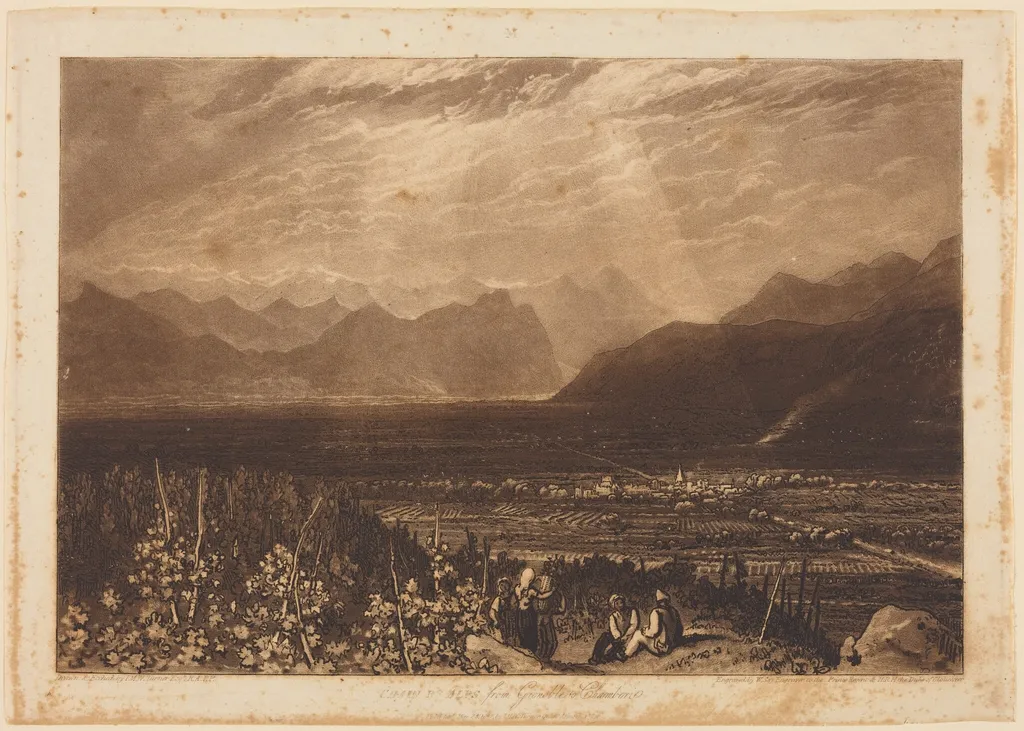
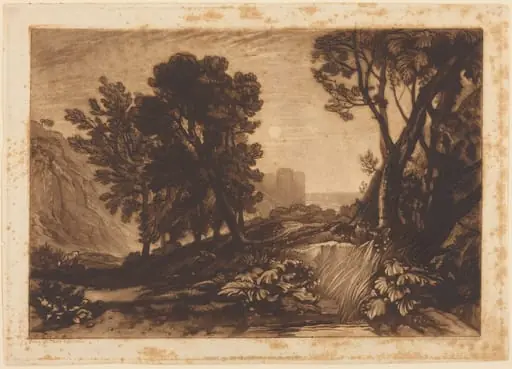
Chain of Alps from Grenoble to Chamberi is an ink print by the Romanticist artist William Say. It dates from 1812 and is held in the collection of the National Gallery of Art.
About this work
Overview
The composition balances expansive mountain forms with a quiet foreground of rural life, emphasizing atmosphere over topographical precision.
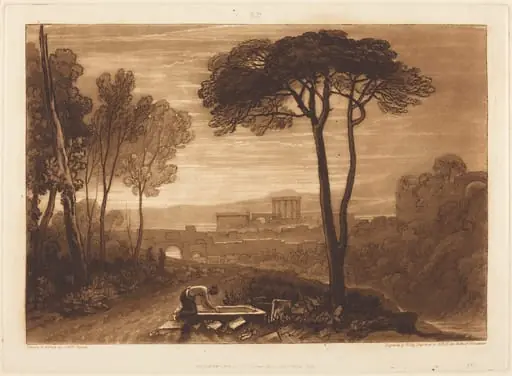
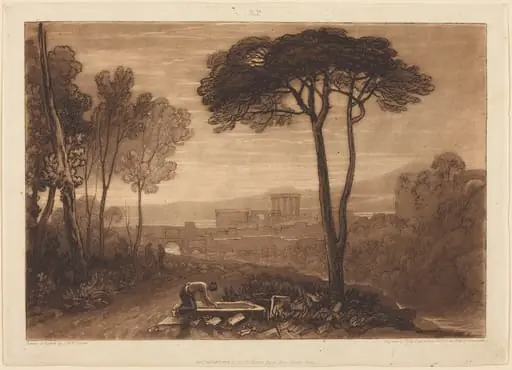
Created in 1812 by William Say, this print combines etching and mezzotint techniques to depict a panoramic view of the Alps stretching from Grenoble to Chambery. The composition balances expansive mountain forms with a quiet foreground of rural life, emphasizing atmosphere over topographical precision. Its soft tonal gradations evoke a sense of distance and stillness characteristic of early 19th-century landscape prints.
Subject & Meaning
The scene portrays a tranquil alpine valley with a modest village nestled beside a winding river. Figures tend to livestock near a flowering fence, suggesting harmony between human activity and the natural world. The mist-laden peaks dominate the upper half, not as imposing barriers but as serene, distant presences—reflecting a contemplative rather than heroic view of nature common in post-Revolutionary European art.
Technique & Style
Say employed etching for fine linear detail in the foreground and mezzotint to achieve the hazy, atmospheric quality of the mountains and sky. The muted tonal range, with delicate transitions from light to shadow, enhances the dreamlike mood. This hybrid technique allowed for both precision and softness, aligning with contemporary tastes for lyrical, evocative landscapes over stark realism.
History & Provenance
The print was produced in 1812 during a period of growing interest in alpine scenery among British and French audiences. It likely circulated as part of a series of topographical views, intended for private collectors rather than public display. No documented exhibition history exists, but its technique and subject suggest it was made for the domestic market, where landscape prints were prized for their meditative qualities.
Context
In the early 1800s, travel to the Alps became more accessible, inspiring artists to depict the region not as a threat but as a source of quiet awe. Say’s work aligns with a broader trend in Romantic-era printmaking that favored emotional resonance over documentary accuracy. The emphasis on mist, soft light, and humble human presence reflects a cultural shift toward introspection and the sublime in everyday nature.
Legacy
Though not widely reproduced or studied today, the print exemplifies the quiet, atmospheric approach to landscape that preceded the more dramatic Romantic visions of the mid-century. Its technical finesse and restrained emotion mark it as a representative work of early 19th-century British printmaking, bridging topographical tradition and emerging Romantic sensibility.
Artist & collection


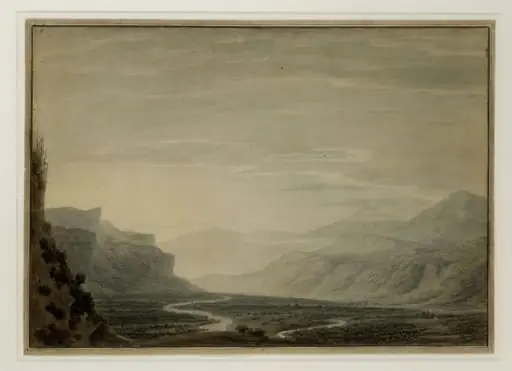 Valley with winding streams, a range of mountains in the background, and a village on the left
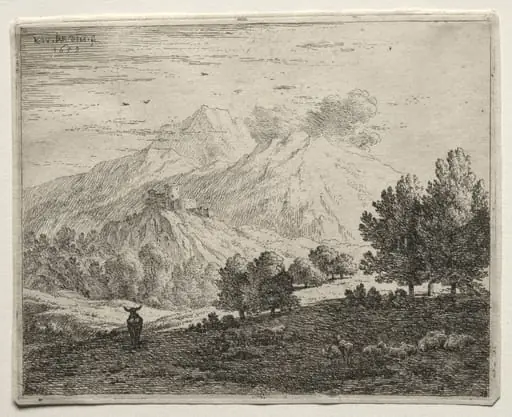 The Four Mountains
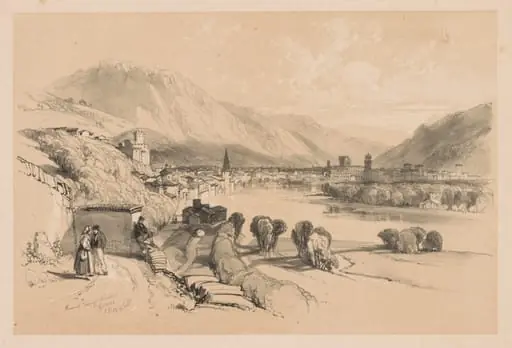 Sketches at Home and Abroad: General View of Trento
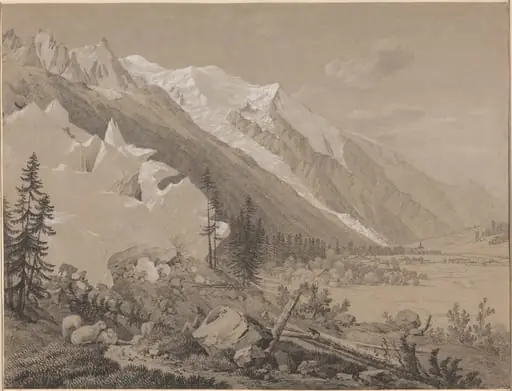 Vue du Mont Blanc
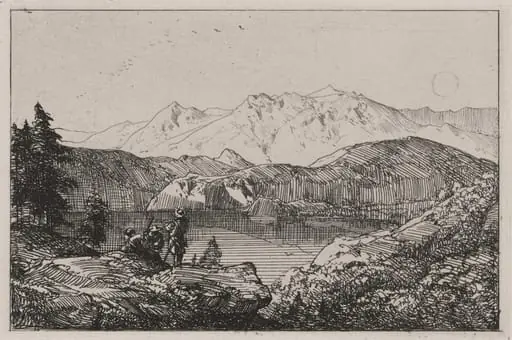 Mountain View with Lake
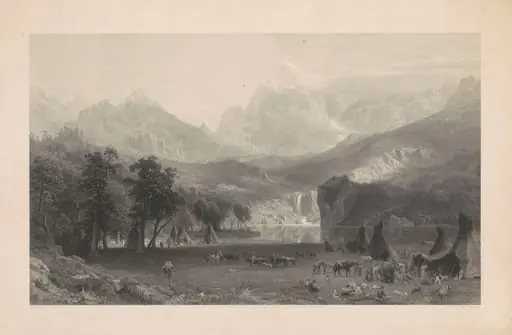 The Rocky Mountains
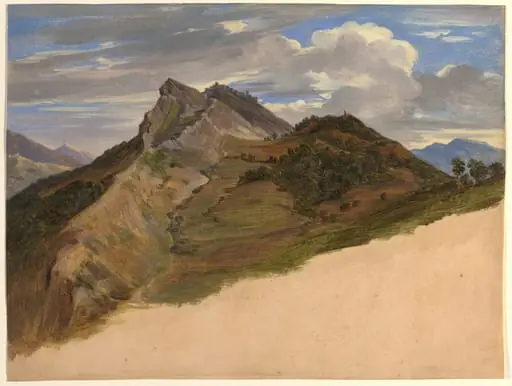 Civitella Seen from the North
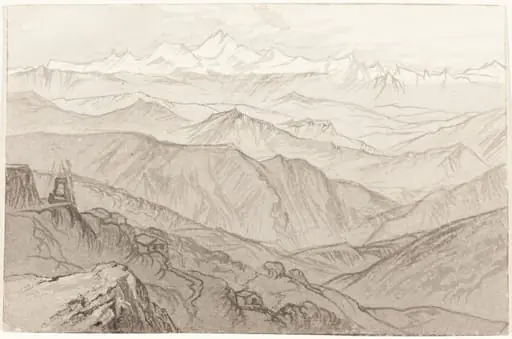 Mount Kinchinjunga (All Things Fair)
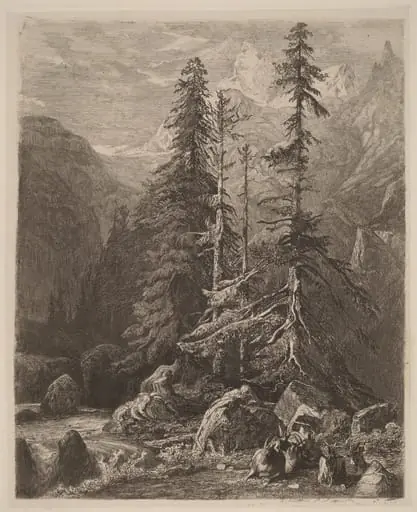 Essais de gravure à l'eau forte par Alexandre Calame, I, pl. 21
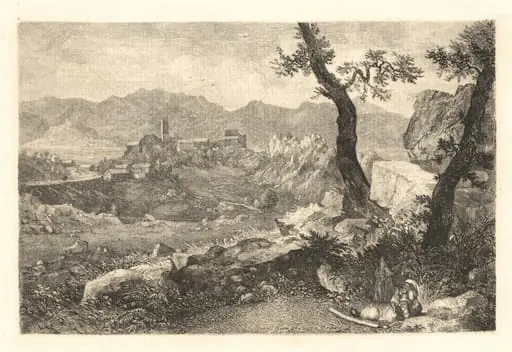 A View near Rome