Artwork
Leaning, Flying and Falling
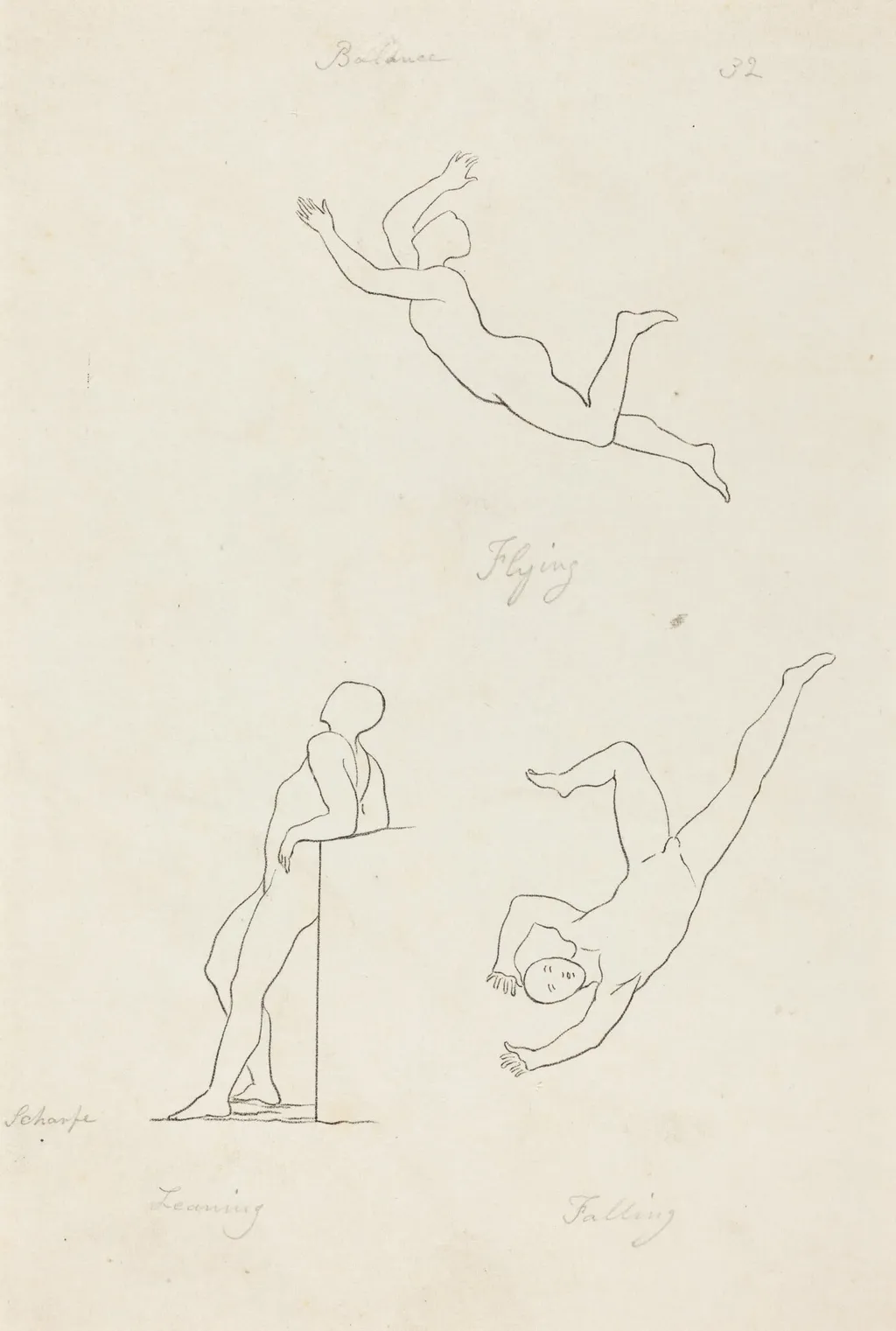
Leaning, Flying and Falling is an ink print by the Romanticist artist George Scharf. It dates from 1829 and is held in the collection of the National Gallery of Art.
About this work
Overview
Created in 1829, this lithograph by George Scharf is a proof before letters, capturing a sequence of four dynamic human poses.
Created in 1829, this lithograph by George Scharf is a proof before letters, capturing a sequence of four dynamic human poses. Each figure is rendered with minimal detail, emphasizing movement over anatomy. The composition presents a single subject in four transitional states: leaning, flying, flipping, and falling. The work functions as a study of bodily motion, stripped of narrative or setting, focused purely on physical gesture.
Subject & Meaning
The four figures depict a solitary individual in varying states of motion, each labeled with a single word—Balance, Flying, Leaning, Falling. These labels suggest an interest in the mechanics of posture and equilibrium rather than storytelling. The subject is not a character but a vessel for observing how weight, momentum, and gravity affect the body. The absence of context directs attention to the physicality of movement itself.
Technique & Style
Scharf employed lithography to produce loose, fluid lines that mimic the spontaneity of a sketch. The ink flows lightly across the stone, avoiding heavy shading or precise contours. This technique allowed rapid execution, preserving the immediacy of gesture. The lack of detail and the emphasis on line quality reflect a focus on motion over realism, aligning with observational drawing practices of the time.
History & Provenance
This print exists as a proof stage, prior to the addition of lettering, suggesting it was an experimental or preparatory version. Scharf, known for his topographical and theatrical illustrations, used lithography to explore movement in ways distinct from his finished works. The piece likely served as a personal study, possibly for later illustrations or as part of his broader interest in human motion.
Context
In the 1820s, lithography was emerging as a medium for both commercial and artistic experimentation. Scharf’s work aligns with contemporary interests in anatomy and motion, influenced by scientific illustration and stage performance studies. While most prints of the era emphasized detail or narrative, this piece stands out for its reduction of form to essential movement, reflecting a shift toward kinetic observation in visual culture.
Legacy
Though not widely exhibited during Scharf’s lifetime, this lithograph anticipates later explorations of motion in art, such as those by Eadweard Muybridge and the Futurists. Its stripped-down approach to the human figure as a locus of movement influenced subsequent studies in gesture and dynamics. It remains a quiet but significant example of early 19th-century visual inquiry into bodily motion.
Artist & collection


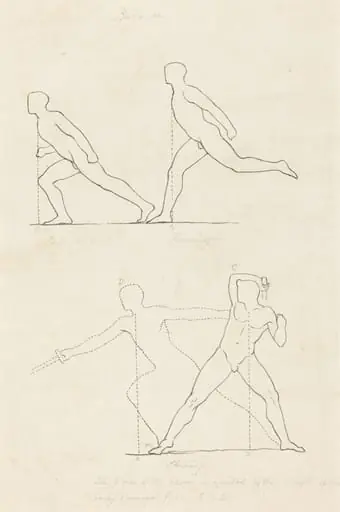 Preparing to Run; Running; Striking
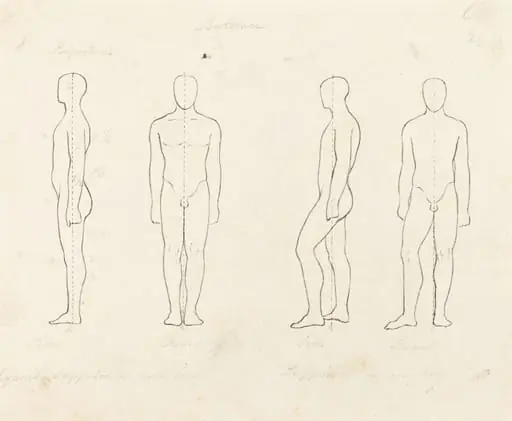 Extent of Motion, Front and Side View Equipoised, Supported on One Leg
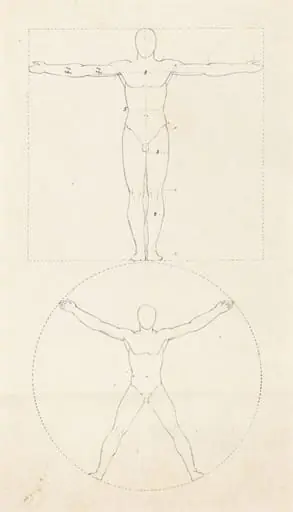 Circle and Square of the Human Figure
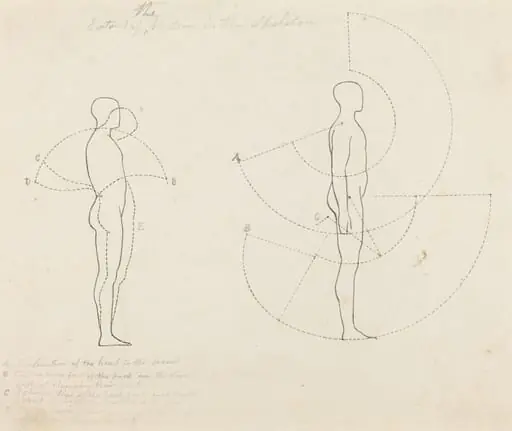 Extent of Motion Shown in Two Figures
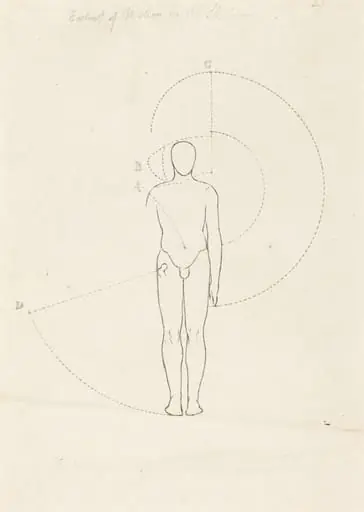 Extent of Motion, One Figure
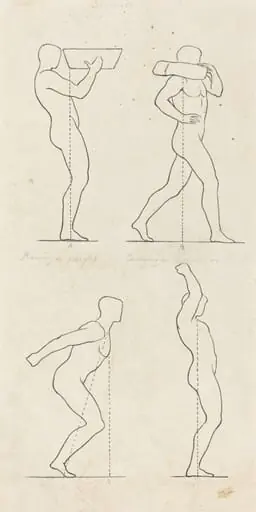 Bearing a Weight; Preparing to Jump, and Alighting
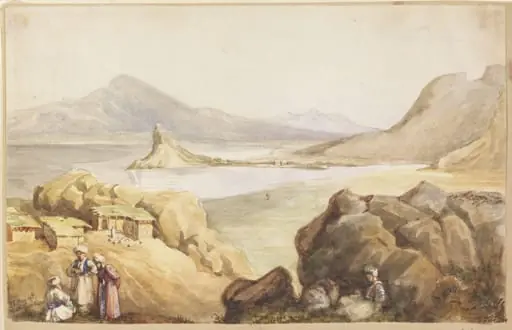 Gule-Hissa Ovassy in the Northern part of Lycia
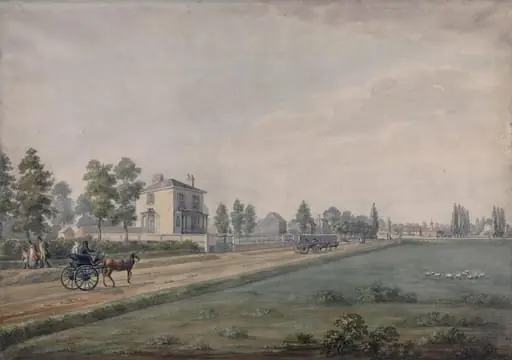 Mitcham Common, Surrey, shewing the road running along the west side
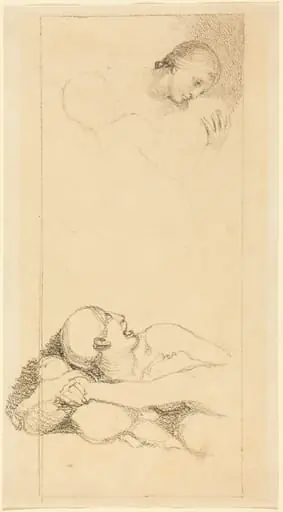 Frightened Man Looking Up; Woman and Children
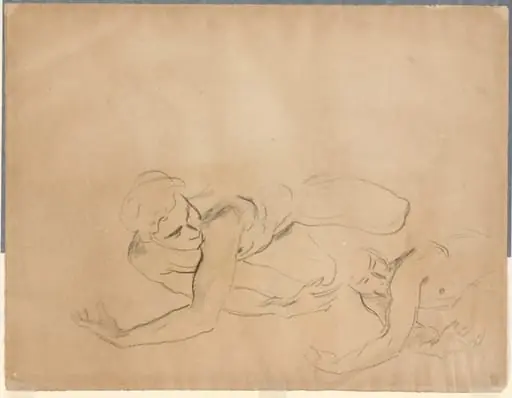 Studies of a Male Nude (verso)
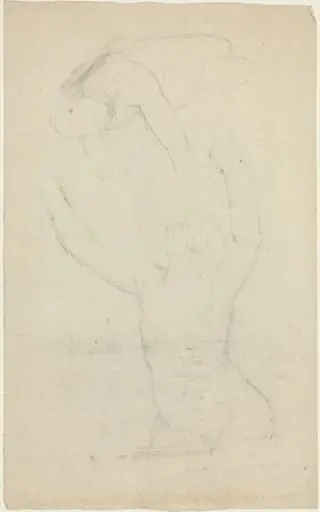 Two Airborne? Figures Reaching out to One Another
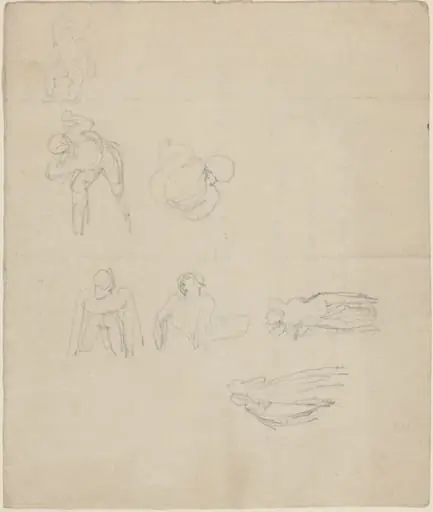 Sheet of Figures Studies
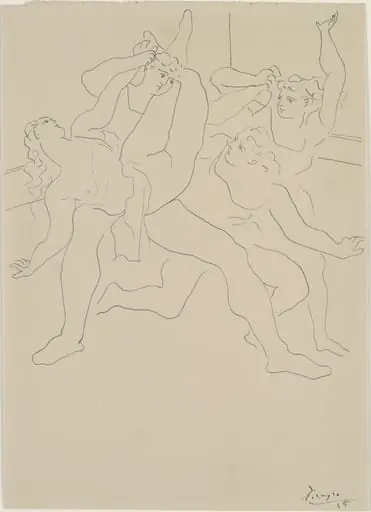 Untitled
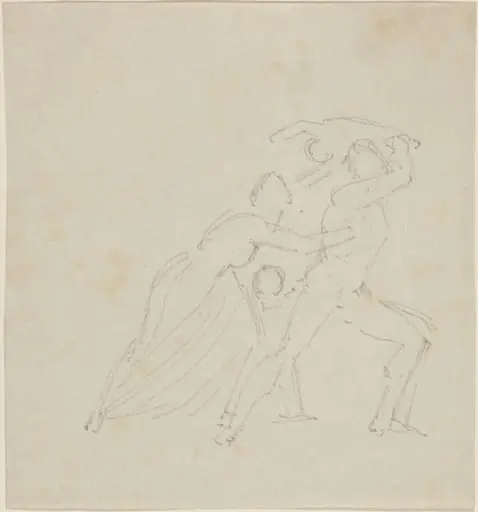 Study for "The Fury of Athamas"
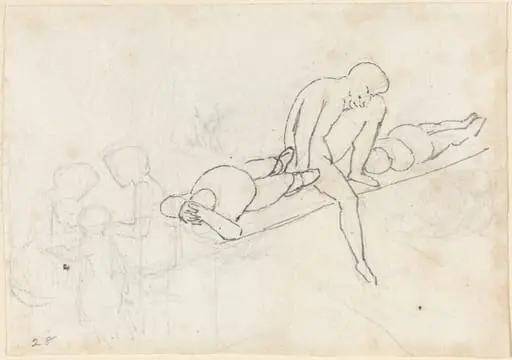 Seated Man Flanked by Two Reclining Figures; Huddle of Figures in Lower Left Corner
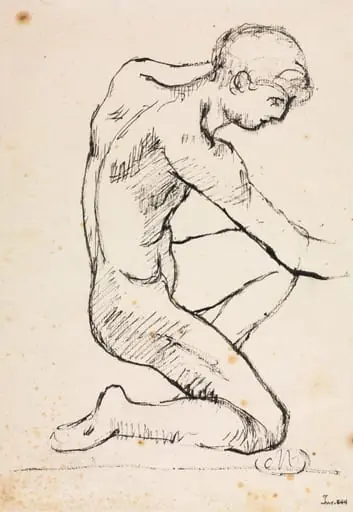 Study of a Male Nude
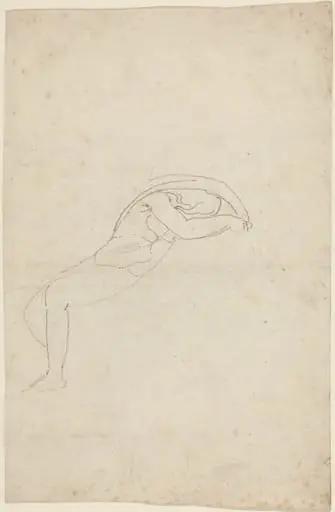 Study of a Semi-Reclining Figure
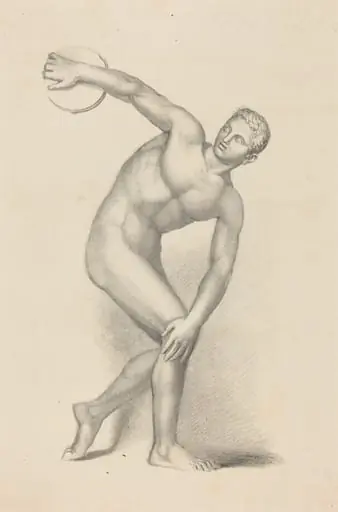 Discobulus, by Myron