Artwork
Extent of Motion, One Figure
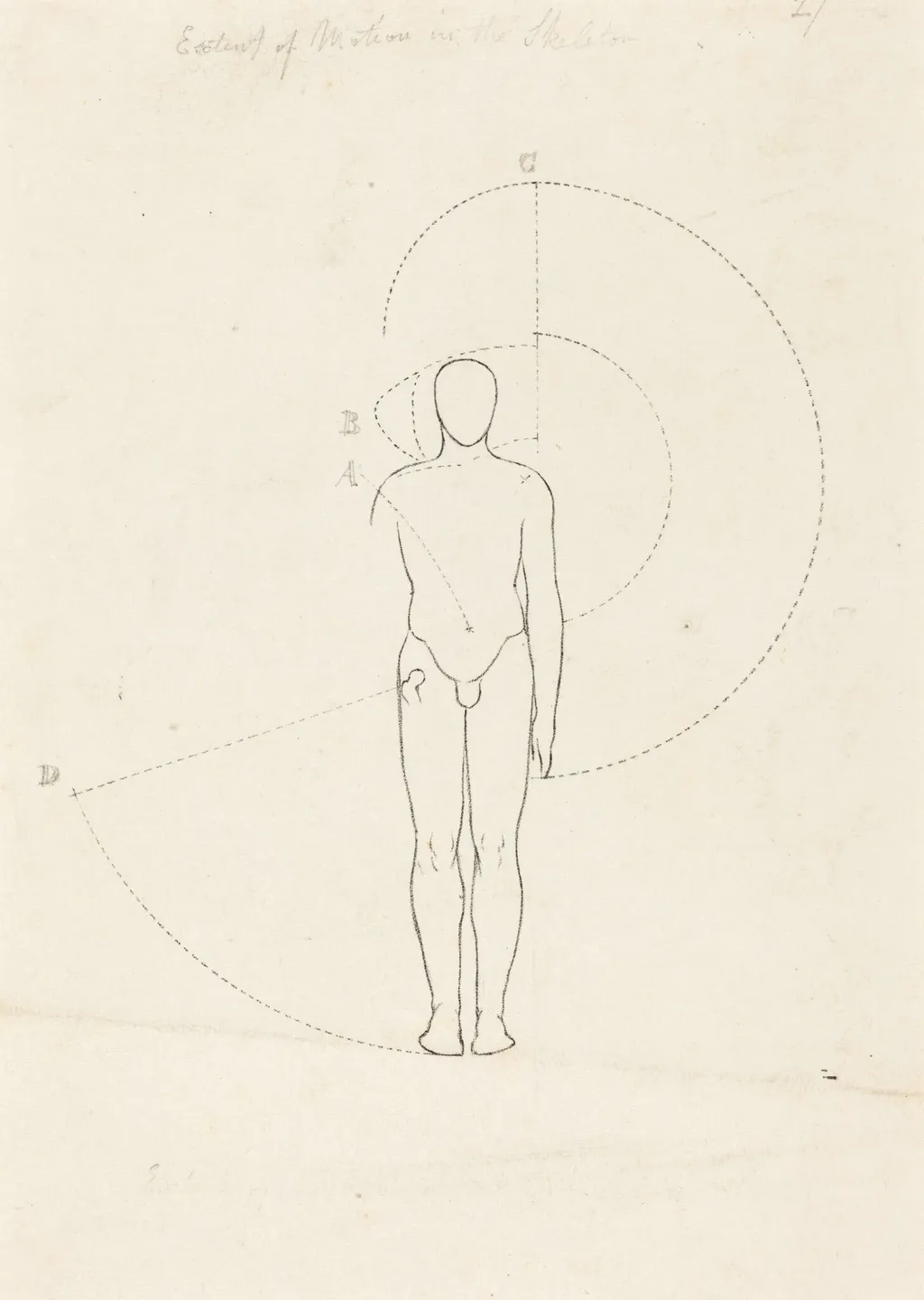
Extent of Motion, One Figure is an ink print by the Romanticist artist George Scharf. It dates from 1829 and is held in the collection of the National Gallery of Art.
About this work
Overview
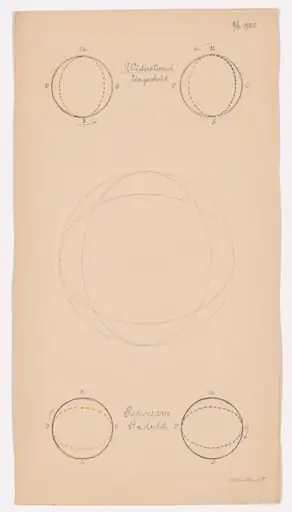
George Scharf’s 1829 lithographic print, titled Extent of Motion, One Figure, presents a minimalist study of the human form. Rendered as a stark, stick‑figure nude, the composition consists of basic linear contours without anatomical detail, surrounded by faint circular and linear marks that suggest a schematic approach to tracking movement and proportion.
Subject & Meaning
The work isolates a solitary standing figure, arms relaxed at the sides, to explore the fundamentals of bodily motion rather than decorative representation. The surrounding geometric guides function as visual annotations, indicating the artist’s interest in quantifying the range and balance of human movement through a simplified visual language.
Technique & Style
Executed as a lithographic proof before lettering, the piece employs a quick, sketch‑like hand that emphasizes line over texture. The absence of shading and the use of rudimentary shapes align the print with instructional studies, where clarity of form and proportion takes precedence over aesthetic refinement.
History & Provenance
Created in 1829, the print belongs to Scharf’s early period, a time when he engaged in anatomical and motion studies for academic purposes. While specific ownership records are limited, the work survives as part of collections documenting 19th‑century printmaking practices and pedagogical approaches to the human figure.
Context
During the early nineteenth century, artists and scientists increasingly sought systematic methods to analyze human anatomy and movement. Scharf’s lithograph reflects this interdisciplinary climate, echoing contemporary efforts to merge artistic observation with empirical measurement, a precursor to later studies in biomechanics and figure drawing.
Artist & collection


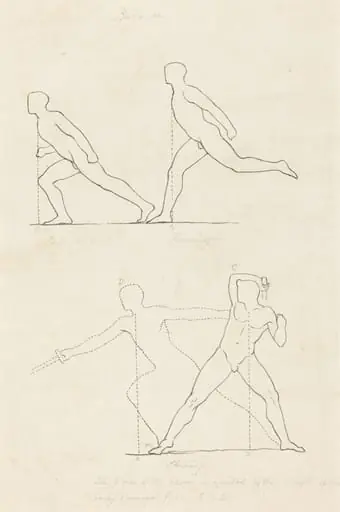 Preparing to Run; Running; Striking
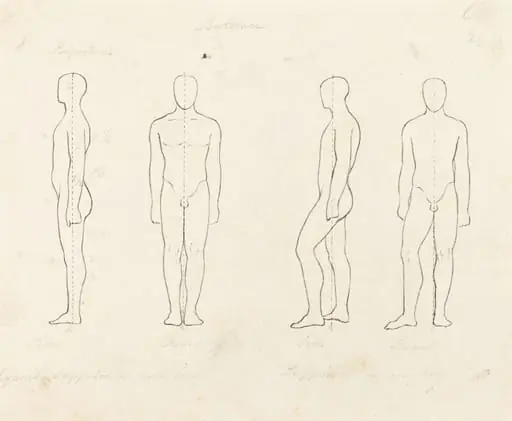 Extent of Motion, Front and Side View Equipoised, Supported on One Leg
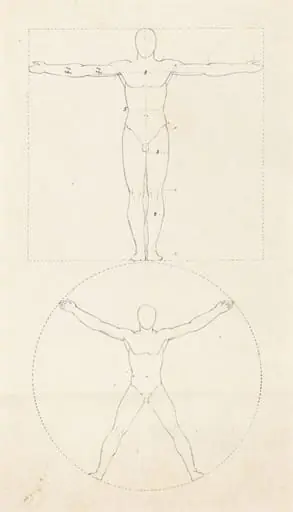 Circle and Square of the Human Figure
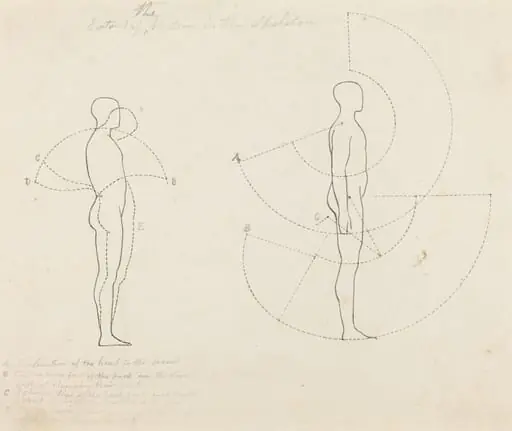 Extent of Motion Shown in Two Figures
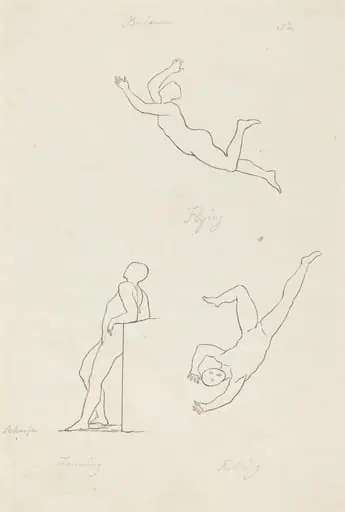 Leaning, Flying and Falling
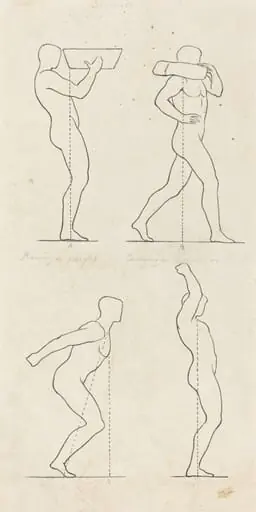 Bearing a Weight; Preparing to Jump, and Alighting
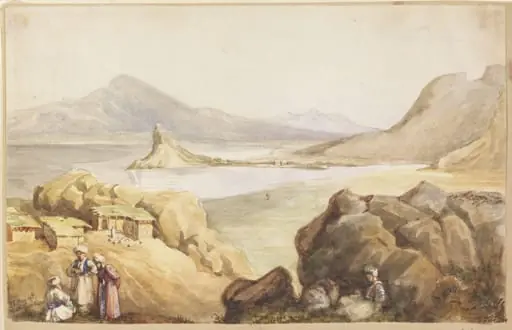 Gule-Hissa Ovassy in the Northern part of Lycia
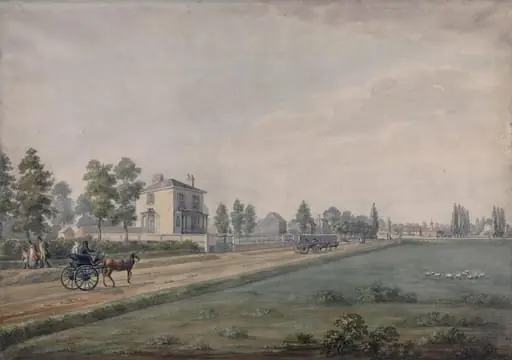 Mitcham Common, Surrey, shewing the road running along the west side