Artwork
Extent of Motion Shown in Two Figures
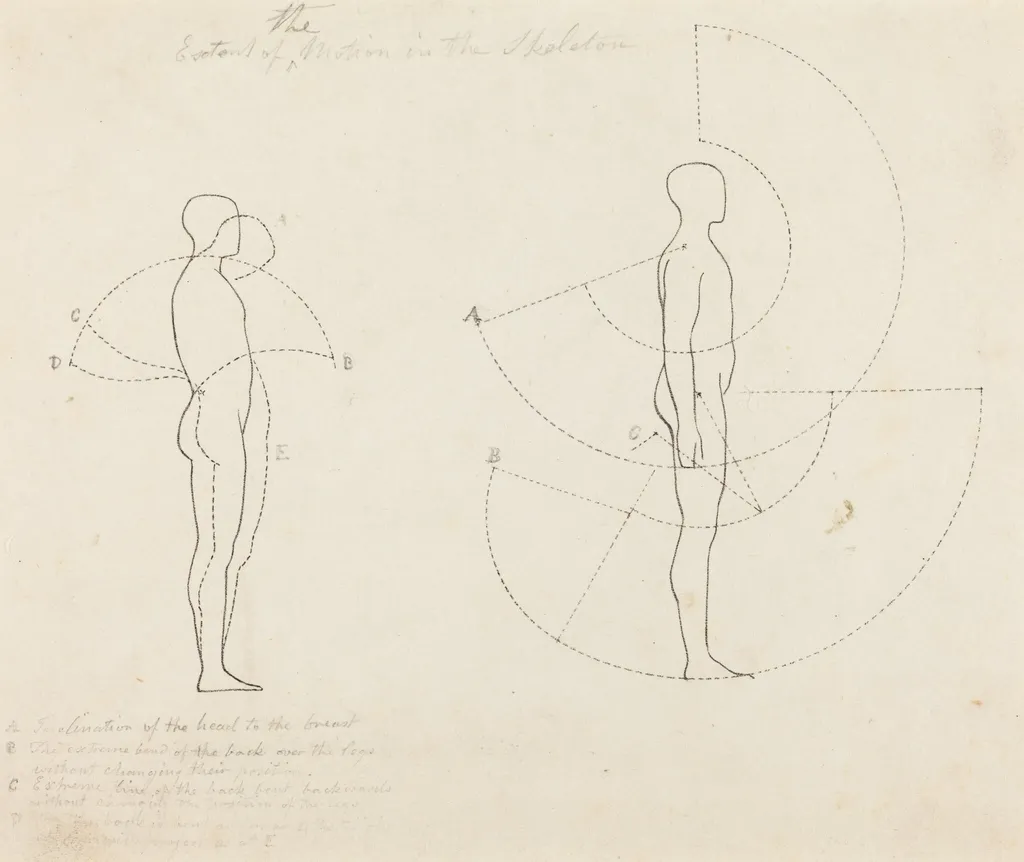
Extent of Motion Shown in Two Figures is an ink print by the Romanticist artist George Scharf. It dates from 1829 and is held in the collection of the National Gallery of Art.
About this work
Overview
Created in 1829 by George Scharf, this lithographic proof depicts two simplified human figures within circular frames, each oriented in opposite directions.
Created in 1829 by George Scharf, this lithographic proof depicts two simplified human figures within circular frames, each oriented in opposite directions. The figures are rendered with minimal detail, emphasizing skeletal articulation through radiating lines that indicate the range of limb movement. The title, 'The Extent of Motion in the Skeleton,' frames the image as an instructional study rather than an artistic composition.
Subject & Meaning
The work illustrates anatomical mobility, focusing on the mechanical limits of human motion. Each figure's limbs are marked with radial lines to show maximum reach in multiple directions, suggesting a systematic approach to understanding posture and articulation. The handwritten annotations below reinforce its purpose as a reference tool, likely intended for artists seeking accuracy in depicting the moving body.
Technique & Style
Executed in lithography, the image uses fine, precise lines to convey structure without shading or texture. The figures are reduced to schematic forms, prioritizing clarity over realism. The circular framing and linear annotations reflect a scientific diagramming style, aligning with early 19th-century efforts to standardize visual knowledge for educational use in the arts.
History & Provenance
This is a proof state, printed before the addition of lettering, indicating it was part of a preparatory phase for publication. Scharf, known for his topographical and scientific illustrations, likely produced this as part of a broader project on anatomical drawing. Its survival as a proof suggests it was retained for reference or internal review rather than distributed widely.
Context
In the 1820s, artists increasingly turned to anatomical studies to improve figure drawing, influenced by advances in medical science and the rise of art academies. Scharf’s lithograph reflects this trend, merging observational precision with pedagogical intent. Similar diagrams appeared in manuals by artists like Charles Bell and Henry Cline, who sought to bridge art and anatomy.
Legacy
Though not widely exhibited, this work exemplifies a quiet but significant shift in artistic training: the integration of empirical observation into studio practice. Its schematic clarity influenced later instructional materials, contributing to the standardization of anatomical reference in art education throughout the 19th century.
Artist & collection


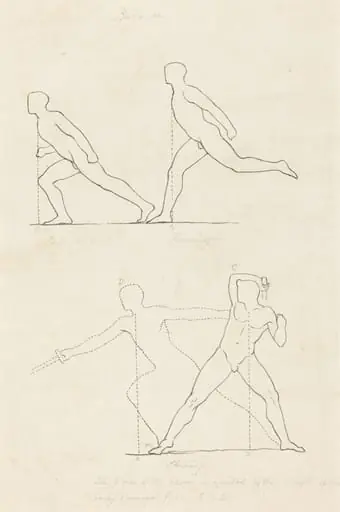 Preparing to Run; Running; Striking
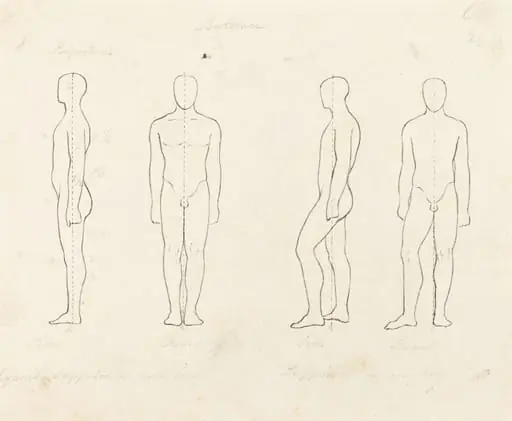 Extent of Motion, Front and Side View Equipoised, Supported on One Leg
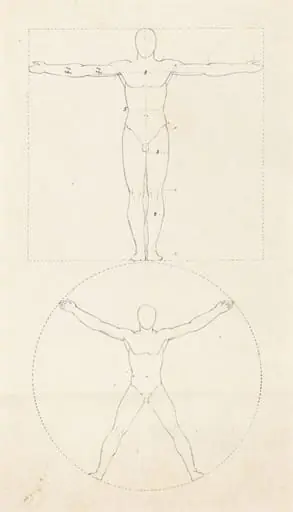 Circle and Square of the Human Figure
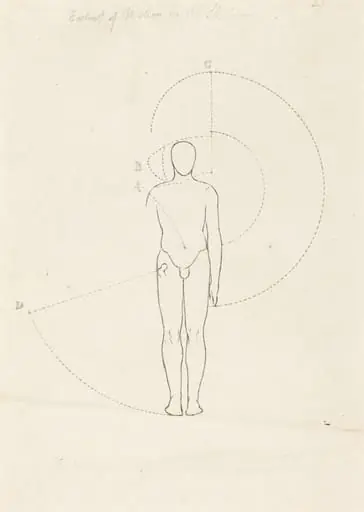 Extent of Motion, One Figure
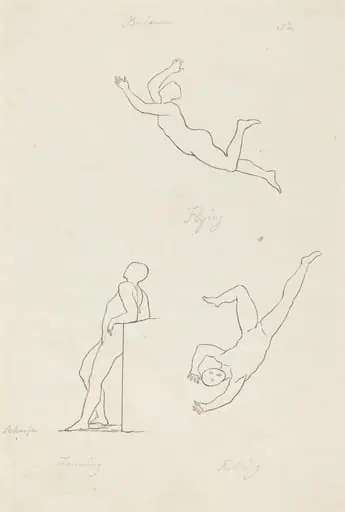 Leaning, Flying and Falling
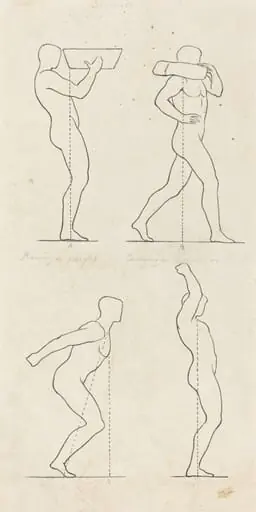 Bearing a Weight; Preparing to Jump, and Alighting
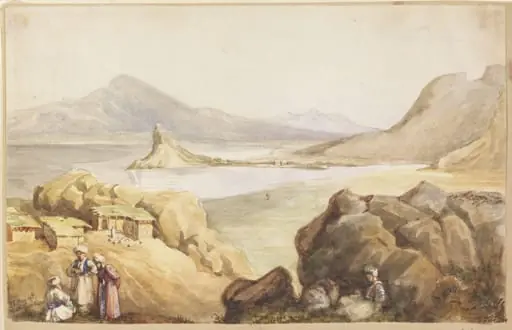 Gule-Hissa Ovassy in the Northern part of Lycia
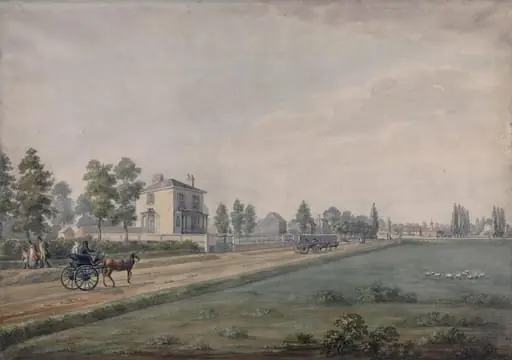 Mitcham Common, Surrey, shewing the road running along the west side