Artwork
Circle and Square of the Human Figure
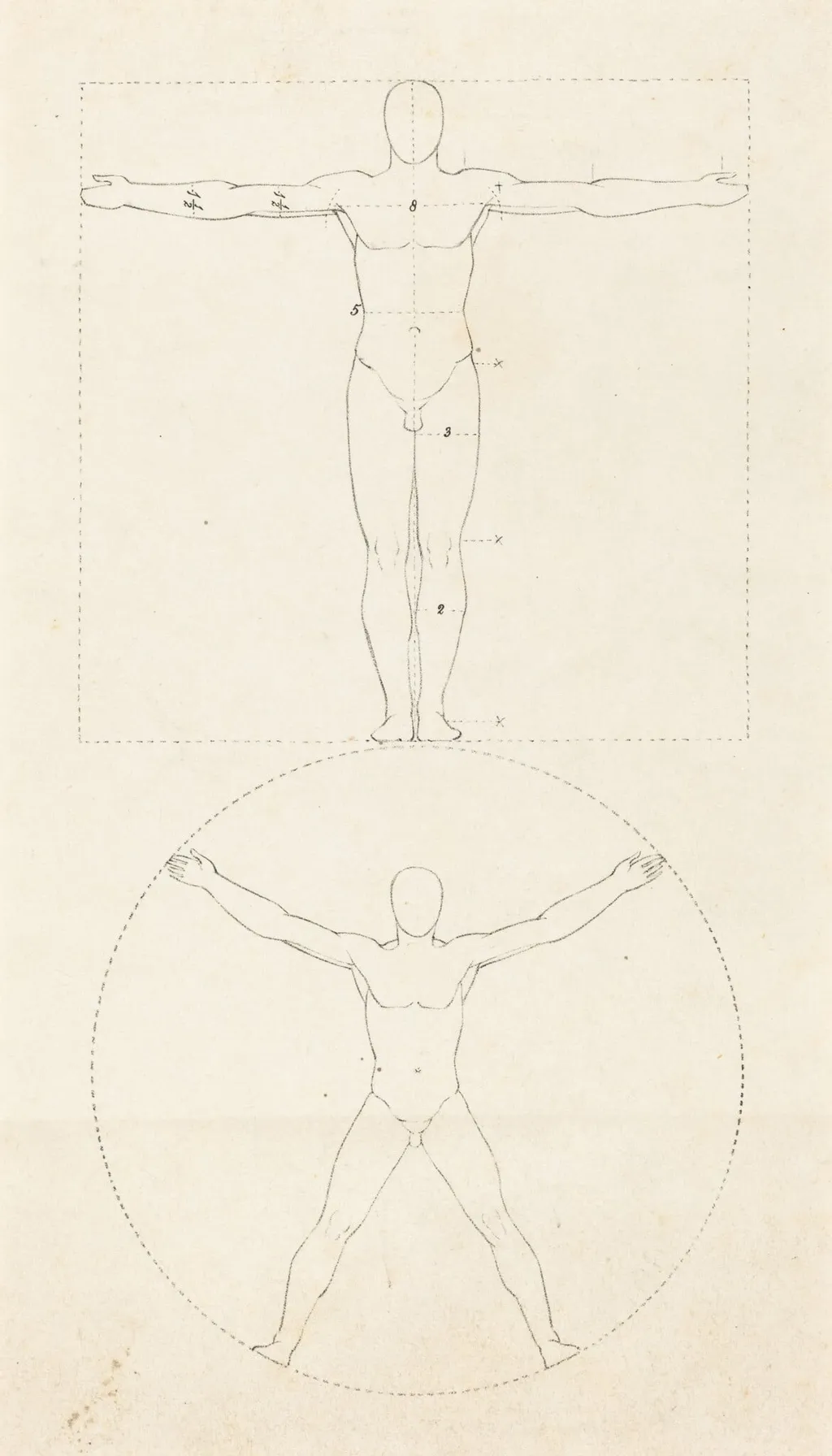
Circle and Square of the Human Figure is an ink print by the Romanticist artist George Scharf. It dates from 1829 and is held in the collection of the National Gallery of Art.
About this work
Overview
George Scharf’s 1829 lithograph titled *Circle and Square of the Human Figure* presents a study of the nude form arranged within two geometric outlines.
George Scharf’s 1829 lithograph titled *Circle and Square of the Human Figure* presents a study of the nude form arranged within two geometric outlines. The upper composition places a standing figure with outstretched arms inside a square, while the lower composition mirrors the pose within a circle. Simple line work delineates the limbs, joints, and extremities, and a series of numbers and dotted lines suggest proportional measurements.
Subject & Meaning
The print functions as an instructional diagram, illustrating how the human body can be inscribed within basic shapes. By positioning the same pose in both a square and a circle, Scharf highlights the relationship between anatomical proportions and geometric order, a concern central to academic drawing practices of the early nineteenth century.
Technique & Style
Executed as a lithographic proof before lettering, the work relies on the medium’s capacity for fine, repeatable line work. Scharf employs a restrained, almost schematic style: clean contours, minimal shading, and annotated dimensions. This approach underscores the print’s pedagogical purpose rather than aesthetic embellishment.
History & Provenance
Created in 1829, the lithograph reflects Scharf’s involvement in the period’s burgeoning interest in systematic art education. While specific ownership records are limited, the piece survives as part of collections documenting early printmaking methods and instructional materials used in European art academies.
Artist & collection


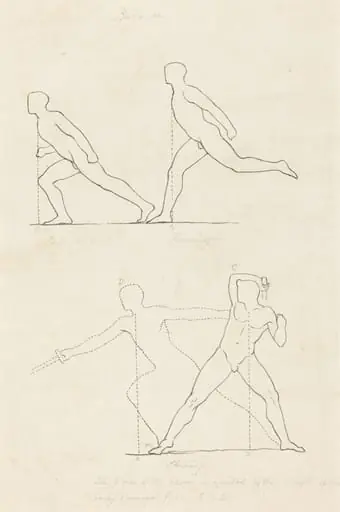 Preparing to Run; Running; Striking
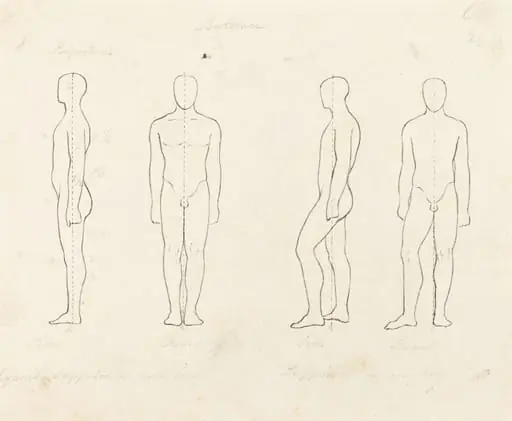 Extent of Motion, Front and Side View Equipoised, Supported on One Leg
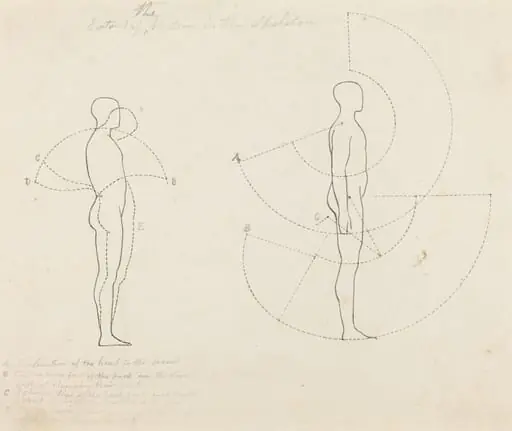 Extent of Motion Shown in Two Figures
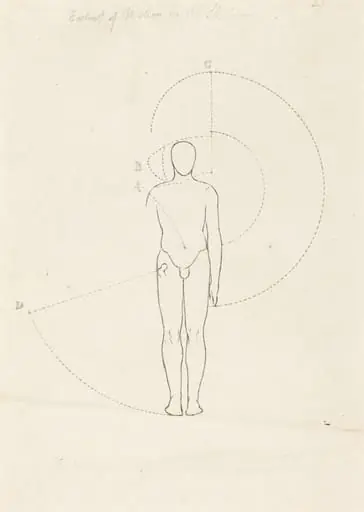 Extent of Motion, One Figure
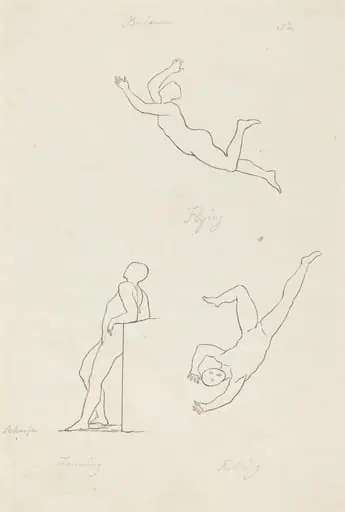 Leaning, Flying and Falling
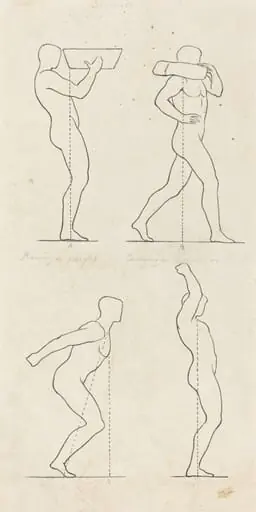 Bearing a Weight; Preparing to Jump, and Alighting
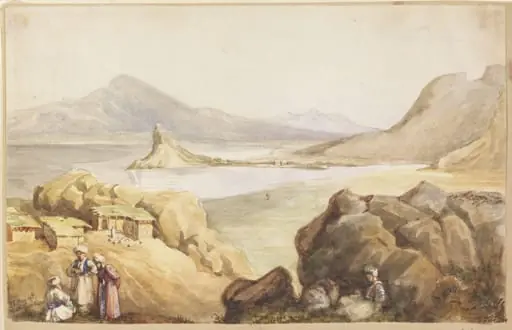 Gule-Hissa Ovassy in the Northern part of Lycia
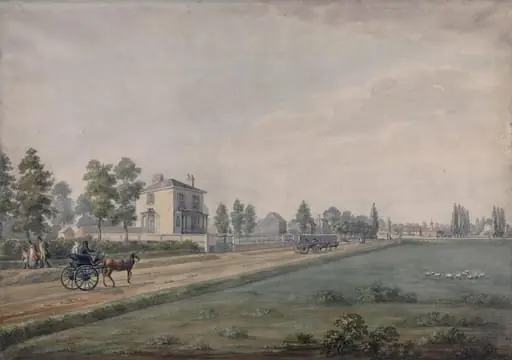 Mitcham Common, Surrey, shewing the road running along the west side