Artwork
The Virgin of the Immaculate Conception (recto)
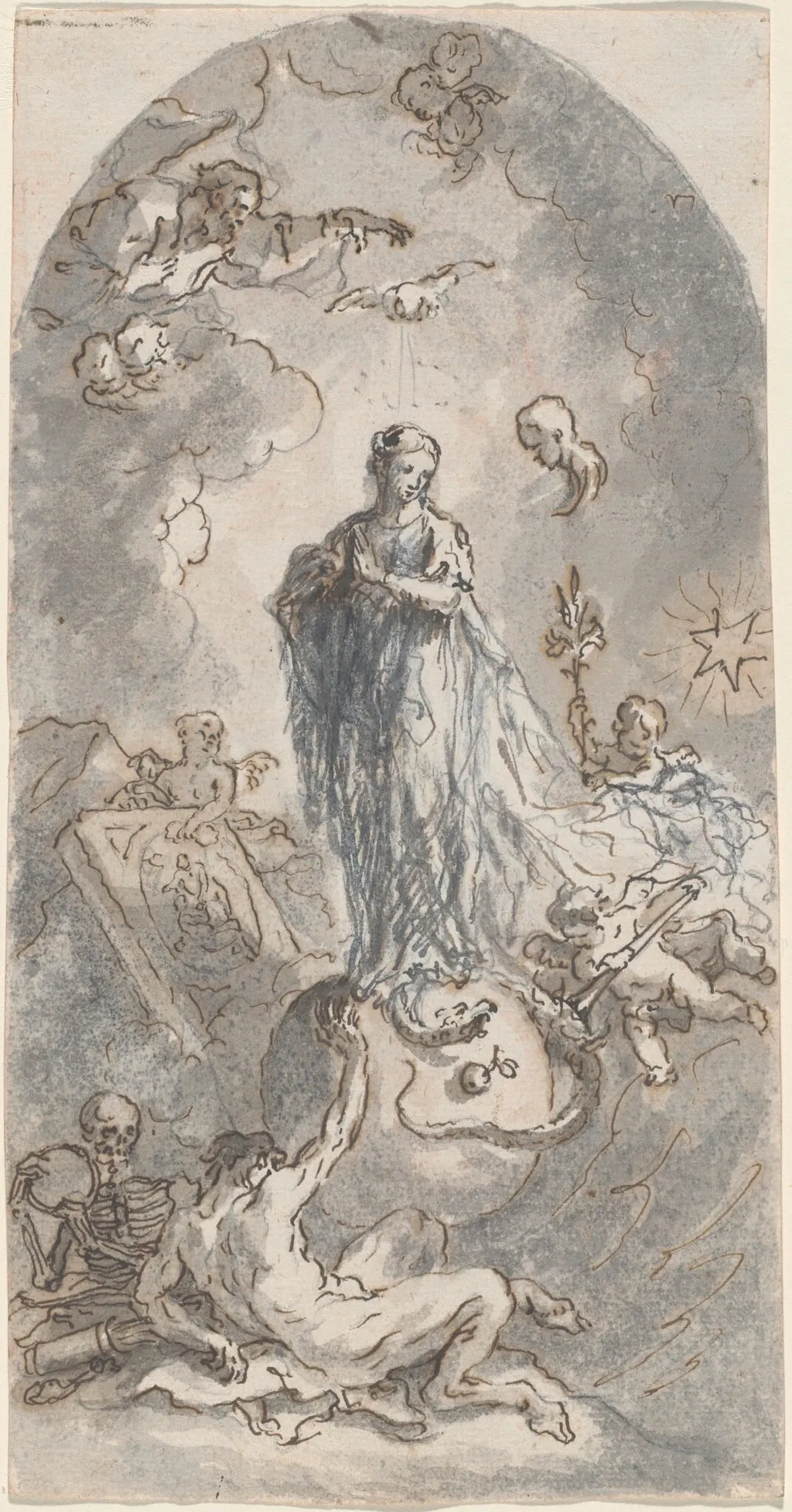
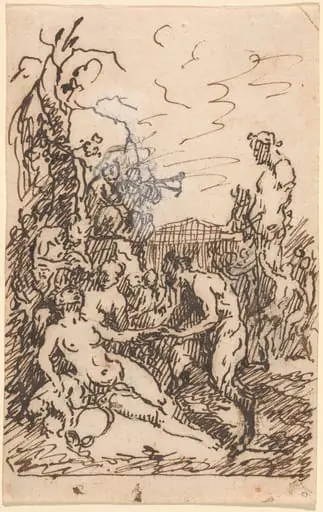
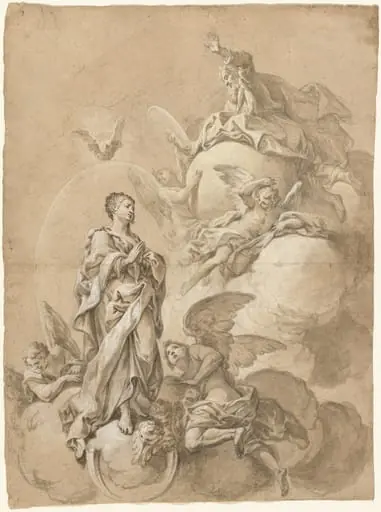
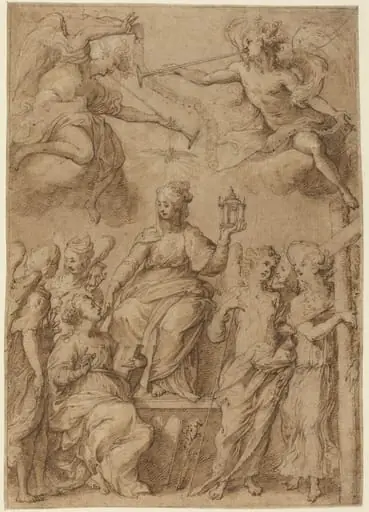
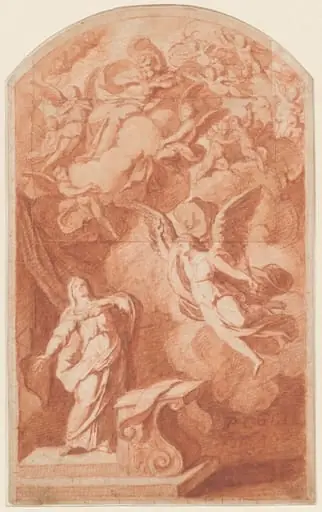
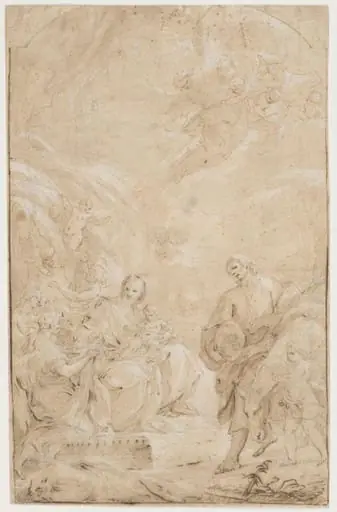
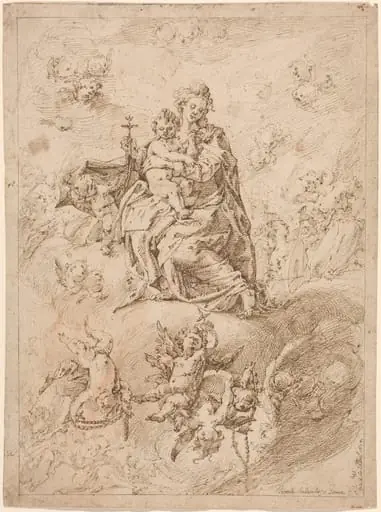
The Virgin of the Immaculate Conception (recto) is an ink drawing by the Romanticist artist Martin Johann Schmidt. It dates from 1764 and is held in the collection of the National Gallery of Art. Created in 1764, this drawing presents a contemplative Virgin Mary standing upon a rugged pedestal.
About this work
Overview
Created in 1764, this drawing presents a contemplative Virgin Mary standing upon a rugged pedestal. The composition is populated by diminutive figures—infants, a skeletal form, and a serpent winding at her feet—set against a sky mottled with delicate clouds and faint luminous points. The overall effect balances serenity of the central figure with the surrounding symbolic turbulence.
Subject & Meaning
The central female figure embodies the Immaculate Conception, a theological concept that emphasizes Mary's purity from birth. The surrounding infants suggest the triumph over original sin, while the skeletal presence and coiled snake serve as reminders of death and evil subdued by divine grace. The ethereal light at the edges reinforces a celestial endorsement of her immaculate status.
Technique & Style
Executed with pen and brown ink, the drawing incorporates brown and gray washes applied over a black chalk underdrawing. Cross‑hatched lines generate tonal depth, while the loose washes soften edges, lending a hazy, atmospheric quality. The draftsmanship reflects a refined, northern‑Italian influence, evident in the careful contouring of the figure and the subtle modulation of light and shadow.
History & Provenance
Born in Grafenwörth, Schmidt trained with Gottlieb Starmayr before establishing his practice in Stein, where he supplied numerous ecclesiastical commissions.
The work is attributed to Martin Johann Schmidt, often called Kremser Schmidt, a prominent Austrian painter of the late Baroque and Rococo era. Born in Grafenwörth, Schmidt trained with Gottlieb Starmayr before establishing his practice in Stein, where he supplied numerous ecclesiastical commissions. This drawing likely originated as a preparatory study for a larger altarpiece or devotional image.
Context
During the mid‑18th century, Austrian religious art frequently merged Baroque dynamism with Rococo elegance, emphasizing both emotional intensity and decorative refinement. Schmidt’s oeuvre exemplifies this synthesis, integrating dramatic narrative elements—such as the serpent and skeletal figure—with a graceful, idealized portrayal of the Virgin, aligning with contemporary devotional trends that highlighted personal piety and theological clarity.
Artist & collection
Artist
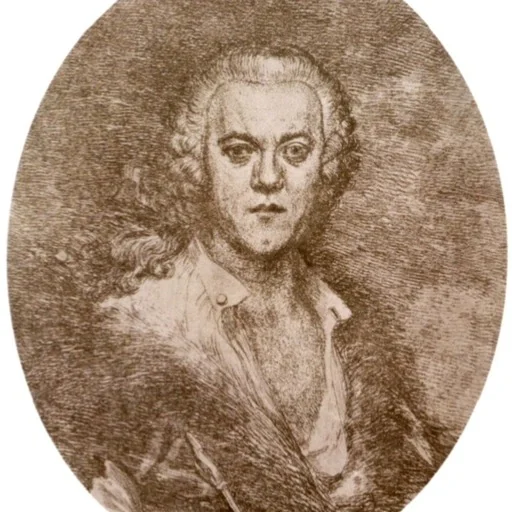
Martin Johann Schmidt, called Kremser Schmidt or Kremserschmidt, (25 September 1718 – 28 June 1801), was one of the outstanding Austrian painters of the late Baroque/Rococo along with Franz Anton Maulbertsch.