Artwork
Saint John the Baptist
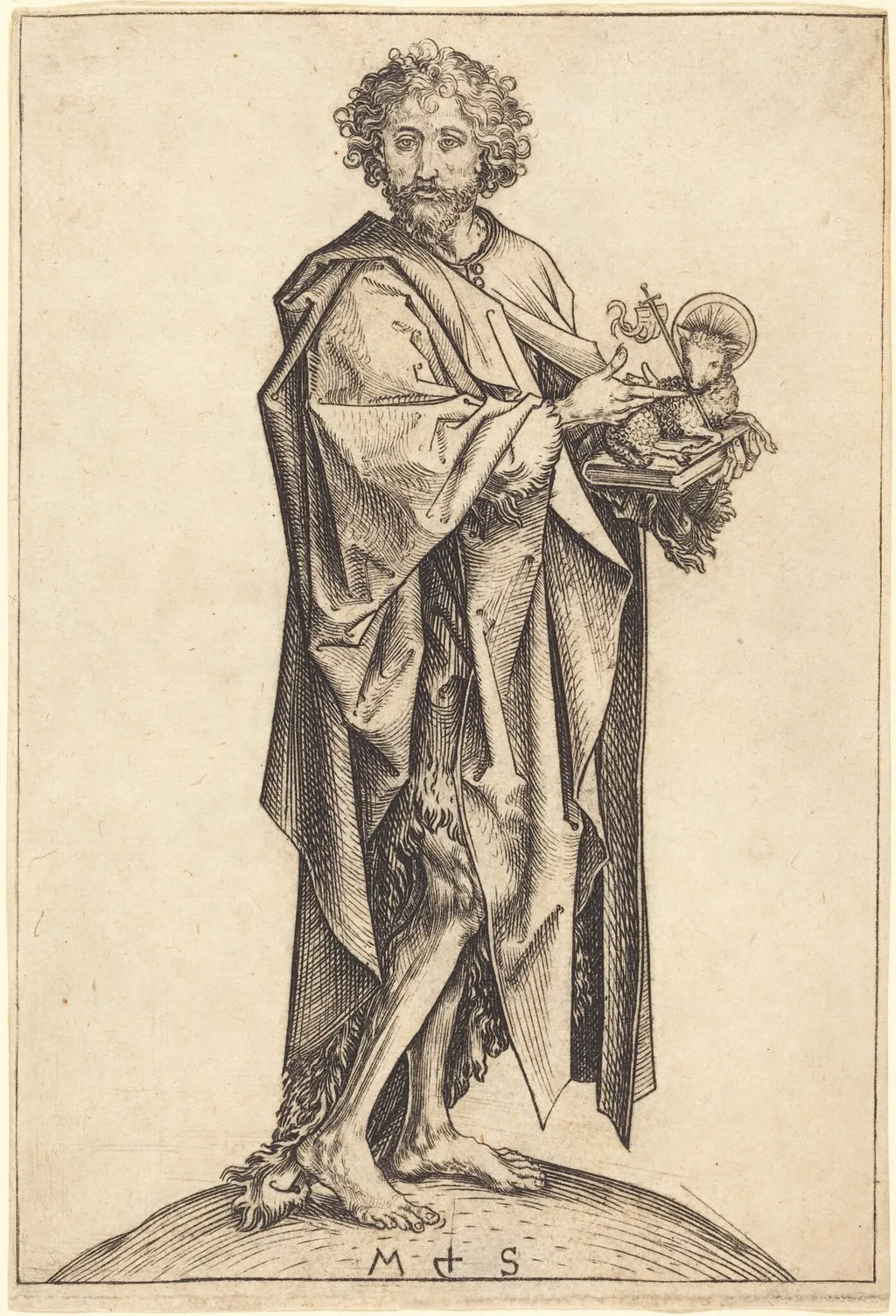
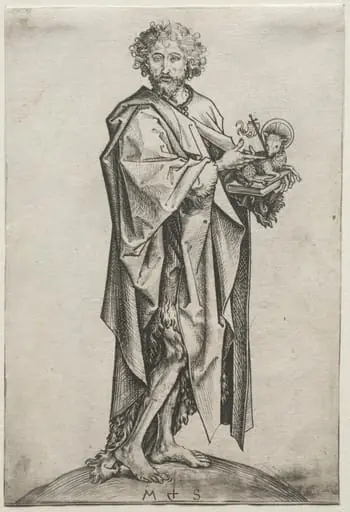
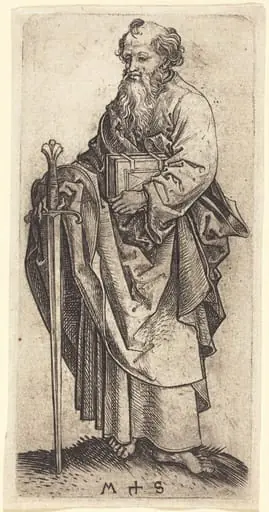
Saint John the Baptist is an ink print by the Renaissance artist Martin Schongauer. It dates from 1475 and is held in the collection of the National Gallery of Art.
About this work
Overview
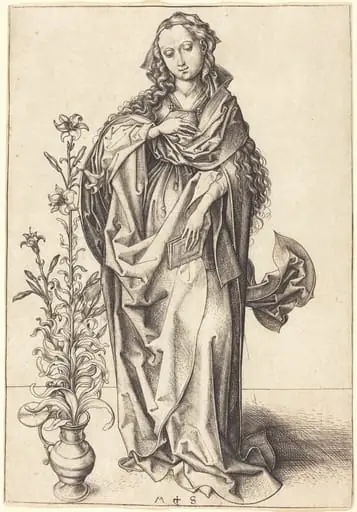
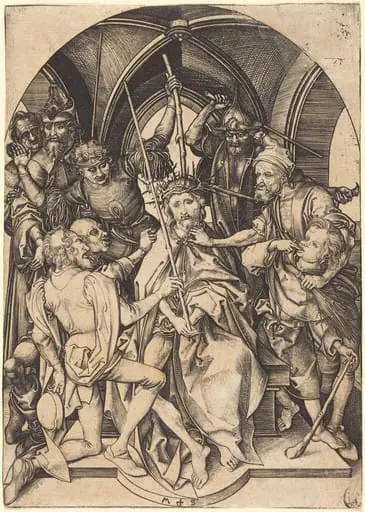
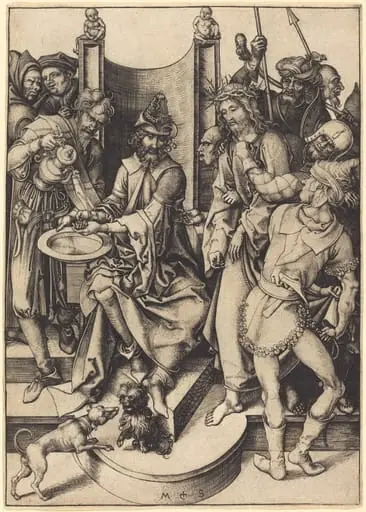
Schongauer’s 116 known engravings established him as a leading figure in the medium, with this piece reflecting his mastery of fine line and tonal gradation.
Created circa 1475, this engraving on laid paper portrays Saint John the Baptist as a solitary, contemplative figure. Executed by Martin Schongauer, an Alsatian artist active in the late 15th century, the work exemplifies the technical precision and devotional focus characteristic of Northern European printmaking before Dürer’s rise. Schongauer’s 116 known engravings established him as a leading figure in the medium, with this piece reflecting his mastery of fine line and tonal gradation.
Subject & Meaning
The figure of John the Baptist is depicted with a solemn expression, holding a small book or tablet while gesturing toward it, suggesting scriptural reflection. A lamb, symbolizing Christ, rests upon the object, its halo indicating divine presence. The composition conveys John’s role as the forerunner of Christ, emphasizing spiritual preparation and prophecy. The absence of landscape or architectural detail focuses attention on the figure’s inner stillness and sacred function.
Technique & Style
Schongauer employed fine, controlled lines to model the folds of the robe and the texture of the beard and hair, using cross-hatching to achieve subtle gradations of light and shadow. The smooth, even surface of the laid paper enhanced the clarity of the engraved lines. The background remains unadorned, heightening the figure’s presence. This method, typical of early engraving, required meticulous planning and steady handwork to achieve depth without color or tone.
History & Provenance
The print originates from Schongauer’s workshop in Colmar, where he produced engravings for both religious devotion and artistic circulation. While the exact early ownership history is undocumented, the work’s survival in multiple impressions suggests wide distribution across religious and scholarly circles in the late 15th century. Its preservation reflects the growing appreciation for prints as autonomous artworks, not merely reproductive tools.
Context
In the decades before the Reformation, devotional imagery in print form became increasingly accessible to lay audiences. Schongauer’s engravings, including this one, responded to a demand for portable, affordable religious icons. His work bridged the traditions of manuscript illumination and emerging print culture, influencing later artists who sought to combine spiritual depth with technical innovation in the graphic arts.
Legacy
Schongauer’s engravings, including this depiction of Saint John, served as models for subsequent generations of Northern artists. His precise line work and emotional restraint informed Dürer’s early prints and contributed to the elevation of engraving as a respected artistic medium. Though overshadowed in popular memory by later figures, Schongauer’s technical achievements laid essential groundwork for the evolution of printmaking in Europe.
Artist & collection

Artist
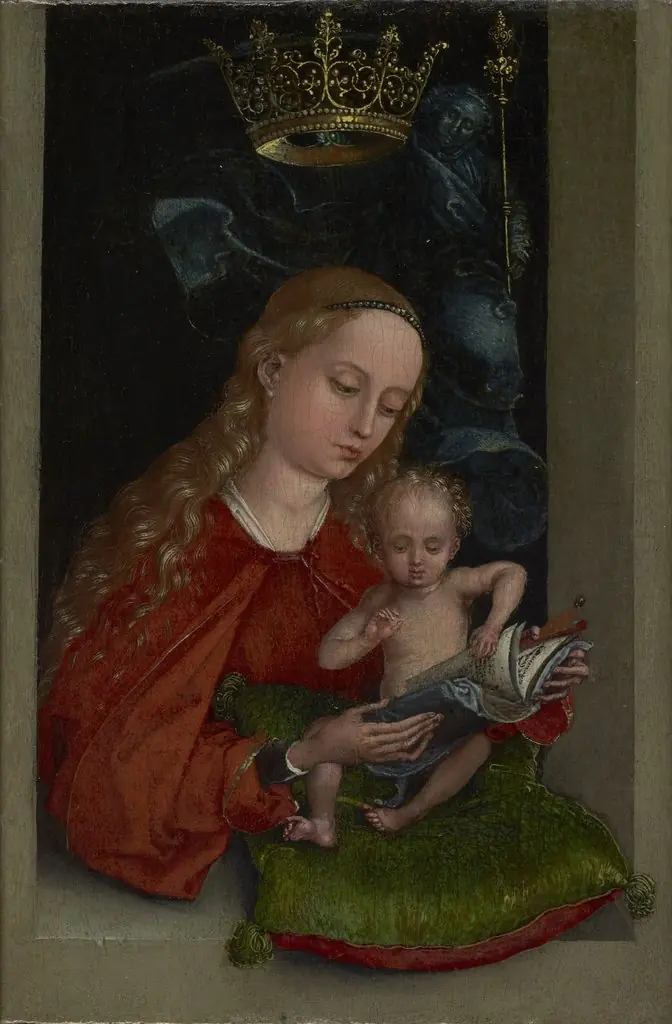
Martin Schongauer, also known as Martin Schön or Hübsch Martin by his contemporaries, was an Alsatian engraver and painter.