Artwork
The Flagellation
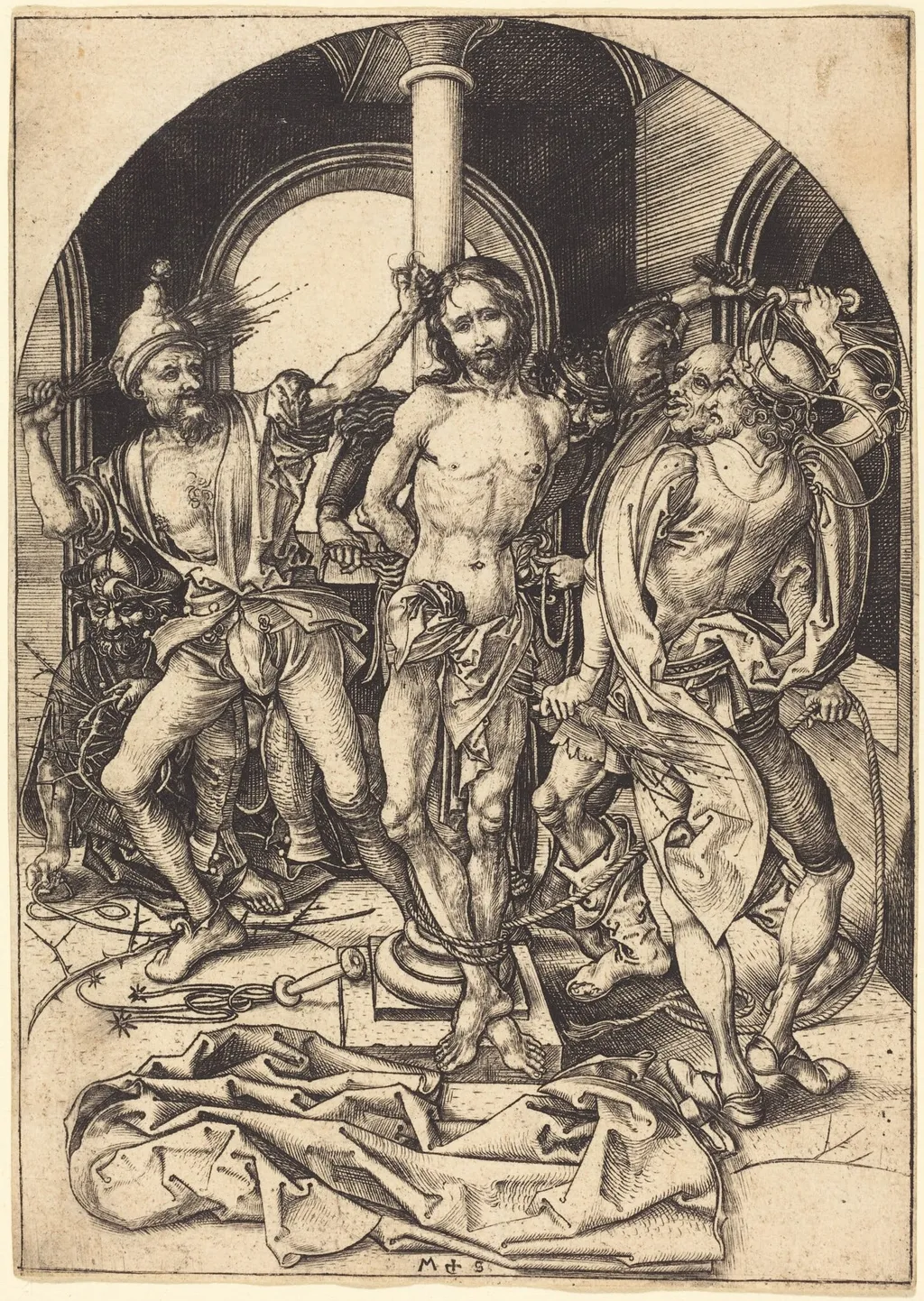
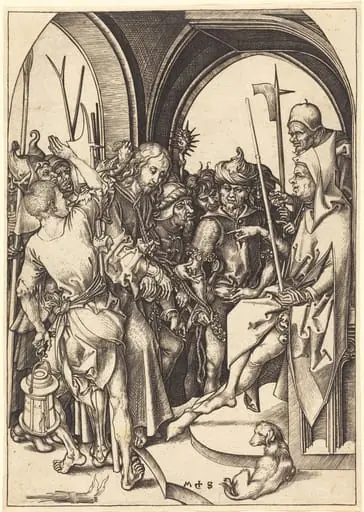
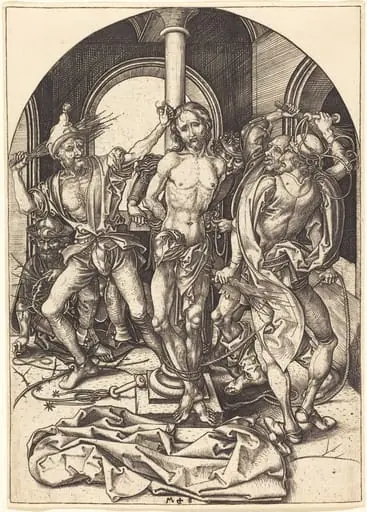
The Flagellation is an ink print by the Renaissance artist Martin Schongauer. It dates from 1480 and is held in the collection of the National Gallery of Art.
About this work
Overview
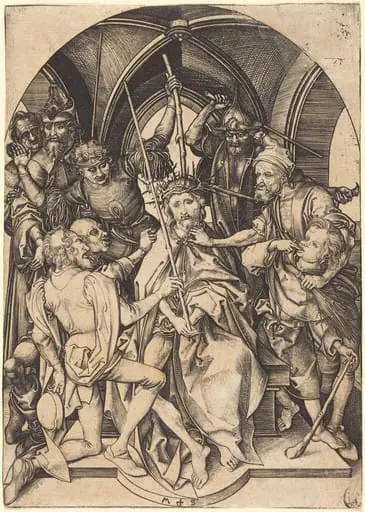
Martin Schongauer’s engraving *The Flagellation*, dated to the late 1470s or early 1480s, presents a compact, high‑contrast scene of Christ being scourged. Executed on a copper plate and printed in black ink, the image centers on a bound Christ illuminated against a dark background, surrounded by three tormentors in simple robes and turbans.
Subject & Meaning
The work visualises the biblical episode of Christ’s flagellation, emphasizing his physical suffering and spiritual endurance. By isolating the figure of Christ and limiting surrounding detail, Schongauer directs the viewer’s focus to the contrast between the saint’s serene, smooth skin and the harsh, rough faces of his assailants.
Technique & Style
Schongauer employed fine, parallel lines and cross‑hatching to model flesh, drapery, and the metallic column, achieving a convincing sense of volume. The engraving’s sparse background and careful use of chiaroscuro reflect the influence of his goldsmith training and the emerging German engraving tradition.
History & Provenance
Created when printmaking was still a relatively new medium, the plate was likely cut in the 1470s. The work circulated among collectors in Northern Europe and contributed to Schongauer’s reputation as the pre‑eminent Northern printmaker before Albrecht Dürer.
Context
Schongauer’s output bridges the late Gothic aesthetic and the nascent Renaissance interest in anatomical accuracy. *The Flagellation* exemplifies the period’s fascination with religious narrative rendered through meticulous line work, a hallmark of late‑15th‑century German art.
Artist & collection

Artist
Martin Schongauer, also known as Martin Schön or Hübsch Martin by his contemporaries, was an Alsatian engraver and painter.