Artwork
Saffed
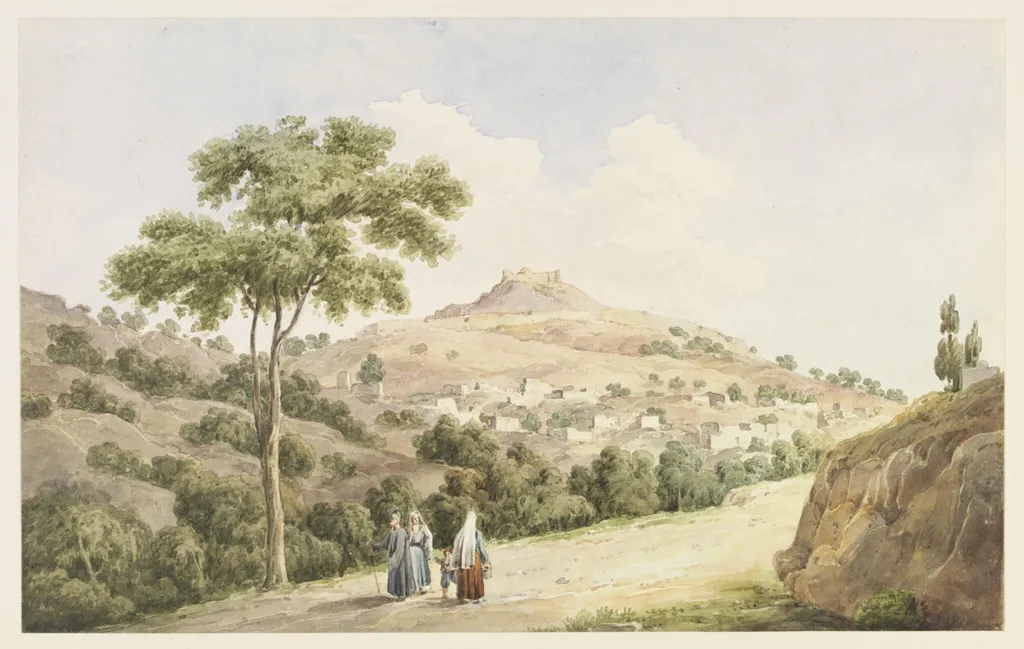
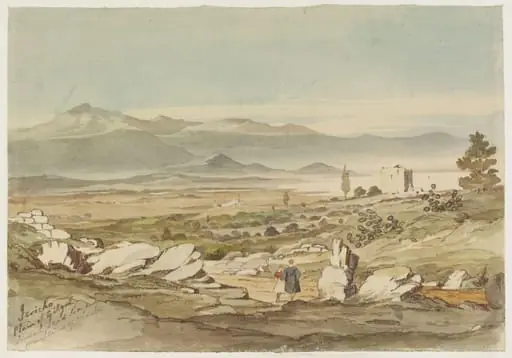
Saffed is a watercolor work on paper by the Romanticist artist Antonio or Anton Schranz. It dates from 1837 and is held in the collection of the Victoria and Albert Museum. This watercolour, created by Antonio Schranz Jr.
About this work
Overview
The scene features three figures traversing a dry, undulating terrain beneath a pale sky.
This watercolour, created by Antonio Schranz Jr. between late 1836 and mid-1837, captures a quiet landscape in the eastern Mediterranean. The scene features three figures traversing a dry, undulating terrain beneath a pale sky. Subtle brushwork and muted earth tones convey stillness, while inscriptions on the mounting card suggest the work was made during a journey with a private patron, likely during Schranz’s travels between Malta and Turkey.
Subject & Meaning
The figures—apparent travelers with one carrying a staff—move slowly through a barren, sunlit landscape. Their presence evokes transience, a common theme in 19th-century travel sketches. The ruined structure in the distance and scattered architecture imply a landscape shaped by time and human habitation. The absence of narrative action or dramatic tension invites contemplation rather than storytelling, aligning with a quiet, observational mode of representation.
Technique & Style
Schranz employed delicate watercolour washes to render the arid terrain, using thin layers of brown, ochre, and muted green to suggest texture without detail. The sky is softly graded, with faint cloud forms adding depth without disruption. Figures are rendered with minimal strokes, emphasizing their integration into the environment. The technique reflects a restrained, topographical approach, prioritizing atmospheric tone over dramatic contrast.
History & Provenance
Schranz traveled from Malta to Turkey between April 1836 and December 1839, a period during which this work was likely produced. Inscriptions on the original mounting card link the drawing to a specific patron, indicating it was made on commission. Related sketches by Schranz are held in the Benaki Museum in Athens and a private collection in Malta, suggesting a broader body of work documenting his journey through the region.
Context
Created during the height of Romanticism, the work reflects the movement’s interest in landscape as a vessel for mood and memory. Unlike grand Romantic vistas, Schranz’s scene avoids theatricality, instead focusing on the quiet dignity of travel and the passage of time in modest, everyday settings. His approach aligns with the growing European fascination with the eastern Mediterranean as a site of historical resonance and visual quietude.
Legacy
Schranz’s watercolours remain relatively obscure, yet they contribute to a lesser-known corpus of 19th-century travel art from the Mediterranean. Their preservation in institutional and private collections underscores their value as documentary records of regional topography and cultural movement. While not widely exhibited, they offer insight into the personal, unidealized encounters that shaped European perceptions of the region during the Romantic era.
Own this work as a print
Artist & collection
Artist
Antonio Schranz made watercolours of Egyptian and Levantine sites in the 1830s–40s.

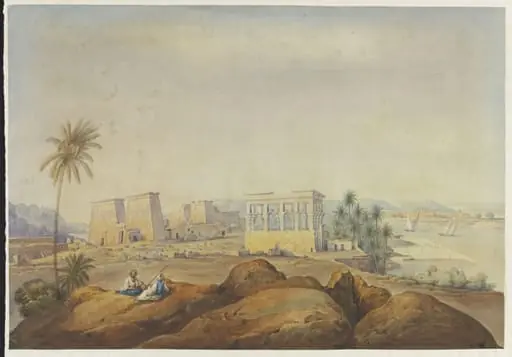 The Temple of Isis and Kiosk of Trajan on the Island of Philae
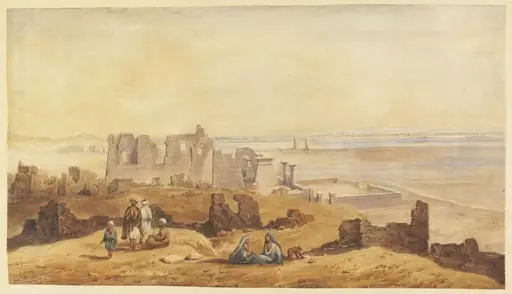 Luxor: the West Bank, with the Temple of Ramesses III at Madinat Habu; looking east towards the Nile
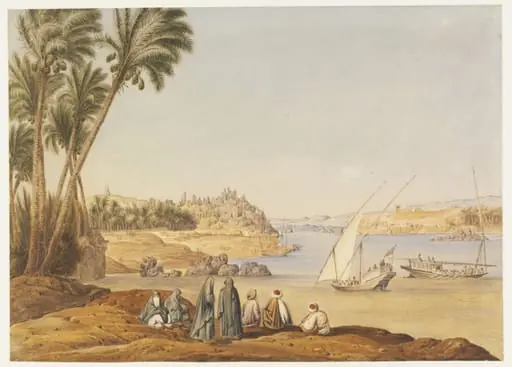 Aswan; looking south up the Nile
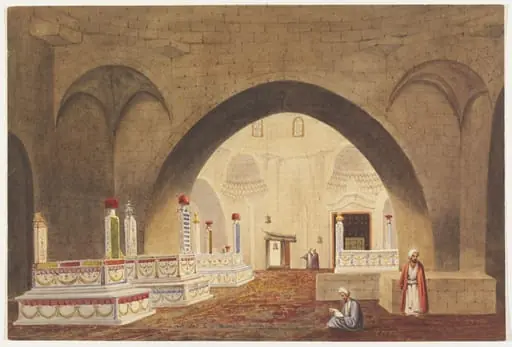 Mausoleum of Mehmet Ali and his family at Cairo
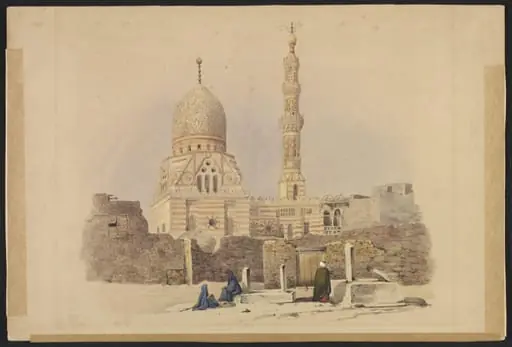 Mosk of Kaed Bey Cairo -
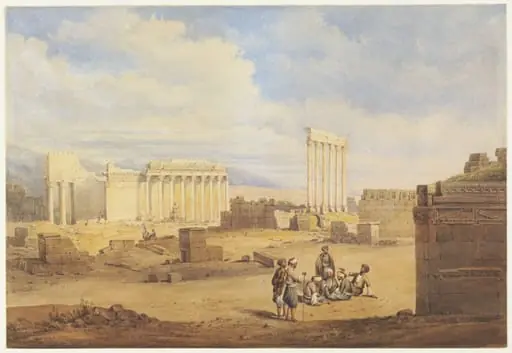 Baalbek
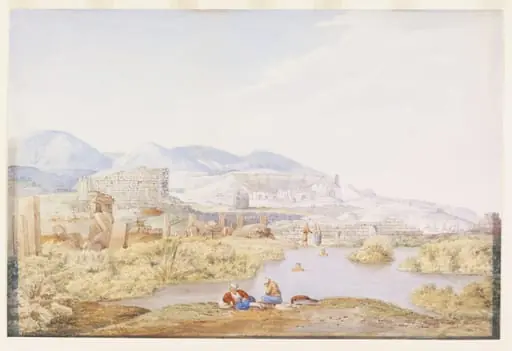 Hierapolis - Natural Hot Spring. Phrygia
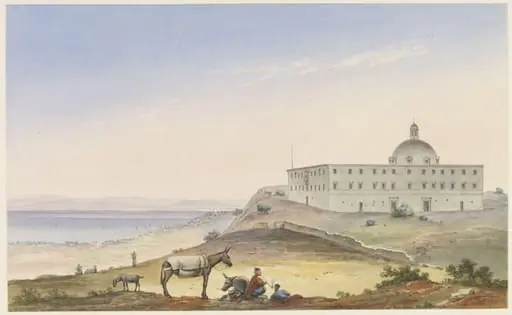 Convent on Mount Carmel
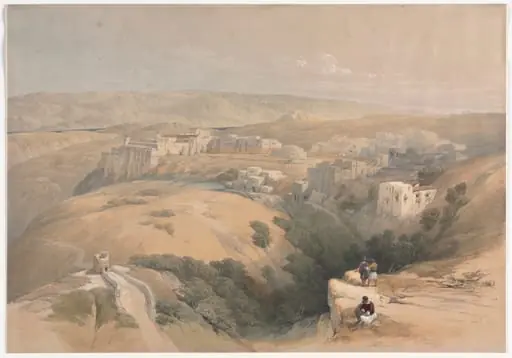 Bethlehem
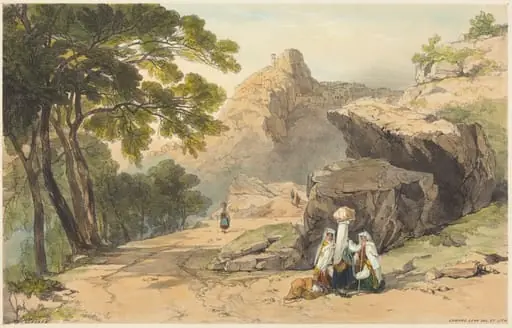 Cervara
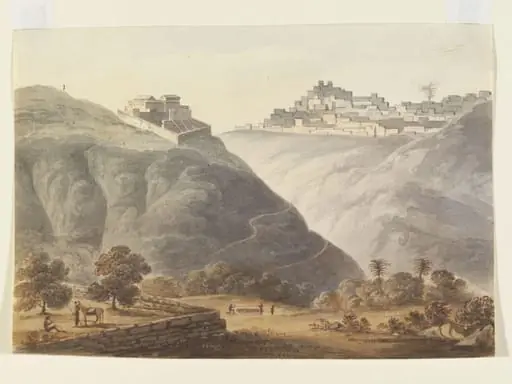 Bethlehem
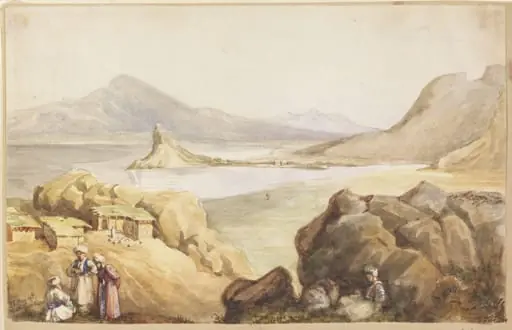 Gule-Hissa Ovassy in the Northern part of Lycia
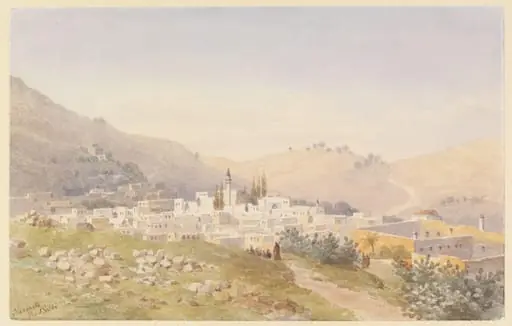 Nazareth
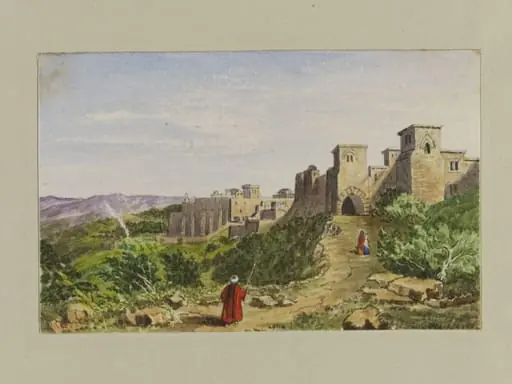 Bethlehem
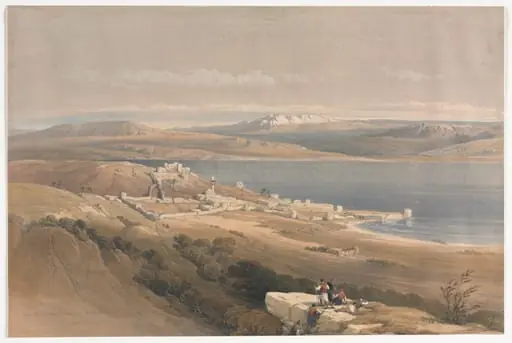 City of Tiberias on the Sea of Galilee, looking towards Hebron
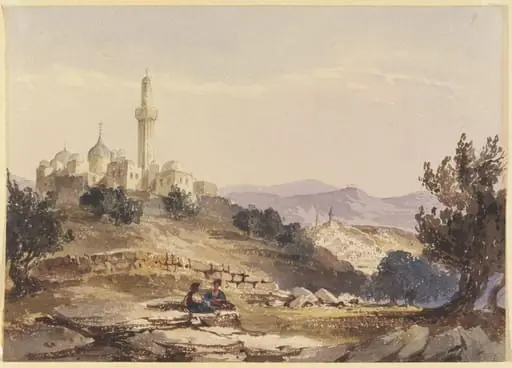 Mosque of the Ascension on the Mount of Olives
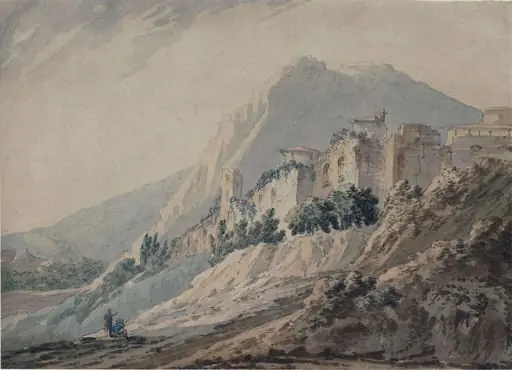 Mountainous landscape with ruined building
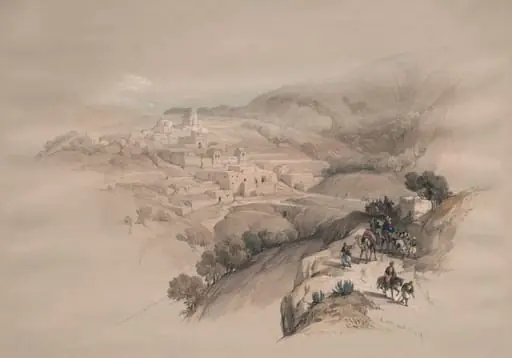 Bethany
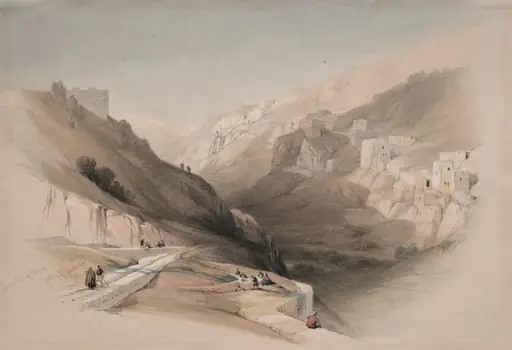 Lower Pool of Siloam, Valley of Jehoshaphat
 Jericho Plain of Gilgal, Jordan, Dead Sea, and Mountains of Moab