Artwork
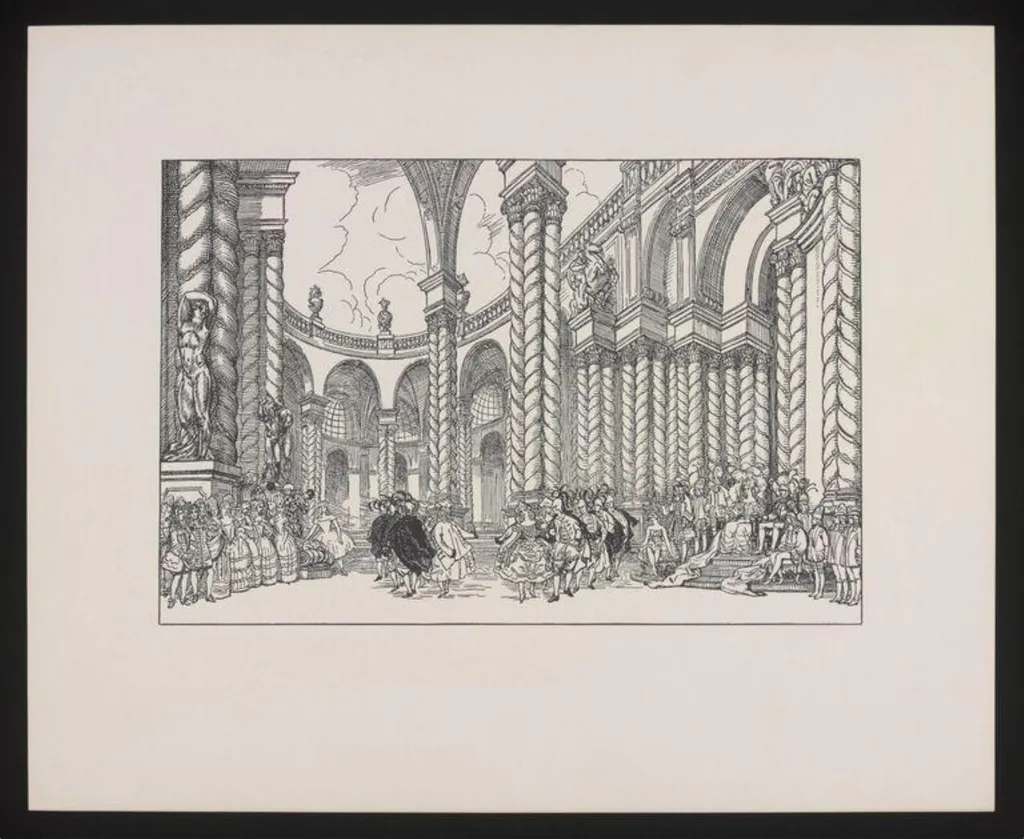
Print is a print by Randolph Schwabe. It dates from 1924 and is held in the collection of the Victoria and Albert Museum.
About this work
Overview
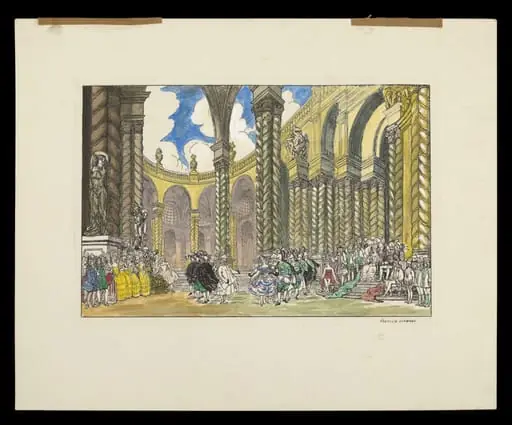
Randolph Schwabe’s print captures a moment from Act V of Marius Petipa’s ballet *The Sleeping Princess*. Set beneath an elaborate arched pavilion that opens to the sky, the composition presents two rows of dancers executing a Mazurka, flanked by courtiers on one side and members of the royal family on the other.
Subject & Meaning
The scene juxtaposes the disciplined choreography of the ballet with the ceremonial presence of Princess Aurora, the Queen, the King, the Prince and their attendants. By placing the performers within a grand architectural frame, Schwabe highlights the ritualized elegance of courtly dance and its role in the narrative of the ballet.
Technique & Style
Executed in an uncoloured, line‑based manner, the print reflects the early‑1920s fascination with Diaghilev’s Ballets Russes. Schwabe’s precise drawing emphasizes the intricate detailing of the arches, twisted columns and decorative motifs, while the arrangement of figures conveys movement within a static medium.
History & Provenance
Created in the mid‑1920s, the work was produced during a period when European artists were documenting the visual spectacle of the Ballets Russes. The print is now part of the Victoria and Albert Museum’s collection, where it serves as a record of both the ballet’s choreography and contemporary artistic interest in stage design.
Context
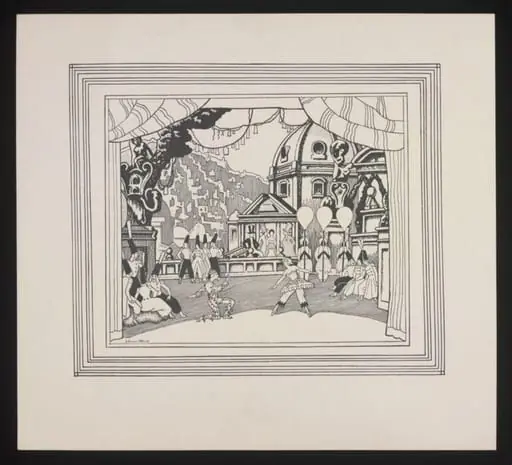
*The Sleeping Princess* was a popular production of the Ballets Russes, known for its lavish sets and intricate choreography. Schwabe’s depiction aligns with other contemporary prints that sought to preserve the transient performance arts of the era, translating stage spectacle into a permanent visual document.
Artist & collection
Artist
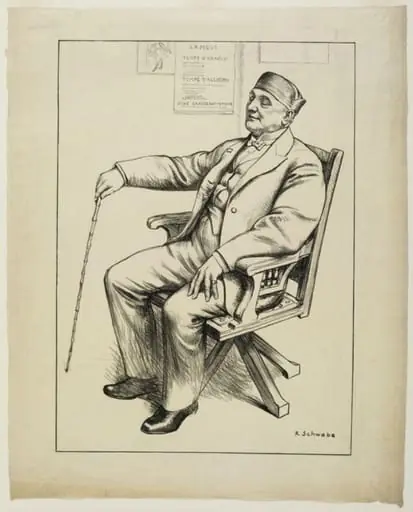
Randolph Schwabe made drypoint prints and pencil drawings in the 1920s. His prints show dancers like Enrico Cecchetti teaching and quiet portraits such as Stanislas Idzikowski. He worked in a straightforward, lined…

 Print
Print Untitled
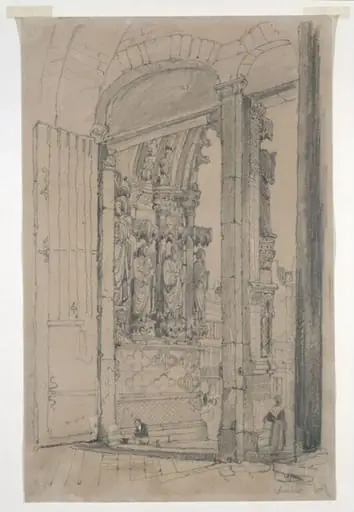 Amiens Cathedral
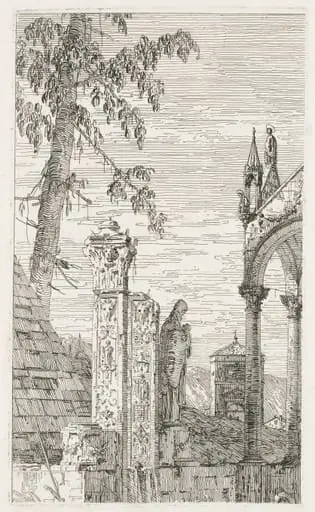 Views: Fragments of Sculpture
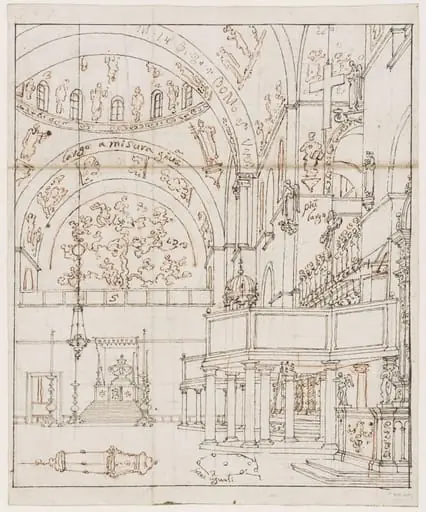 View of the interior of St. Mark's, Venice
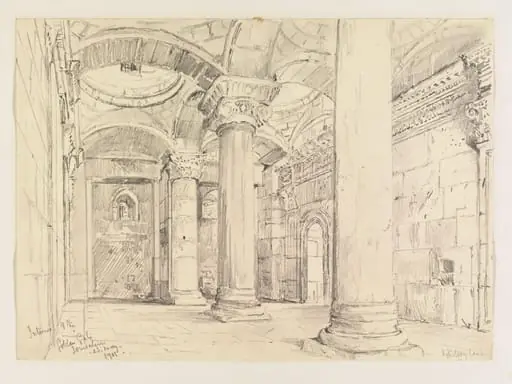 Interior of the Golden Gate Jerusalem
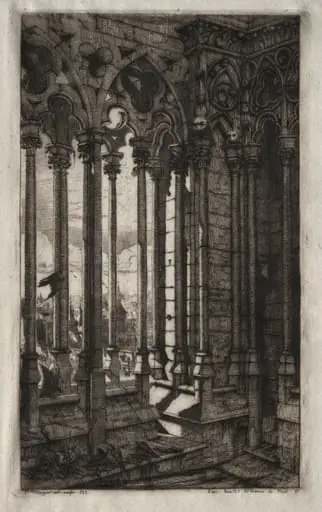 The Etchings of Paris: The Gallery of Notre Dame
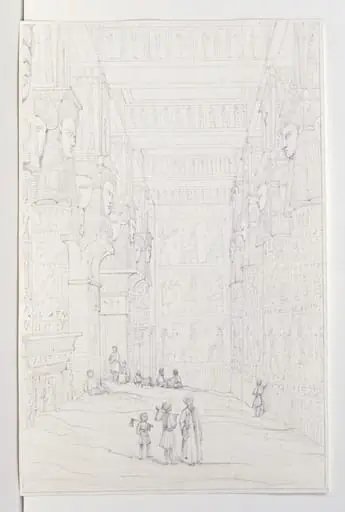 Denderah. Interior of Great Temple
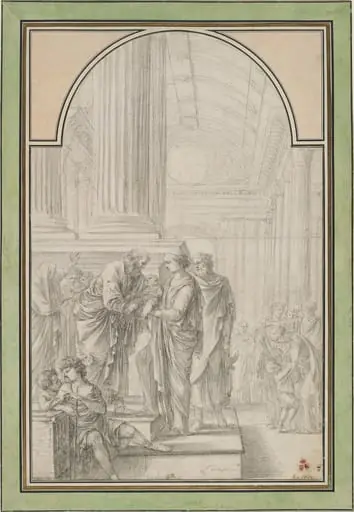 The Presentation in the Temple
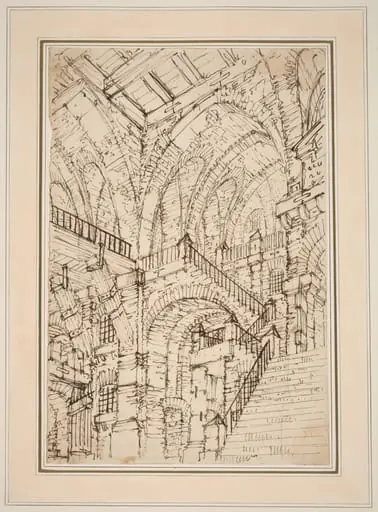 A Prison Interior with a Monumental Staircase
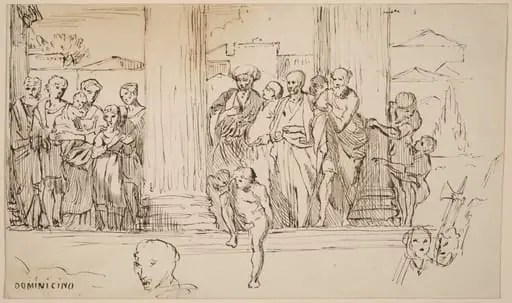 Study after Domenichino