Artwork
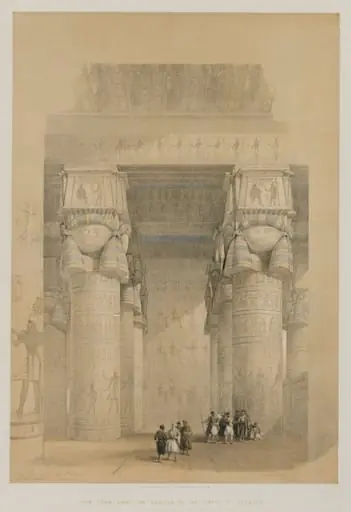
Denderah. Interior of Great Temple
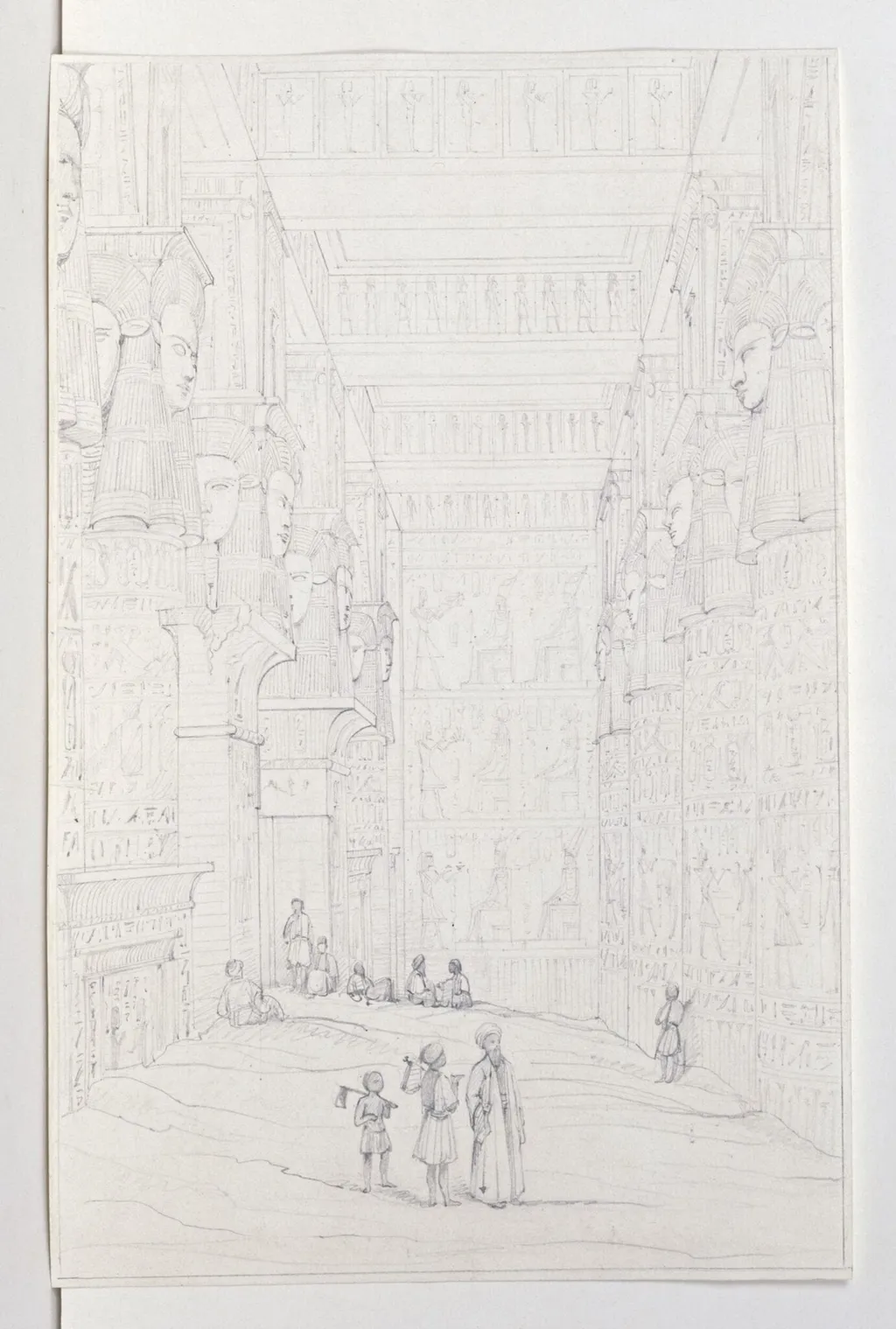
Denderah. Interior of Great Temple is a drawing by the Romanticist artist Owen Jones. It dates from 1832 and is held in the collection of the Victoria and Albert Museum.
About this work
Overview
It was later included as Plate 8 in the 1843 publication “Views On The Nile From Cairo To The Second Cataract,” part of the Searight Collection.
Created in 1832 by Owen Jones, this pencil drawing captures the interior of the Great Temple at Denderah. It was later included as Plate 8 in the 1843 publication “Views On The Nile From Cairo To The Second Cataract,” part of the Searight Collection. The work belongs to a series of eleven detailed architectural studies made during Jones’s travels along the Nile, documenting ancient structures with precision and care.
Subject & Meaning
The scene depicts a quiet courtyard within the temple, framed by towering columns and weathered stone walls. Figures—two children and an adult—gather near the entrance, their presence underscoring the site’s continued, if diminished, human connection to the ancient space. The hieroglyphs and carved reliefs on the walls are rendered with attention, suggesting an interest in preserving the temple’s inscriptions as cultural records rather than mere decoration.
Technique & Style
Jones employed fine, deliberate pencil strokes to build texture and depth, using cross-hatching to suggest the play of light across carved surfaces. The drawing’s roughness reflects its function as a field study: lines accumulate to define stone grain, shadowed recesses, and uneven flooring. There is no idealization; the architecture is shown as it appeared in situ, with wear and detail preserved through meticulous mark-making.
History & Provenance
The drawing originated as part of Jones’s documented journey along the Nile in the early 1830s. It entered the Searight Collection and was later published in 1843. Similar works by Jones are held in the Victoria and Albert Museum and the British Museum, indicating his systematic approach to recording Egyptian monuments. These drawings served both scholarly and public audiences during a period of growing European interest in Egyptology.
Context
Jones produced this drawing during a wave of European expeditions to Egypt following Napoleon’s campaign. While many focused on grand monuments, Jones emphasized architectural detail and atmospheric conditions. His work contributed to a more nuanced understanding of Egyptian temples, moving beyond spectacle to document the physical reality of decay, light, and human interaction within sacred spaces.
Legacy
Jones’s Denderah drawing exemplifies early archaeological illustration that prioritized accuracy over romanticism. Its inclusion in a widely circulated publication helped disseminate visual knowledge of Egyptian architecture to artists and scholars in Britain. The drawing’s emphasis on texture and light influenced later documentation practices, setting a standard for fidelity in recording ancient sites.
Artist & collection
Artist
English architect and designer Owen Jones spent the 1830s in Egypt and later sketched its temples in crisp watercolours.

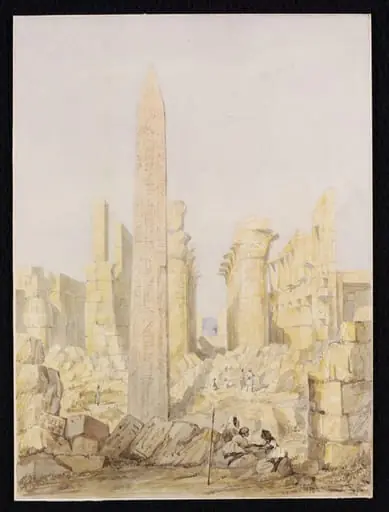 Great Temple. Karnac. Thebes
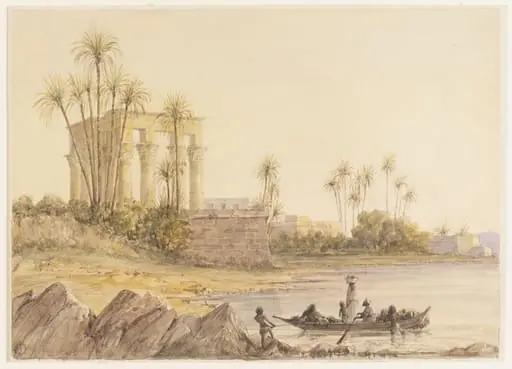 Landing Place. Philoe
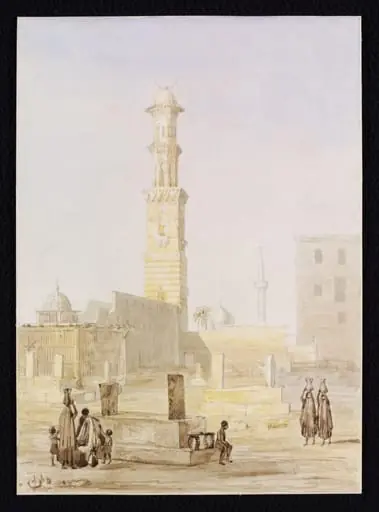 Tombs near Cairo
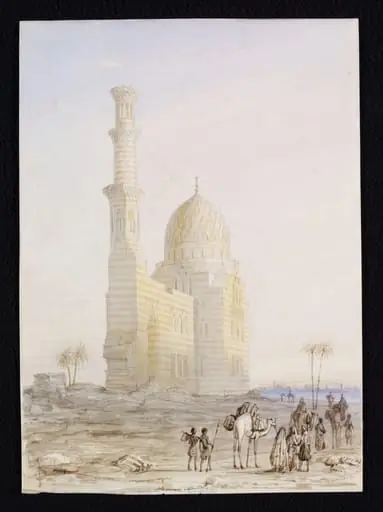 Tomb near Cairo
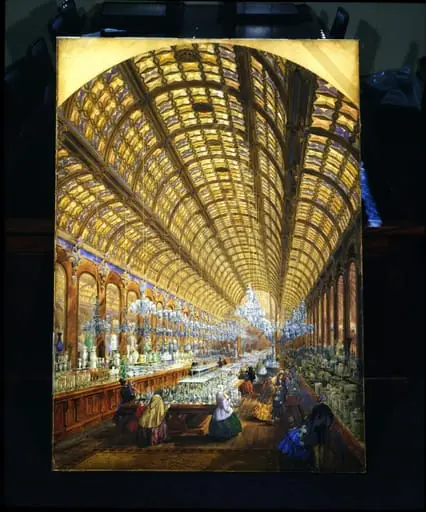 Osler's Gallery, Oxford Street, London
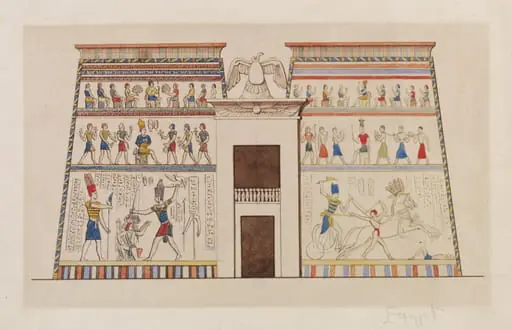 Architectural drawing of an entrance pylon to an Egyptian temple
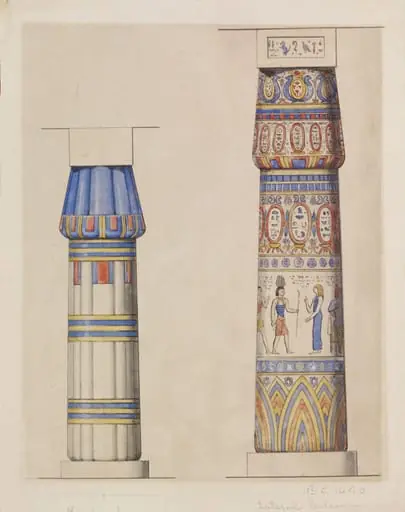 Temple of Luqsor B.C.1490 Lateral Column Temple of Karnak B.C.1490
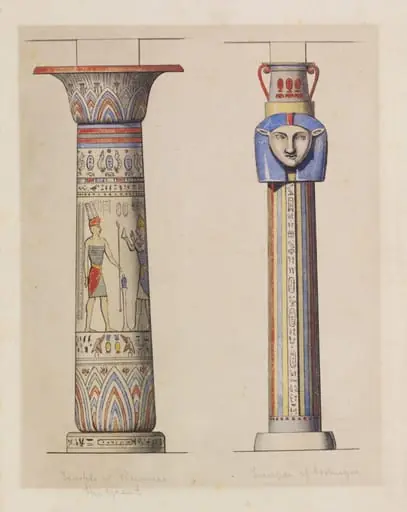 Temple of Ramses the Great B.C.1420. Temple of Sedingar B.C.1490
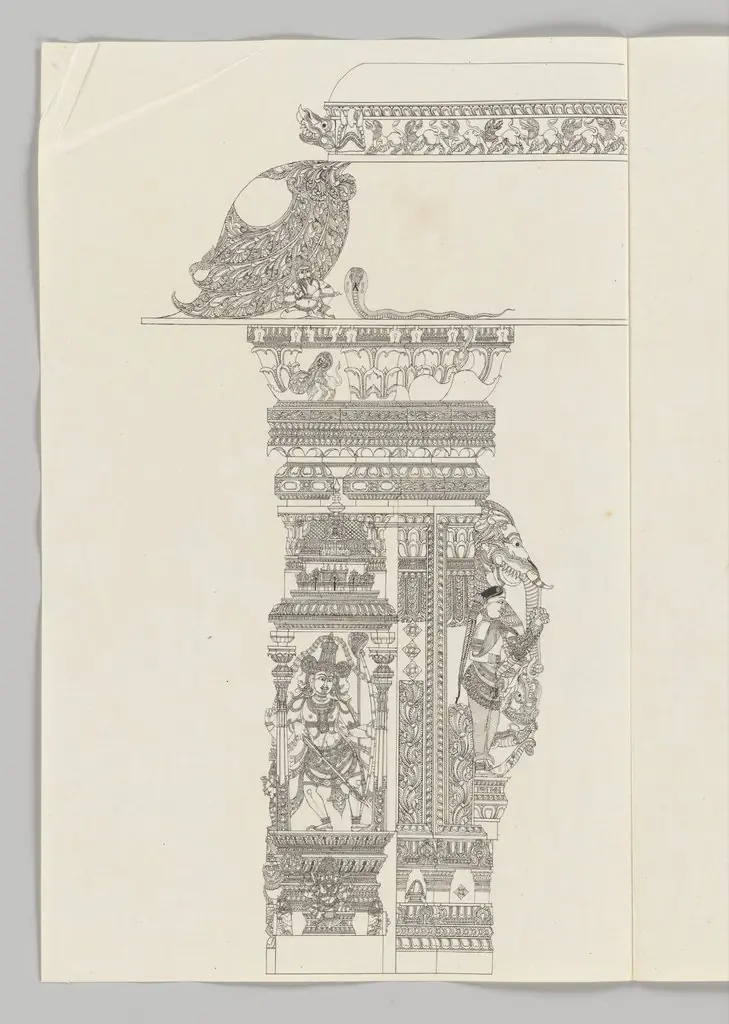 Shiva as Tripsurasamhara; woman holding a flywhisk; rearing yali
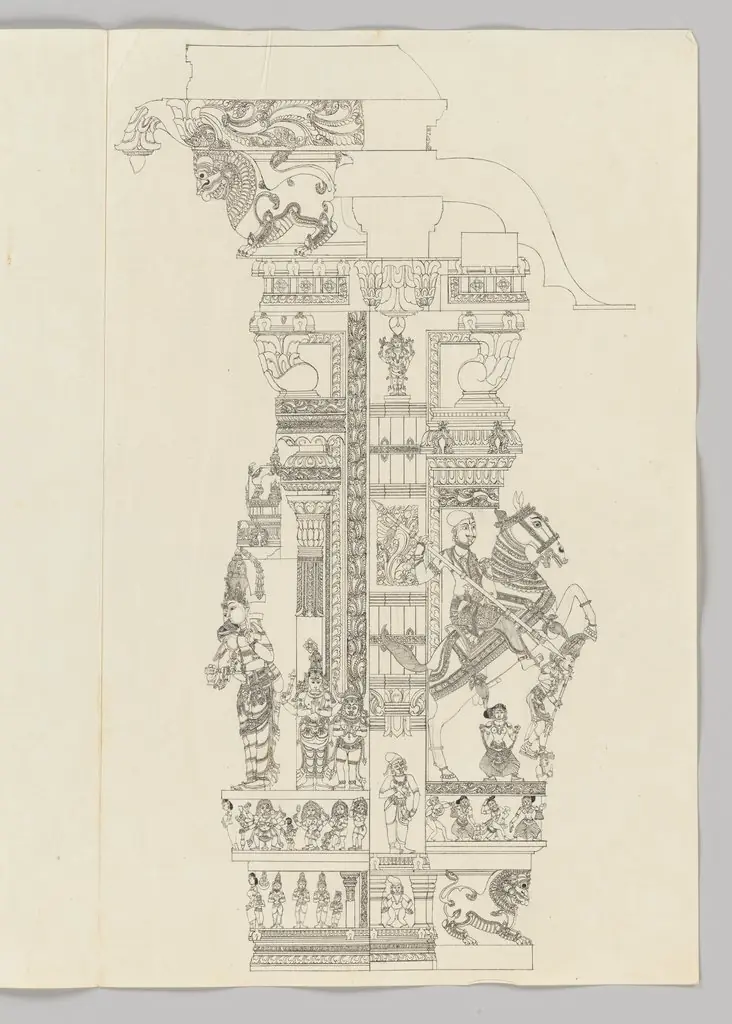 Marriage of Minakshi and Sundareshvara; equestrian warrior with spear
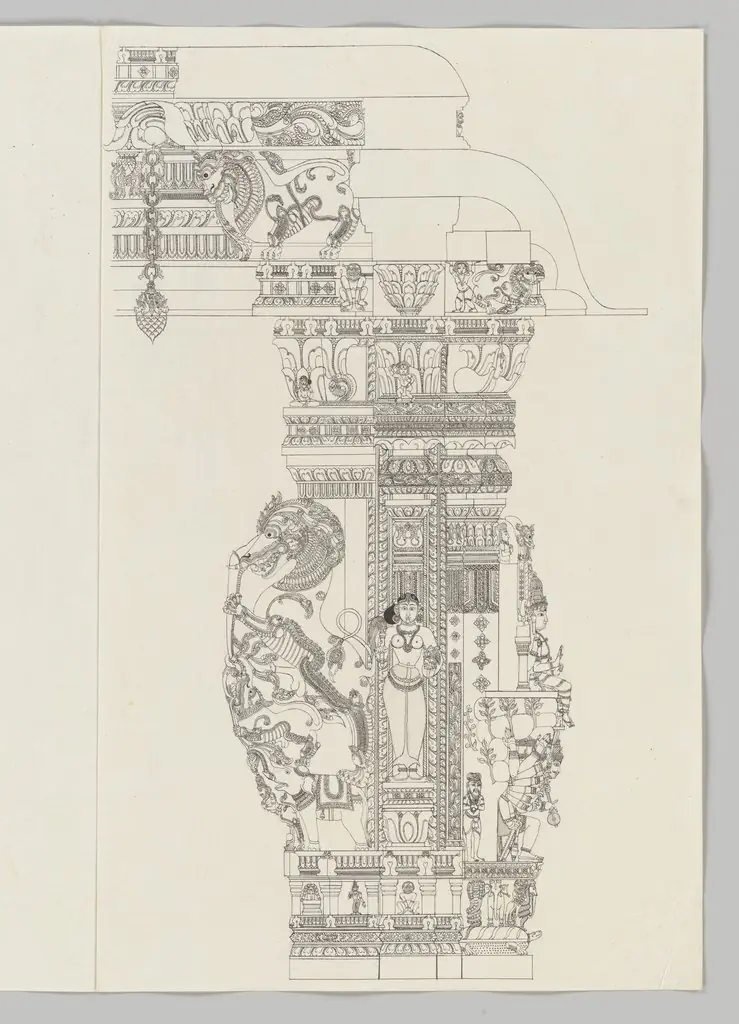 Shiva Ravananugrahamurti; woman holding a flywhisk; rearing yali
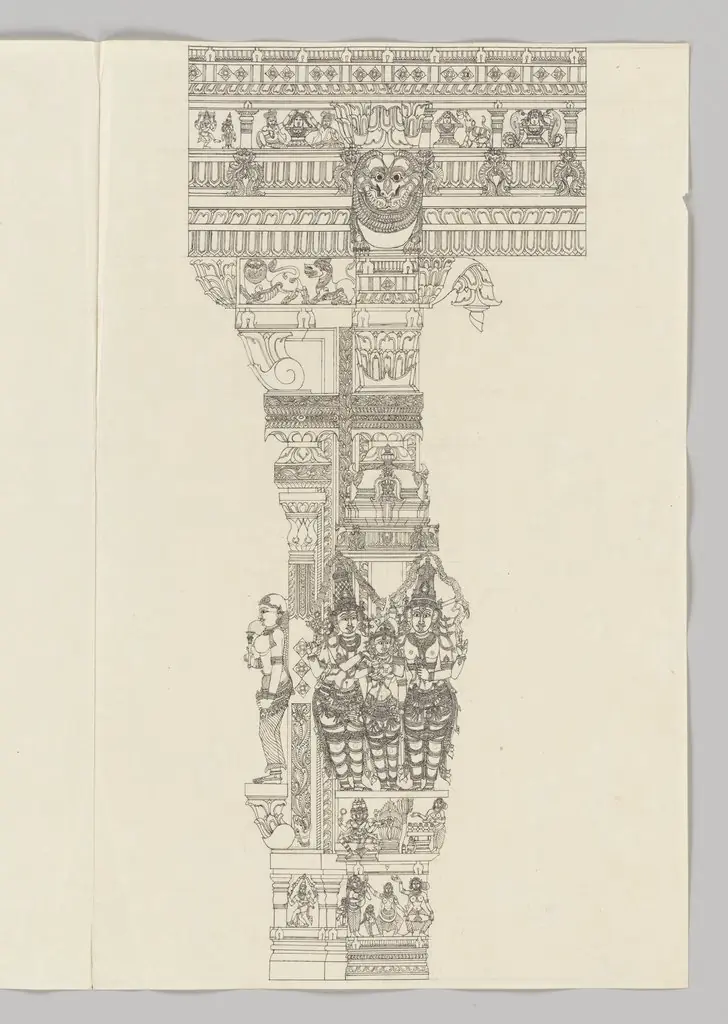 Marriage of Minakshi and Sundarehsvara, attended by Vishnu
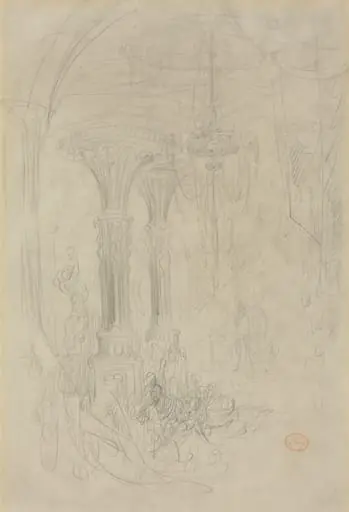 Cleopatra
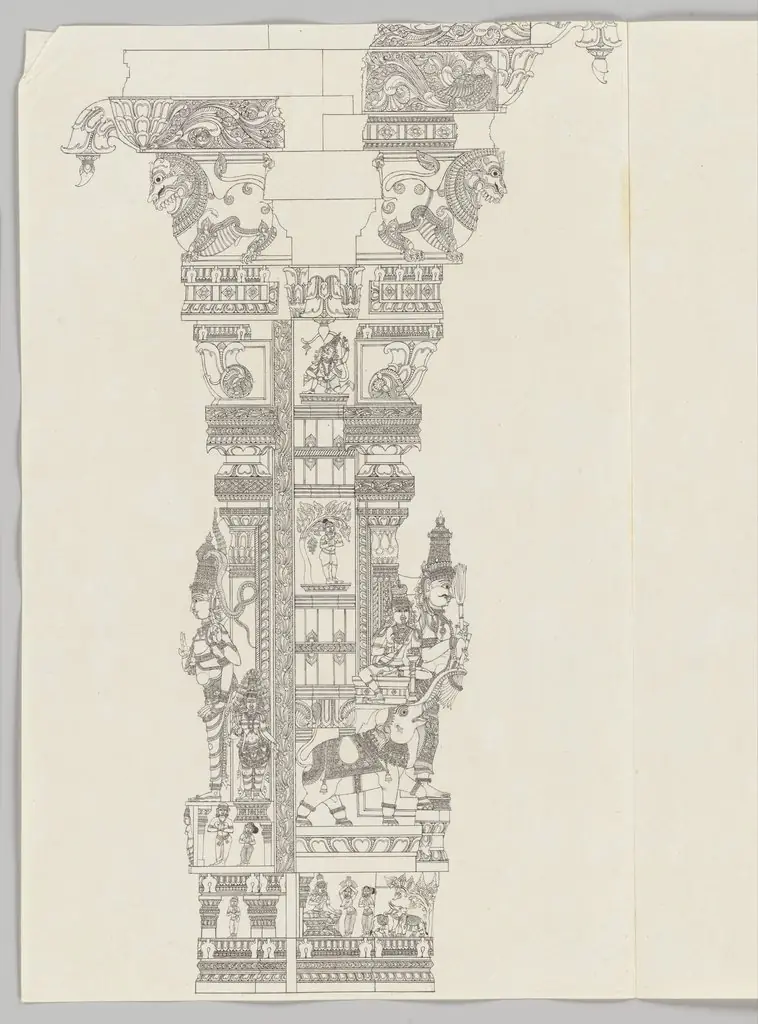 Sundareshvara feeding sugarcane to the elephant
 Untitled
 Untitled
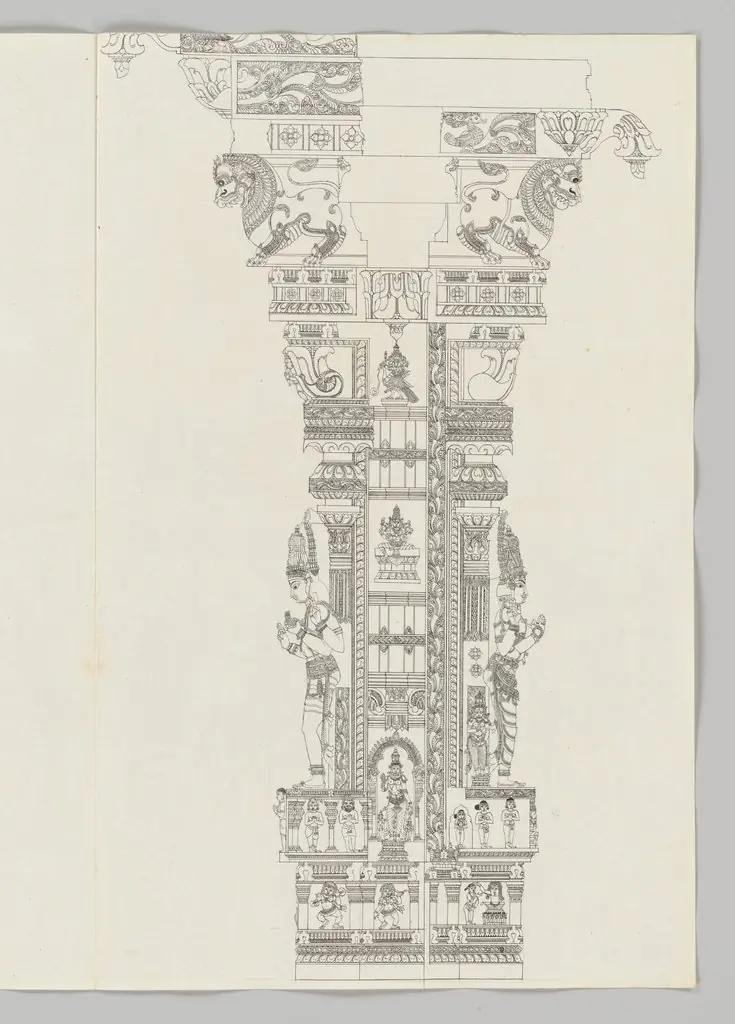 Sundareshvara teaching a bird a mantra; Nandishvara.
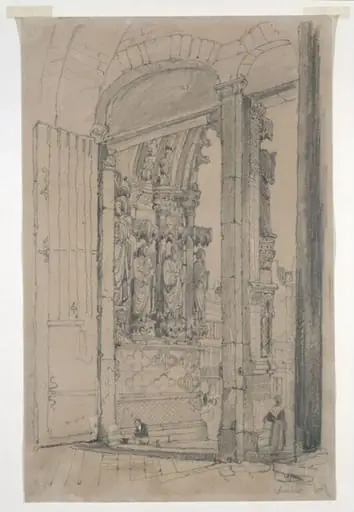 Amiens Cathedral
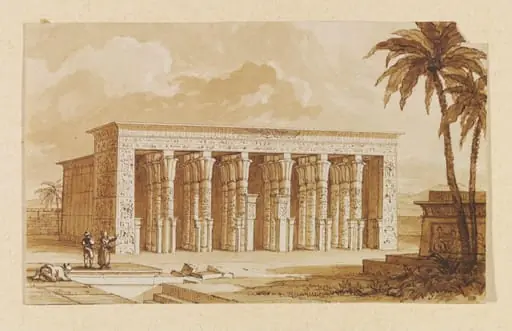 Perspective view of the Temple of Antaeopolis
 Egypt and Nubia, Volume II: View from Under the Portico of the Temple of Dendera