Artwork
Cap de fată

Cap de fată is an unspecified painting by Rudolf Schweitzer-Cumpăna. It dates from 1936 and is held in the collection of the Argeș County Museum.
About this work
Overview
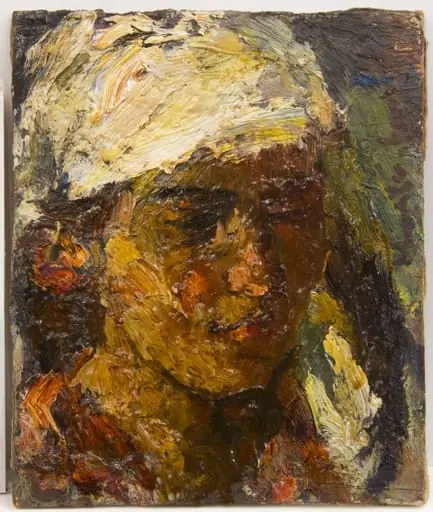
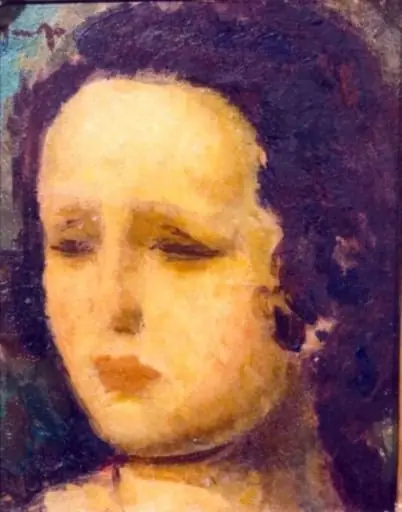
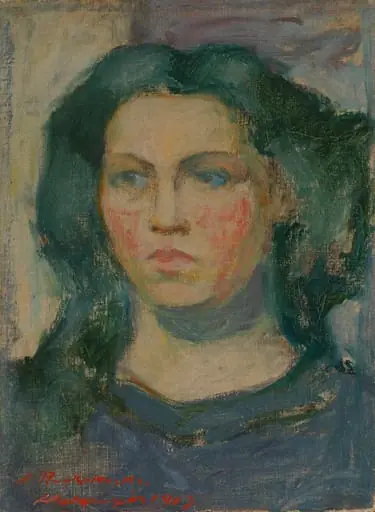
Rudolf Schweitzer‑Cumpăna’s painting Cap de fată, executed around 1936, presents a single figure in a modestly sized canvas. The work is a portrait of a young woman rendered with a restrained palette and a focus on subtle emotional expression.
Subject & Meaning
The sitter is depicted with dark hair, turned slightly toward the right, her gaze directed outward. The warm coloration of her face and the gentle modeling of her features convey a sense of quiet introspection, inviting viewers to contemplate her inner state.
Technique & Style
Schweitzer‑Cumpăna employs visible brushwork to build the portrait’s surface, allowing the texture of the paint to contribute to the overall effect. Warm tonal values dominate the facial area, while the surrounding background shifts between darker and lighter hues, creating a soft contrast that frames the figure without overwhelming it.
Context
Created in the mid‑1930s, the painting reflects the artist’s continued interest in intimate portraiture, a genre that allowed exploration of individual character through nuanced light and color. The work aligns with contemporary trends toward expressive realism, emphasizing mood over strict academic detail.
Artist & collection
Artist
Rudolf Schweitzer-Cumpăna was a Romanian painter. Born in Pitești into an ethnic German family, he finished high school in his native town before attending the Royal Academy of Arts at Berlin from 1904 to 1909, studying…