Artwork
Group of Natives from Near Khyber Pass
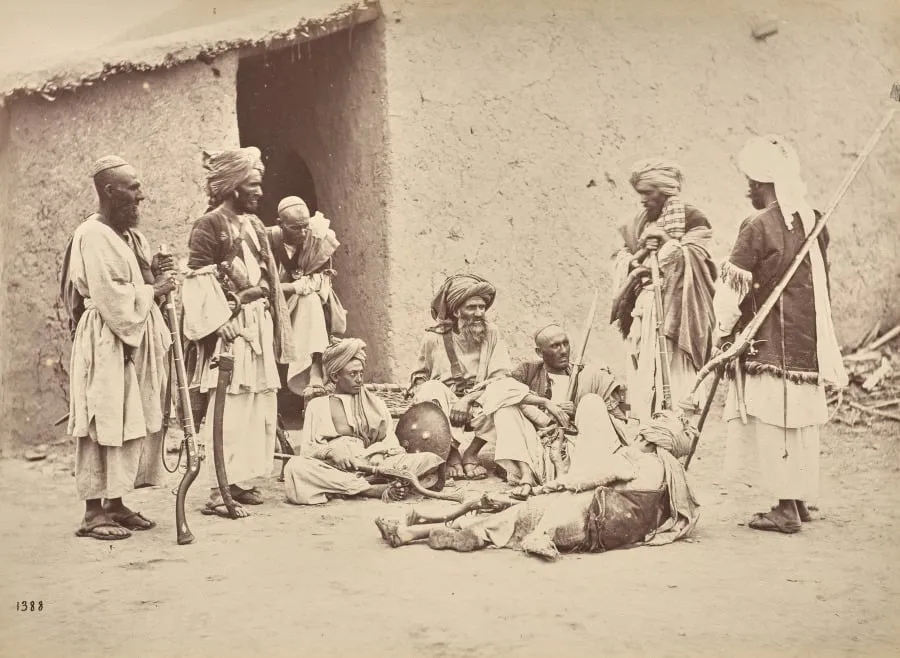
Group of Natives from Near Khyber Pass is a photography by the Impressionist artist John Burke. It dates from 1879 and is held in the collection of the Cleveland Museum of Art.
About this work
John Burke traveled with British troops in Afghanistan, yet he focused on the people already living there—not the fighting.
You see five men in loose robes and turbans standing on a rocky hillside.
This photo was taken during a war, but it’s not a battle scene. John Burke traveled with British troops in Afghanistan, yet he focused on the people already living there—not the fighting. The men look straight at the camera, calm and still, like they’re posing for a portrait.
If you want to see more early war photography, look up John Burke (Irish, 1845–1915).
Overview
This photograph, titled 'Group of Natives from Near Khyber Pass', is part of a collection documenting the Second Anglo-Afghan War (1878-1880). Captured by John Burke, a pioneering photographer in Afghanistan, the image contrasts with typical war photography by focusing on local inhabitants rather than conflict scenes.
Subject & Meaning
The photograph depicts five Afghan men in traditional attire standing calmly on a rocky hillside, posing directly for the camera. Their serene demeanor reflects Burke's emphasis on portraying the native population amidst the backdrop of war, rather than the conflict itself.
Technique & Style
Given the technological limitations of the era, the photograph is a posed portrait, characteristic of early conflict photography's reliance on static compositions. The image's clarity and the subjects' direct engagement with the camera highlight Burke's skill in capturing intimate, non-confrontational moments.
History & Provenance
Taken during John Burke's travels with British troops in Afghanistan, this photograph is one of many he captured during the Second Anglo-Afghan War. As the primary photographer of the conflict, Burke's work provides a unique visual record of the time.
Context
The photograph is set against the broader context of the Second Anglo-Afghan War, yet it diverges from traditional war imagery by humanizing the local population. It reflects the dual nature of Burke's project: documenting a military campaign while offering glimpses into Afghan life.
Legacy
This photograph contributes to John Burke's legacy as a pioneer in Afghan photography. His work, including this piece, has influenced the development of conflict photography by showcasing the value of capturing the human dimension of war zones.
Artist & collection

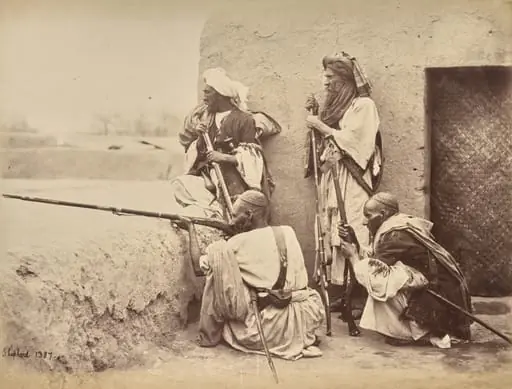
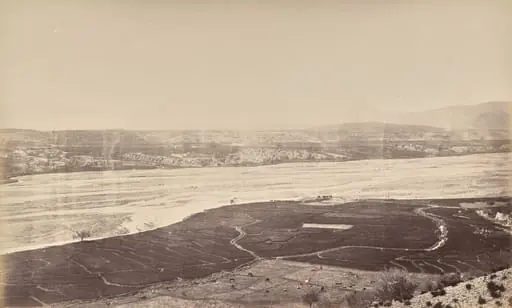
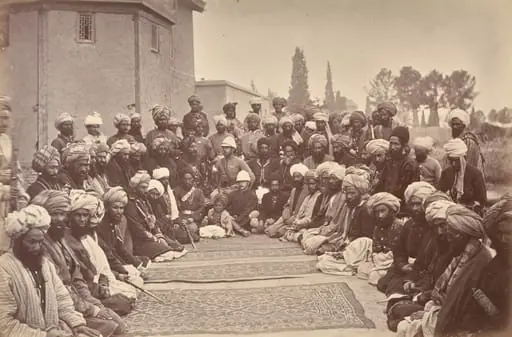
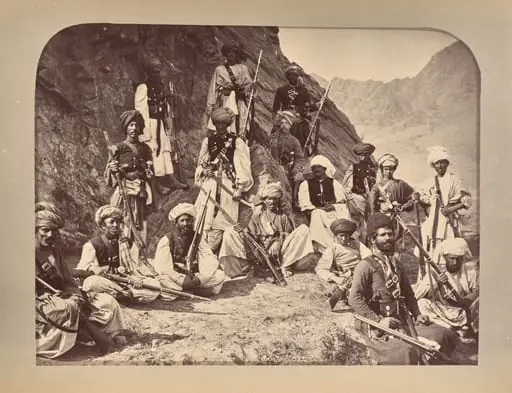 The Khan of Lalpura and Officers
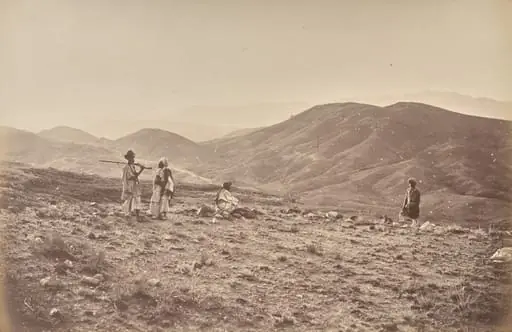 The 44th Hill, Looking Towards Jugdalluck
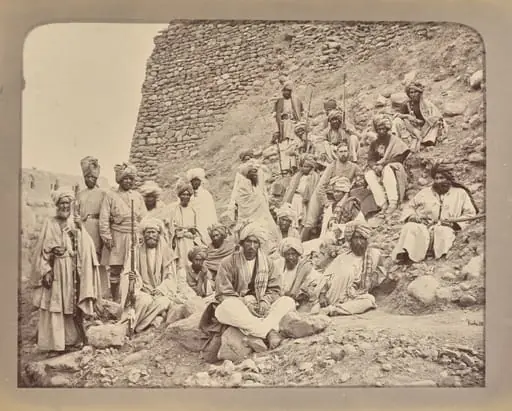 Khyber Chiefs with Captain Tucker
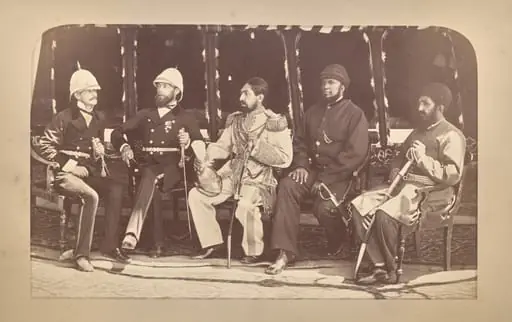 The Amir Yakub Khan, General Daod Shah, Habeebula Moustafi, Major Cavagnari, Mr. Jenkyns
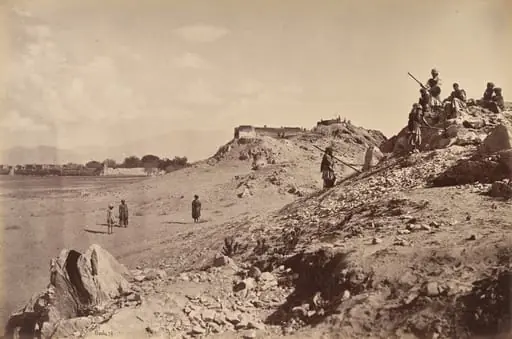 Jellalabad, Pipers Hill
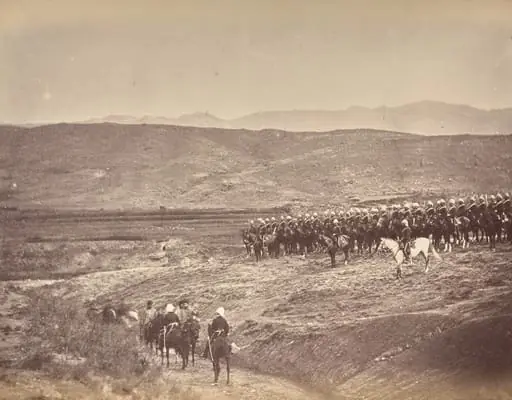 The Amir Yakub Khan. The First Meeting with Major Cavagnari and Mr. Jenkins, 7 Miles from Safed Sang