Artwork
Seishu Futami ga Ura|View of Futami Beach at Ise
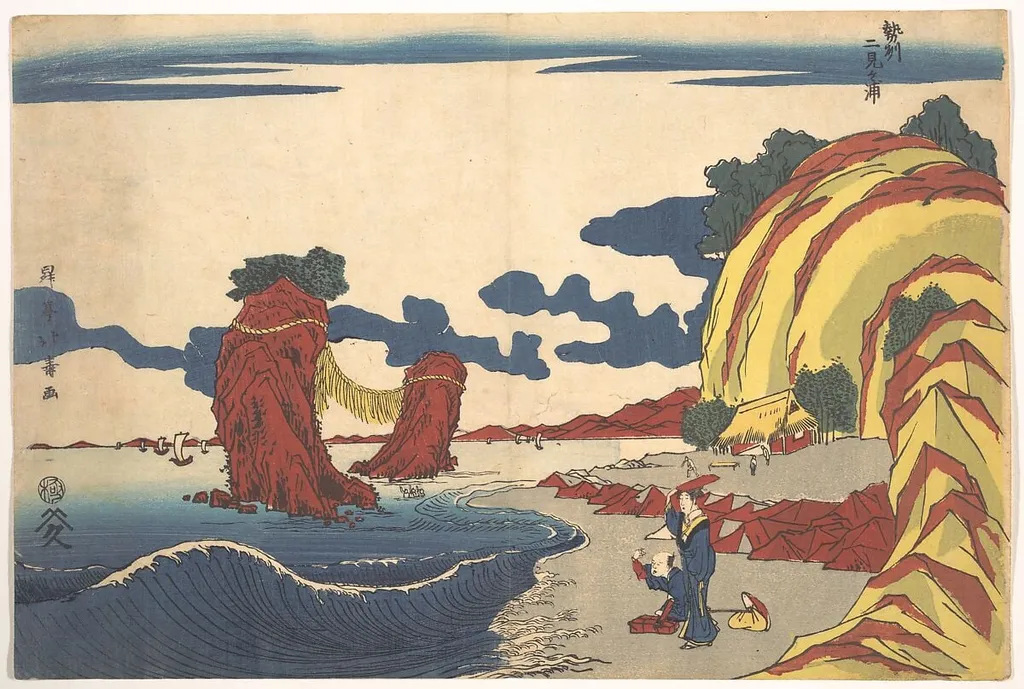
Seishu Futami ga Ura|View of Futami Beach at Ise is an ink print by the Romanticist artist Shōtei Hokuju 昇亭北寿. It dates from 1815 and is held in the collection of the Metropolitan Museum of Art. This woodblock print, created around 1815 by Shōtei Hokuju, depicts the coastal landscape of Futami Beach in Ise.
About this work
Overview
This woodblock print, created around 1815 by Shōtei Hokuju, depicts the coastal landscape of Futami Beach in Ise. Rendered in ink and color on paper, it belongs to the ukiyo-e tradition of Japanese printmaking. The work is part of the collection at The Metropolitan Museum of Art, where it is cataloged under its Japanese title, Seishu Futami ga Ura.
Subject & Meaning
The scene centers on two towering red cliffs rising from the sea, framed by a pale sky and gentle waves. Two figures on the shore— one with an umbrella, another near a basket—appear small against the monumental geology, emphasizing nature’s scale over human presence. A modest structure nestled in the cliffs suggests quiet habitation amid wild terrain, evoking contemplation rather than narrative.
Technique & Style
The print’s composition balances asymmetry and negative space, typical of ukiyo-e, while the color palette enhances the atmospheric mood without realism.
Hokuju employed bold, flat areas of color to define the cliffs, using vivid reds and ochres that suggest luminous rock under evening light. The sky is rendered in soft washes of blue with delicate cloud lines, contrasting the sharp contours of the cliffs. The print’s composition balances asymmetry and negative space, typical of ukiyo-e, while the color palette enhances the atmospheric mood without realism.
History & Provenance
The print was produced during the late Edo period, a time when landscape prints gained popularity among urban audiences. It was likely part of a series or standalone publication distributed through commercial print shops. The Metropolitan Museum of Art acquired it as part of its broader collection of Japanese prints, preserving its original condition and provenance.
Context
Created during a period of growing interest in pilgrimage sites and scenic locales, the print reflects the cultural practice of viewing nature as spiritually resonant. While not tied to a specific religious event, Futami Beach was known for its sacred rocks and association with Shinto tradition, lending the scene a quiet reverence common in Edo-period landscape art.
Legacy
Hokuju’s work contributes to the evolution of Japanese landscape printing, bridging earlier stylized views with later, more atmospheric approaches. Though not widely known outside specialist circles, this print exemplifies how ukiyo-e artists conveyed emotional depth through natural forms, influencing later generations of printmakers and Western artists drawn to Japanese aesthetics.
Artist & collection

Artist
This ukiyo-e artist printed scenes of Edo-era Japan in vivid color. Look at *View of Futami Beach at Ise*, where the triple pine islands rise above a bay dotted with bobbing boats. Hokuju used flat planes of cobalt and…

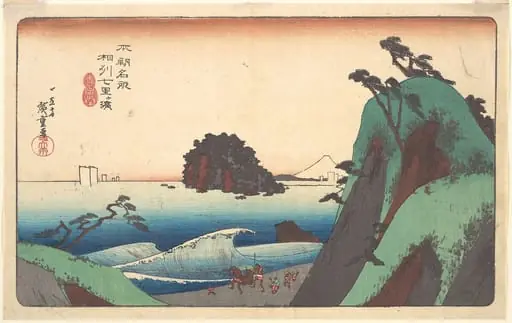 本朝名所 相州七里ヶ浜|Soshu, Shichi-ri ga Hama
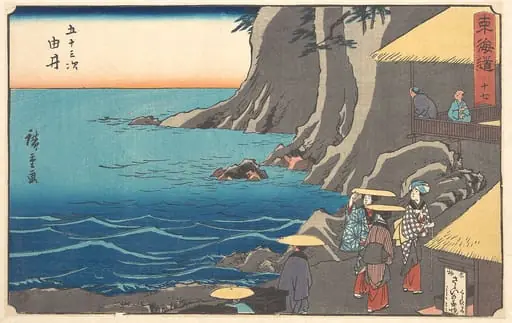 東海道五十三次 由井|Yui
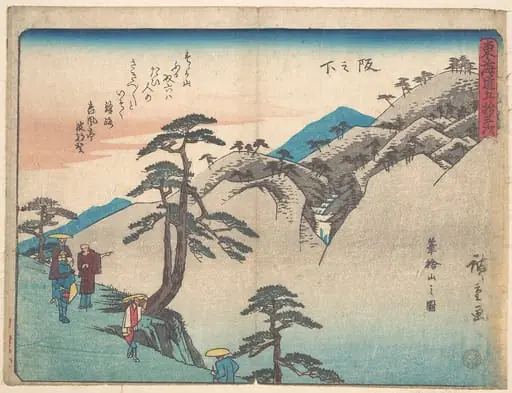 東海道五十三次 坂下|Saka-no-shita
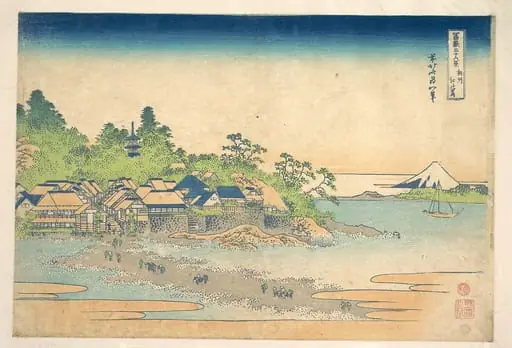 冨嶽三十六景 相州江の島|Enoshima in Sagami Province (Sōshū Enoshima), from the series Thirty-six Views of Mount Fuji (Fugaku sanjūrokkei)
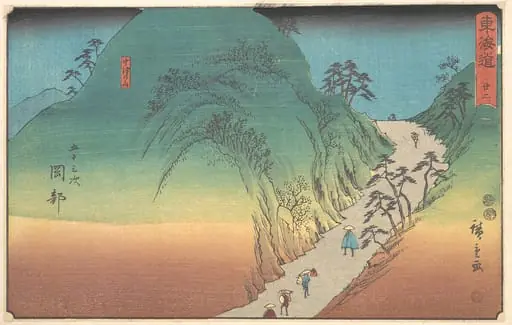 東海道五十三次 岡部 宇津の山|Okabe
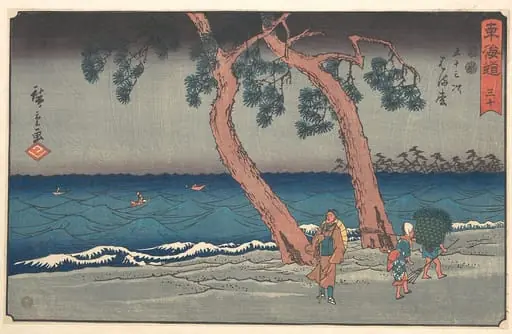 東海道五十三次 はま松|Hamamatsu
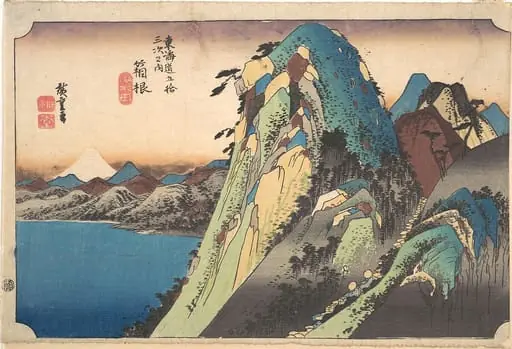 東海道五十三次之内 箱根 湖水図|Hakone; Kosui
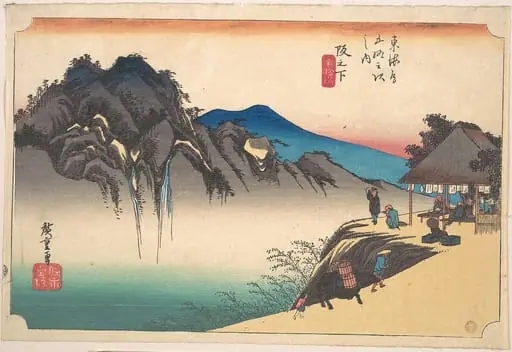 東海道五十三次之内 阪之下 筆捨嶺|Saka-no-shita, Fude-sute Mine
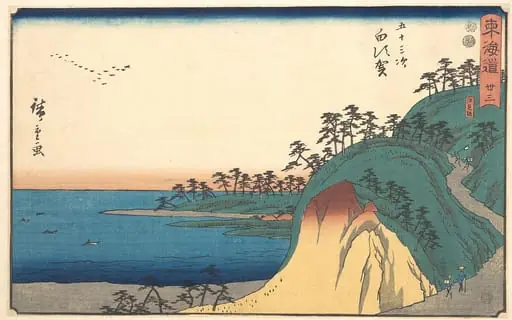 東海道五十三次 白須賀 汐見坂|Shirasuke
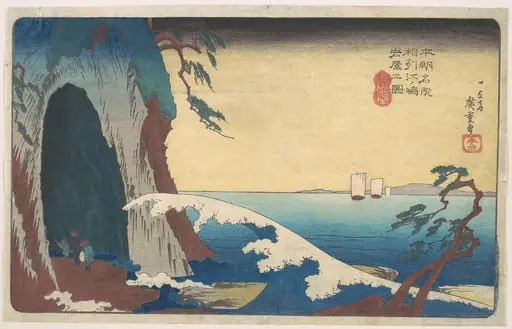 本朝名所 相州江ノ嶋岩屋之図|Sōshū, Enoshima Iwaya no Zu
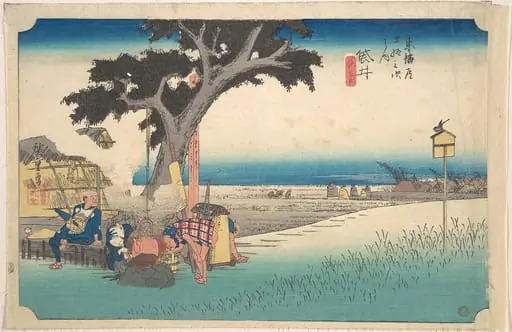 東海道五十三次之内 袋井 出茶屋の図|Fukuroi; De Chaya