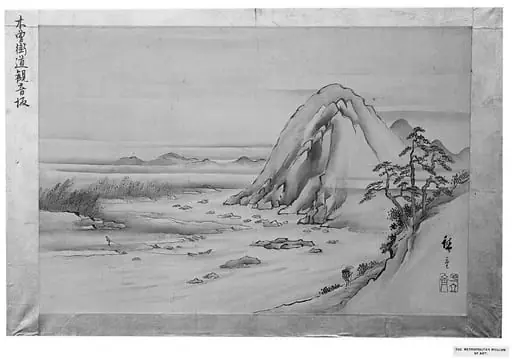
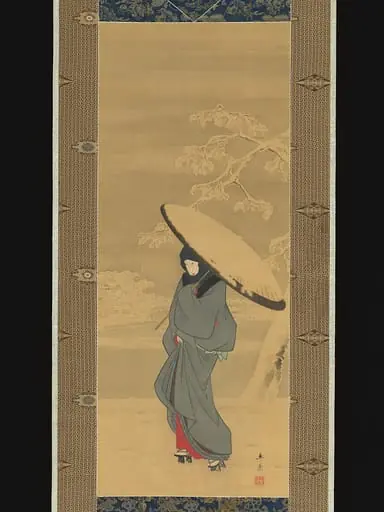
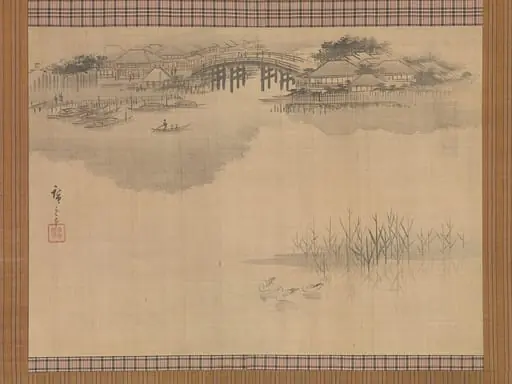
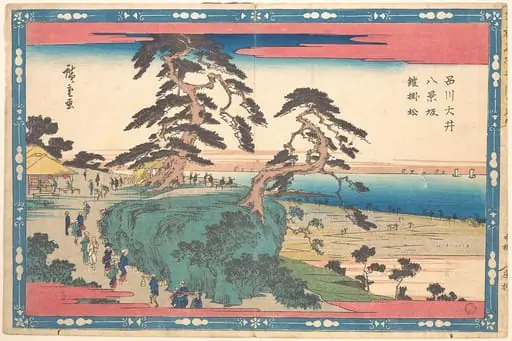
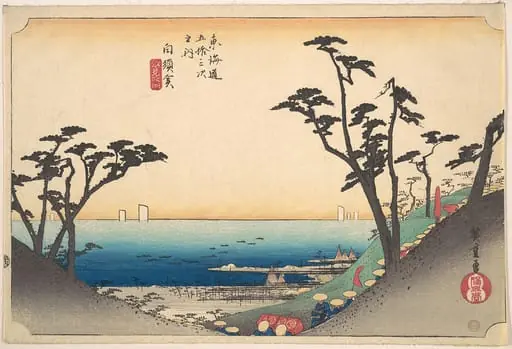
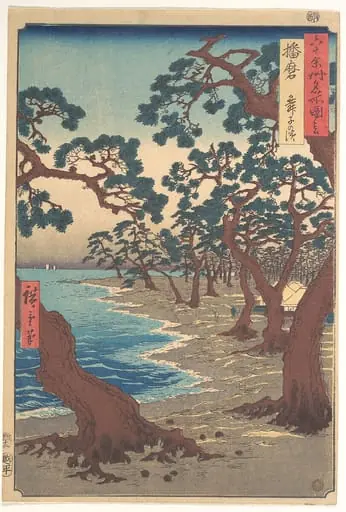
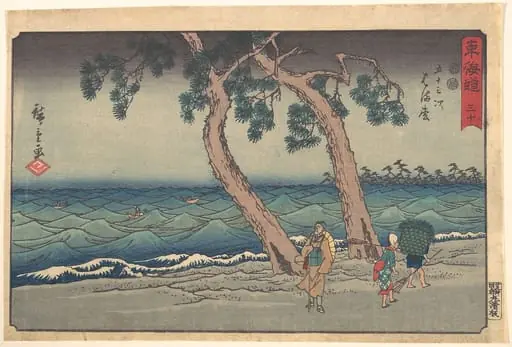
Artwork
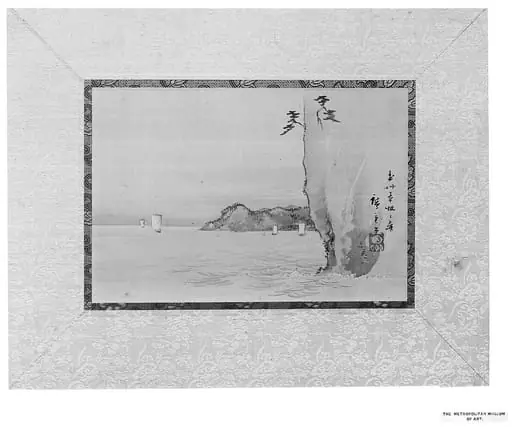
本朝名所 相州江ノ嶋岩屋之図|Sōshū, Enoshima Iwaya no Zu
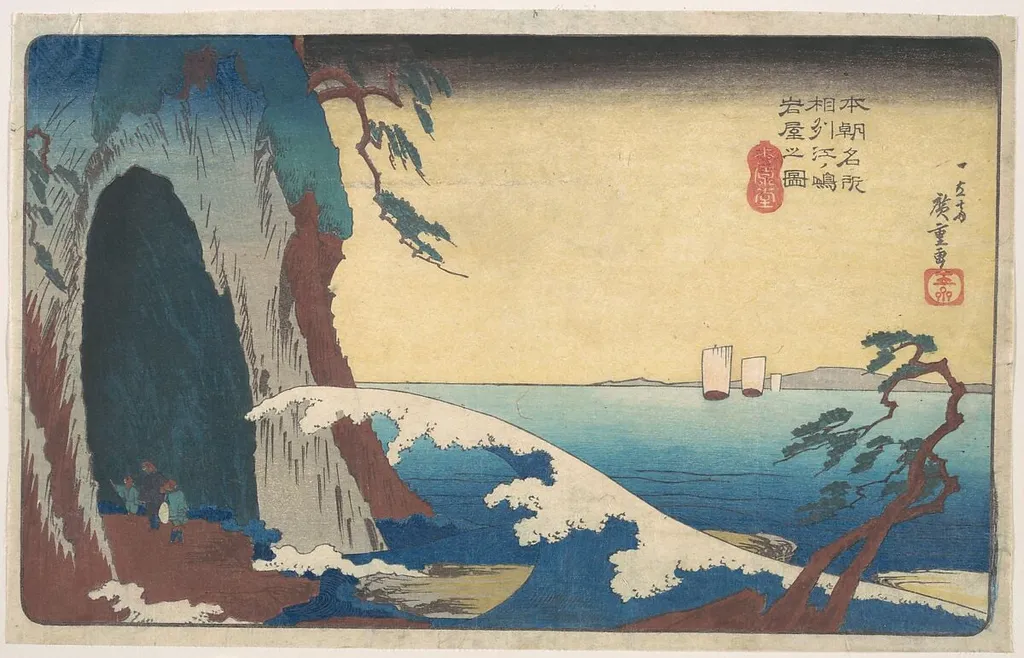
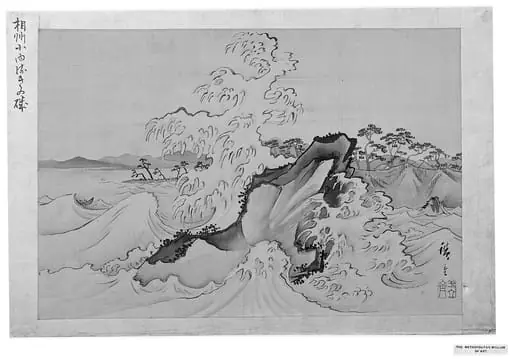
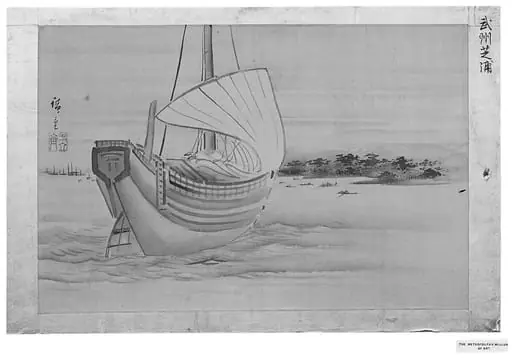
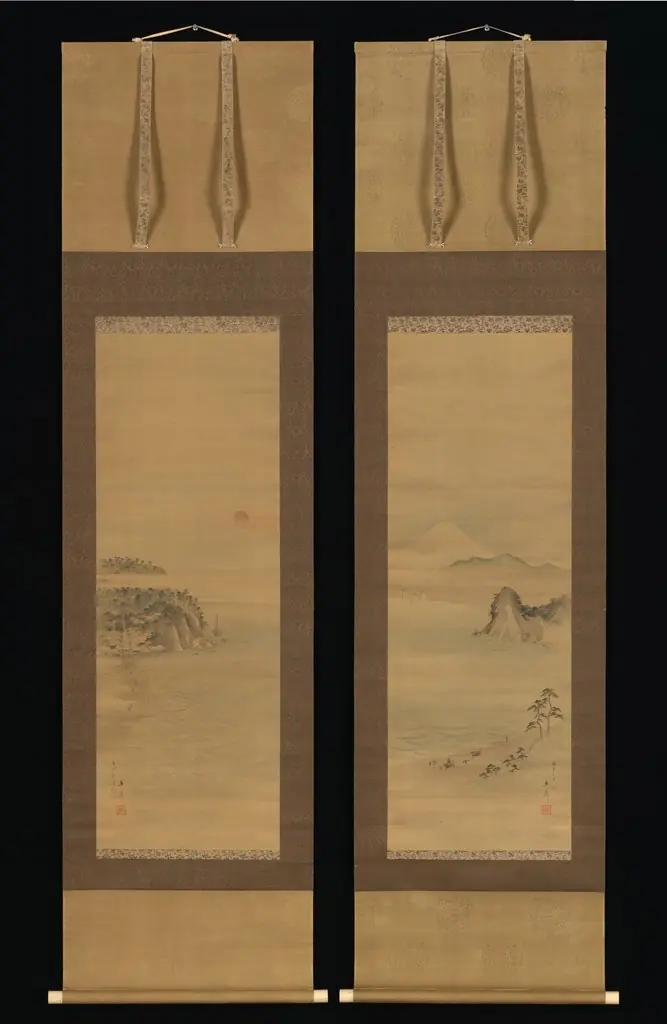
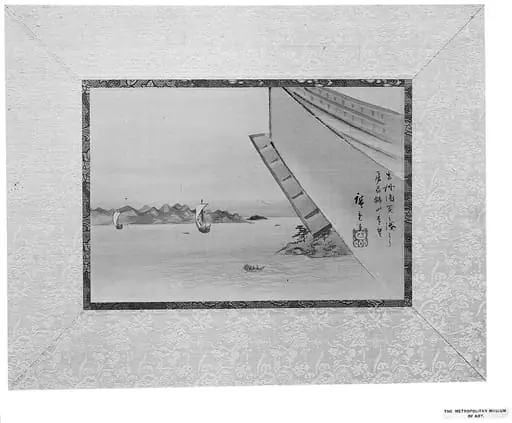
本朝名所 相州江ノ嶋岩屋之図|Sōshū, Enoshima Iwaya no Zu is an ink print by the Romanticist artist Utagawa Hiroshige. It dates from 1828 and is held in the collection of the Metropolitan Museum of Art.
About this work
Overview
Created in 1828 by the ukiyo‑e master Utagawa Hiroshige, this woodblock print portrays the rugged Enoshima cave shrine on Japan’s Sagami coast. Rendered in ink and vivid pigments on paper, the image captures a tempestuous seascape where dark clouds, fierce waves, and a lone tree dominate the composition, while a small group of figures seeks shelter beneath the rock overhang.
Subject & Meaning
The scene focuses on the natural and spiritual significance of Enoshima’s rocky sanctuary, a place where worshippers historically took refuge from the sea’s moods. By emphasizing the clash between human vulnerability and the raw power of weather, the work suggests a contemplation of nature’s impermanence and the shrine’s role as a protective haven.
Technique & Style
Hiroshige employs bold, saturated hues—deep blues for the surf, stark reds for the cliff, and stark whites for rain—to heighten the drama. Rapid, angular strokes delineate the crashing waves and slashing rain, while subtle cross‑hatching adds texture to the stone and foliage, exemplifying the artist’s mature landscape approach within the ukiyo‑e tradition.
History & Provenance
The print is part of Hiroshige’s early series of scenic studies that marked his transition from urban subjects to natural vistas. It entered the collection of The Metropolitan Museum of Art, where it remains a documented example of his 1820s output and of the broader shift toward landscape imagery in Japanese printmaking.
Context
Produced during the late Edo period, the work reflects a growing public appetite for travel literature and picturesque locales. Enoshima, situated near the Tōkaidō route, was a popular pilgrimage and sightseeing destination, and Hiroshige’s depiction contributed to its visual fame while aligning with contemporary interests in atmospheric effects and regional identity.
Artist & collection
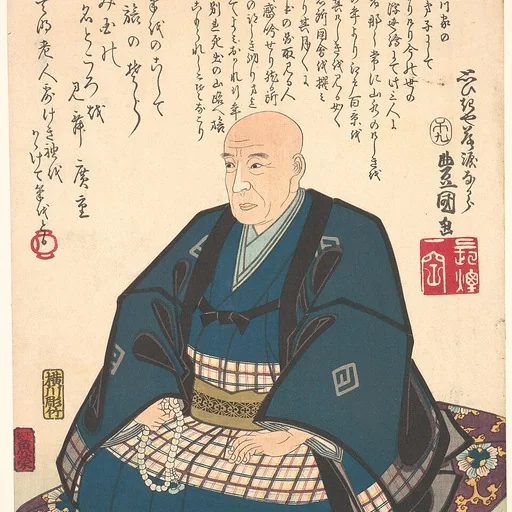
Artist
Utagawa Hiroshige (歌川 広重) or Andō Hiroshige (安藤 広重), born Andō Tokutarō (安藤 徳太郎; 1797 – 12 October 1858), was a Japanese ukiyo-e artist, considered the last great master of that tradition.