Artwork
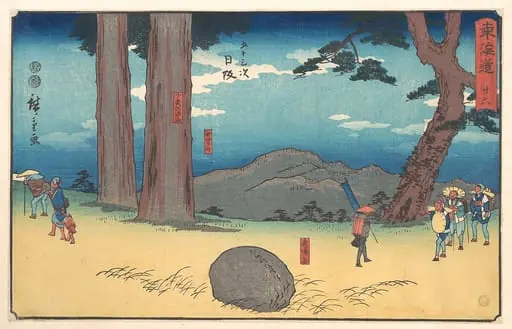
東海道五十三次 坂下|Saka-no-shita
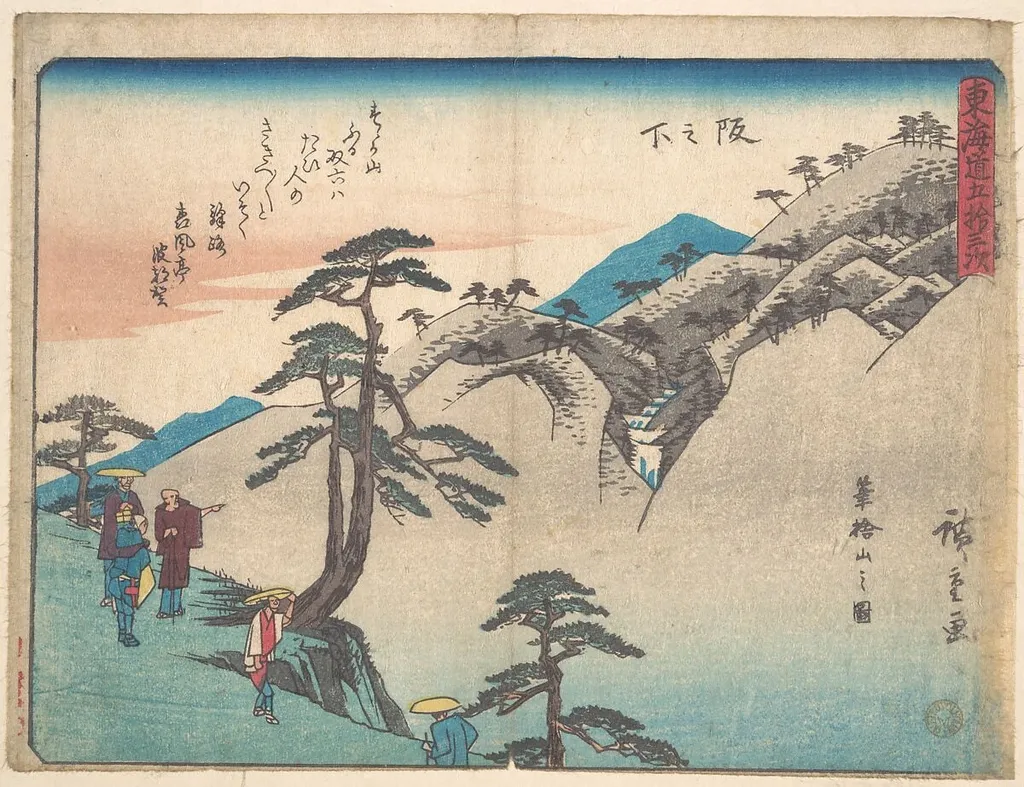
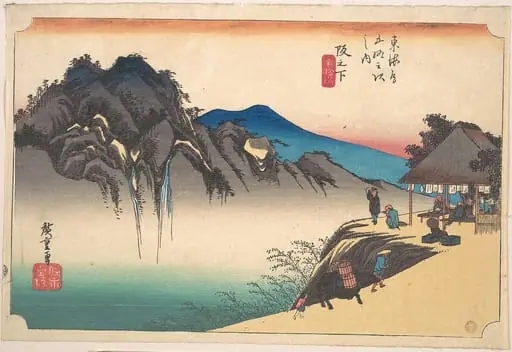
東海道五十三次 坂下|Saka-no-shita is an ink print by the Romanticist artist Utagawa Hiroshige. It dates from 1838 and is held in the collection of the Metropolitan Museum of Art.
About this work
Overview
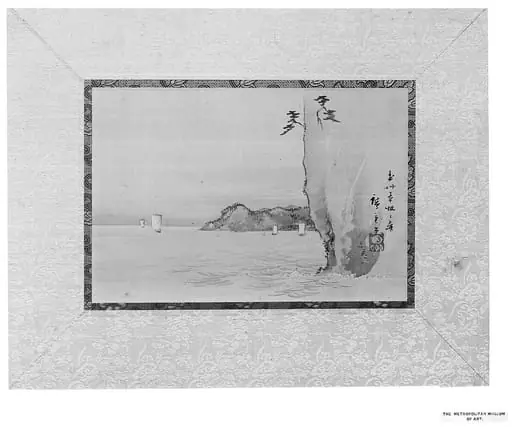
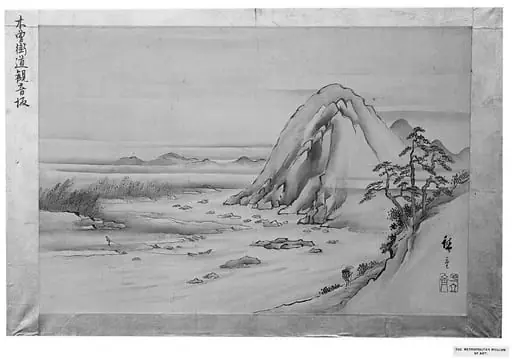
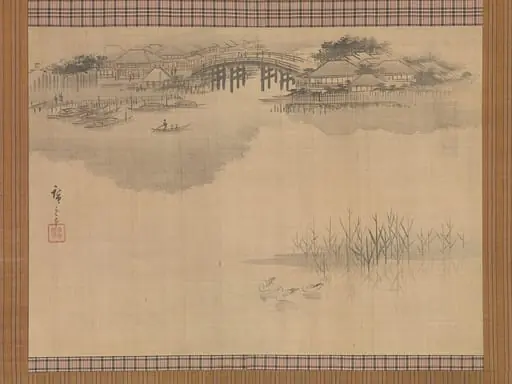
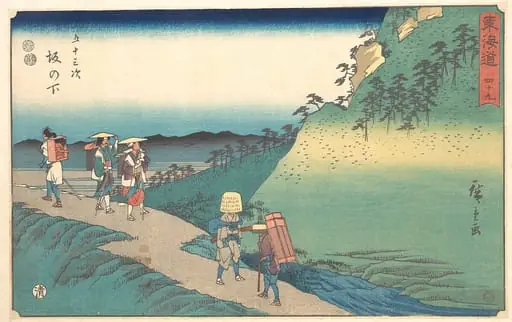
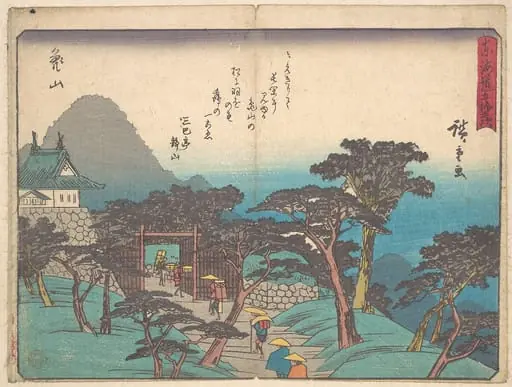
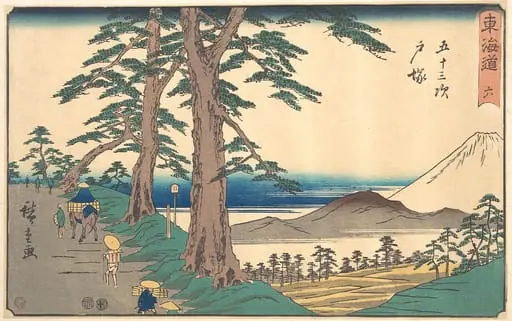
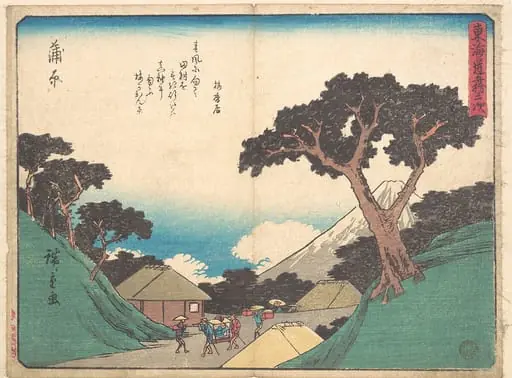
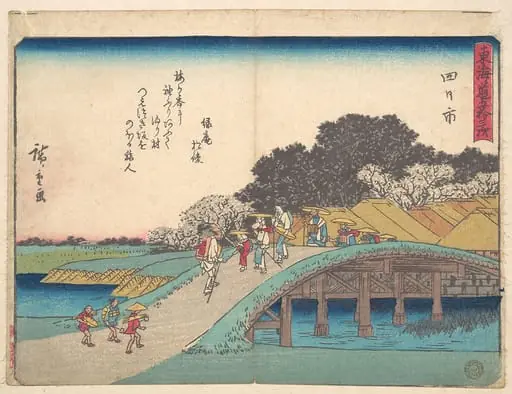
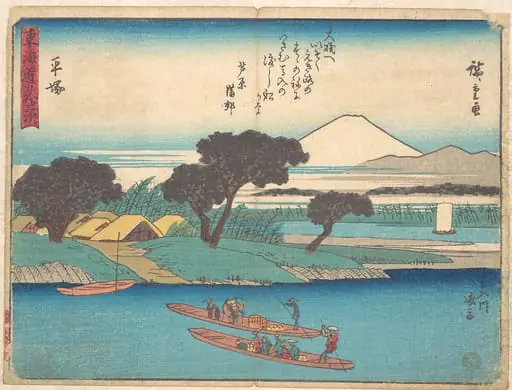
Saka-no-shita is a woodblock print from Utagawa Hiroshige's series The Fifty-three Stations of the Tōkaidō, created circa 1838. Characteristic of Hiroshige's focus on landscapes, this piece captures a serene winter scene at the Saka-no-shita station.
Subject & Meaning
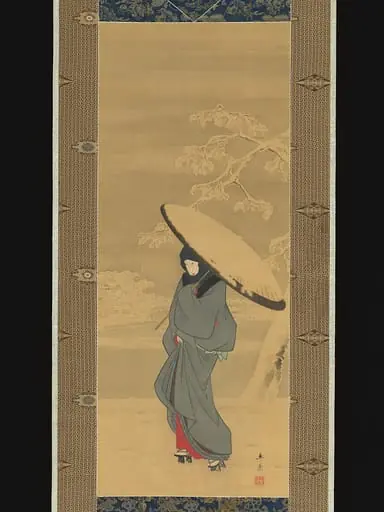
The print depicts travelers navigating a snowy mountain pass, with a woman resting near a twisted pine tree. The tranquil atmosphere contrasts with the implied hardship of winter travel, reflecting the human experience within natural beauty.
Technique & Style
Hiroshige employed quick, precise lines to convey texture, such as tree bark and uneven snow. A soft blue sky with a subtle sunset glow and misty distant hills enhance the depth and serenity of the composition, showcasing his mastery of atmospheric detail.
History & Provenance
Created around 1838 for The Fifty-three Stations of the Tōkaidō series, Saka-no-shita represents Hiroshige's contribution to ukiyo-e during the Edo period, diverging from the genre's typical urban focus with its landscape emphasis.
Context
Part of a larger series documenting stations along the Tōkaidō road, Saka-no-shita reflects the cultural significance of this travel route in 19th-century Japan, while also highlighting Hiroshige's individual artistic voice within the ukiyo-e tradition.
Legacy
Saka-no-shita contributes to Hiroshige's reputation as a leading landscape ukiyo-e artist. Its detailed, atmospheric portrayal of nature influenced subsequent generations of artists, both in Japan and internationally.
Artist & collection
Artist
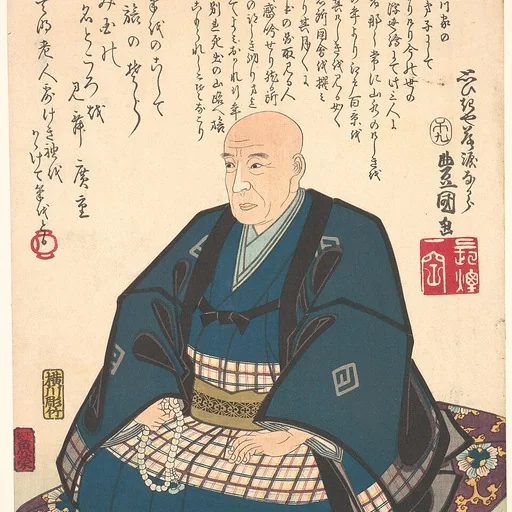
Utagawa Hiroshige (歌川 広重) or Andō Hiroshige (安藤 広重), born Andō Tokutarō (安藤 徳太郎; 1797 – 12 October 1858), was a Japanese ukiyo-e artist, considered the last great master of that tradition.