Artwork
Anantasayan (Vishnu Reclining on Serpent Ananta)
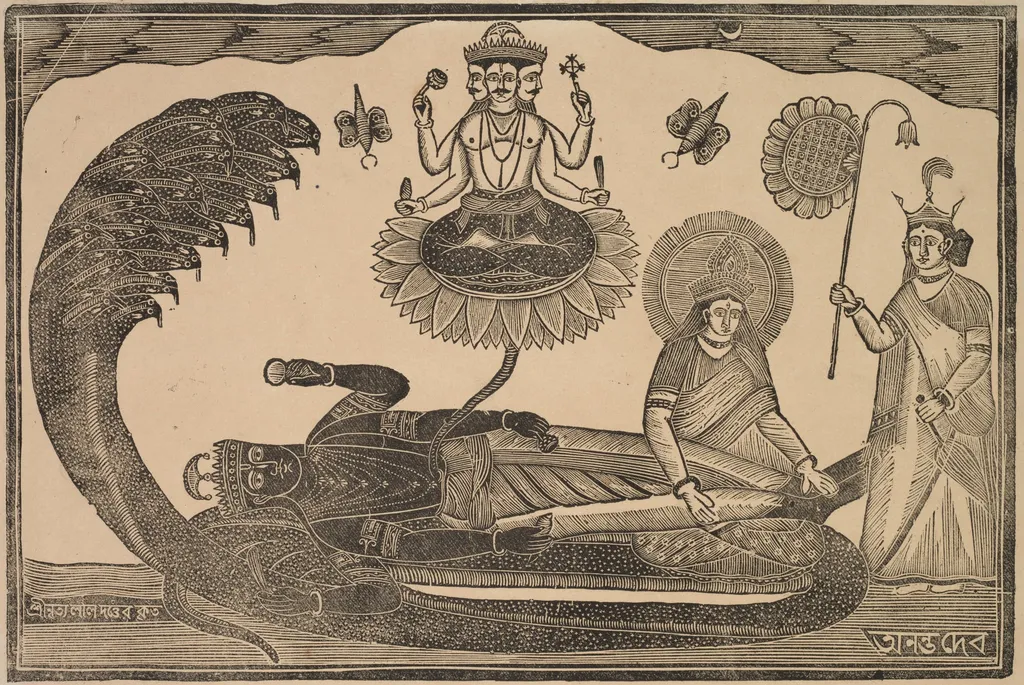
Anantasayan (Vishnu Reclining on Serpent Ananta) is a print by the Impressionist artist Shri Gobinda Chandra Roy. It dates from 1890 and is held in the collection of the Cleveland Museum of Art.
About this work
Overview
Created around 1890 by Shri Gobinda Chandra Roy, this ink drawing depicts the Hindu deity Vishnu in a reclining posture upon the cosmic serpent Ananta.
Created around 1890 by Shri Gobinda Chandra Roy, this ink drawing depicts the Hindu deity Vishnu in a reclining posture upon the cosmic serpent Ananta. The work is part of the collection at The Cleveland Museum of Art and exemplifies the Kalighat style, a tradition of Bengali folk art that emerged near the Kalighat temple in Kolkata. Its compact composition and expressive line work reflect a deliberate adaptation of religious iconography for broader public consumption.
Subject & Meaning
The scene illustrates Vishnu in his role as the preserver, resting on the infinite serpent Ananta during the cosmic cycle of dissolution. Above him, Brahma emerges from a lotus growing from Vishnu’s navel, symbolizing creation’s renewal. A celestial attendant holds a staff, possibly representing divine authority. The moon and stars in the background evoke the eternal night of pralaya, the cosmic pause between ages, reinforcing the theme of cyclical time central to Hindu cosmology.
Technique & Style
Executed in ink on paper, the drawing employs fluid, confident lines to define form without shading or color. Details such as the serpent’s scaled body and the lotus beneath Vishnu’s head are rendered with precision, contrasting with the simplified, almost schematic treatment of other elements. This economy of line is characteristic of Kalighat art, which prioritized clarity and symbolic immediacy over naturalism, suited for mass reproduction and devotional use.
History & Provenance
The work originates from the Kalighat school of painting, which flourished in mid- to late-19th-century Bengal as pilgrims sought affordable religious imagery near the Kalighat temple. Artists like Roy adapted traditional iconography for a growing urban clientele, often producing works on paper for sale. This piece entered the Cleveland Museum of Art’s collection through documented acquisition, preserving its connection to a dynamic period of Indian artistic innovation.
Context
Kalighat paintings responded to colonial urbanization and changing religious practices, blending folk aesthetics with Hindu mythology. Unlike temple sculptures, these works were portable and accessible, serving both devotional and commercial purposes. The depiction of Vishnu reclining on Ananta, a common theme in Indian art, was rendered here with a distinctive immediacy, reflecting the artists’ engagement with contemporary audiences and their desire to convey sacred narratives with visual clarity.
Legacy
This drawing stands as a representative example of how traditional Hindu iconography was reinterpreted in a modernizing society. The Kalighat style influenced later Indian modernists and remains studied for its synthesis of spiritual content and popular form. Though produced for a transient market, works like this endure as vital records of 19th-century religious life and artistic adaptation in colonial India.
Artist & collection

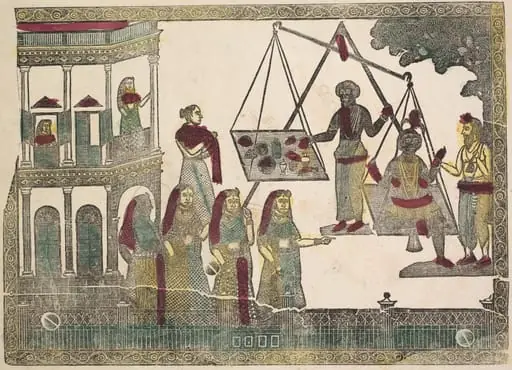 Krishna weighed against precious objects(?) (verso), from a Kalighat album
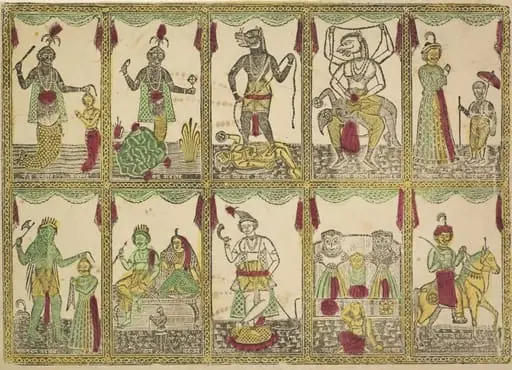 Das Avataras, Ten Incarnations of Vishnu (verso), from a Kalighat album
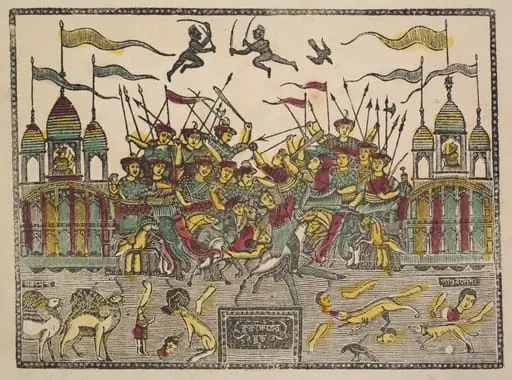 Battle Scene at Kurukshetra from the Mahabharata War (verso), from a Kalighat album
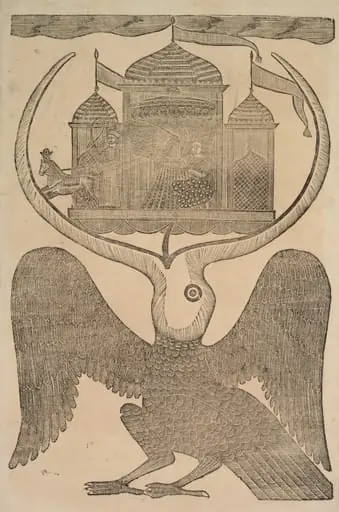 Jatayu hinders Ravana’s chariot trying to prevent Sita’s abduction (recto), from a Kalighat album
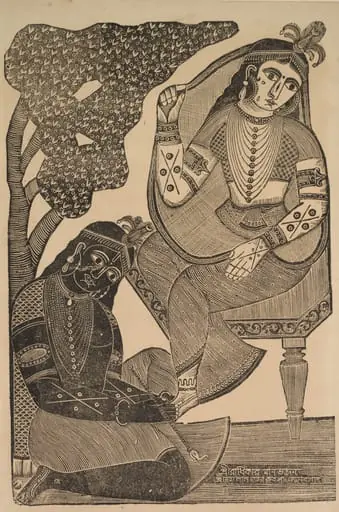 Krishna Stroking Radha's Feet
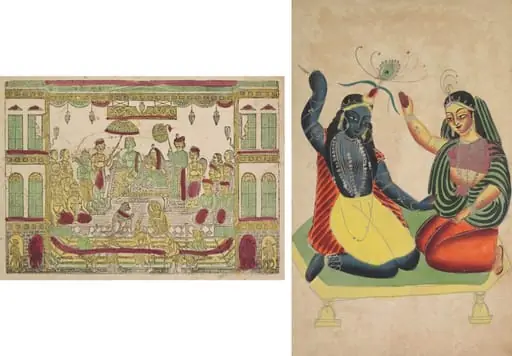 Leaf from a Kalighat album: Rama and Sita in the Royal Palace (recto); Radha and Krishna (verso)
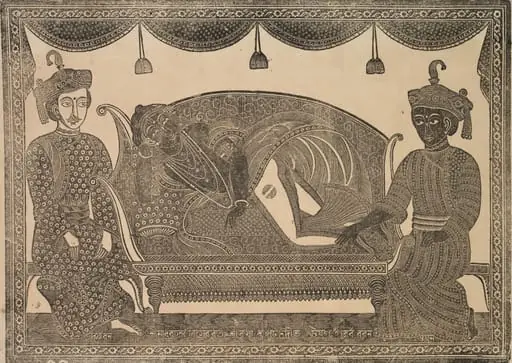 Kalighat Painting
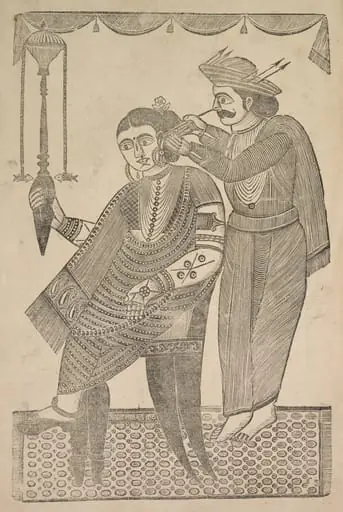 A Barber Cleaning the Ear of a Courtesan