Artwork
Varahi
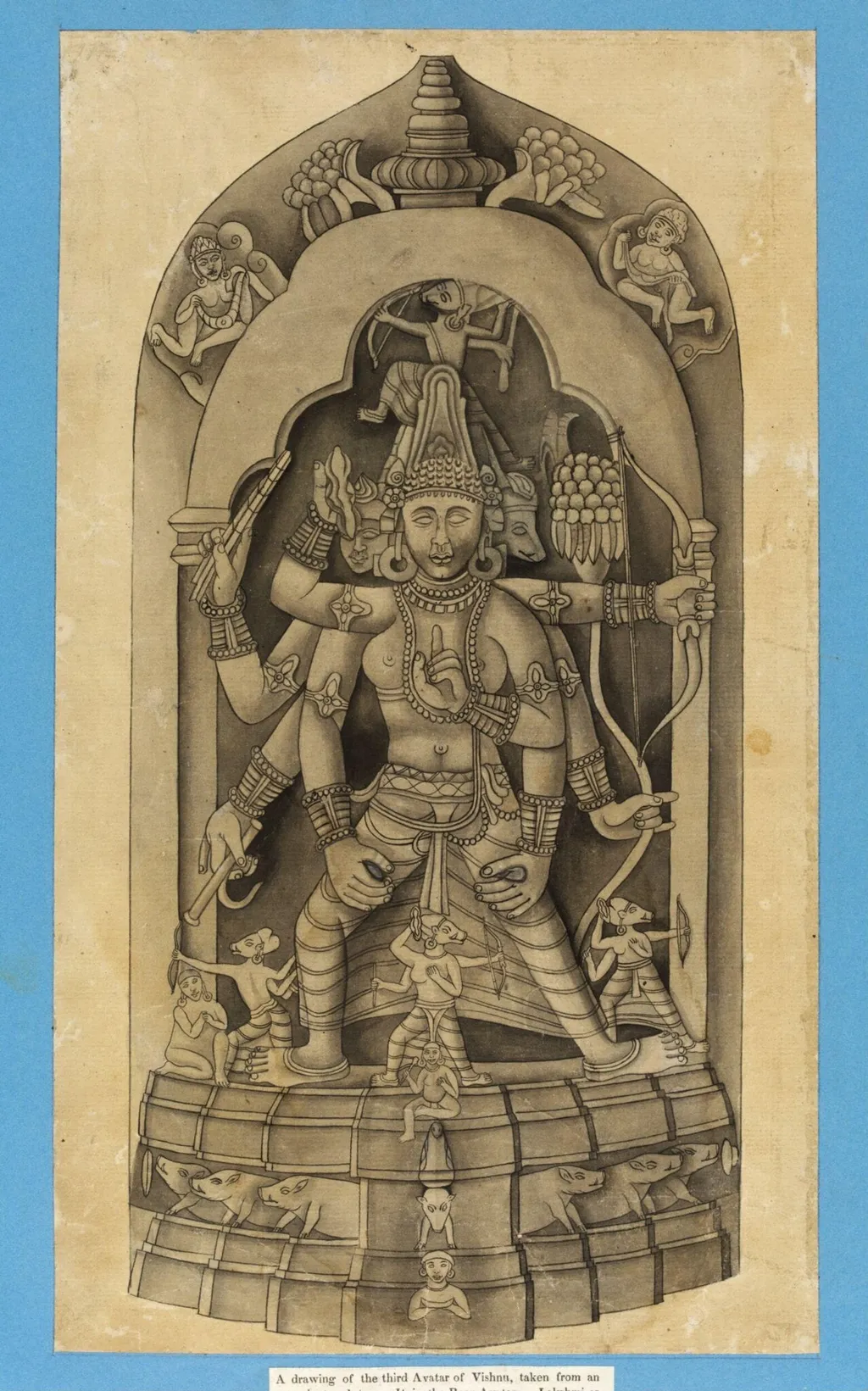
Varahi is a drawing by Unknown. It dates from 1850 and is held in the collection of the Victoria and Albert Museum.
About this work
Overview
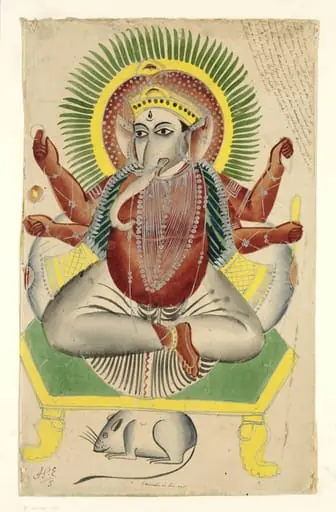
This watercolour drawing captures a stone sculpture of Varahi, a Hindu goddess with a boar’s head. Executed on paper, it was transferred from the Department of Engraving, Illustration & Design under reference RP 51/2237. The composition meticulously renders the sculpted form, emphasizing intricate details of ornamentation and surrounding figures, likely intended as a study or archival record.
Subject & Meaning
Varahi, one of the Matrikas, embodies fierce protective power in Hindu iconography. Here, she stands on a lotus, symbolizing purity amid chaos, with multiple arms wielding weapons like a sword and club. Surrounding figures and carved creatures suggest her dominion over cosmic forces. The arch behind her may reference temple architecture, reinforcing her role as a divine guardian.
Technique & Style
The artist employed fine watercolour washes and precise cross-hatching to simulate the texture of carved stone and the depth of relief. Delicate lines define jewelry, clothing, and the small figures encircling the central form. The background arch and floating entities are rendered with restrained detail, guiding focus to the goddess’s imposing presence without overwhelming the composition.
History & Provenance
The drawing originated in a colonial-era institutional collection, likely produced by a British artist or draftsman documenting Indian temple art. Its transfer from the Department of Engraving, Illustration & Design indicates its use as a reference for study or reproduction. The specific provenance remains tied to archival records, with no known prior ownership outside institutional custody.
Context
Created during a period of systematic documentation of South Asian sculpture, this work reflects 19th-century efforts to catalog religious art for academic and colonial purposes. Similar drawings were made to preserve forms deemed at risk or unfamiliar to Western audiences. The inclusion of minute details suggests an intent to record not just form, but symbolic context as well.
Legacy
As a record of a sculptural prototype, the drawing preserves visual information that may no longer be legible on the original stone. It contributes to the scholarly understanding of Varahi’s iconographic evolution and the transmission of Hindu visual traditions through colonial documentation practices. Its existence underscores the role of drawing in art historical preservation.
Artist & collection

 Domestic Scene
 Giacomo and Cardinal Marco, investing Andrea, Abbot of San Zeno, with his Benefice
 The Nymph of Fontainebleau
 Portrait of a Woman
 Madonna and Child with Saints in the Enclosed Garden
 Venus and Minerva
 Family Group of Four on Sofa
 Wall painting from Room H of the Villa of P. Fannius Synistor at Boscoreale
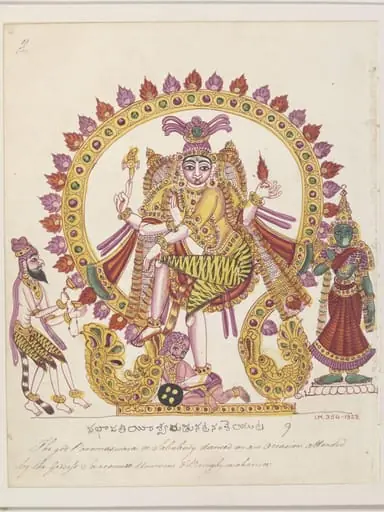 Nataraja (Shiva as lord of the dance)
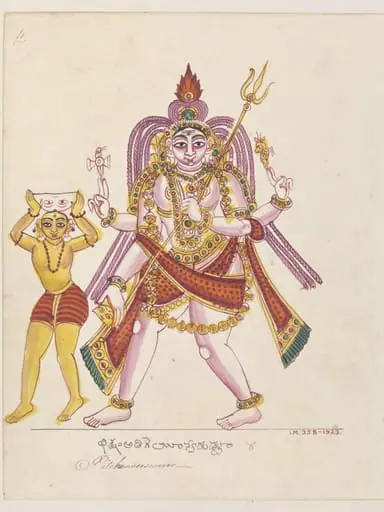 Shiva in his form as Bichandi or Bhikshatana
 One of twenty mica paintings depicting Hindu deities and festival processions with decorated cars.
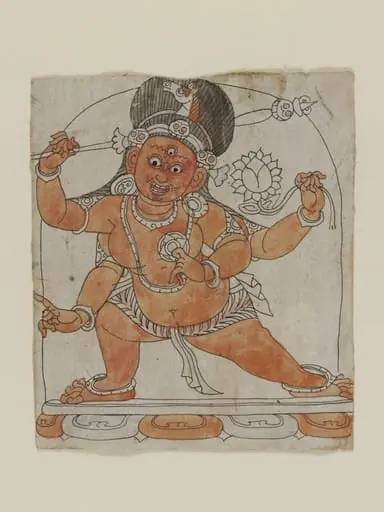 Painting and drawings
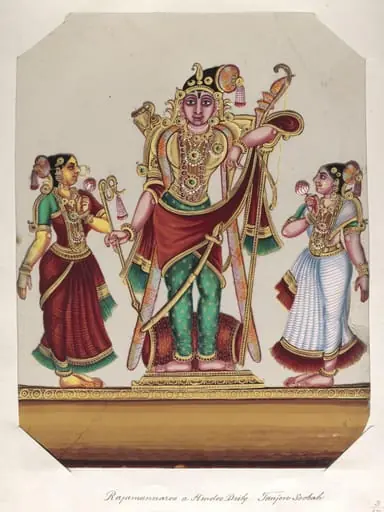 One of seventeen mica paintings depicting Hindu deities.
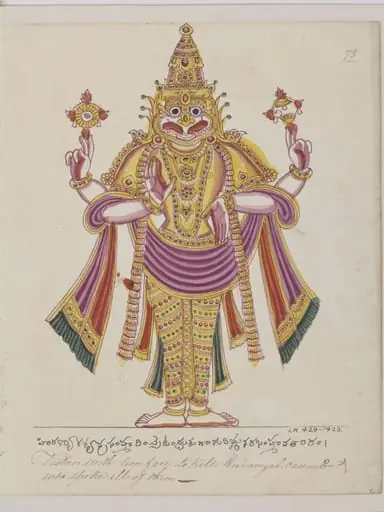 Narasimha, the man-lion, the fourth avatar (incarnation) of Vishnu
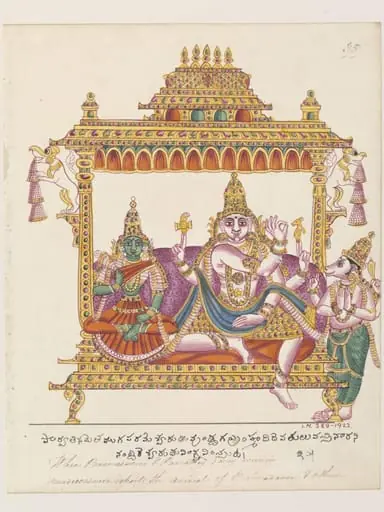 Shiva and Parvati seated on a canopied throne.
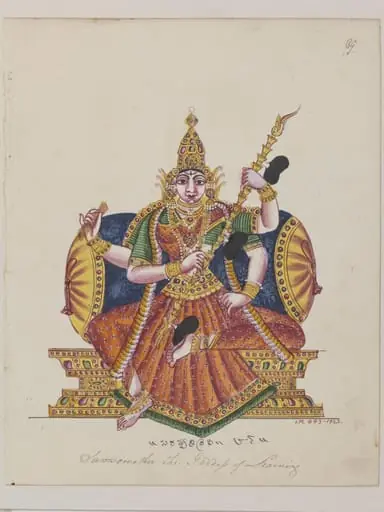 Sarasvati, the goddess of learning, speech and music
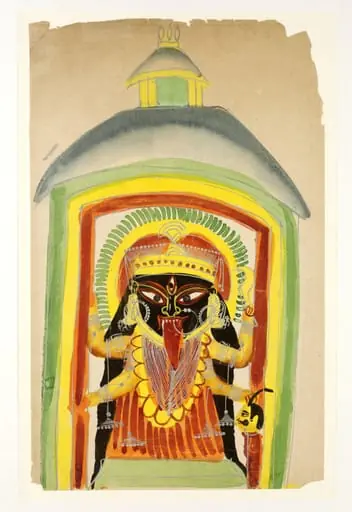 Kali
Kali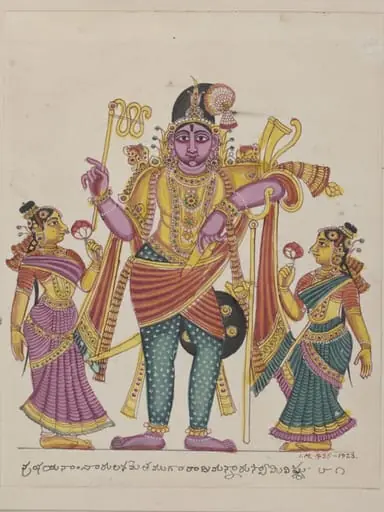 Ayyanar
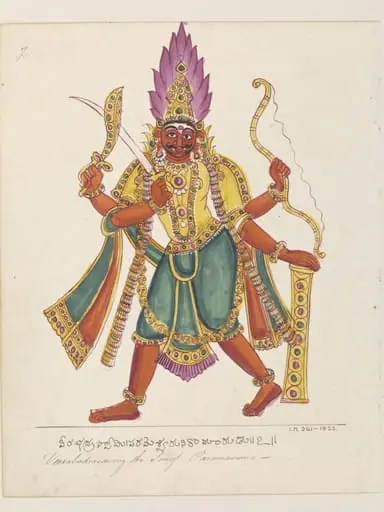 Virabhadra, the son of Shiva.
 Ganesha