Artwork
春江斎北英画 二代目嵐璃寛 見立 「百物語」|Kabuki Actor Arashi Rikan II as Iemon Confronted by an Image of His Murdered Wife, Oiwa, on a Broken Lantern, Referring to Katsushika Hokusai’s Hyaku monogatari (One Hundred Ghost Stories)
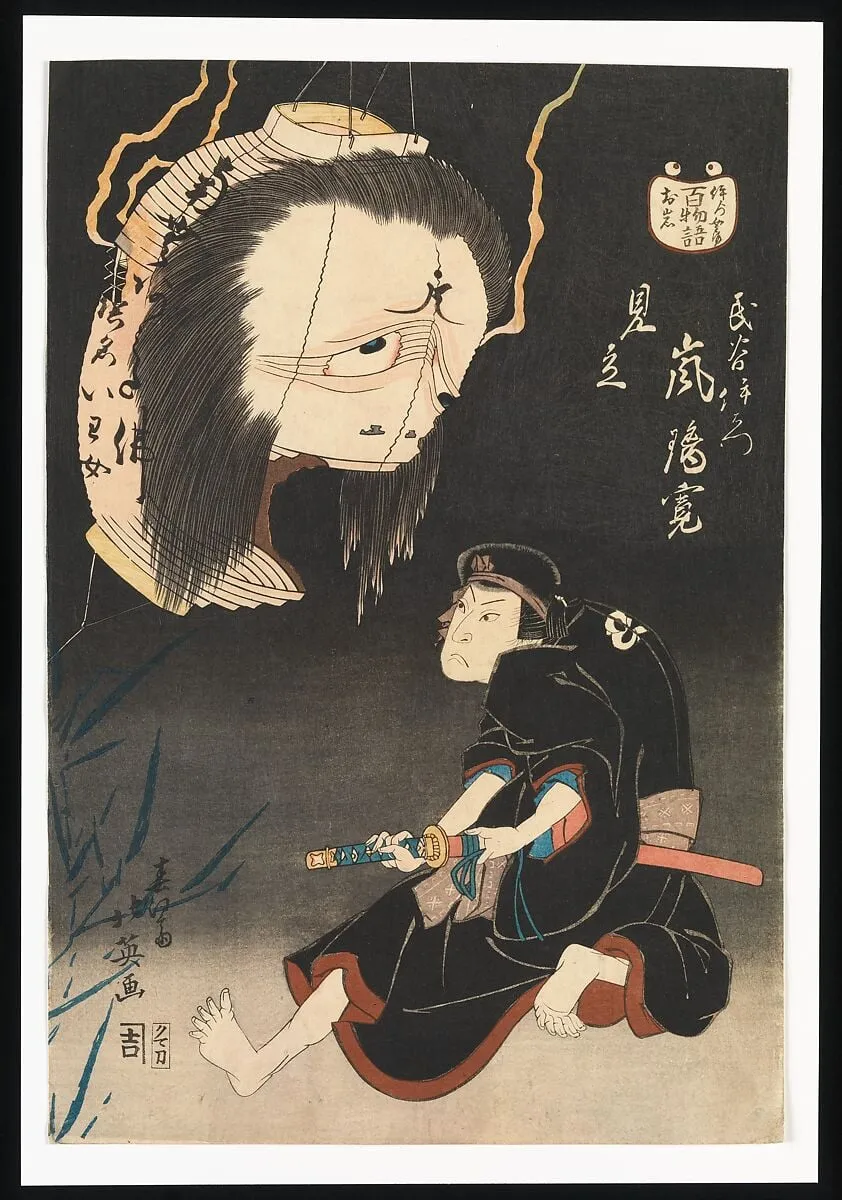
春江斎北英画 二代目嵐璃寛 見立 「百物語」|Kabuki Actor Arashi Rikan II as Iemon Confronted by an Image of His Murdered Wife, Oiwa, on a Broken Lantern, Referring to Katsushika Hokusai’s Hyaku monogatari (One Hundred Ghost Stories) is an ink print by the Romanticist artist Shunbaisai Hokuei 春梅斎北英. It dates from 1832 and is held in the collection of the Metropolitan Museum of Art.
About this work
Overview
This 1832 woodblock print by Shunbaisai Hokuei depicts a dramatic scene featuring Kabuki actor Arashi Rikan II as Iemon, a character confronting the ghost of his murdered wife, Oiwa, inspired by Hokusai's 'Hyaku monogatari' (One Hundred Ghost Stories). The work is part of The Metropolitan Museum of Art's collection.
Subject & Meaning
The print illustrates a pivotal moment from a Kabuki play, where Iemon is haunted by Oiwa's vengeful spirit, symbolized by a giant ghostly face emerging from a broken lantern. This scene conveys the themes of guilt, retribution, and the supernatural, common in Japanese ghost stories.
Technique & Style
Executed in ink and color on paper, the print utilizes a predominantly dark palette with accents of blue and red. The composition employs bold outlines and suggests the use of cross-hatching to achieve deep shadows, emphasizing the tense, eerie atmosphere of the encounter.
History & Provenance
Created in 1832 by Shunbaisai Hokuei, the print is now housed at The Metropolitan Museum of Art, highlighting its significance in the collection of Japanese woodblock prints.
Context
The work draws inspiration from Katsushika Hokusai’s 'Hyaku monogatari', reflecting the influence of Hokusai’s designs on contemporaneous artists. It also showcases the intersection of Kabuki theater with ukiyo-e woodblock printing during the Edo period.
Legacy
While specific legacy details of this particular print are not widely documented, it contributes to the broader appreciation of Edo-period woodblock prints and their role in narrating Kabuki stories and Japanese folklore.
Artist & collection

Artist
Hokuei spent his life in Osaka, a busy port city where art and theater mixed like ink in water.

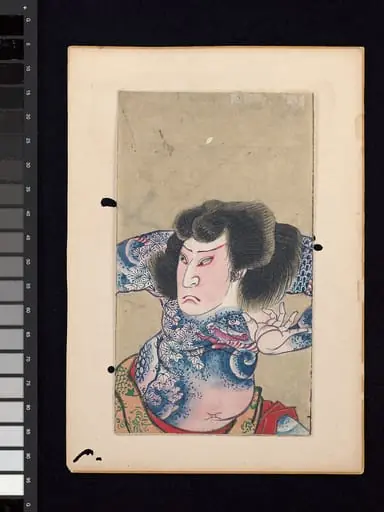 Untitled
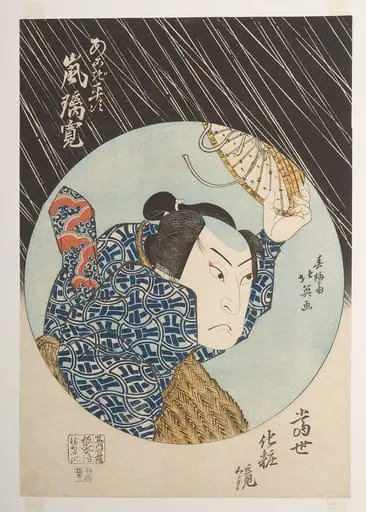 春梅斎北英画 二代目嵐璃寛 『当世化粧鏡』|Kabuki Actor Arashi Rikan II as Akogi Heiji, from the print series Tōsei keshōkagami (Makeup Mirrors of Our Time)
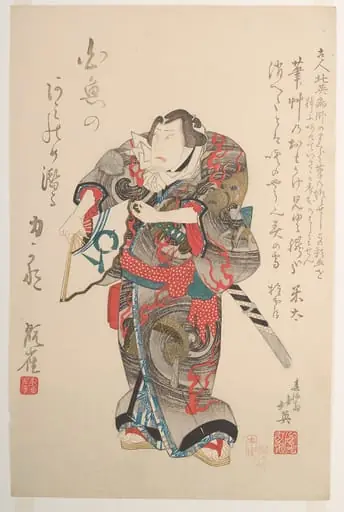 四代目中村歌右衛門 「関取千両幟」|The Actor Nakamura Utaemon IV as the Wrestler Iwakawa Jirokichi
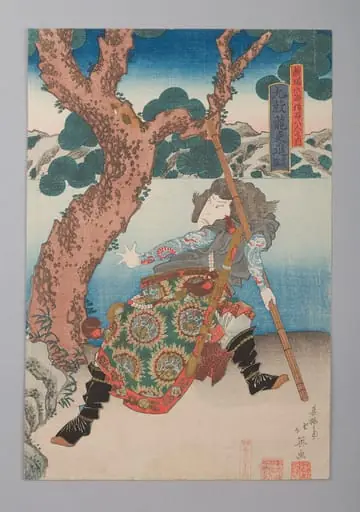 戯場水滸伝百|Three Heroes of the Water Margin Capture the Bandit Queen Ichijōsei, from the series One Hundred Eight Heroes of the Theater Suikoden
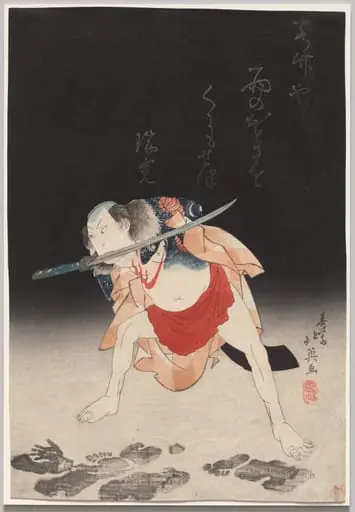 Arashi Rikan II as Danshichi Kurōbei in "Mirror of Naniwa: The Summer Festival"
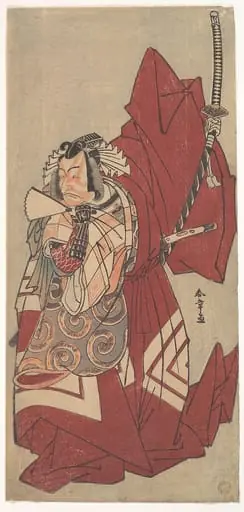 五代目市川団十郎|Kabuki Actor Ichikawa Danjūrō V in a Shibaraku (Stop Right There!) Role as Hannya no Gorō
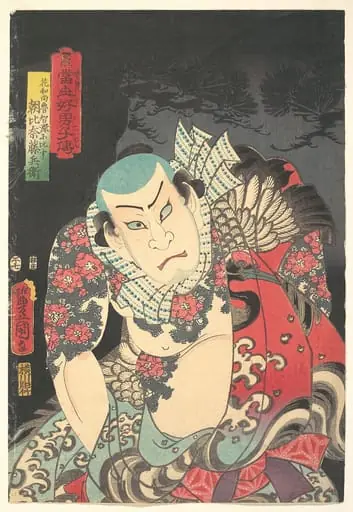 当世好男子伝」松 「花和尚魯智深に比す朝比奈藤兵衛」|The Actor Nakamura Fukusuke I as Asahina Tōbei, likened to Lu Zhishen the Tattooed Priest (Kaoshō Rochishin ni hisu), from the “Pine” triptych of the series A Modern Water Margin (Tōsei suikoden)
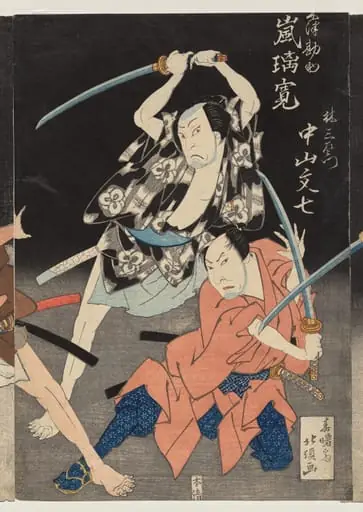 Arashi Rikan II as Kizu Kansuke and Nakayama Bunshichi III as Hayashi Sanzemon from the Kabuki Play "Eight Views of the Kizu River by Boating Song"
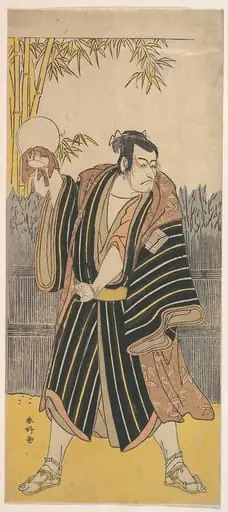 勝川春好画 七代目片岡仁左衛門 五代目市川團十郎|Kabuki Actor Ichikawa Danjūrō V
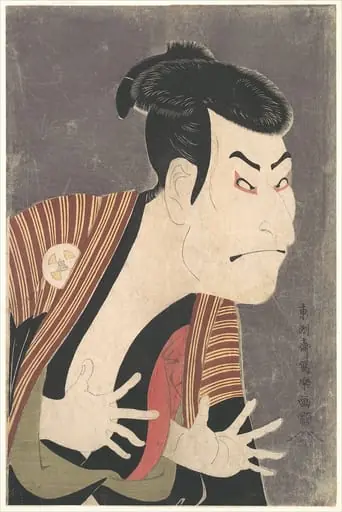 東洲斎写楽画 三代目大谷鬼次の奴江戸兵衛|Kabuki Actor Ōtani Oniji III as Yakko Edobei
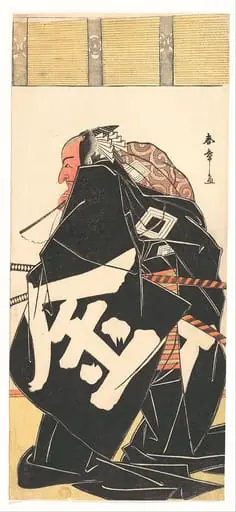 五代目市川団十郎|Kabuki Actor Ichikawa Danjūrō V as Sakata Kintoki in the Play Raikō’s Four Intrepid Retainers in the Costume of the Night Watch (Shitennō tonoi no kisewata)