Artwork
Untitled
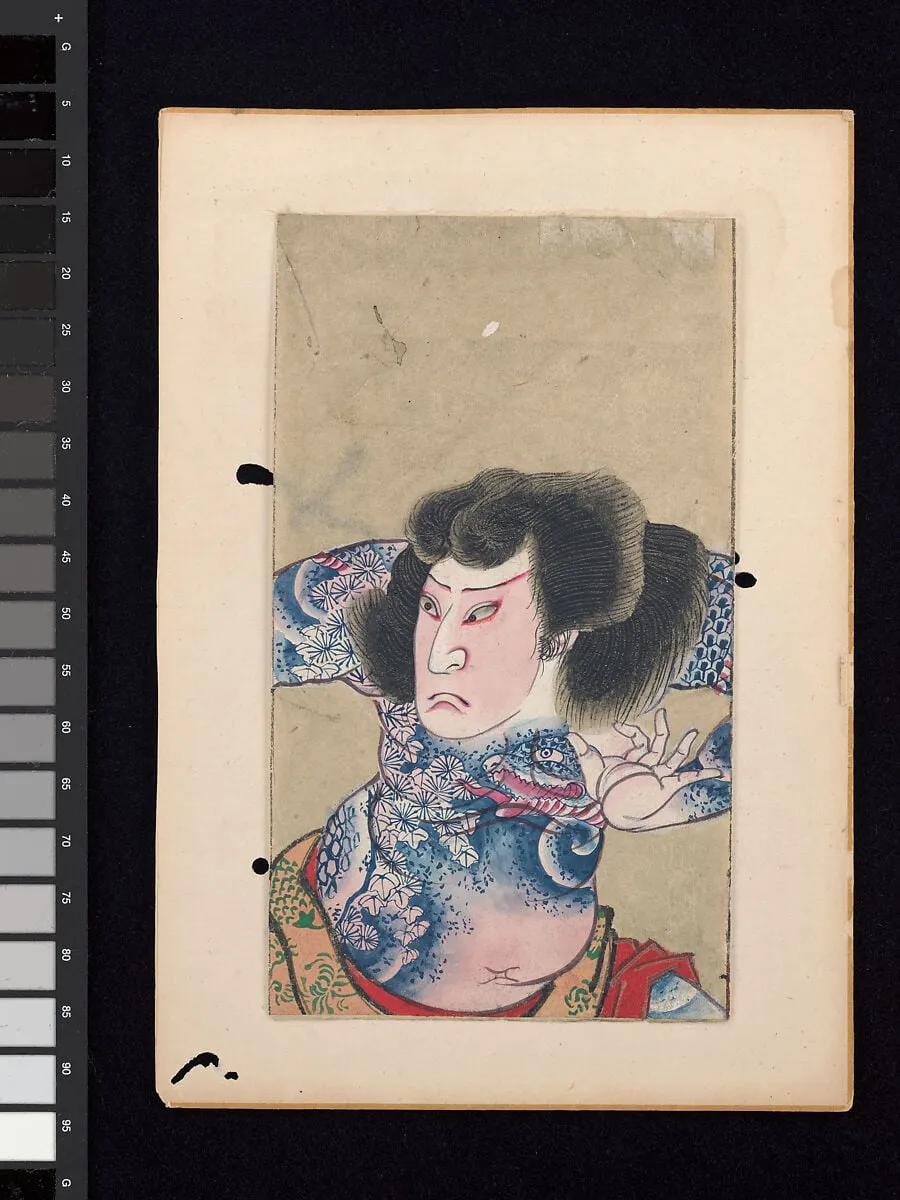
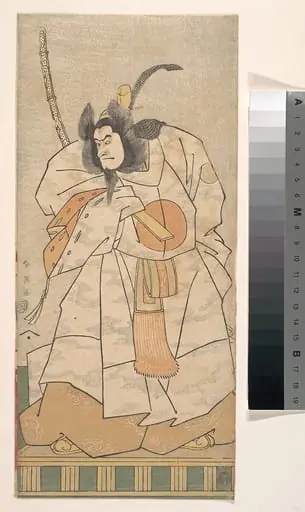
Untitled is an ink print by the Romanticist artist Shunbaisai Hokuei 春梅斎北英. It dates from 1834 and is held in the collection of the Metropolitan Museum of Art.
About this work
Overview
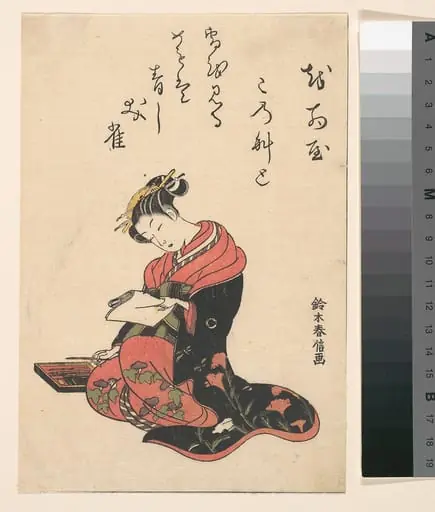
Created around 1834 by the Edo‑period printmaker Shunbaisai Hokuei, this untitled work is a folded album print now in the collection of the Metropolitan Museum of Art. Rendered in ink and color on paper, the piece presents a single figure in vivid costume, set against an unadorned background that emphasizes the subject’s theatrical presence.
Subject & Meaning
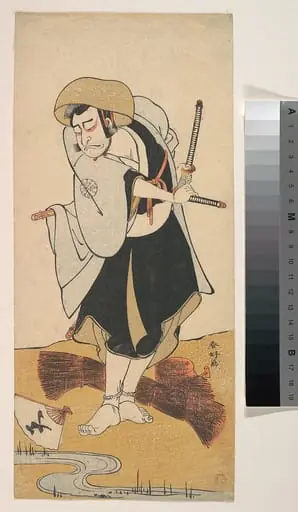
The portrait depicts a stage performer dressed in a richly patterned kimono of blue, red and gold, with the characteristic kabuki makeup of white face, black eyebrows and bright red lips. The raised hand holds a small prop, while the other rests on the hip, conveying a dramatic, confrontational stance typical of kabuki actors portraying heroic or villainous roles.
Technique & Style
Hokuei employed traditional ukiyo‑e woodblock techniques, using bold outlines in ink and layered pigments to achieve saturated colors. The folding album format allows the image to be viewed in sections, a common practice for portable, collectible prints of the period, and the flat, decorative background highlights the figure’s costume and facial expression.
History & Provenance
The print was produced in the early 1830s, a prolific era for actor portraiture in Japan. It entered the Metropolitan Museum of Art’s collection through a 20th‑century acquisition of Japanese prints, where it has been catalogued as an example of Hokuei’s work in the kabuki genre.
Context
During the Edo period, ukiyo‑e artists frequently created bijin and yakusha-e—images of beautiful women and actors—to satisfy popular demand for celebrity likenesses. Hokuei, a disciple of the renowned Sharaku, specialized in capturing the flamboyant gestures and stylized makeup that defined kabuki’s visual culture.
Artist & collection

Artist
Hokuei spent his life in Osaka, a busy port city where art and theater mixed like ink in water.

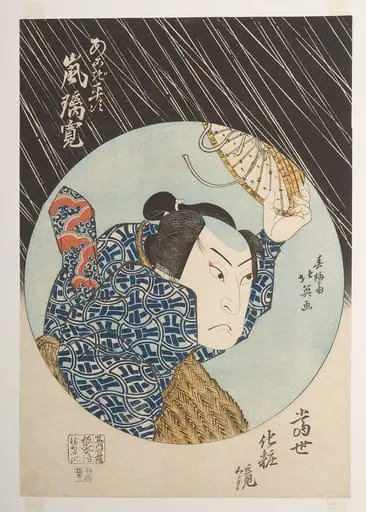 春梅斎北英画 二代目嵐璃寛 『当世化粧鏡』|Kabuki Actor Arashi Rikan II as Akogi Heiji, from the print series Tōsei keshōkagami (Makeup Mirrors of Our Time)
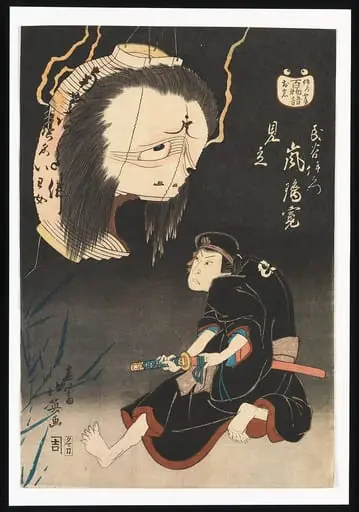 春江斎北英画 二代目嵐璃寛 見立 「百物語」|Kabuki Actor Arashi Rikan II as Iemon Confronted by an Image of His Murdered Wife, Oiwa, on a Broken Lantern, Referring to Katsushika Hokusai’s Hyaku monogatari (One Hundred Ghost Stories)
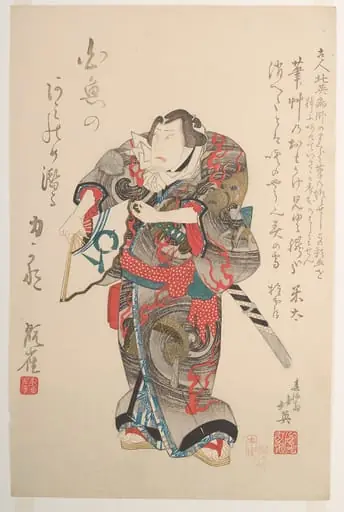 四代目中村歌右衛門 「関取千両幟」|The Actor Nakamura Utaemon IV as the Wrestler Iwakawa Jirokichi
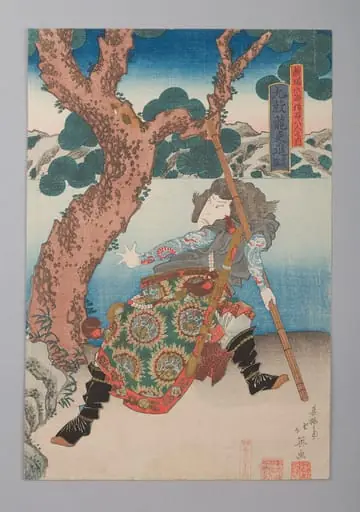 戯場水滸伝百|Three Heroes of the Water Margin Capture the Bandit Queen Ichijōsei, from the series One Hundred Eight Heroes of the Theater Suikoden
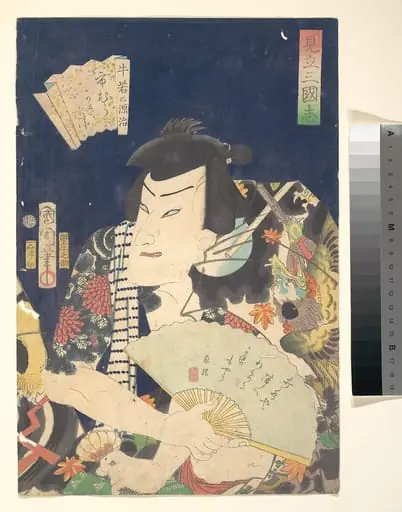 見立三国志 牛若の源治|Ichimura Kakitsu IV as Ushiwaka no Genji in the Kabuki play A Parody of the Romance of the Three Kingdoms (Mitate Sangokushi-Ushiwaka no Genji)
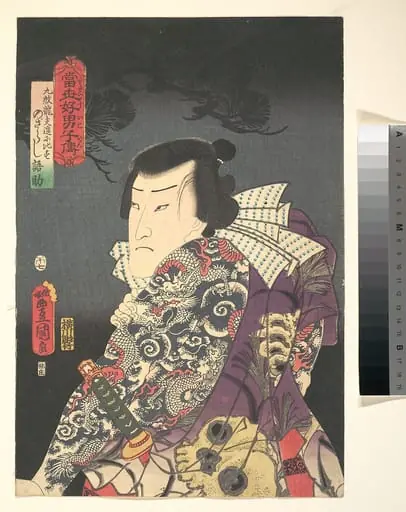 当世好男子伝」松 「九紋竜支進に比すのざらし語助」三代目市川市蔵|The Actor Ichikawa Ichizō III as Nozarashi Gosuke, likened to Shi Jin the Nine Dragoned (Kyūmonryū Shishin ni hisu), from the “Pine” triptych of the series A Modern Water Margin (Tōsei suikoden)
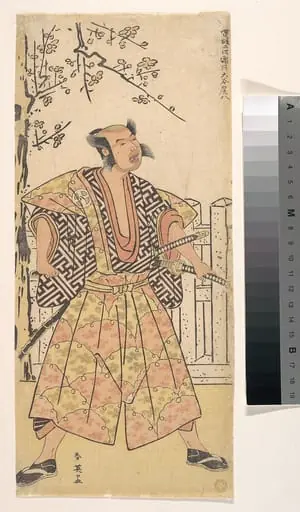 Untitled
 Untitled
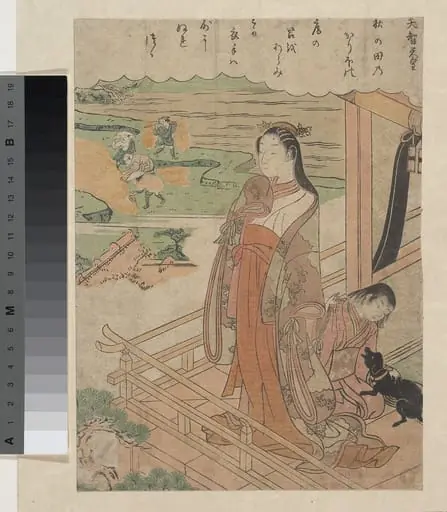 百人一首 天智天皇|Sympathy
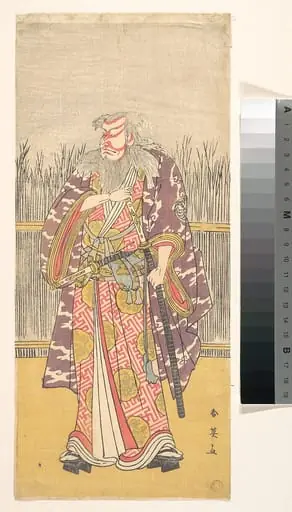 市川鰕蔵(五代目市川団十郎)の佐々木岸柳|The Actor Ichikawa Ebizō (Danjūrō V) as the Elderly Samurai Sasaki Ganryū (?)
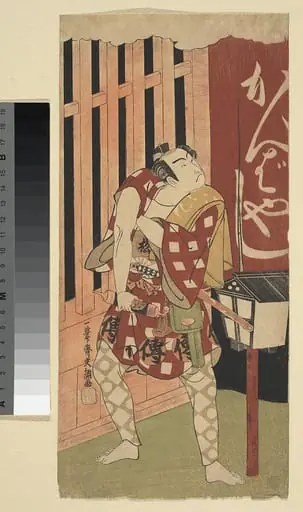 Untitled
 Untitled
 Untitled
 Untitled
 Untitled
 青楼美人合|The Courtesan Kasugano Writing a Letter