Artwork
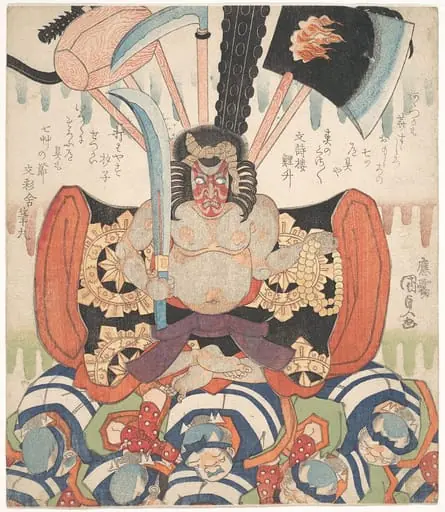
当世好男子伝」松 「花和尚魯智深に比す朝比奈藤兵衛」|The Actor Nakamura Fukusuke I as Asahina Tōbei, likened to Lu Zhishen the Tattooed Priest (Kaoshō Rochishin ni hisu), from the “Pine” triptych of the series A Modern Water Margin (Tōsei suikoden)
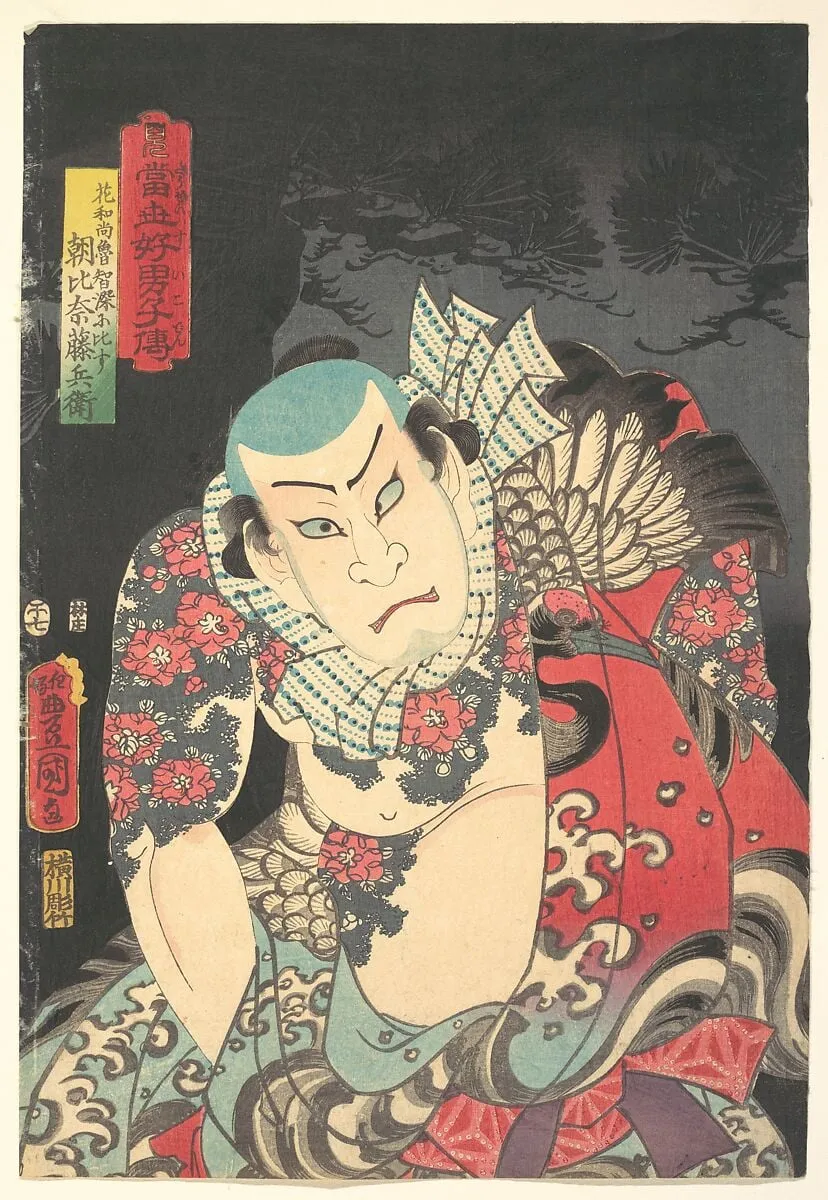
当世好男子伝」松 「花和尚魯智深に比す朝比奈藤兵衛」|The Actor Nakamura Fukusuke I as Asahina Tōbei, likened to Lu Zhishen the Tattooed Priest (Kaoshō Rochishin ni hisu), from the “Pine” triptych of the series A Modern Water Margin (Tōsei suikoden) is an ink print by the Impressionist artist Utagawa Kunisada. It dates from 1854 and is held in the collection of the Metropolitan Museum of Art.
About this work
Overview
This woodblock print is part of a triptych created by Utagawa Kunisada in 1854. It is one of three sheets that together form a cohesive image, held at The Metropolitan Museum of Art.
Subject & Meaning
The print depicts the actor Nakamura Fukusuke I as Asahina Tōbei, likened to the character Lu Zhishen from the classic Chinese novel Water Margin. The character's tattoos and attire signify his role and personality.
Technique & Style
The print is characterized by bold colors and intricate designs, with the subject wearing a bright blue headpiece and a red, patterned robe. The use of ink and color on paper showcases Kunisada's skill in creating detailed, vibrant woodblock prints.
Context
The print is part of the series A Modern Water Margin, which reinterprets classic characters in a contemporary setting. Kunisada's work reflects the popularity of kabuki theater and the Water Margin story during the Edo period.
Artist & collection
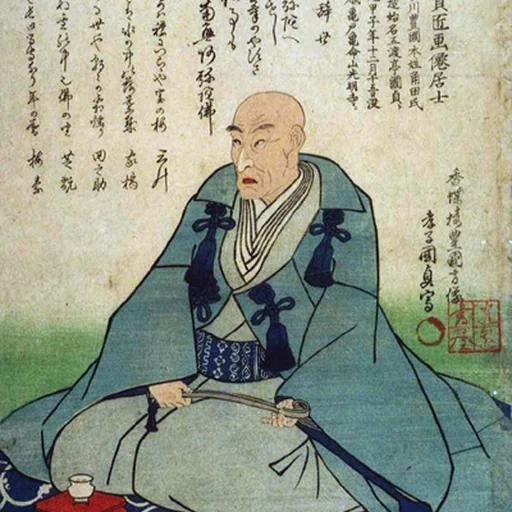

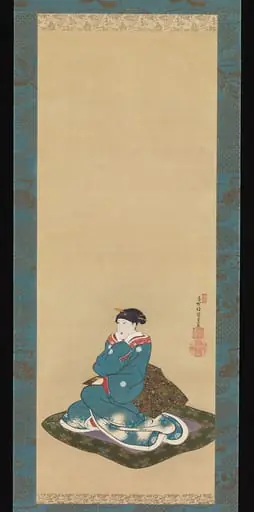 二代目岩井粂三郎の肖像|Portrait of Iwai Kumesaburō II
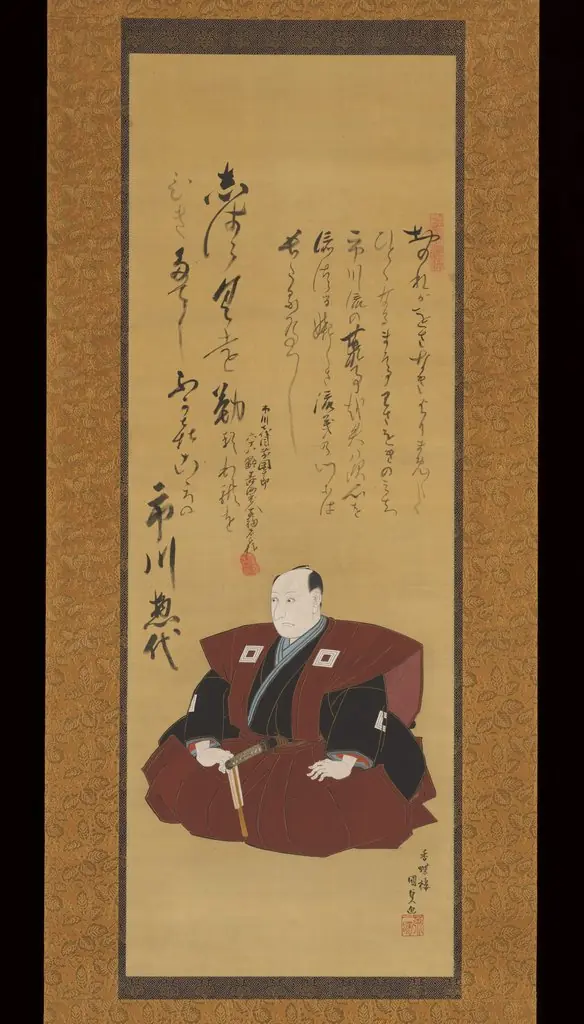 Memorial Portrait of the Actor Ichikawa Ōmezō I
 Untitled
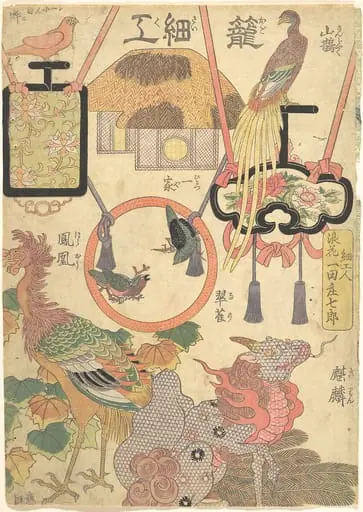 「籠細工 浪花細工人一田庄七郎」|Basketry Work: By the Craftsman Ichida Shōshichirō of Naniwa (Kagosaiku Naniwa saikujin Ichida Shōshichirō)
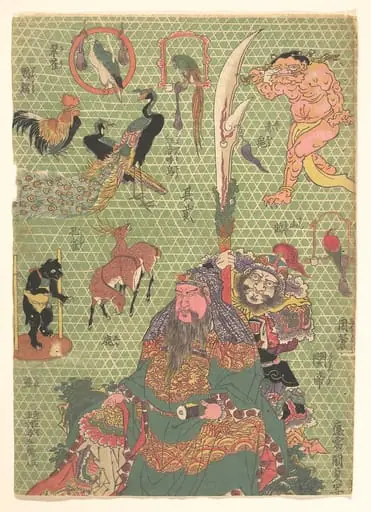 歌川国貞画 「籠細工 浪花細工人 一田庄七郎」|Basketry Work: By the Craftsman Ichida Shōshichirō of Naniwa (Kagozaiku Naniwa saikunin Ichida Shōshichirō)
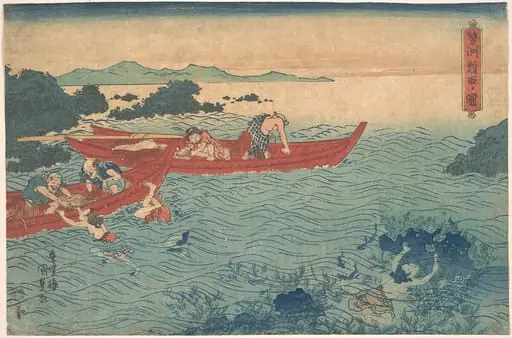 Untitled
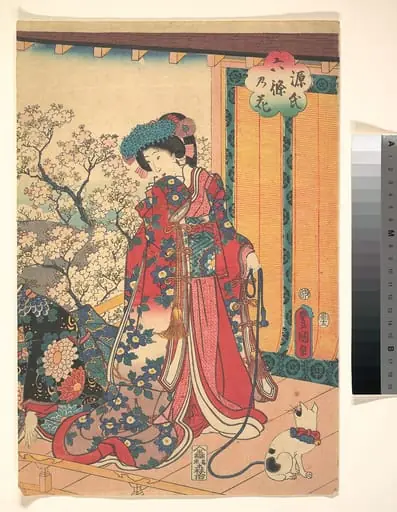 Untitled
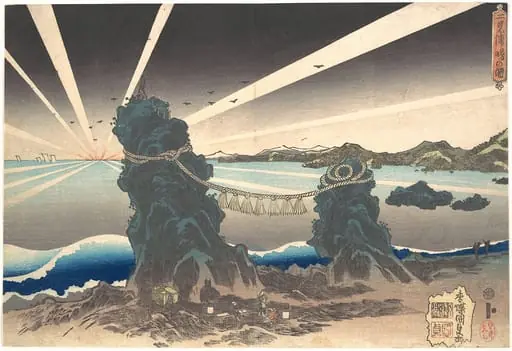 Futami-ga-ura akebono-no kuni|Futami-ga-ura Rocks at Ise, Land of Dawn
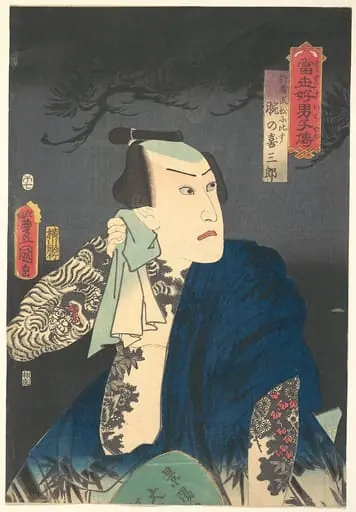 「当世好男子伝」松 「行者武松に比す腕の喜三郎」 初代河原崎権十郎|The Actor Kawarazaki Gonjūrō I as Ude no Kisaburō, likened to Wu Song the Ascetic (Gyōja Bushō ni hisu), from the “Pine” triptych of the series A Modern Water Margin (Tōsei suikoden)
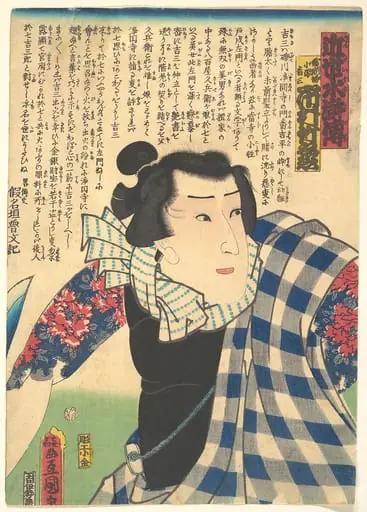 「湯灌場子僧吉三 市川竹之丞」(五代目) 「近世水滸伝」|Ichimura Takenojō V as Yukanba Kozō Kichiza, from A Modern Water Margin (Kinsei suikoden)
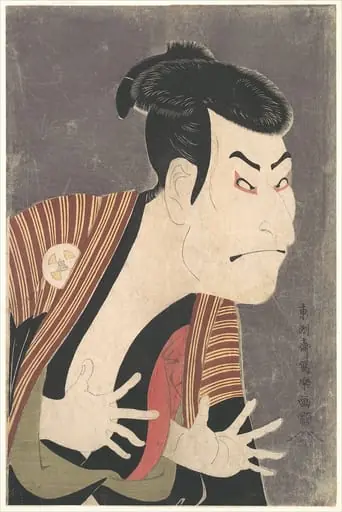 東洲斎写楽画 三代目大谷鬼次の奴江戸兵衛|Kabuki Actor Ōtani Oniji III as Yakko Edobei
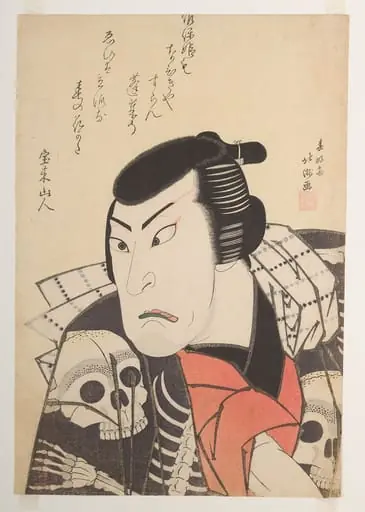 春好斎北洲画 初代市川鰕十郎 「紅紫大坂潤」|Kabuki Actor Ichikawa Ebijūrō I as Tōken (China Dog) Jūbei, in the play Benimurasaki ai de someage (Red and Purple, Rich Dyes of Osaka)
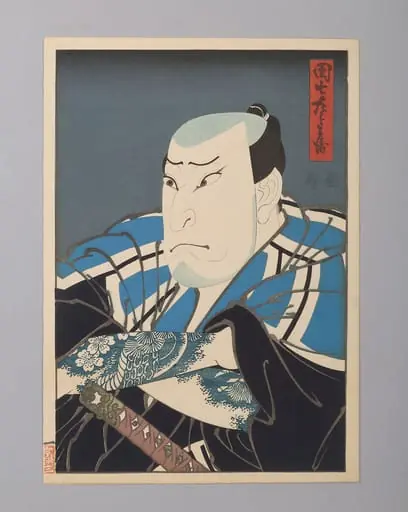 「団七九郎兵衛」|Nakamura Utaemon IV as Danshichi Kurobei
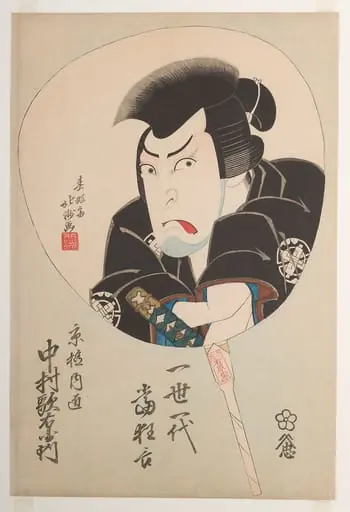 春好斎北洲画 三代目中村歌右衛門 『一世一代当狂言』|Kabuki Actor Nakamura Utaemon III as the Sword Master Kyōgoku Takumi, from the series Issei ichidai atari Kyōgen (Hits of a Lifetime of Kyōgen)
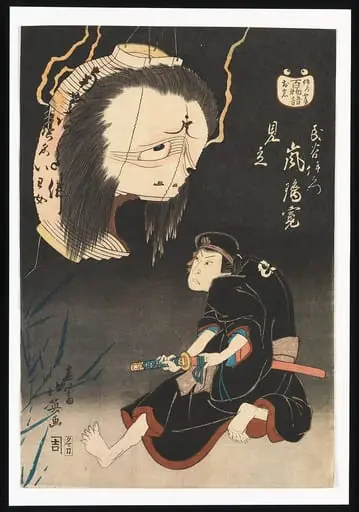 春江斎北英画 二代目嵐璃寛 見立 「百物語」|Kabuki Actor Arashi Rikan II as Iemon Confronted by an Image of His Murdered Wife, Oiwa, on a Broken Lantern, Referring to Katsushika Hokusai’s Hyaku monogatari (One Hundred Ghost Stories)
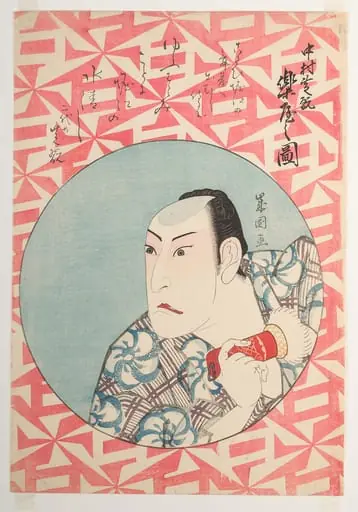 壽陽堂歳国画 『中村芝翫 楽屋之図』|Kabuki Actor Nakamura Shikan Backstage (Nakamura Shikan rakuya no zu)
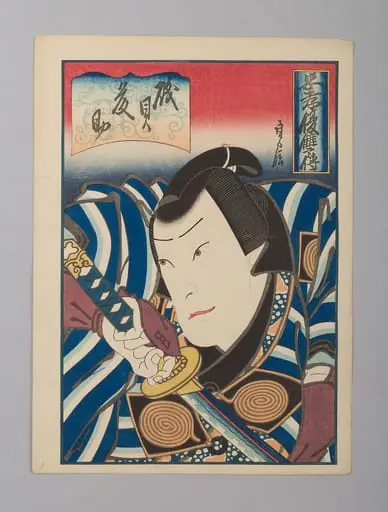 「忠孝復讐傳 磯貝藤助」二代目嵐璃珏|The Actor Arashi Rikaku II as Isogai Tōsuke, from the series Lives of Men who Carried Out Revenge for Loyalty or Filial Piety