Artwork
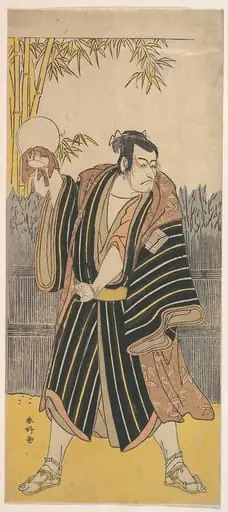
春梅斎北英画 二代目嵐璃寛 『当世化粧鏡』|Kabuki Actor Arashi Rikan II as Akogi Heiji, from the print series Tōsei keshōkagami (Makeup Mirrors of Our Time)
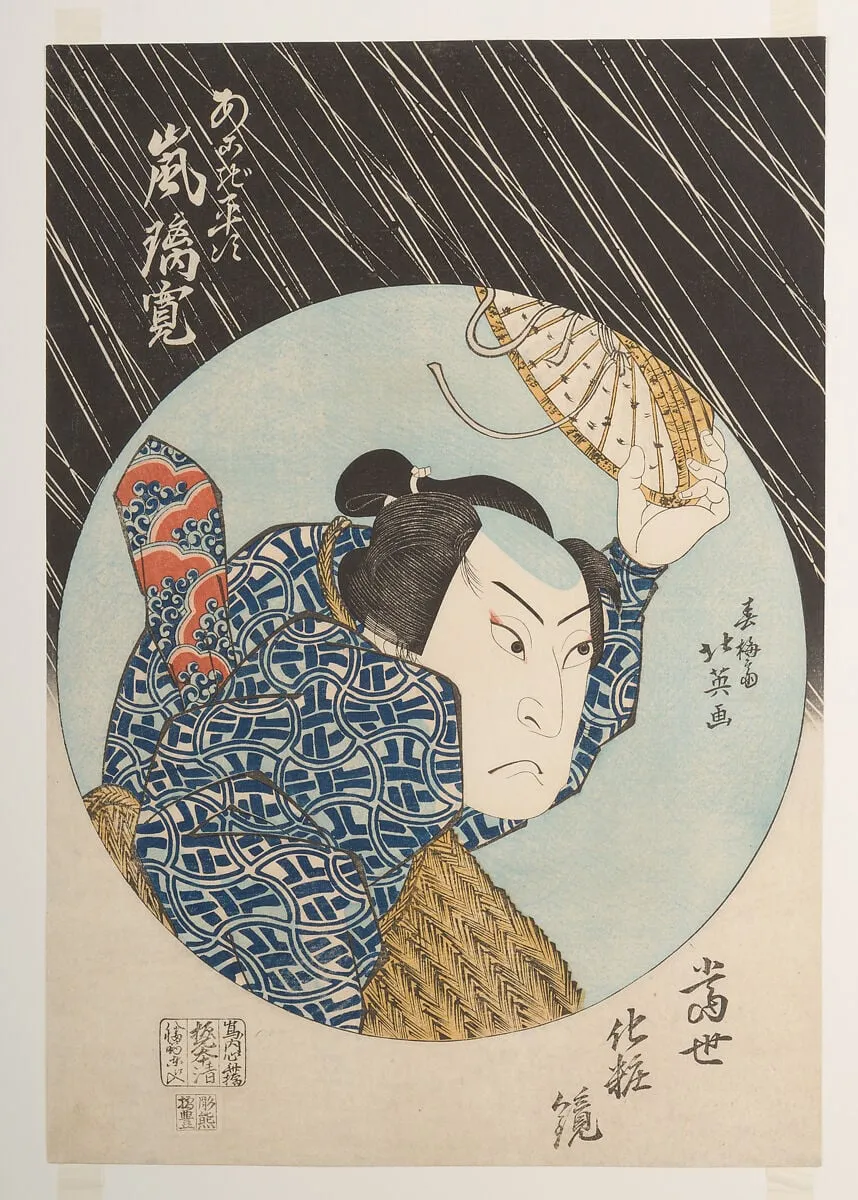
春梅斎北英画 二代目嵐璃寛 『当世化粧鏡』|Kabuki Actor Arashi Rikan II as Akogi Heiji, from the print series Tōsei keshōkagami (Makeup Mirrors of Our Time) is an ink print by the Romanticist artist Shunbaisai Hokuei 春梅斎北英. It dates from 1835 and is held in the collection of the Metropolitan Museum of Art.
About this work
Overview
This 1835 woodblock print by Shunbaisai Hokuei depicts Kabuki actor Arashi Rikan II as Akogi Heiji, part of the series Tōsei keshōkagami (Makeup Mirrors of Our Time), highlighting contemporary makeup styles. It is now in The Metropolitan Museum of Art.
Subject & Meaning
The print focuses on Arashi Rikan II's dramatic portrayal of Akogi Heiji, emphasizing the character's emotional intensity through exaggerated Kabuki makeup and attire, which conveyed narrative and emotional depth in traditional Japanese theater.
Technique & Style
Hokuei employed characteristic woodblock print techniques: bold ink lines, vibrant color, and textured patterns (e.g., the actor's robe, dark cross-hatched background, and light blue framing). The close-up composition accentuates the actor's expressive makeup and costume details.
History & Provenance
Created in 1835, this print is one of Hokuei's contributions to the Tōsei keshōkagami series, documenting Edo-period (1603-1868) Kabuki aesthetics. It is currently held in the collection of The Metropolitan Museum of Art, New York.
Context
The print reflects the Edo period's fascination with Kabuki theater and its stylized makeup (kabuki-gekijo), which played a crucial role in storytelling. The series Tōsei keshōkagami showcased these styles to a broader audience.
Legacy
As part of the Tōsei keshōkagami series, this print contributes to the historical record of Kabuki's visual aesthetics in the 19th century, influencing later representations of the theater and its traditions in Japanese art.
Artist & collection

Artist
Hokuei spent his life in Osaka, a busy port city where art and theater mixed like ink in water.

 Untitled
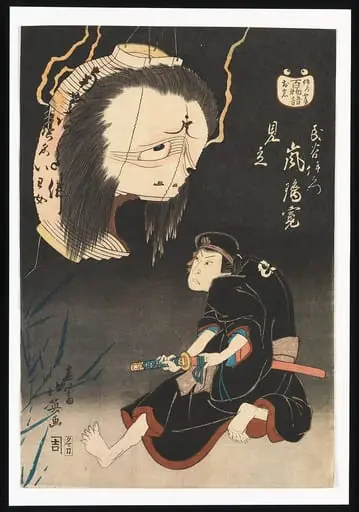 春江斎北英画 二代目嵐璃寛 見立 「百物語」|Kabuki Actor Arashi Rikan II as Iemon Confronted by an Image of His Murdered Wife, Oiwa, on a Broken Lantern, Referring to Katsushika Hokusai’s Hyaku monogatari (One Hundred Ghost Stories)
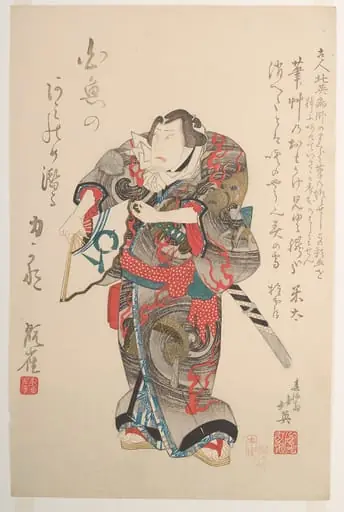 四代目中村歌右衛門 「関取千両幟」|The Actor Nakamura Utaemon IV as the Wrestler Iwakawa Jirokichi
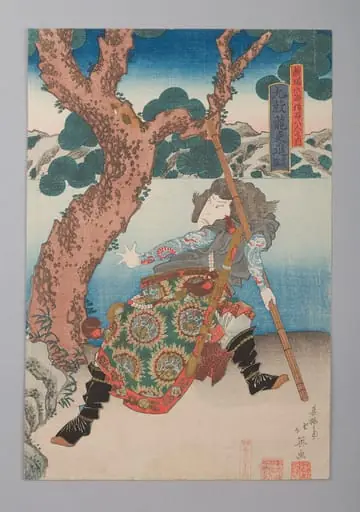 戯場水滸伝百|Three Heroes of the Water Margin Capture the Bandit Queen Ichijōsei, from the series One Hundred Eight Heroes of the Theater Suikoden
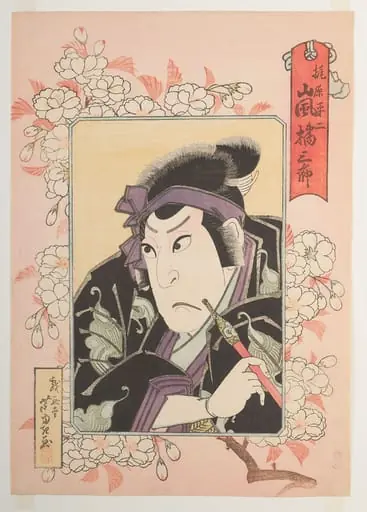 戯画堂芦幸画 二代目嵐橘三郎 「ひらかな盛衰記」|Kabuki Actor Arashi Kitsusaburō II as Kajiwara Heiji, in the play Hiragana seisuiki (Records of the Battles between the Minamoto and Taira Clans in the Japanese Syllabary)
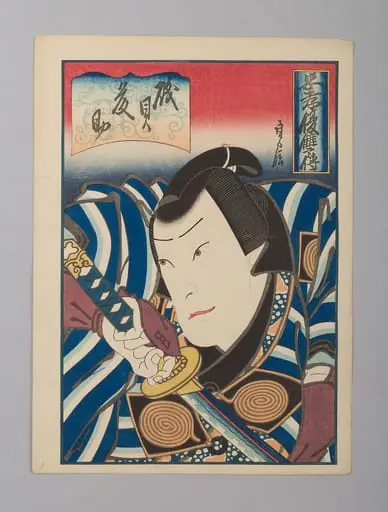 「忠孝復讐傳 磯貝藤助」二代目嵐璃珏|The Actor Arashi Rikaku II as Isogai Tōsuke, from the series Lives of Men who Carried Out Revenge for Loyalty or Filial Piety
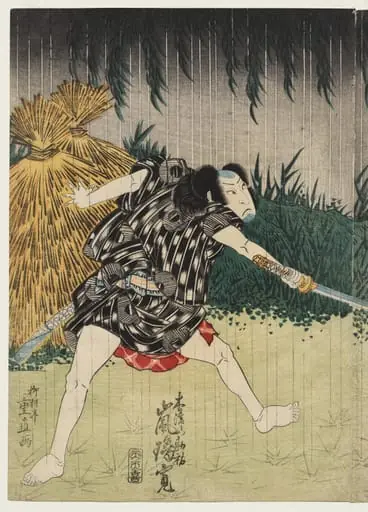 Arashi Rikan II as Kizu Kansuke
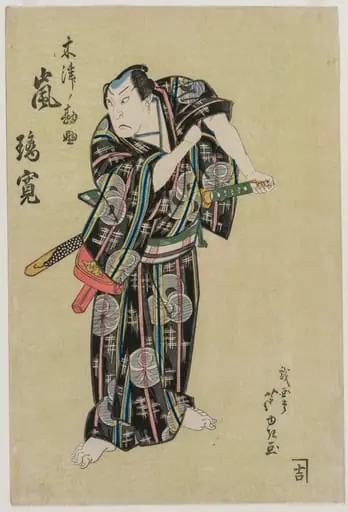 Arashi Rikan II as Kizu Kansuke
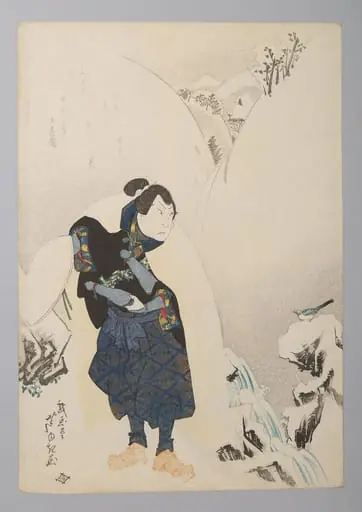 二代目嵐璃寛宮本武蔵|Arashi Rikan II as Miyamoto Musashi
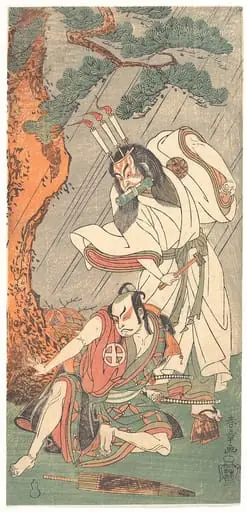 九代目市村羽左衛門・三代目大谷廣次|Kabuki Actors Ichimura Uzaemon IX as Ko-kakeyama and Ōtani Hiroji III as Kōga Saburō
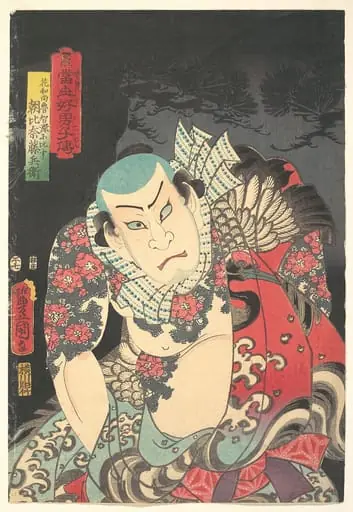 当世好男子伝」松 「花和尚魯智深に比す朝比奈藤兵衛」|The Actor Nakamura Fukusuke I as Asahina Tōbei, likened to Lu Zhishen the Tattooed Priest (Kaoshō Rochishin ni hisu), from the “Pine” triptych of the series A Modern Water Margin (Tōsei suikoden)
 勝川春好画 七代目片岡仁左衛門 五代目市川團十郎|Kabuki Actor Ichikawa Danjūrō V