Artwork
Maica Domnului cu Pruncul
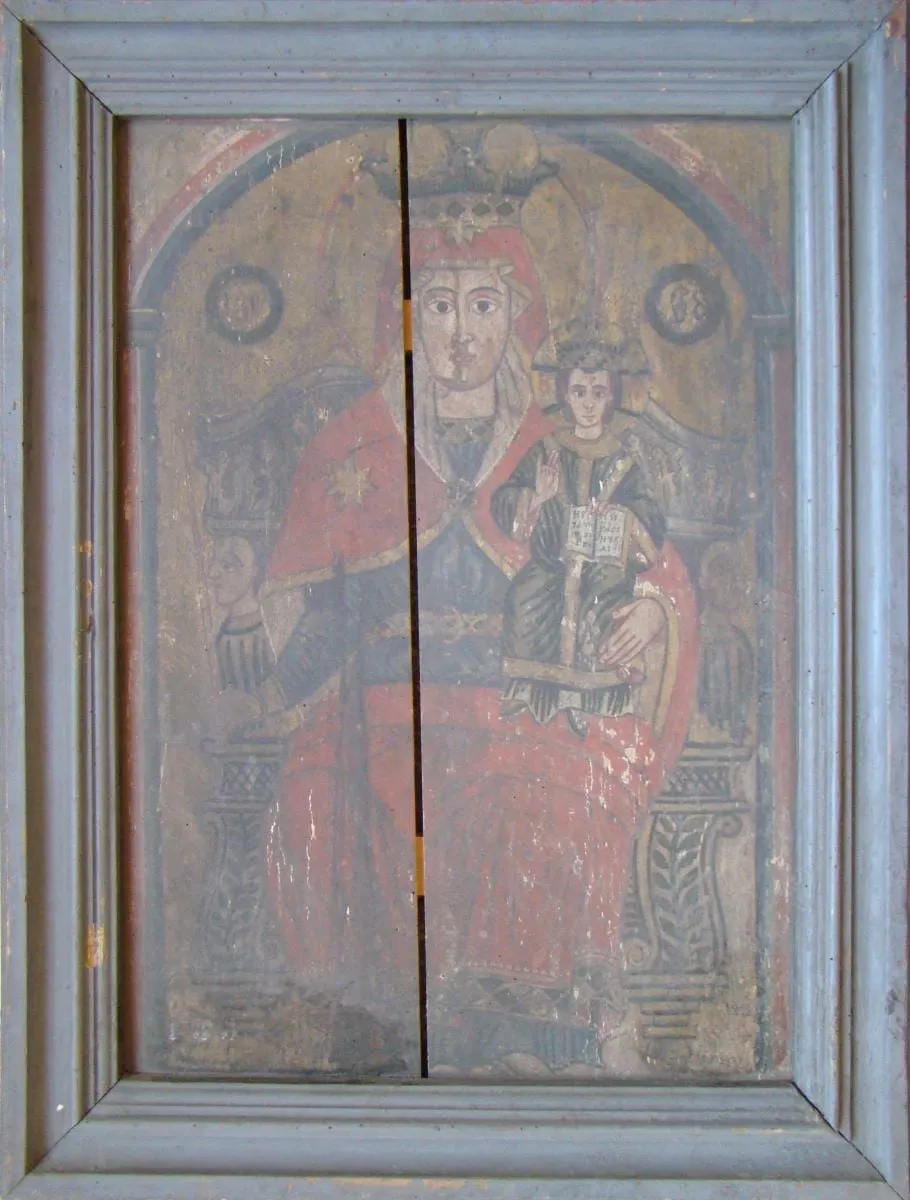
Maica Domnului cu Pruncul is a drawing by the Romanticist artist Simion Poienaru. It dates from 1842 and is held in the collection of the Alba Iulia Orthodox Archdiocese.
About this work
Overview
Its composition follows traditional religious iconography, emphasizing spiritual authority over naturalistic detail.
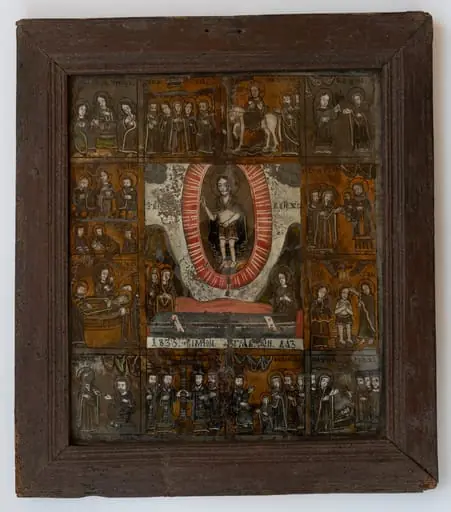
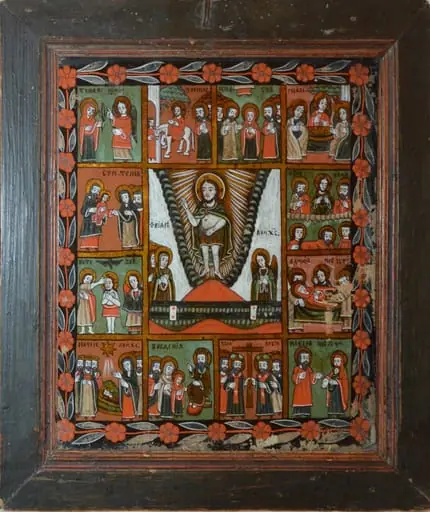
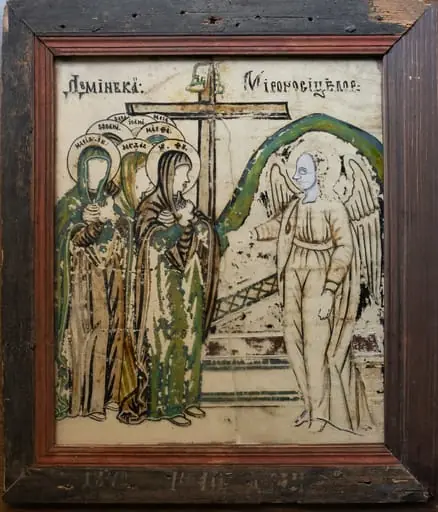
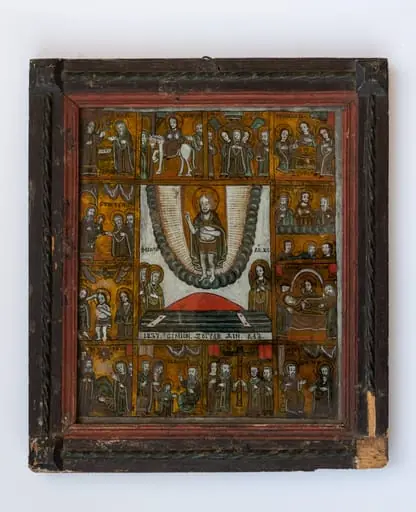
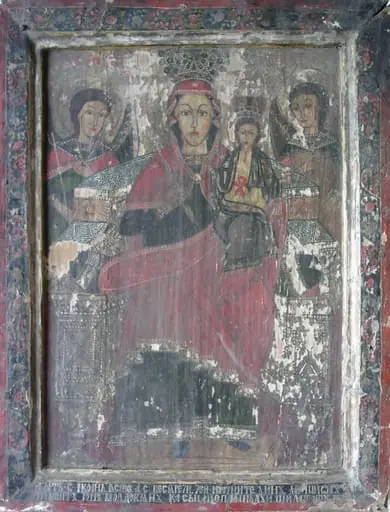
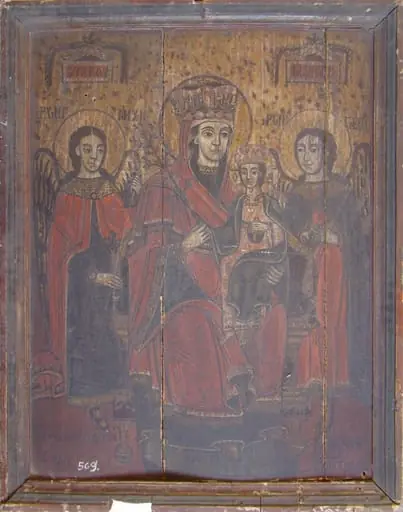
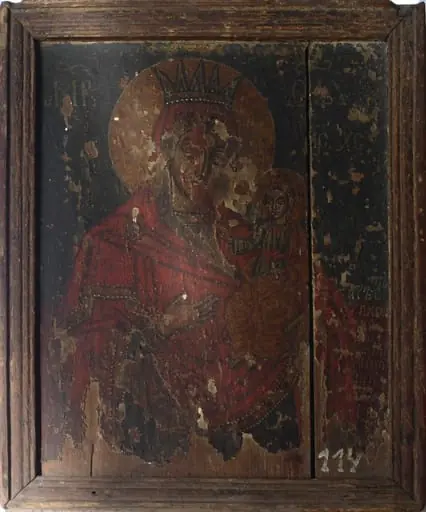
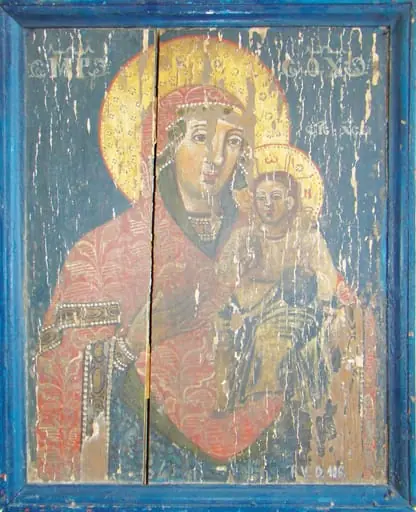
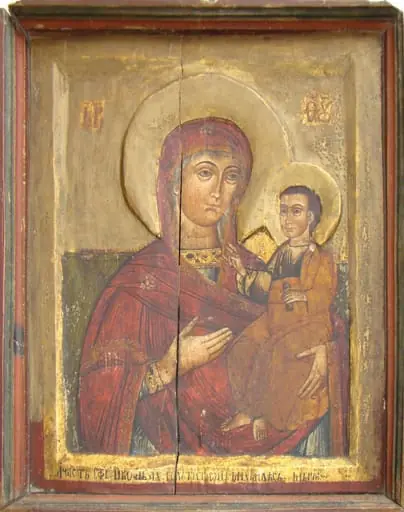
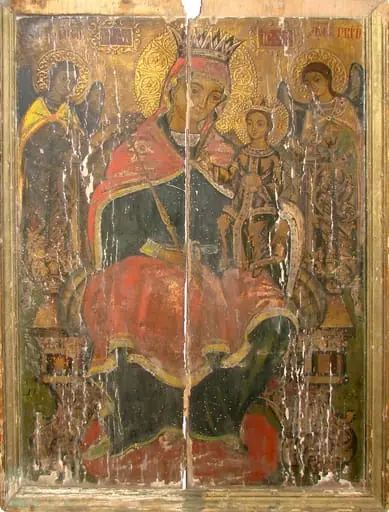
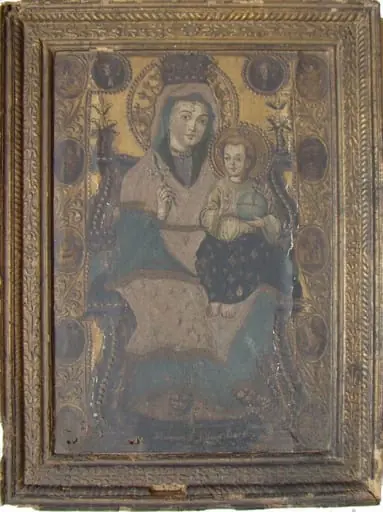
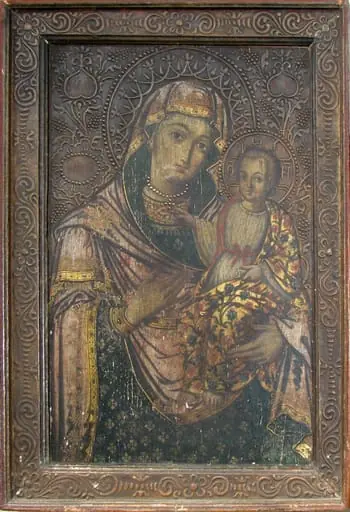
Created in 1842 by Simion Poienaru, this devotional image depicts the Virgin Mary seated beside the Christ Child. Both figures are crowned and rendered in a solemn, frontal pose. The work is preserved in the Museum of Ethnography, where its age is evident in faded pigments and surface wear. Its composition follows traditional religious iconography, emphasizing spiritual authority over naturalistic detail.
Subject & Meaning
The Virgin and Child are portrayed as celestial sovereigns, their golden crowns signaling divine status. The Child, seated beside his mother, raises his hand in a gesture of blessing, reinforcing his role as savior. Their serious expressions convey solemnity rather than warmth, aligning with liturgical traditions that prioritize reverence over emotional expression. The imagery serves as a focus for prayer and veneration.
Technique & Style
The painting employs flat, stylized forms with minimal modeling, typical of folk religious art in 19th-century Eastern Europe. Colors are limited to blues, reds, and golds, applied in broad areas with subtle patterning on robes. Halos are rendered as circular bands of faded blue, while cross-hatching suggests depth in folds of fabric, though the overall approach remains symbolic rather than illusionistic.
History & Provenance
The work was produced in 1842 by Simion Poienaru, a Romanian icon painter active in the mid-19th century. It entered the collection of the Museum of Ethnography, likely through regional ecclesiastical or domestic donations. Its condition reflects decades of use in private or parish settings before institutional preservation, with visible fading and surface abrasions consistent with age and handling.
Context
This image emerged during a period when rural Romanian communities maintained strong ties to Orthodox devotional practices. Artists like Poienaru worked outside academic traditions, drawing from Byzantine models adapted to local aesthetics. Such icons were often commissioned for home altars or village churches, serving as both spiritual aids and markers of cultural identity in a time of social change.
Legacy
The painting exemplifies a regional tradition of religious imagery that persisted alongside, and sometimes in resistance to, Western artistic trends. Its preservation in a museum setting underscores its value as a cultural artifact rather than a fine art object. It continues to inform studies of folk piety, artisanal practice, and the transmission of religious symbols in Eastern Europe.
Artist & collection
Artist
Simion Poienaru liked to tuck little parties around his holy scenes—tiny figures dancing in the margins of Jesus’s resurrection, like uninvited guests who’d wandered in from a village wedding.
 Maica Domnului cu Pruncul
 Maica Domnului cu Pruncul
 Maica Domnului cu Pruncul
 Maica Domnului cu Pruncul
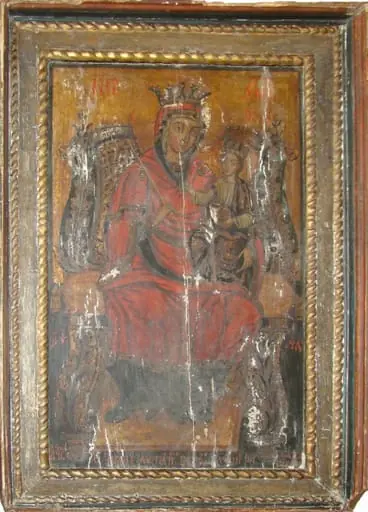 Maica Domnului cu Pruncul
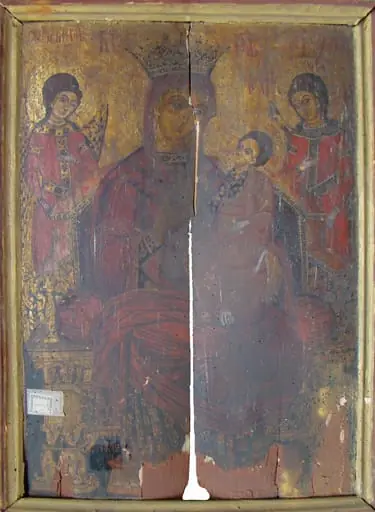 Maica Domnului cu Pruncul
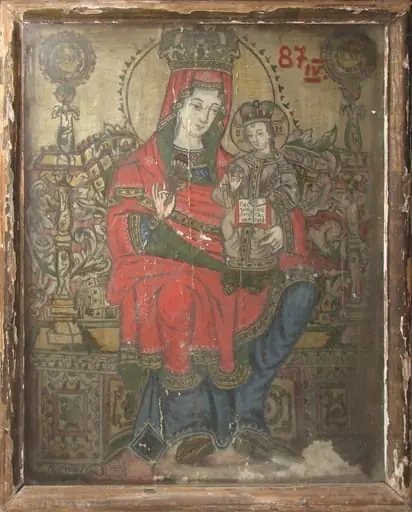 Maica Domnului cu Pruncul, floarea neveștejită
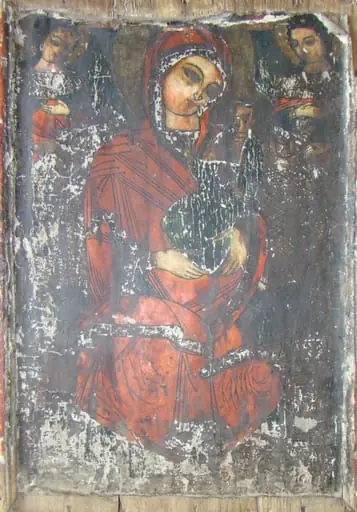 Maica Domnului cu Pruncul
 Maica Domnului cu Pruncul
 Maica Domnului cu Pruncul
 Maica Domnului cu Pruncul, floarea neveștejită
 Maica Domnului cu Pruncul