Artwork
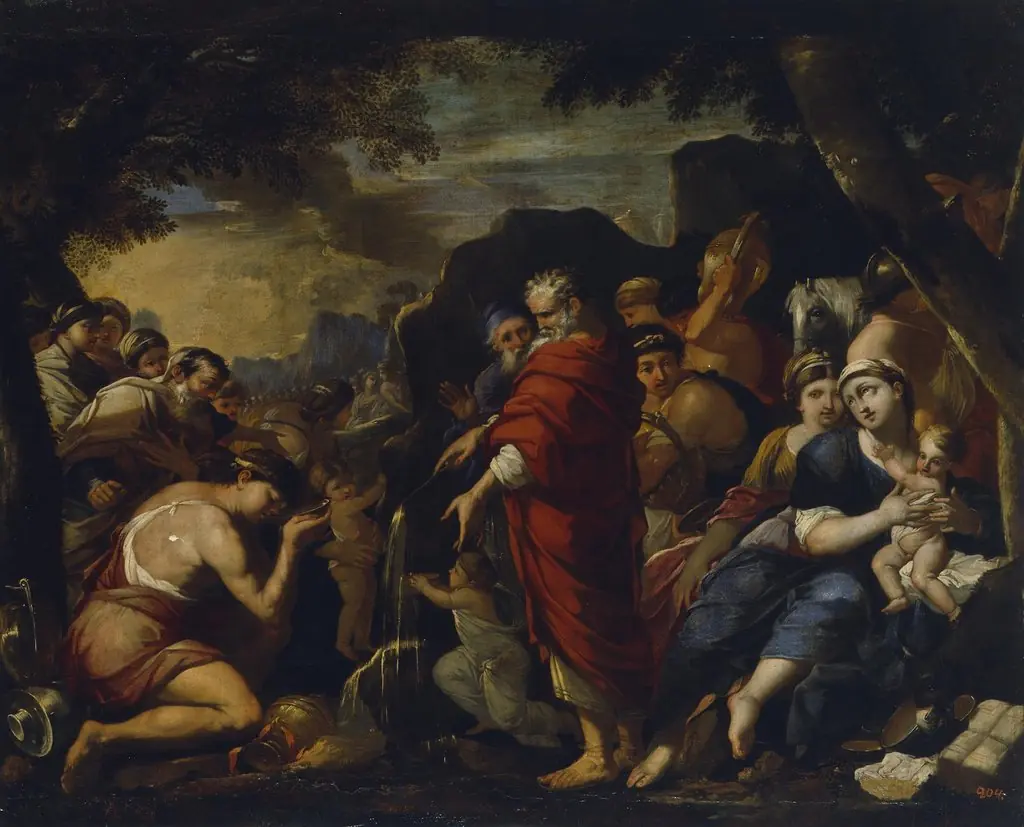
The Israelites after Crossing the Red Sea
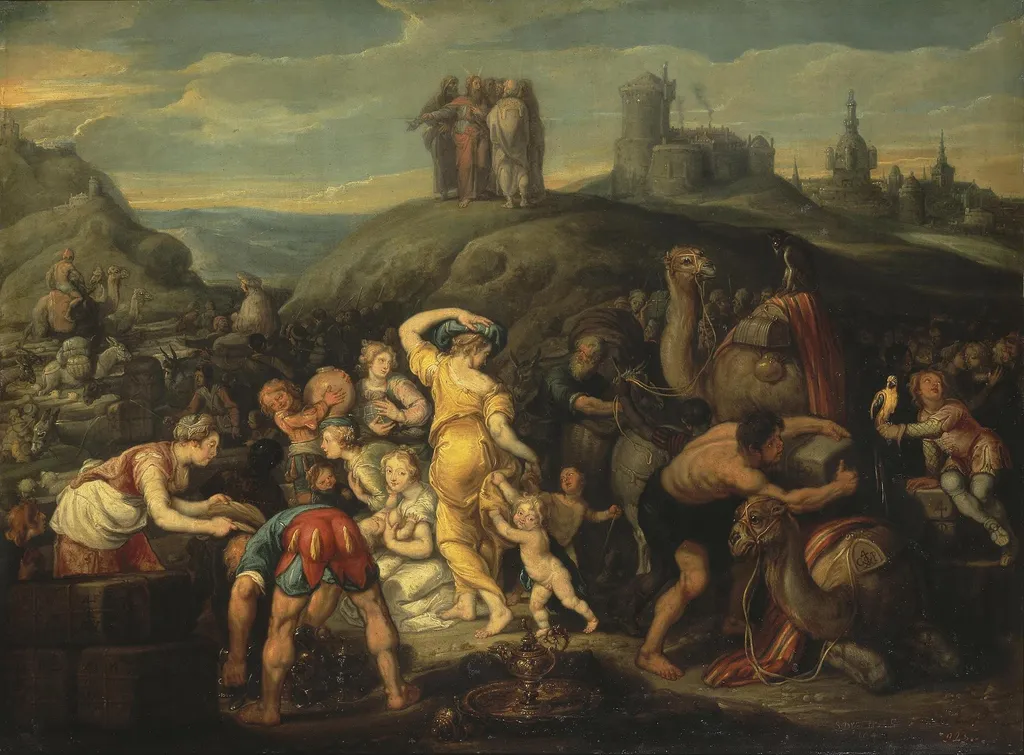
The Israelites after Crossing the Red Sea is an oil painting by the Flemish Baroque painting artist Simon de Vos. It dates from 1641 and is held in the collection of the Hermitage Museum.
About this work
The painting is called The Israelites after Crossing the Red Sea.
It was created by Simon de Vos in 1641.
The artist used copper as the medium, which is an interesting choice.
This painting is held at the State Hermitage Museum, which has a large collection of art.
You can learn more about the artist's style and other works by looking up Simon de Vos.
Overview
Simon de Vos painted *The Israelites after Crossing the Red Sea* in 1641 using copper as a support, a less common choice compared to canvas.
Simon de Vos painted *The Israelites after Crossing the Red Sea* in 1641 using copper as a support, a less common choice compared to canvas. This small-scale work reflects his transition from genre painting to larger biblical narratives during his mature period. The piece is part of the State Hermitage Museum’s collection, where it remains one of the few surviving religious compositions by the Flemish artist from this phase of his career.
Subject & Meaning
The scene captures the Israelites moments after their escape from Egypt, having crossed the parted Red Sea. Figures are shown in varied poses of relief and contemplation, emphasizing their survival and the divine intervention that saved them. De Vos avoids dramatic spectacle, instead focusing on quiet human response to miraculous deliverance, aligning with devotional themes popular in Counter-Reformation art.
Technique & Style
De Vos employed the smooth, rigid surface of copper to achieve fine detail and luminous color effects. His brushwork shows the influence of Rubens and van Dyck, particularly in the modeling of figures and the rich textures of fabric and skin. The composition is tightly organized, with figures arranged in a shallow space that draws attention to their emotional states rather than expansive landscape.
History & Provenance
The painting was completed in 1641, during de Vos’s shift toward religious subjects after early success in genre scenes. It entered the Hermitage collection in the 18th or 19th century, likely through imperial acquisitions of European art. Its survival in relatively intact condition reflects careful preservation, though little is documented about its ownership between creation and museum acquisition.
Context
In mid-17th-century Antwerp, religious imagery remained in demand despite growing secular trends. De Vos, like many Flemish artists, responded by adapting Baroque dynamism to biblical narratives for private collectors and churches. Copper supports, though costly, were favored for their durability and fine finish, especially in works intended for intimate viewing.
Legacy
Though not among de Vos’s most widely known works, this painting illustrates his technical adaptability and engagement with major religious themes. It contributes to understanding how Flemish painters negotiated artistic trends and devotional needs in the post-Reformation era. Its presence in the Hermitage underscores the broader European interest in biblical history as subject matter for refined, small-scale art.
Own this work as a print
Artist & collection
Artist
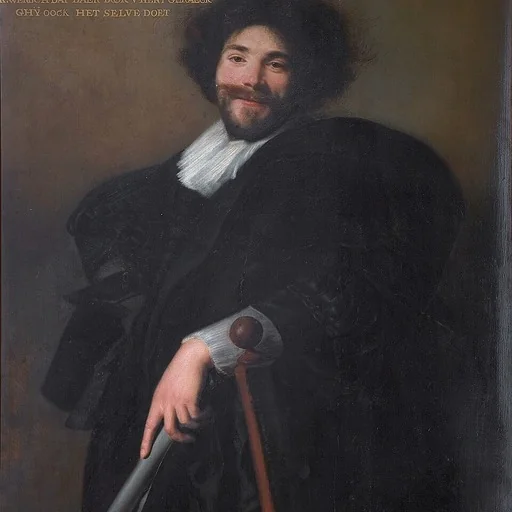
Simon de Vos (20 October 1603 – 15 October 1676) was a Flemish painter, draughtsman and art collector.

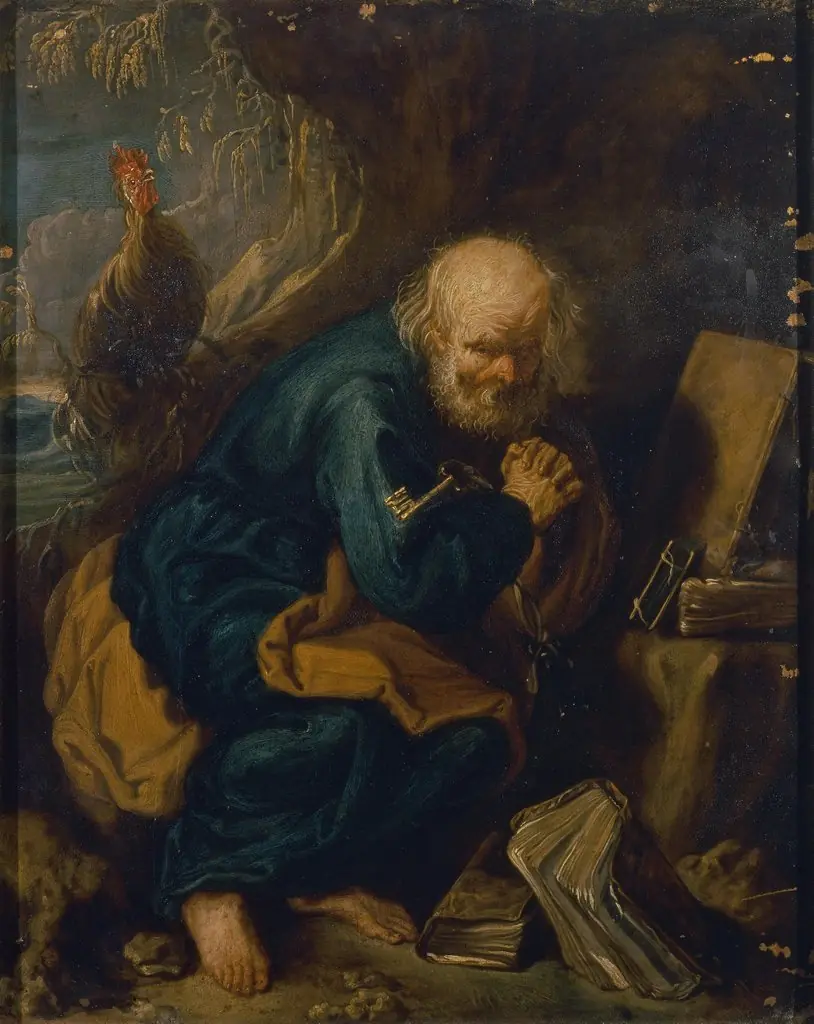
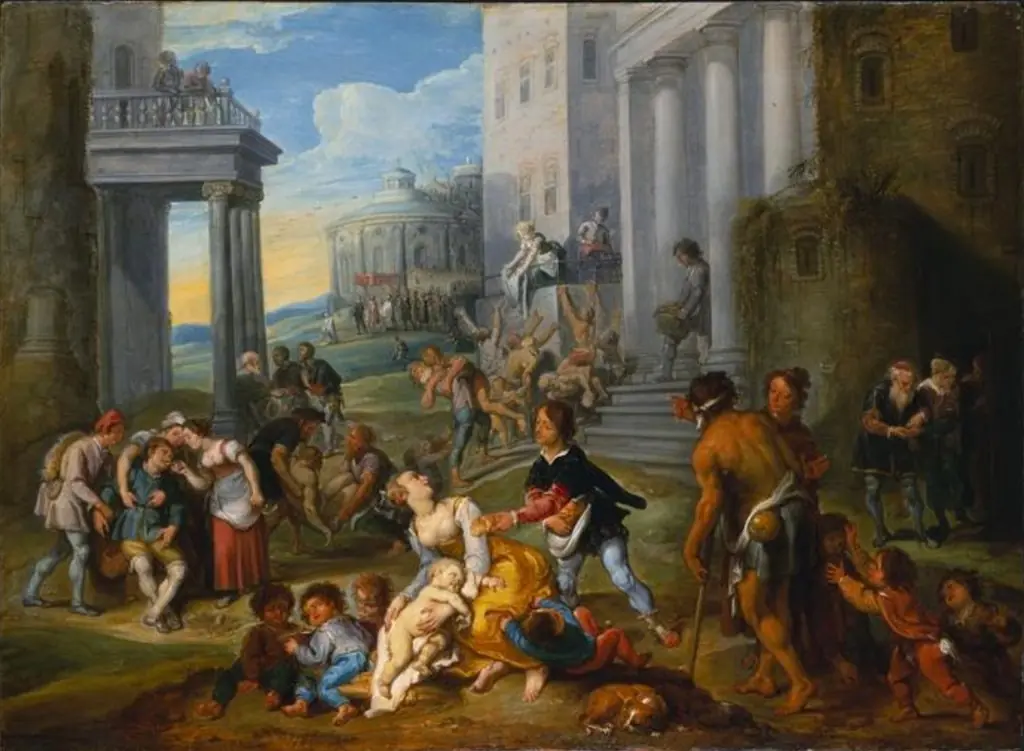
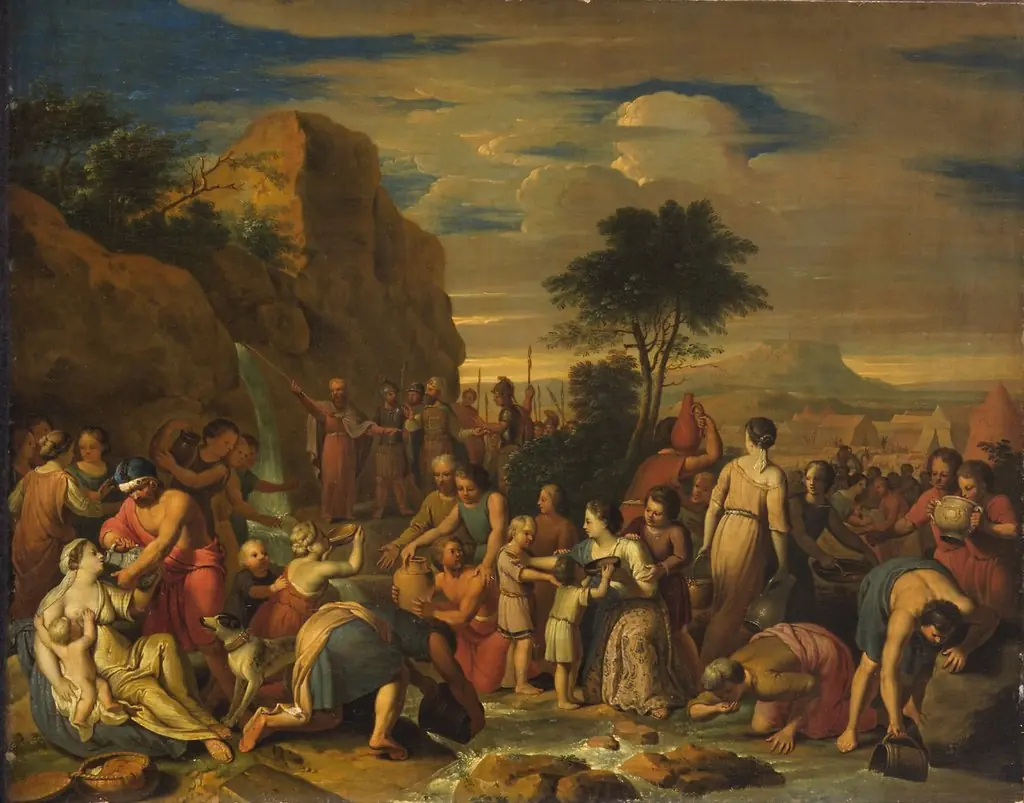 Moses schlägt Wasser aus dem Felsen
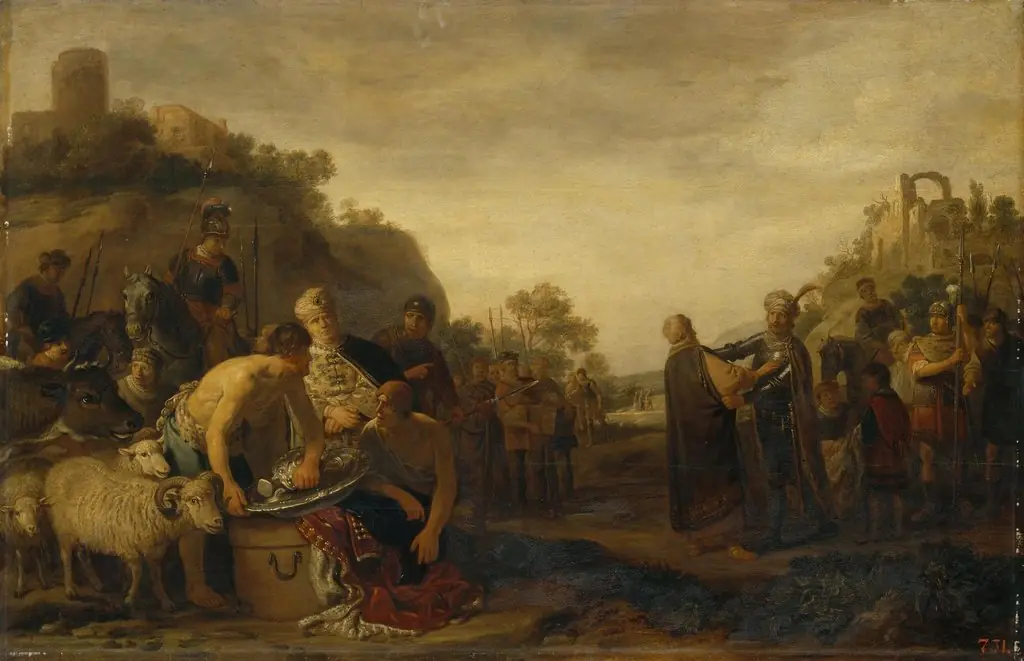 Samuel and Saul
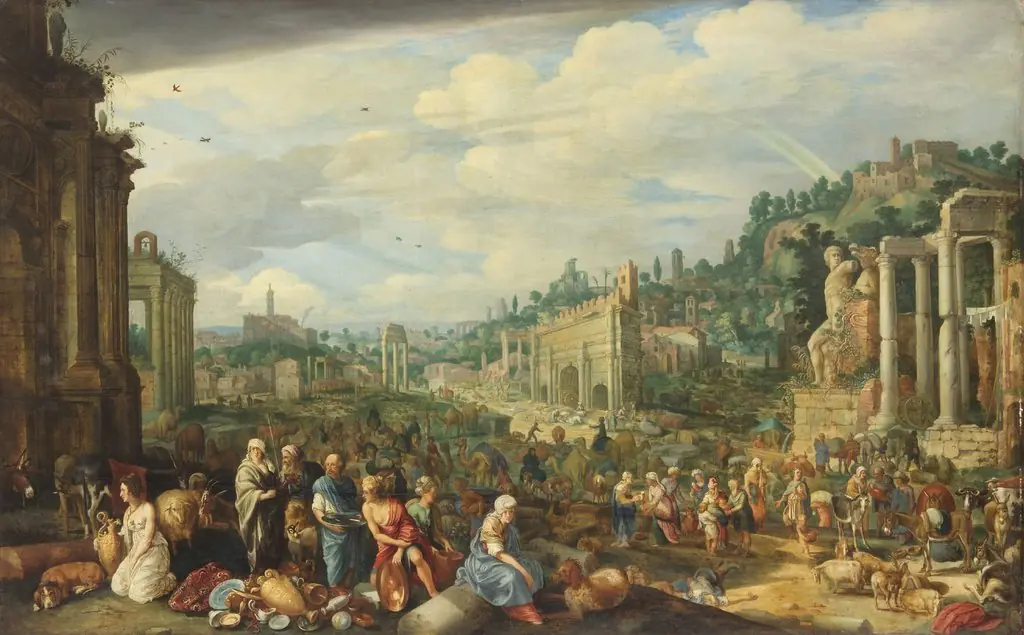 Ansicht des Campo Vaccino in Rom (Aufbruch der Israeliten aus Ägypten)
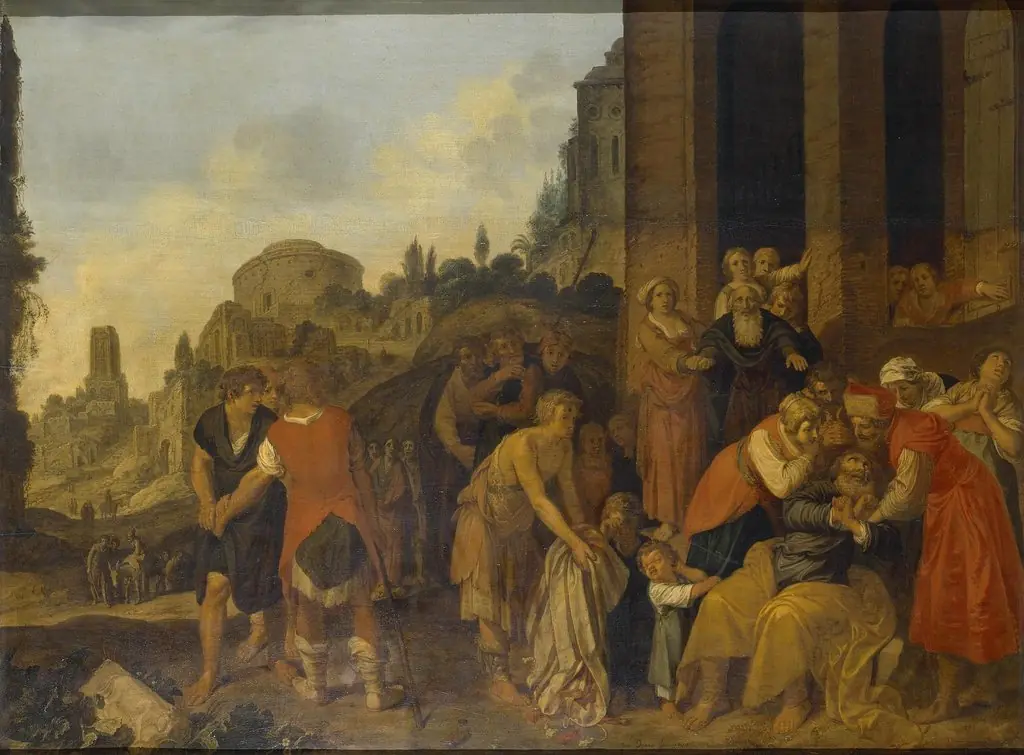 Jacob's Sons Show Him Joseph's Blood-Stained Robe
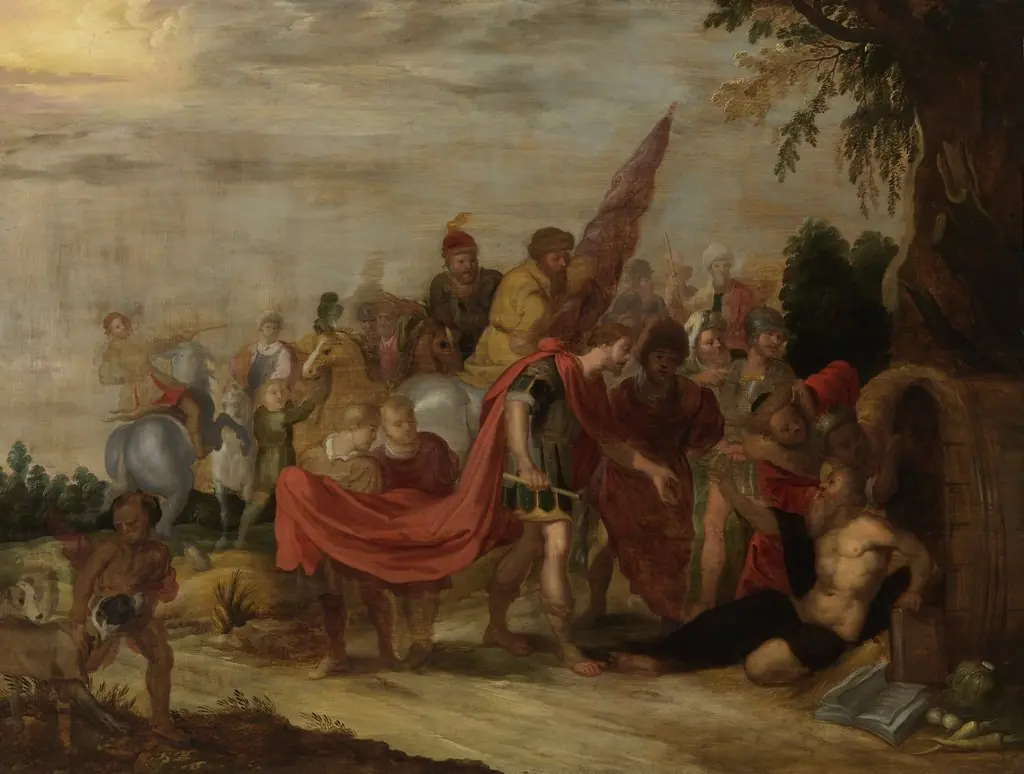 Alexander en Diogenes
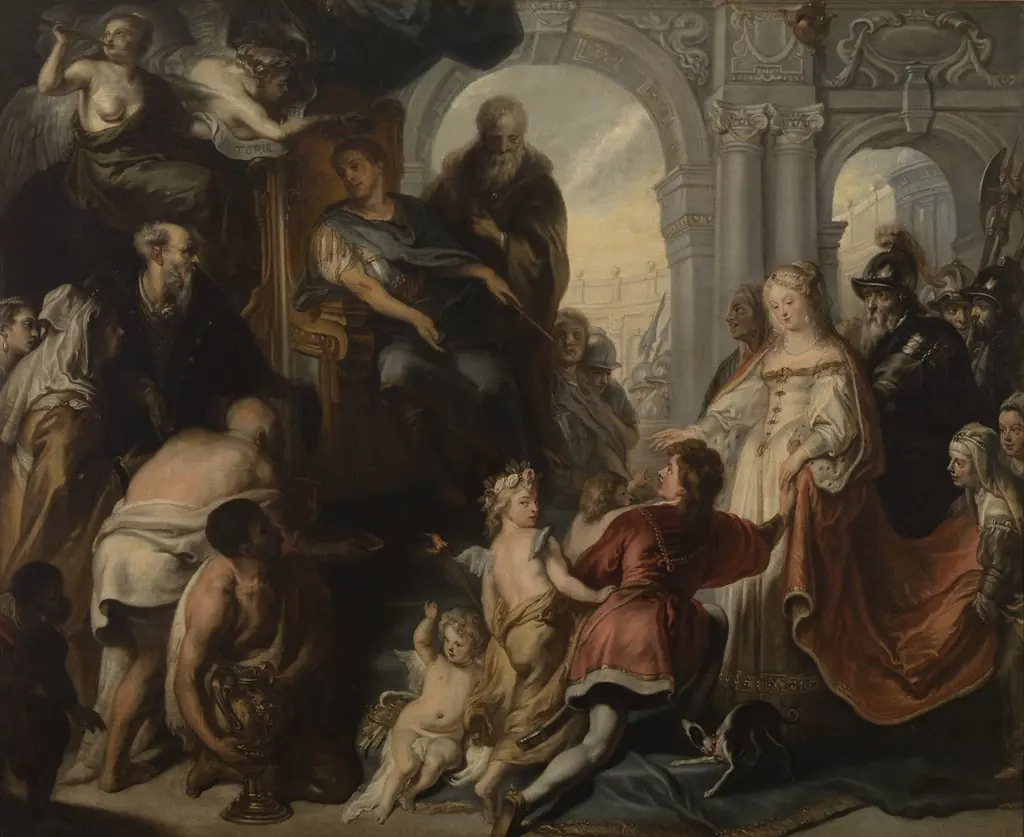 The Continence of Scipio Africanus
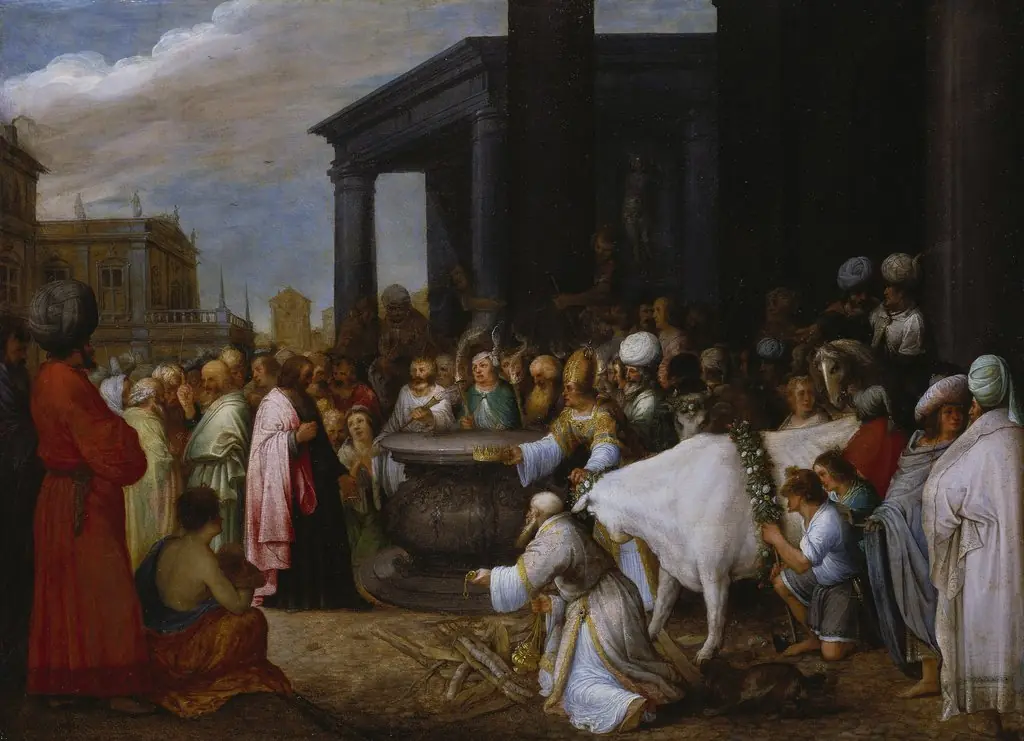 Paul and Barnabas are worshiped as gods in Lystra
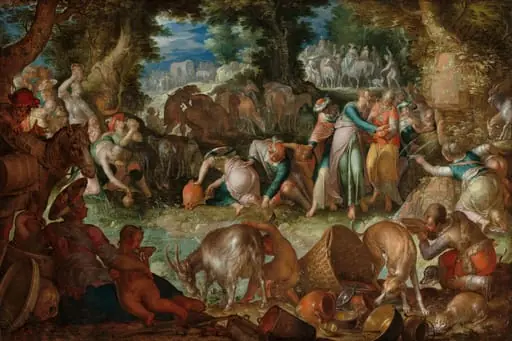 Moses Striking the Rock
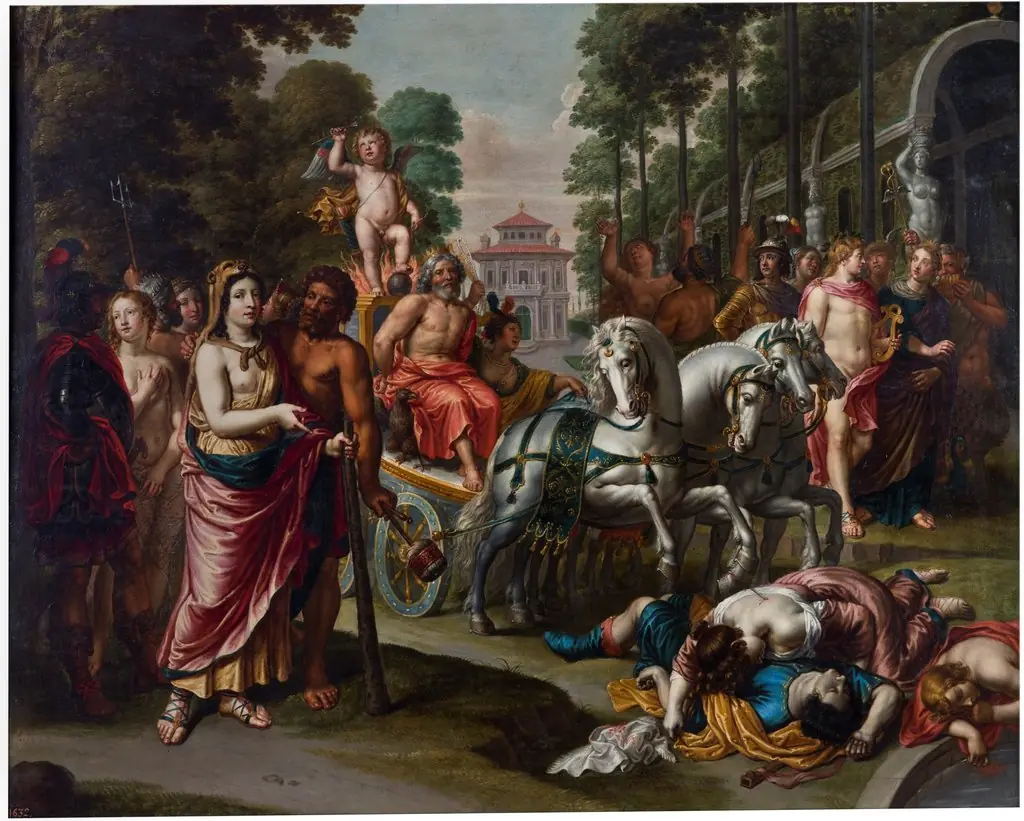 Triumph of Love
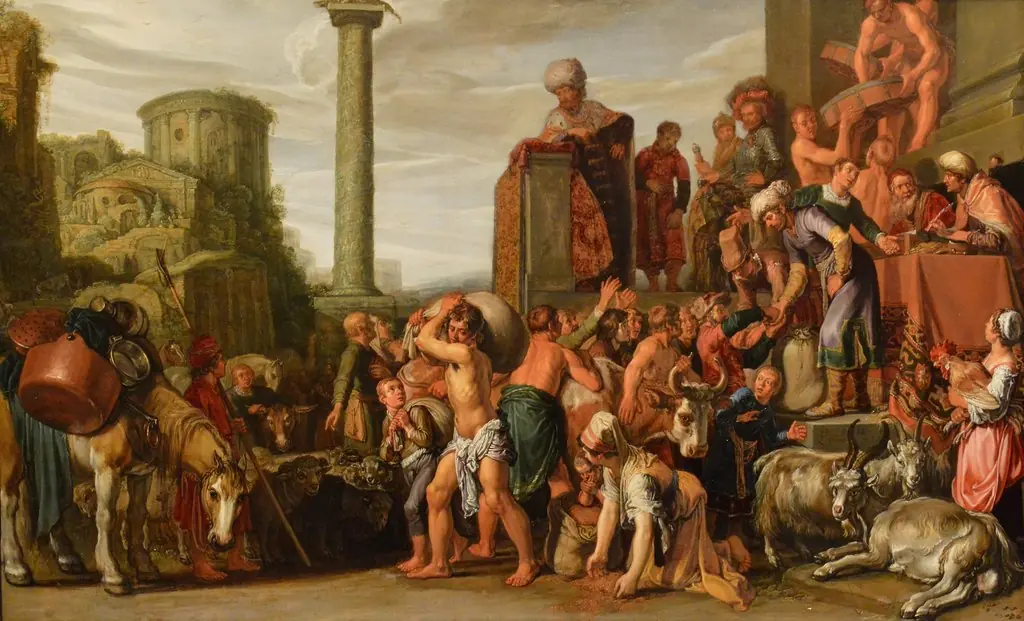 Joseph Selling Corn in Egypt
 Moses Striking the Rock