Artwork
The Emperor of Austria ascending the Great Pyramid
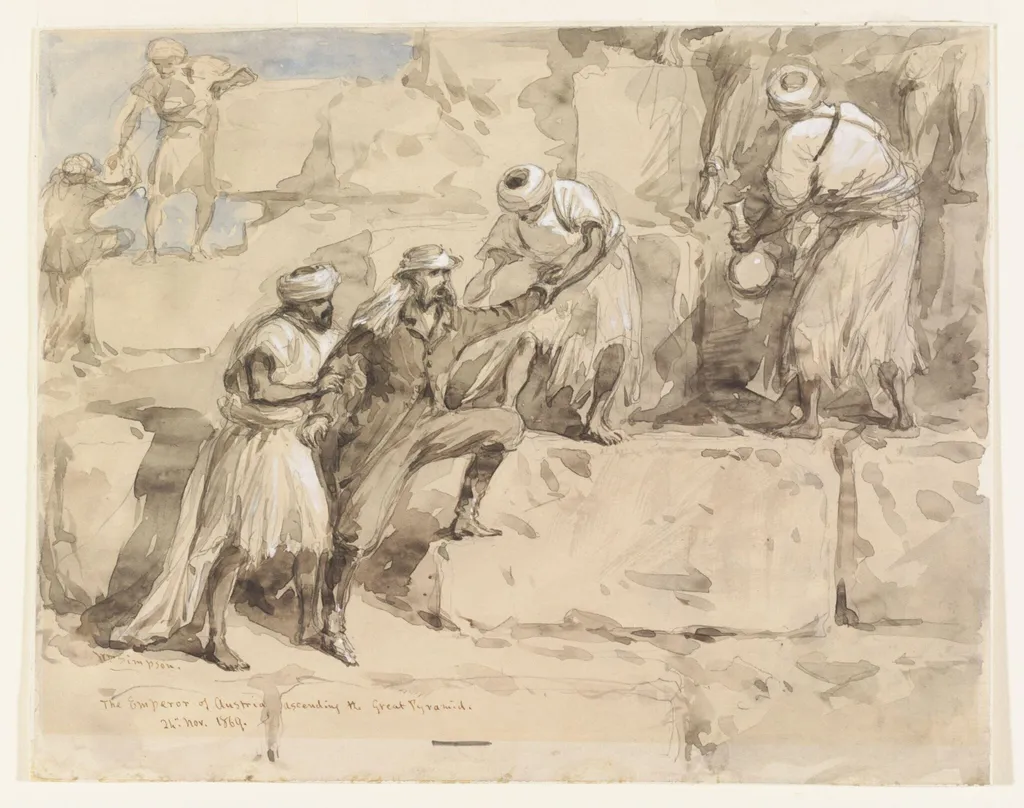
The Emperor of Austria ascending the Great Pyramid is a watercolor work on paper by the Impressionist artist William Simpson. It dates from 1869 and is held in the collection of the Victoria and Albert Museum.
About this work
William Simpson painted watercolour scenes of the Emperor of Austria on the Great Pyramid in 1869.
William Simpson painted watercolour scenes of the Emperor of Austria on the Great Pyramid in 1869. It shows Franz Joseph being hauled up by two Arab guides like any tourist. Simpson had a sharp eye for odd moments like this.
He once wrote that he saw the emperor “lugged” up like “an overland passenger.” Simpson himself had been in Egypt for the Suez Canal opening. The new canal cut travel time to India.
Look up the artist Simpson, William.
Overview
Painted in 1869, this watercolour by William Simpson captures Emperor Franz Joseph of Austria being carried up the Great Pyramid by local guides. The scene was observed during Simpson’s trip to Egypt to document the opening of the Suez Canal. Rather than portraying imperial grandeur, the work highlights an unexpected moment of physical vulnerability, contrasting the emperor’s status with the labor of those who assisted him.
Subject & Meaning
The painting depicts Franz Joseph not as a sovereign in ceremonial attire, but as a tourist subjected to the same physical demands as other visitors. Simpson’s choice to focus on the emperor being hauled up the pyramid underscores the absurdity of colonial-era tourism, where even royalty relied on local labor to access ancient monuments. The image subtly critiques the performative nature of imperial travel in the 19th century.
Technique & Style
Simpson employed loose, fluid watercolour washes to convey movement and texture, capturing the dust of the desert and the strain of the guides. His brushwork is brisk yet precise, reflecting his background in lithography and rapid sketching for illustrated newspapers. The composition directs attention to the emperor’s awkward posture and the physical exertion of the men, emphasizing narrative over idealization.
History & Provenance
Created during Simpson’s assignment for the Illustrated London News, the watercolour was made in November 1869, coinciding with the Suez Canal’s inauguration. Simpson, employed as a special artist since 1866, documented global events with speed and observational acuity. The work likely originated as a personal sketch, later refined into a finished piece, possibly for private circulation or as preparatory material for publication.
Context
The Suez Canal’s opening marked a shift in global travel, rendering the traditional overland route through Egypt obsolete. Yet, as Simpson observed, the pyramid remained a destination for European elites seeking exotic spectacle. The practice of hiring local men to carry visitors to the summit was common, reflecting both economic necessity and entrenched power dynamics between tourists and the Egyptian workforce.
Legacy
Simpson’s work represents a transitional moment in visual journalism, where hand-drawn illustrations still conveyed news before photography became dominant. His unvarnished depiction of imperial figures in mundane, even undignified, situations offered a rare counterpoint to official imagery. The watercolour endures as a quiet testament to the human labor underpinning 19th-century tourism and imperial spectacle.
Own this work as a print
Artist & collection
Artist
William Simpson drew what he saw during the Crimean War in the 1850s, including sketches of battles and camps in Crimea and Constantinople.

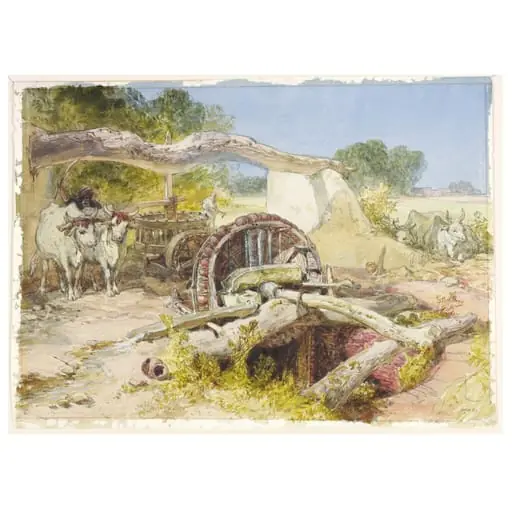
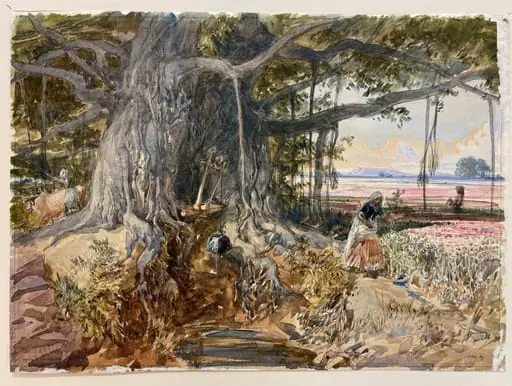
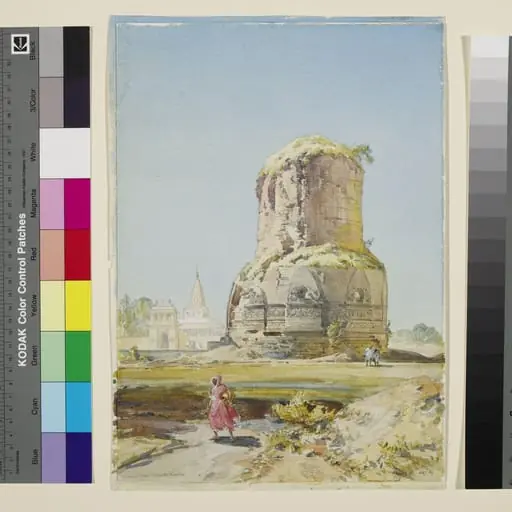
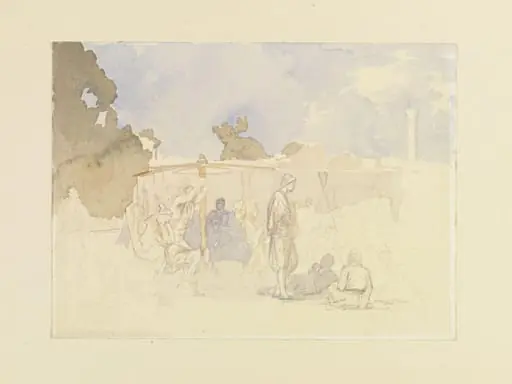 A group of figures in Eastern dress, Turkey
![Advanced guard & Baggage of the Royal artillery landi[ng] a[t] Alexandria en route for India, by T. B. S.](https://artifactworldgallery.com/img/t-b-s--advanced-guard-baggage-of-the-royal-artillery-landi-ng-a-t-a--605f6f4d9d8dfe93-w320.webp) Advanced guard & Baggage of the Royal artillery landi[ng] a[t] Alexandria en route for India
Advanced guard & Baggage of the Royal artillery landi[ng] a[t] Alexandria en route for India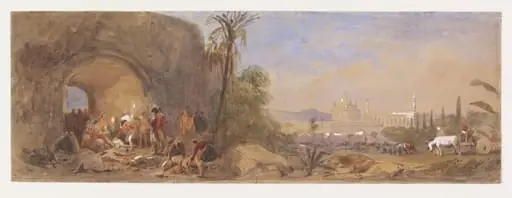 The Finding of the Body of Tipu Sultan at Seringapatam.
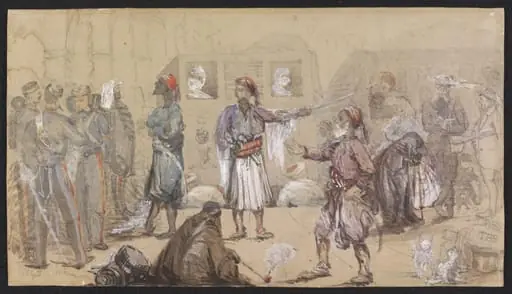 Railway Station, Alexandria
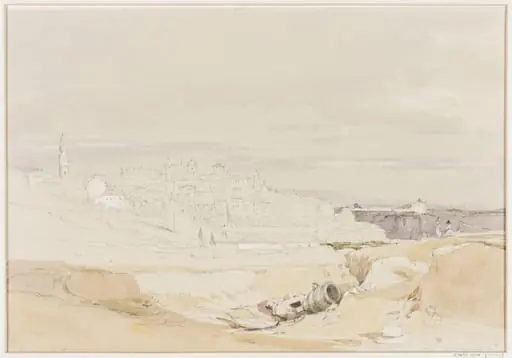 Sketch in Portugal
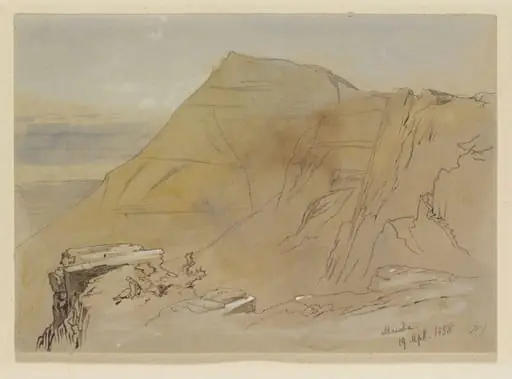 Masada
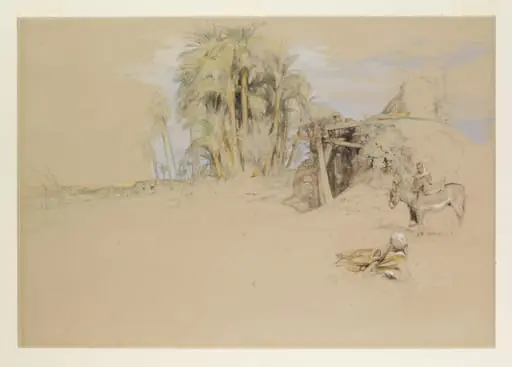 Rural Scene in Upper Egypt, on the banks of the Nile
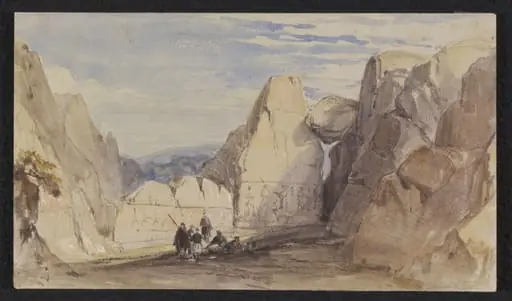 The Hittite rock sanctuary of Yazilikaya
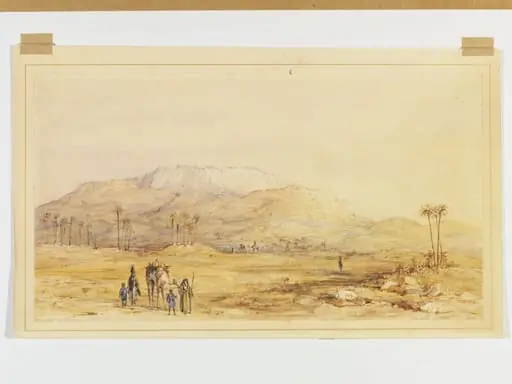 Pyramid of Abu Roash from the Village of Kerdassy
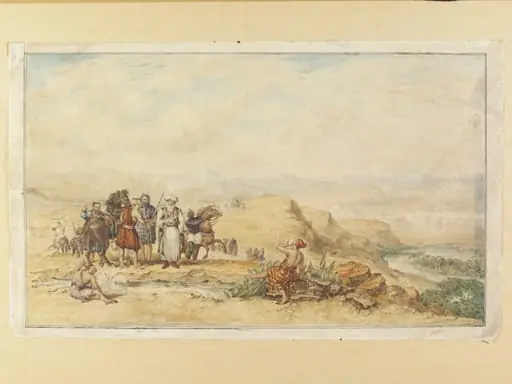 Halt at an Oasis