Artwork
Bridge of ropes on the Sutlej
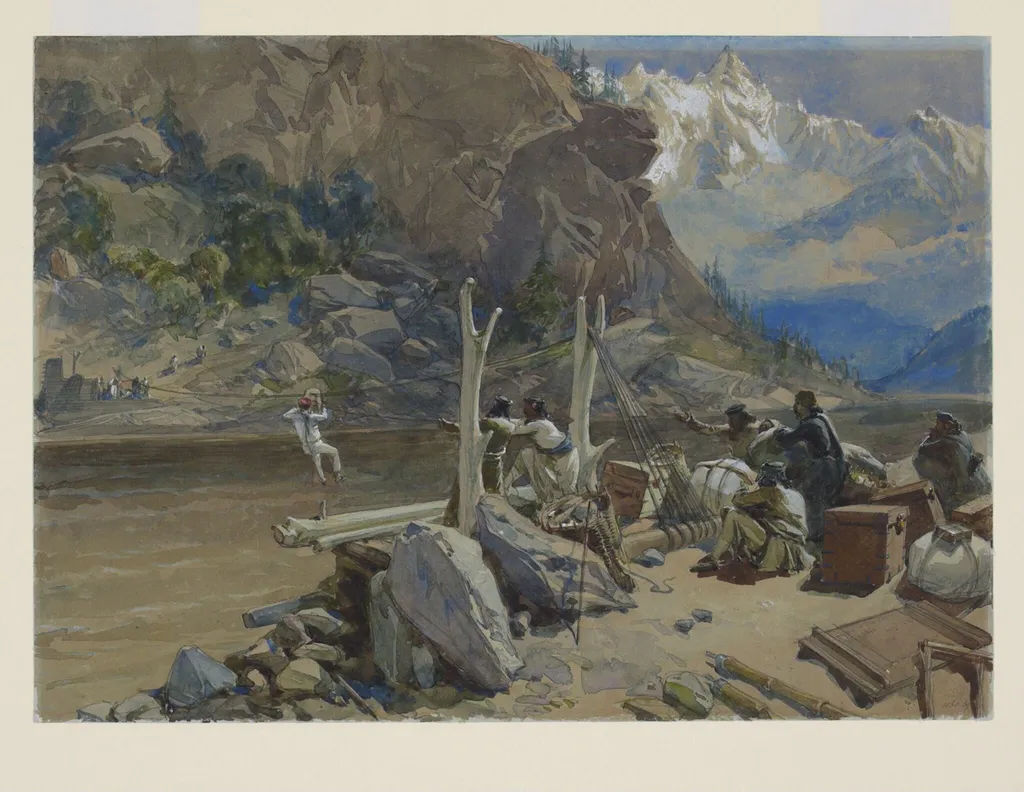
Bridge of ropes on the Sutlej is a paint painting by the British Romanticist artist William Simpson. It dates from 1860 and is held in the collection of the Victoria and Albert Museum.
About this work
This watercolor shows a rope bridge swaying high above a river. A few people cross it. Trees and a rocky cliff fill the background.
Simpson made these sketches after India’s 1857 revolt. The British hired him to record famous spots. His fast pencil lines became these calm watercolors later.
See more of his work at the Victoria and Albert Museum.
Overview
William Simpson, a British artist known for his documentary watercolours, created this work during a journey through the Himalayas in the late 1850s.
William Simpson, a British artist known for his documentary watercolours, created this work during a journey through the Himalayas in the late 1850s. Commissioned after the 1857 Revolt to record significant sites in British India, he traveled extensively, producing rapid pencil sketches that later informed detailed watercolours painted in London. This piece depicts a rope bridge spanning the Sutlej River, capturing a moment of travel in a remote region rarely seen by Europeans.
Subject & Meaning
The painting portrays a slender rope bridge suspended high above the turbulent Sutlej River, with figures cautiously crossing. The bridge, a vital but perilous link in mountainous terrain, symbolizes both human ingenuity and vulnerability. Simpson’s focus on the lone traveler underscores the isolation and risk of such crossings, reflecting European fascination with the exotic and the sublime in Indian landscapes, while avoiding overt political commentary.
Technique & Style
Simpson employed delicate watercolour washes to render the misty mountain backdrop and the river’s reflective surface. His pencil sketches, made on-site, informed the composition’s precise lines and spatial depth. The palette is restrained yet vivid, emphasizing the contrast between the dark ropes, the pale sky, and the rugged cliffs. The brushwork balances precision with atmospheric softness, conveying both the physical reality and emotional weight of the scene.
History & Provenance
Simpson traveled to the Sutlej Valley in 1859 during his first Himalayan expedition, sketching the rope bridge at Chini, situated at 10,000 feet. These field studies were later developed into finished watercolours after his return to London in 1862. The work was produced under commission by Day and Sons, a London lithography firm seeking visual records of India’s post-revolt landscape. The painting entered the Victoria and Albert Museum’s collection as part of his broader Indian series.
Context
Created in the aftermath of the 1857 Revolt, Simpson’s work was part of a British effort to visually document and reassert control over India’s geography and cultural landmarks. While his images appear neutral, they served to frame unfamiliar terrain as both awe-inspiring and orderly under colonial observation. The rope bridge, a local solution to geographic isolation, became a subject of curiosity for European audiences unfamiliar with such engineering.
Legacy
Simpson’s watercolours of India remain valuable as historical records of remote regions during a period of colonial transition. His method—rapid field sketches transformed into polished studio works—set a precedent for documentary art in imperial contexts. Though romanticized, his depictions preserved details of infrastructure and landscape now altered or lost, offering insight into the lived realities of travel in 19th-century northern India.
Artist & collection
Artist
William Simpson drew what he saw during the Crimean War in the 1850s, including sketches of battles and camps in Crimea and Constantinople.

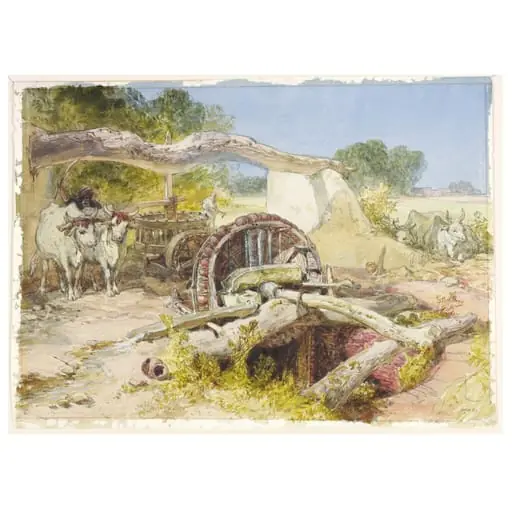
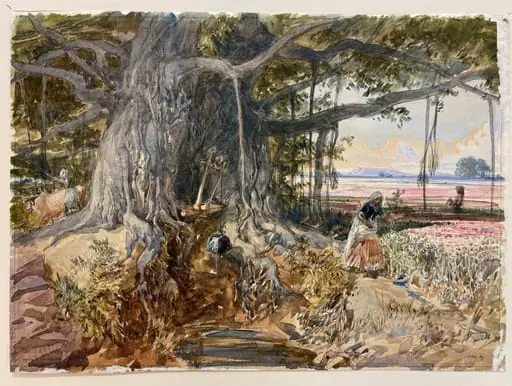
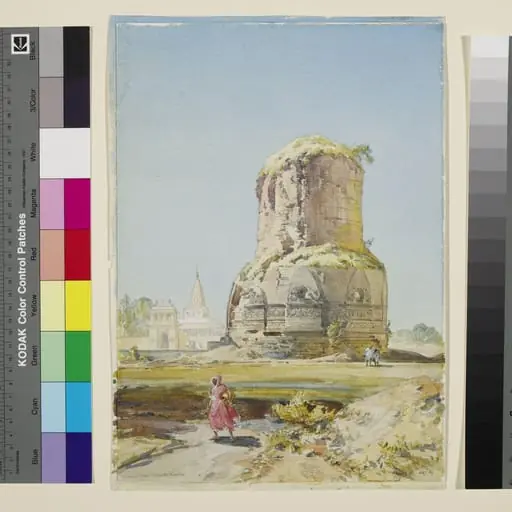

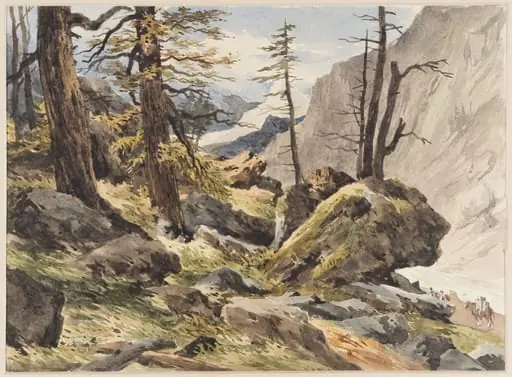 Road leading to Zermatt, Switzerland
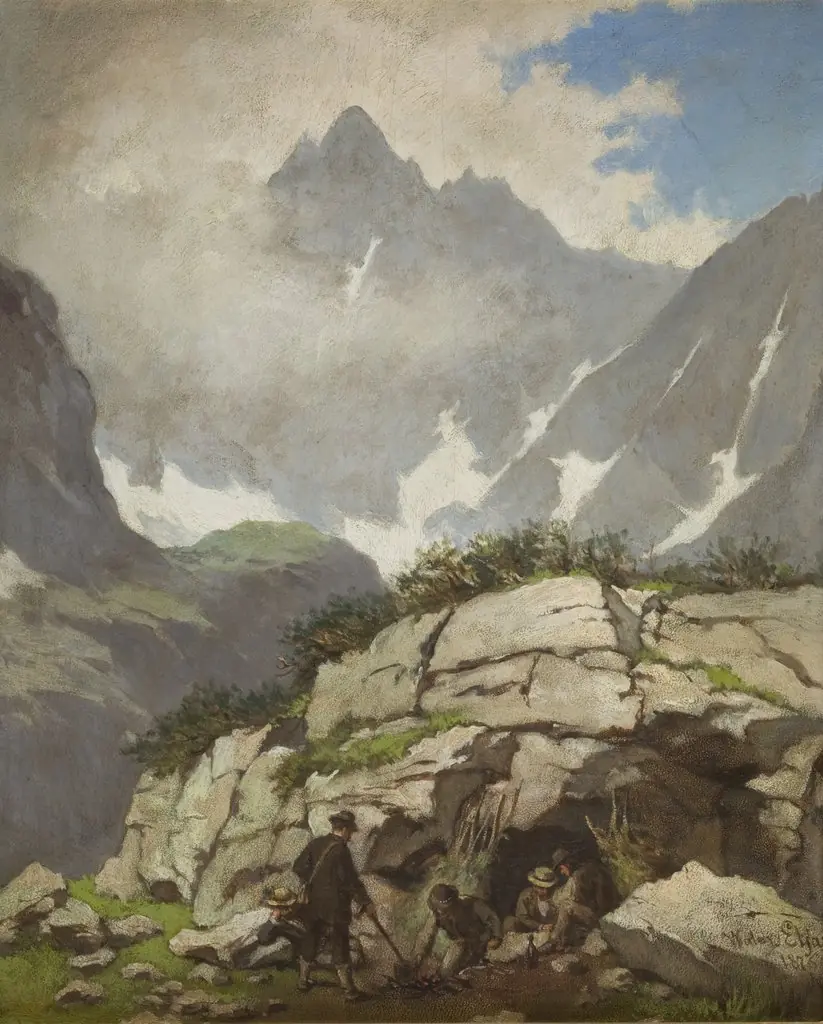 Rock Refuge of Reverend Stolarczyk in the Tatra Mountains
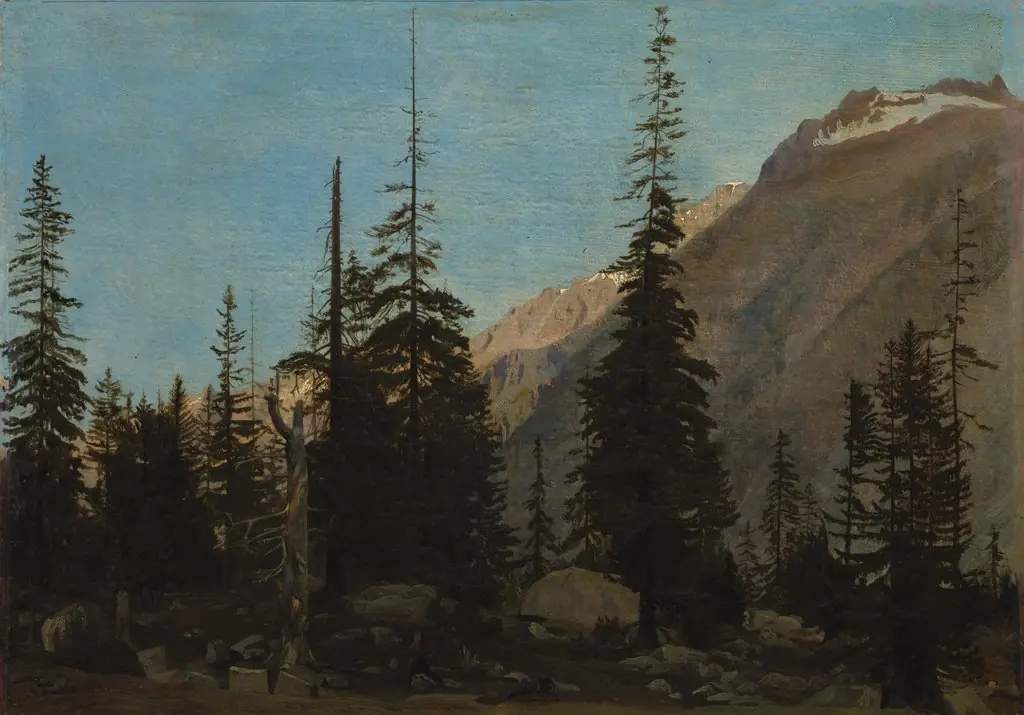 Alpine Landscape: The Handegg, Switzerland
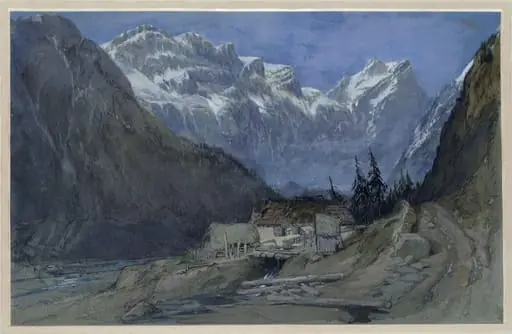 Val d'Orso
 Berglandschap in Tirol met gemzen
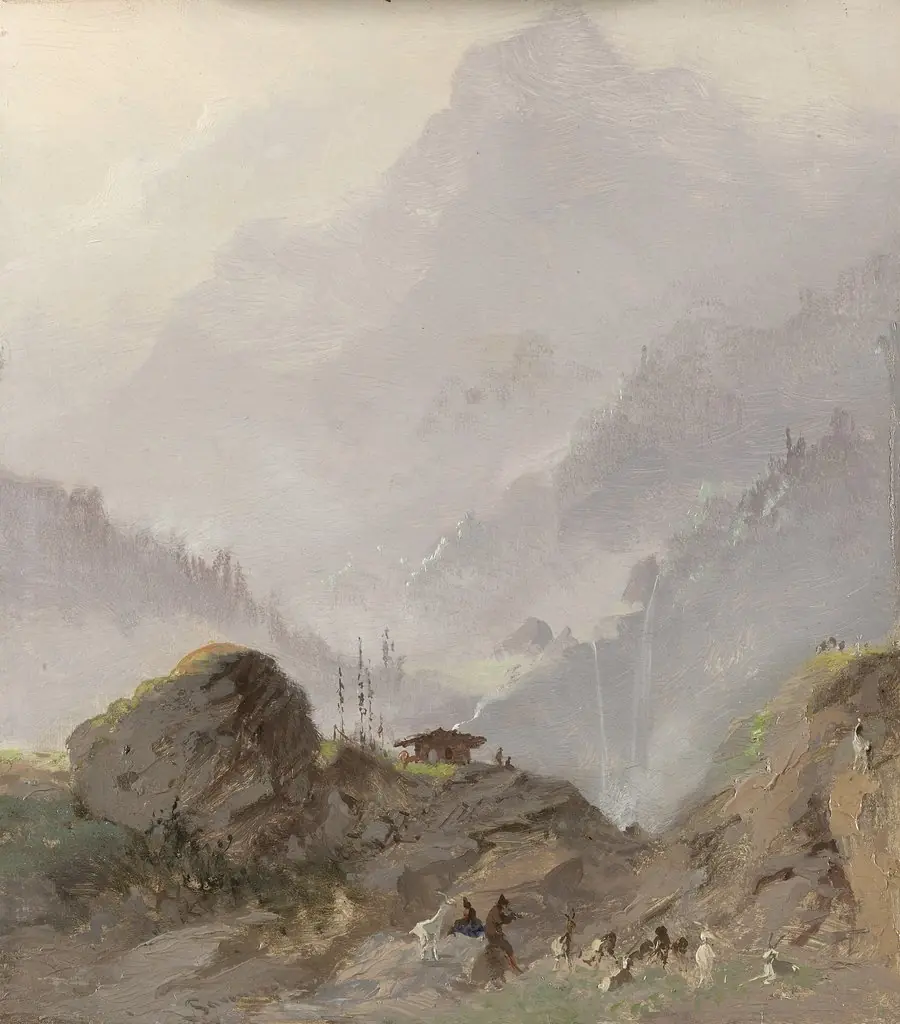 Alpine Landscape in Tyrol with Chamois Herd
 Ortler Spitz, Tirol
 Landscape, Switzerland
 View at Handeck, Switzerland
 Mountain Stream with Rapids
 Pine Trees and Bridge
 Children sleeping in the Himalayas