Artwork
Πανοραμική άποψη της Αθήνας από τον Υμμητό
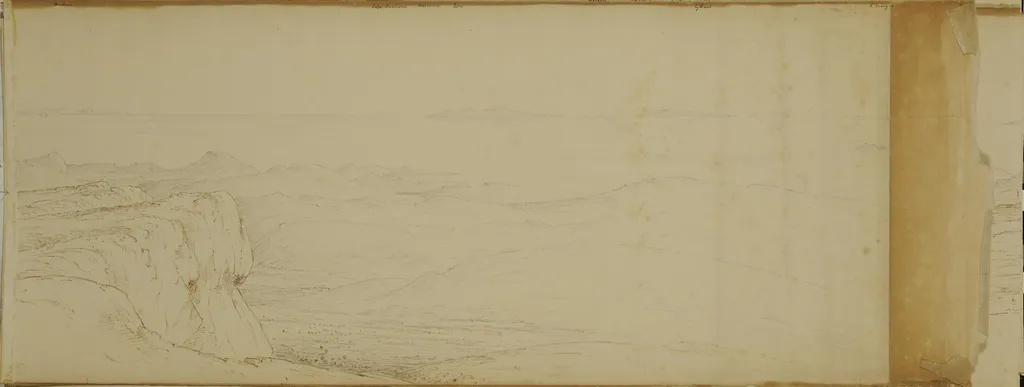
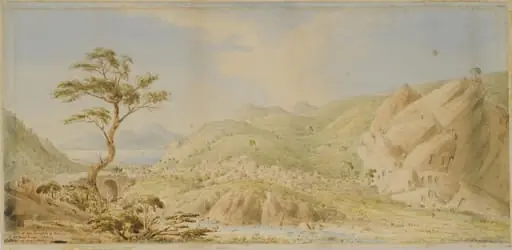
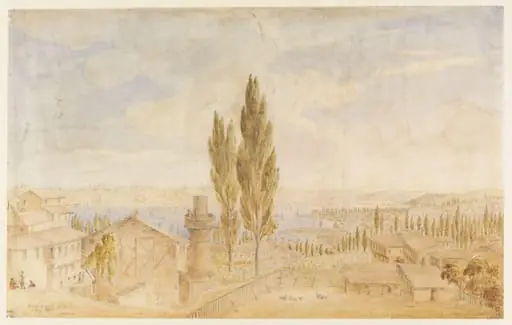
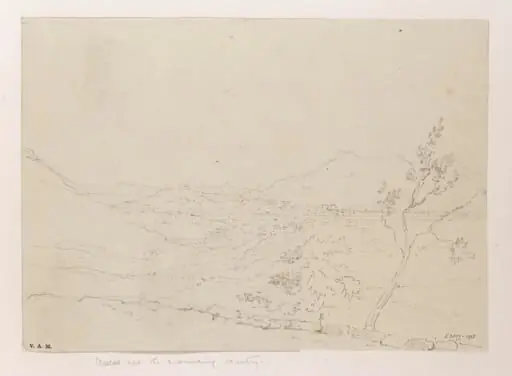
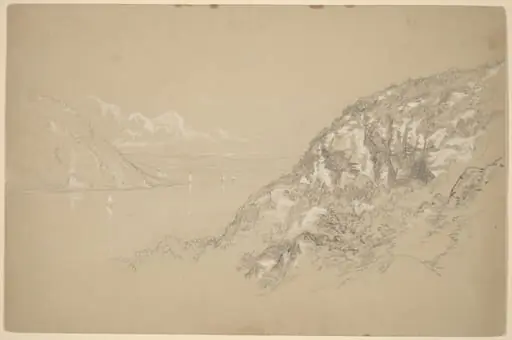
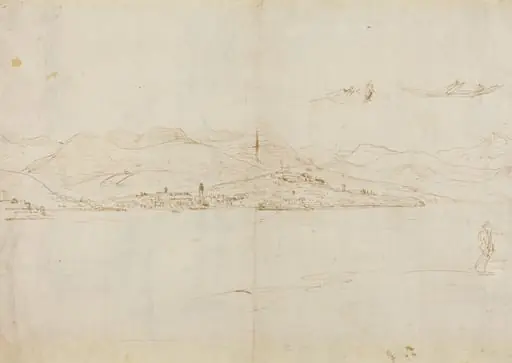
Πανοραμική άποψη της Αθήνας από τον Υμμητό is a drawing by the Romanticist artist James Skene. It dates from 1841 and is held in the collection of the Historical & Ethnological Society of Greece.
About this work
Overview
Its composition emphasizes spatial distance rather than architectural detail, reflecting a 19th-century approach to landscape representation.
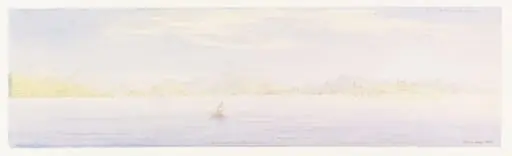
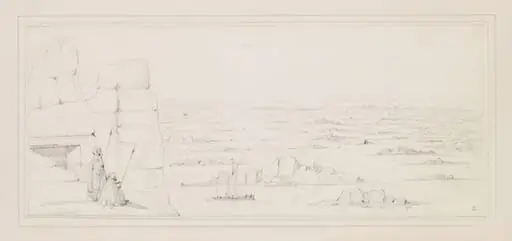
Created in 1841 by Scottish artist James Skene, this pencil and ink drawing presents a distant, elevated view of Athens from Mount Hymettus. Rendered on paper that has yellowed and developed faint brown discolorations over time, the work captures the city as a diminished presence against expansive sky and rugged terrain. Its composition emphasizes spatial distance rather than architectural detail, reflecting a 19th-century approach to landscape representation.
Subject & Meaning
The drawing depicts Athens as a quiet, scattered settlement nestled in the landscape, with winding paths and minimal building forms suggesting habitation without precision. The vast emptiness surrounding the city, paired with the dominant rocky foreground, conveys a sense of solitude and timelessness. This treatment aligns with Romantic sensibilities, where nature’s scale overshadows human settlement, evoking contemplation over documentation.
Technique & Style
Skene employed restrained linear marks and tonal washes to define distant structures and terrain, avoiding fine detail in favor of broad, atmospheric shapes. The foreground’s jagged rock formations contrast with the soft, empty sky, reinforcing depth and isolation. The paper’s aging has softened the image further, enhancing its muted, contemplative mood. This method prioritized emotional resonance over topographical accuracy, typical of travel sketches from the period.
History & Provenance
The drawing entered the collection of the Museum of Ethnography after being produced during Skene’s travels in Greece in the early 1840s. As a Scottish artist and amateur topographer, he documented sites across the region for personal and scholarly interest. Its preservation in an ethnographic institution reflects its value as a cultural record rather than a fine art object, underscoring its role in documenting the Greek landscape during a period of national transformation.
Context
Painted shortly after Greek independence, the work reflects a European fascination with ancient lands now reconfigured as modern nations. Skene’s view avoids political or historical markers, instead presenting Athens as a quiet ruin amid enduring nature. This perspective aligned with Romantic travel literature, which often framed classical sites as melancholic relics, inviting viewers to contemplate time’s passage rather than contemporary realities.
Legacy
Though not widely exhibited, the drawing remains a quiet example of 19th-century European engagement with the Greek landscape. Its modest scale and unembellished style offer insight into how travelers perceived and recorded distant places before photography became common. It contributes to a broader archive of visual responses to Greece during its early modern era, valued for its sincerity over spectacle.
Artist & collection

Artist
James Skene of Rubislaw (1775–1864) was a Scottish lawyer and amateur artist, best known as a friend of Sir Walter Scott.
Museum
Historical & Ethnological Society of Greece
Continue through works from the same source collection.