Artwork
Asiatic Castle of the Dardanells
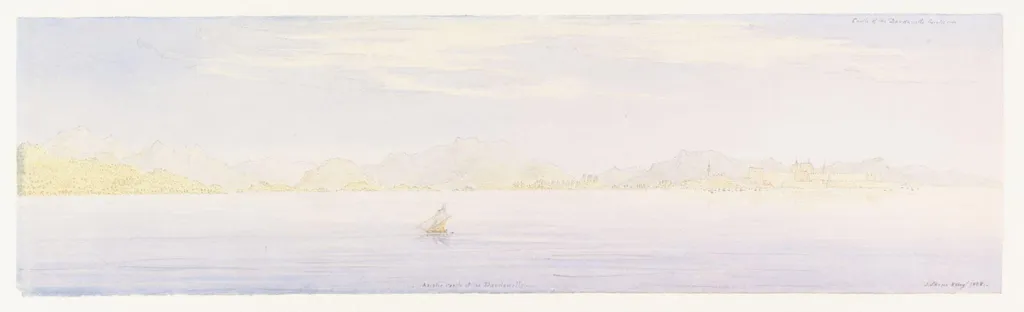
Asiatic Castle of the Dardanells is a watercolor work on paper by the Romanticist artist James Skene. It dates from 1838 and is held in the collection of the Victoria and Albert Museum.
About this work
Overview
Executed during Skene’s travels in the region, the work reflects his practice of recording landscapes en plein air.
Created in 1838, *Asiatic Castle of the Dardanelles* is a watercolour by James Skene, capturing a coastal fortress along the strait connecting the Aegean and Sea of Marmara. Executed during Skene’s travels in the region, the work reflects his practice of recording landscapes en plein air. It entered public collection after being acquired at a Bonham’s auction in 1977 for £22, preserving a modest but evocative record of 19th-century travel sketching.
Subject & Meaning
The scene centers on a distant fortress perched along the Asian shore of the Dardanelles, its forms softened by atmospheric perspective. A solitary boat drifts near the water’s center, suggesting quiet human presence without narrative detail. The composition avoids grandeur, instead emphasizing solitude and the subtle interplay between land, sea, and sky — a contemplative view shaped by the artist’s observational rather than monumental intent.
Technique & Style
Skene employed loose, fluid brushwork and diluted pigments to achieve a luminous, translucent effect. Forms are suggested rather than defined, with hazy hills and faint architectural details emerging through minimal strokes. The pale sky merges seamlessly with the water, reinforcing a sense of airiness. The work reads as a rapid study, prioritizing mood and light over precision, characteristic of amateur topographical sketching of the period.
History & Provenance
The watercolour was likely made during Skene’s 1830s journey through the eastern Mediterranean, a period when British travelers documented classical and Ottoman landscapes. It remained in private hands until its appearance at Bonham’s in May 1977, where it was purchased for £22. Its subsequent acquisition by a public institution ensured its preservation as an example of 19th-century travel watercolours, though its full provenance prior to 1977 remains undocumented.
Context
Skene’s work emerged amid a broader British interest in the Near East following the Greek War of Independence and increased travel to Ottoman territories. While professional artists produced grander views, amateurs like Skene focused on intimate, fleeting impressions. This piece aligns with the tradition of topographical watercolours — not intended for exhibition, but as personal records of place, often made for private circulation or later sale.
Legacy
Though not widely exhibited, the watercolour contributes to the understanding of how 19th-century British travelers engaged with the landscapes of the eastern Mediterranean. Its modest scale and unassuming technique reflect a quieter, more personal mode of observation. As a surviving example of amateur travel art, it offers insight into the visual culture of exploration beyond formal academic traditions.
Artist & collection

Artist
James Skene of Rubislaw (1775–1864) was a Scottish lawyer and amateur artist, best known as a friend of Sir Walter Scott.

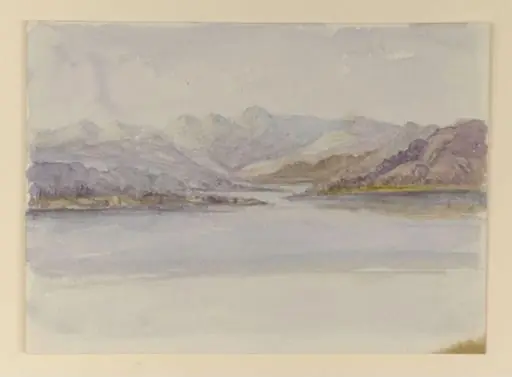 View across a lake to the Langdale Pikes
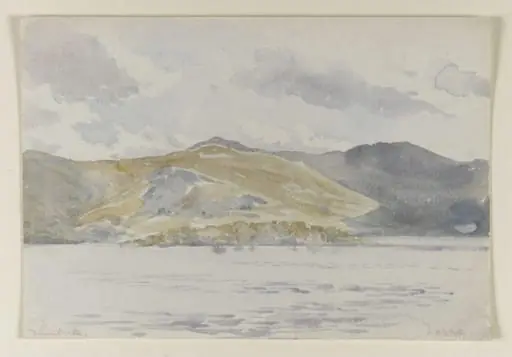 Derwentwater
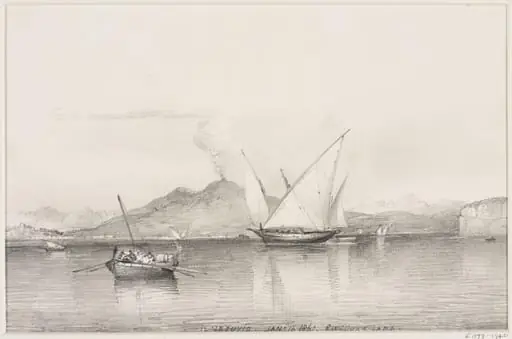 Il Vesuvio
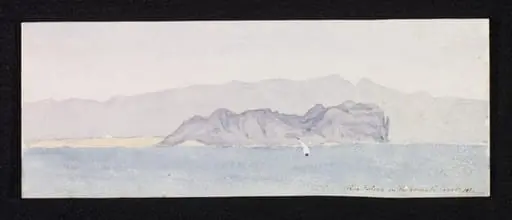 Ras Falook on the Somali Coast
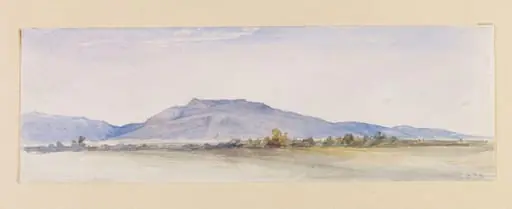 The Xanthus Valley, Lycia
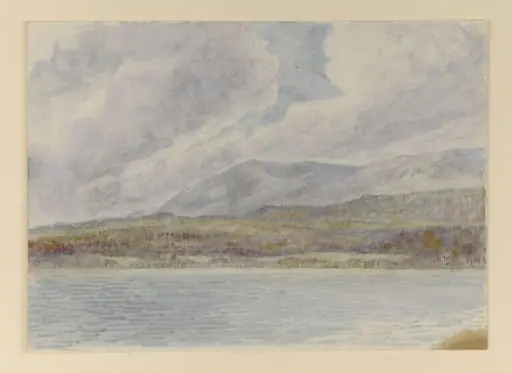 View across Derwentwater
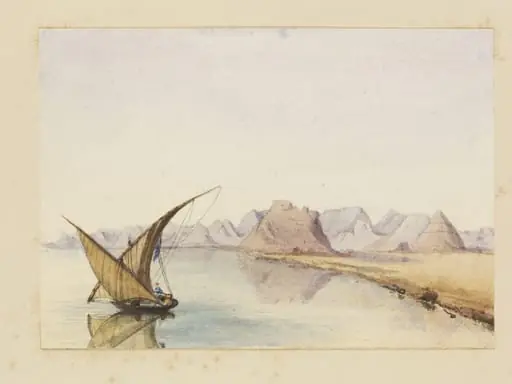 View of the Nile with boat
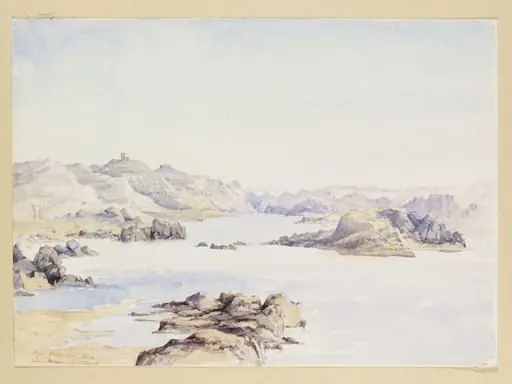 From Elephantine between Asouan and the 1st Cataract
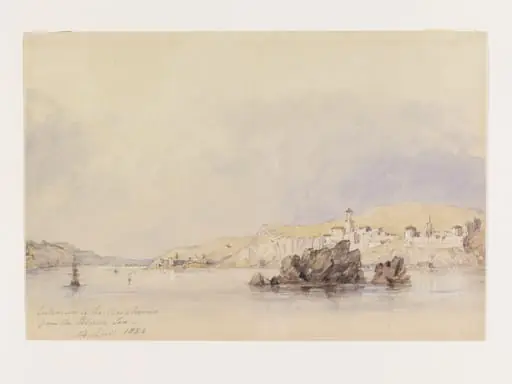 Entrance to the Bosphorus from the Black Sea
![Looking towards Leanders Tower and the Sultans New Palace [Dolmabahçe] From Scutari, by Michael Anthony Shrapnel Biddulph](https://artifactworldgallery.com/img/michael-anthony-shrapnel-biddulph--looking-towards-leanders-tower-and-the-sultans-new-palace-do--77513ba4e146ed32-w320.webp) Looking towards Leanders Tower and the Sultans New Palace [Dolmabahçe] From Scutari
Looking towards Leanders Tower and the Sultans New Palace [Dolmabahçe] From Scutari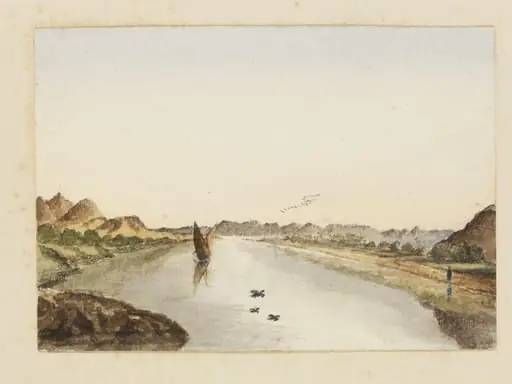 View of the Nile