Artwork
Saint John the Evangelist
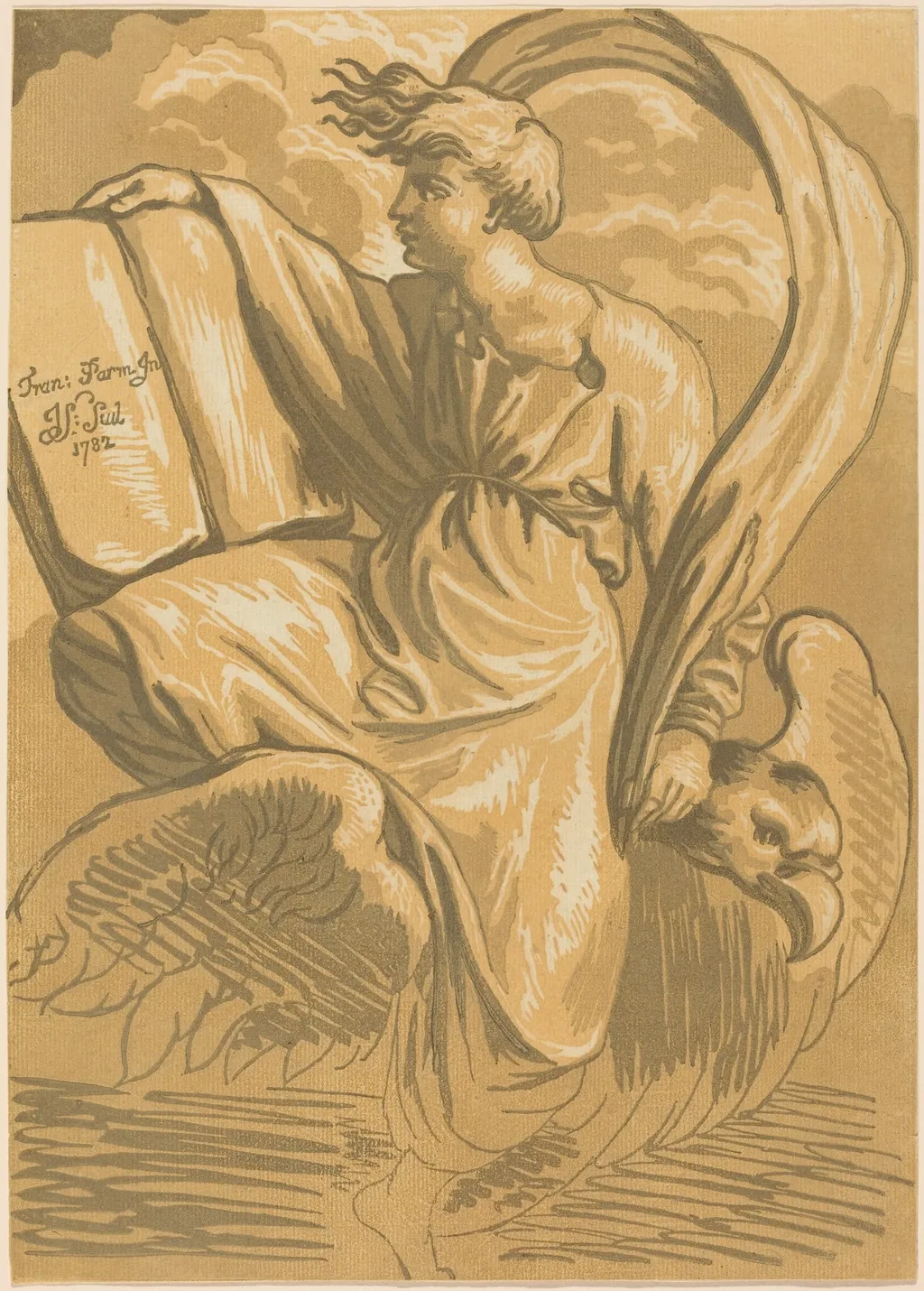
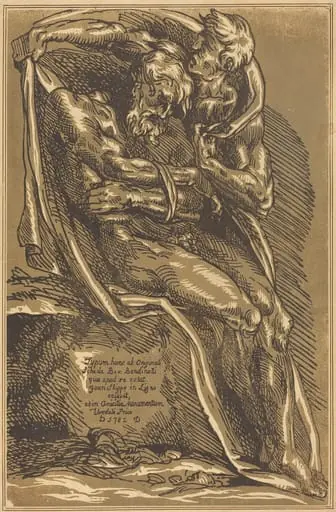
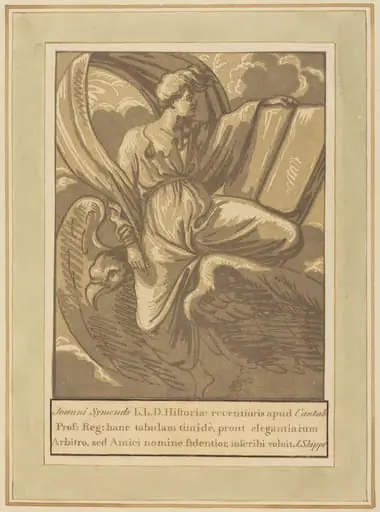
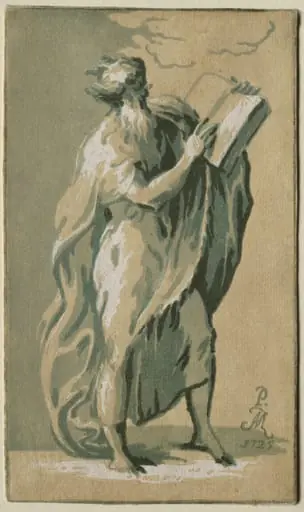
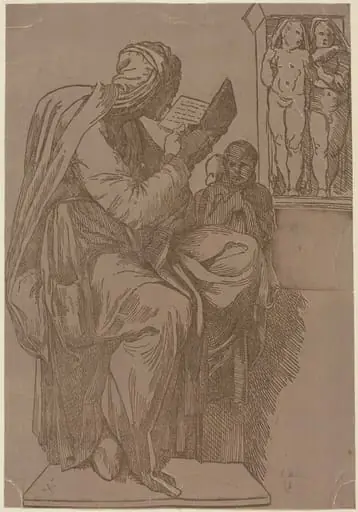
Saint John the Evangelist is an ink print by the Romanticist artist John Skippe. It dates from 1782 and is held in the collection of the National Gallery of Art.
About this work
Overview
Created in 1782, this chiaroscuro woodcut depicts Saint John the Evangelist as a dynamic, winged figure. The print employs bold contrasts of light and shadow to model form and movement, characteristic of the chiaroscuro technique. Executed in woodcut, it reflects a transitional moment in printmaking where dramatic lighting was used to evoke spiritual presence rather than mere illustration.
Subject & Meaning
The open book in his left hand signifies his scriptural work, while the slender feather in his right alludes to the act of writing under divine guidance.
The figure represents Saint John the Evangelist, traditionally associated with divine inspiration and the authorship of the Gospel. The open book in his left hand signifies his scriptural work, while the slender feather in his right alludes to the act of writing under divine guidance. Wings suggest his celestial role, and the wind-swept robes convey a sense of divine motion, reinforcing his connection to the sacred.
Technique & Style
The image is produced through chiaroscuro woodcut, a method using multiple blocks to layer tones of black, gray, and white. This technique allows for nuanced gradations of light and shadow, enhancing the figure’s three-dimensionality. The flowing drapery and atmospheric background of clouds and water demonstrate a deliberate emphasis on movement and mood, aligning with emerging Romantic sensibilities in visual art.
History & Provenance
The print was made by John Skippe in 1782, during a period when religious subjects were being reinterpreted through emerging aesthetic movements. Though Skippe is primarily known as a painter, this woodcut stands as a rare printed work in his oeuvre. Its survival suggests limited circulation, likely among collectors or ecclesiastical patrons interested in devotional imagery with modern visual language.
Context
In late 18th-century Britain, religious imagery was increasingly framed through emotional and naturalistic expression. Skippe’s depiction of Saint John, with its windswept robes and sublime backdrop, reflects a shift away from rigid iconography toward a more personal, atmospheric interpretation. This aligns with broader cultural interests in the sublime and the spiritual power of nature.
Legacy
This woodcut remains a singular example of Skippe’s engagement with printmaking and his attempt to merge devotional subject matter with Romantic visual strategies. While not widely reproduced or studied, it offers insight into how religious figures were reimagined in the late Enlightenment, bridging traditional symbolism with emerging artistic concerns for emotion and atmosphere.
Artist & collection