Artwork
Man in Chains
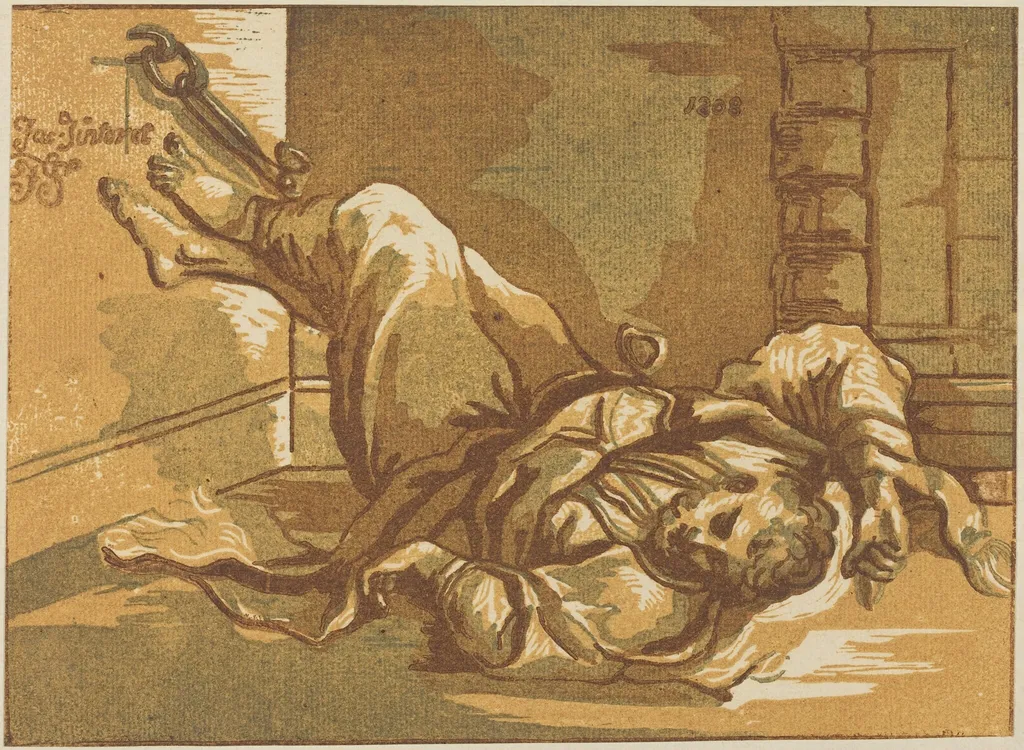
Man in Chains is an ink print by the Romanticist artist John Skippe. It dates from 1808 and is held in the collection of the National Gallery of Art.
About this work
Overview
John Skippe’s 1808 chiaroscuro woodcut titled Man in Chains depicts a bound figure collapsed on a stark floor. The composition centers on a twisted male form whose wrists are fastened with massive chains, while his limbs are tangled in rope. A bare wall, a ladder and a dimly lit window form a minimal backdrop, heightening the sense of confinement and physical strain.
Subject & Meaning
The work presents a solitary individual in a state of helplessness, his head bowed and body contorted under the weight of heavy shackles. The stark portrayal of bondage and the cramped setting suggest themes of oppression, vulnerability, and the human response to physical restraint, inviting viewers to contemplate the psychological impact of captivity.
Technique & Style
The limited tonal range and simplified background are characteristic of early 19th‑century printmaking that sought dramatic effect through stark lighting.
Executed as a chiaroscuro woodcut, Skippe employs contrasting dark and light areas to model volume and convey tension. The deep shadows sculpt the figure’s musculature, while the illuminated portions highlight the oppressive weight of the chains. The limited tonal range and simplified background are characteristic of early 19th‑century printmaking that sought dramatic effect through stark lighting.
History & Provenance
Created in 1808, Man in Chains is an early example of Skippe’s print work during a period when chiaroscuro techniques were being revived in Britain. The piece has been held in several private collections before entering a public museum’s print department, where it is referenced in studies of Romantic-era graphic art.
Artist & collection

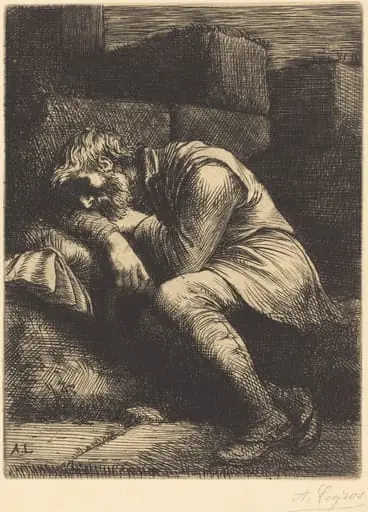 Sleeping Beggar (Mendiant endormi)
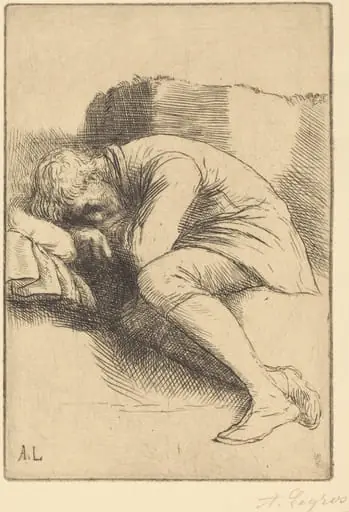 Sleeper (Un dormeur)
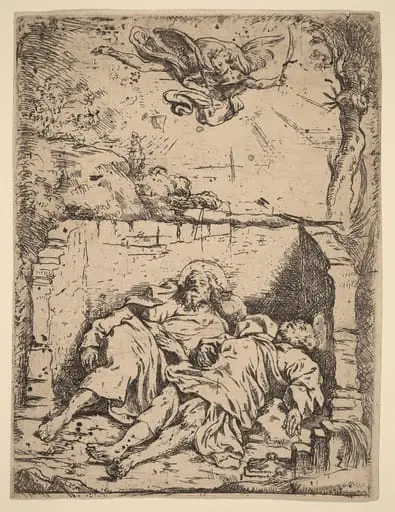 The Bodies of Saints Peter and Paul
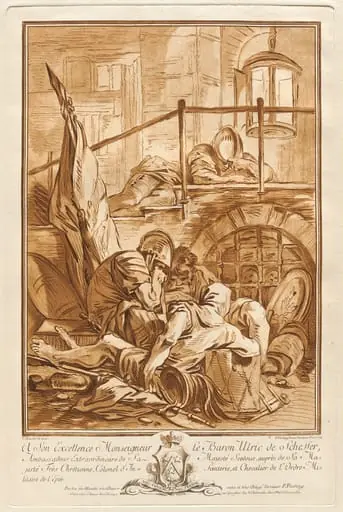 Guardhouse
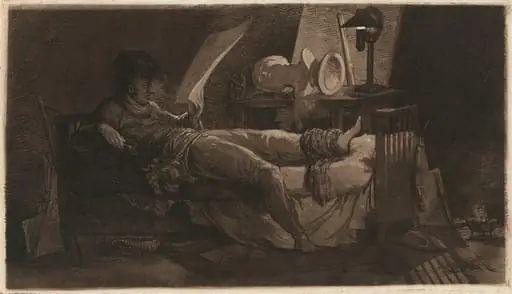 Self-Portrait with an Injured Foot
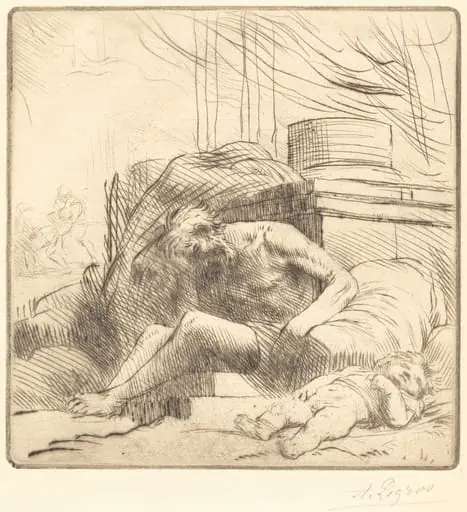 Victim of a Fire (Victime d'un incendie)
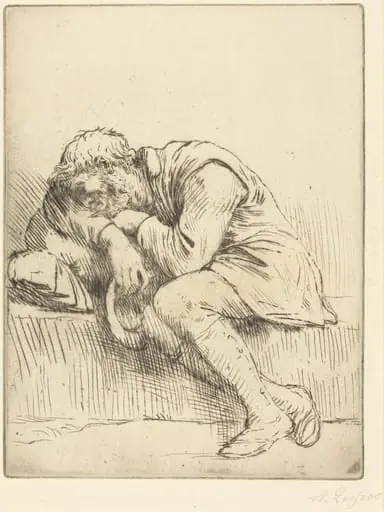 Sleeping Beggar (Mendiant endormi)
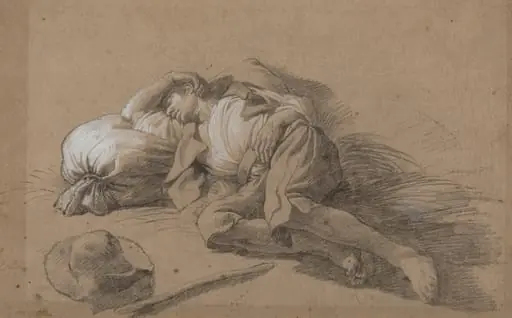 Sleeping Peasant
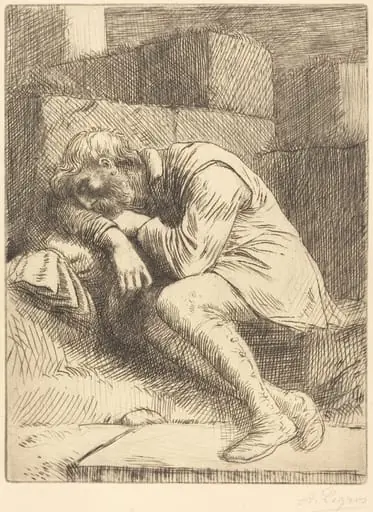 Sleeping Beggar (Mendiant endormi)
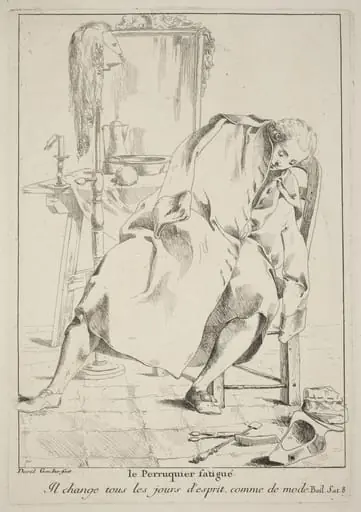 Le Perruquier fatigué (The Tired Wigmaker)
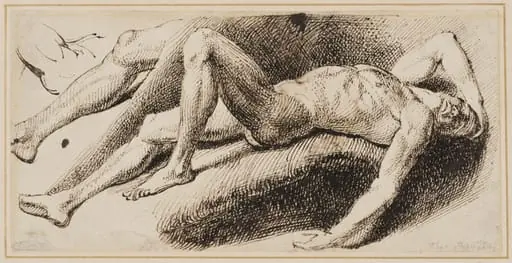 Study of a male nude
 The Wild Rabbit