Artwork
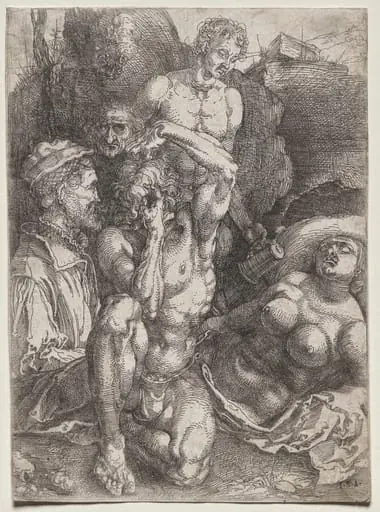
A Naked Man, Seated, with His Hands Tied
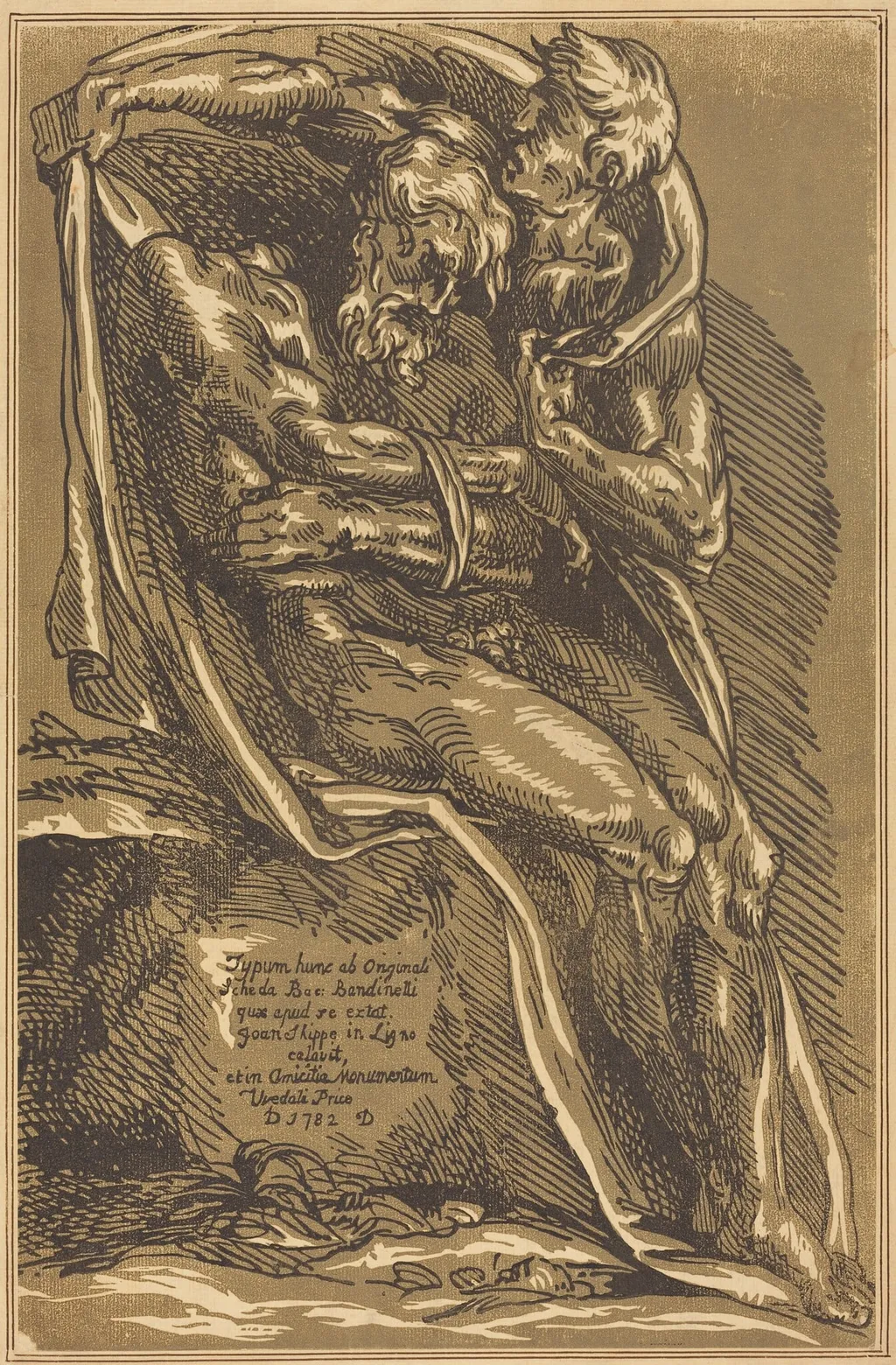
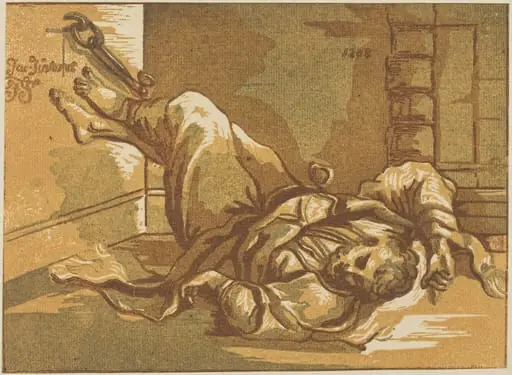
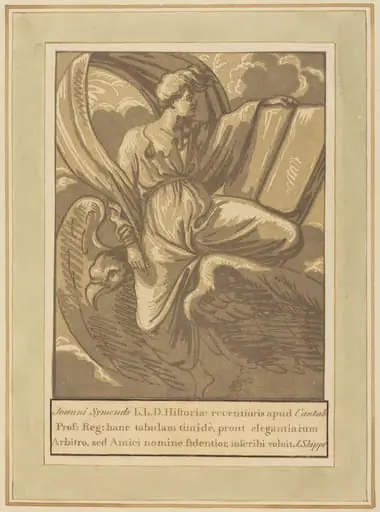
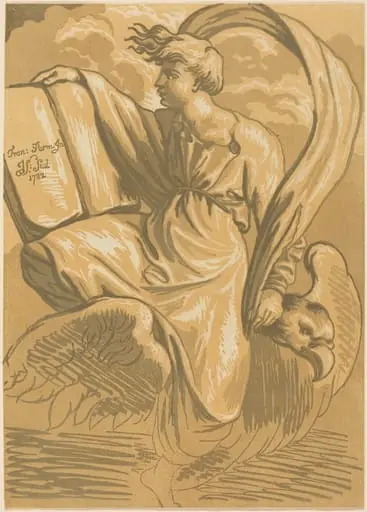
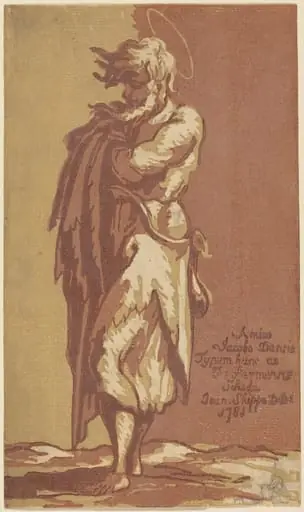
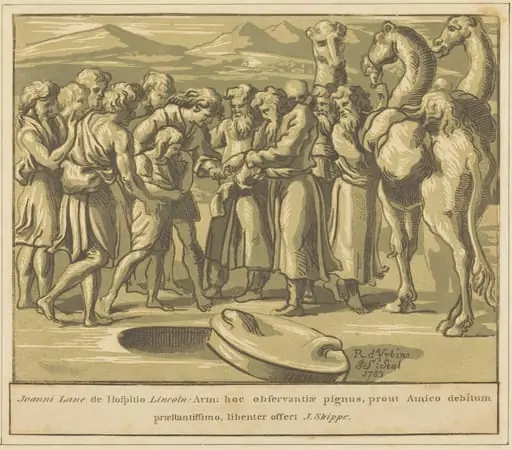
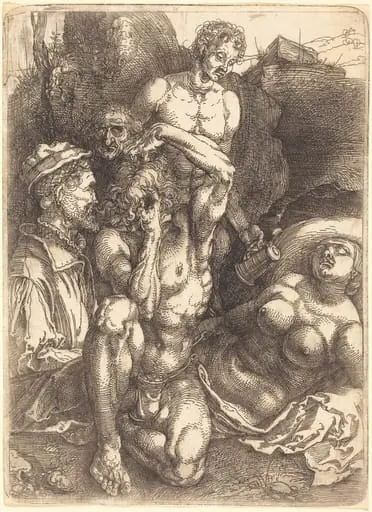
A Naked Man, Seated, with His Hands Tied is an ink print by the Romanticist artist John Skippe. It dates from 1782 and is held in the collection of the National Gallery of Art.
About this work
Overview
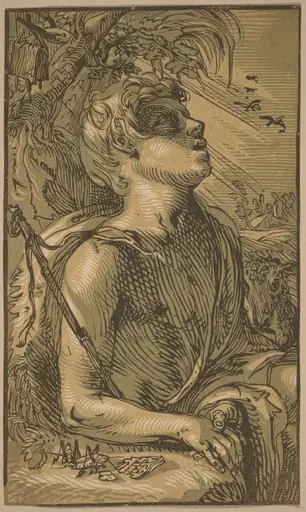
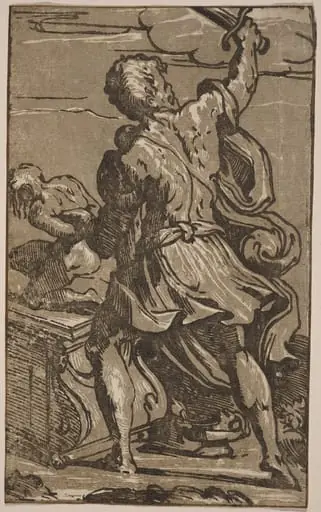
John Skippe’s 1782 woodcut, titled *A Naked Man, Seated, with His Hands Tied*, is a chiaroscuro print executed on laid paper and mounted on an older album sheet. The work measures in the modest dimensions typical of 18th‑century printmaking and presents a solitary figure rendered in a limited palette of greenish‑brown and black.
Subject & Meaning
The image depicts a nude male figure crouched on a plain surface, his hands bound behind his back and his gaze directed downward. The posture conveys a sense of vulnerability and restraint, inviting contemplation of themes such as captivity, exposure, or moral allegory common in the period’s figurative studies.
Technique & Style
Skippe employed the chiaroscuro woodcut method, carving separate blocks for dark and light areas to achieve pronounced tonal contrasts. The resulting print displays rough, uneven lines and a textured surface, with deep shadows juxtaposed against lighter patches that model the figure’s volume. The greenish‑brown tint, a product of the paper and ink aging, adds a historic patina.
History & Provenance
Created in 1782, the print was later affixed to an older album sheet, suggesting it entered a collection of prints or studies. No further documentation of its ownership or exhibition history is recorded, leaving its subsequent journey largely untraced.
Artist & collection