Artwork
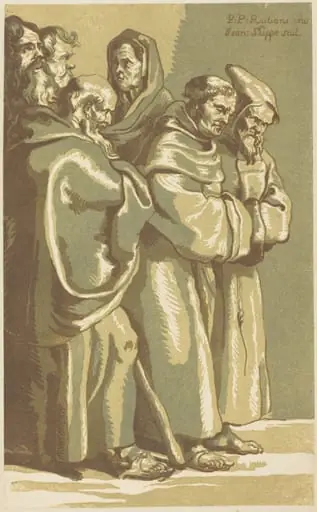
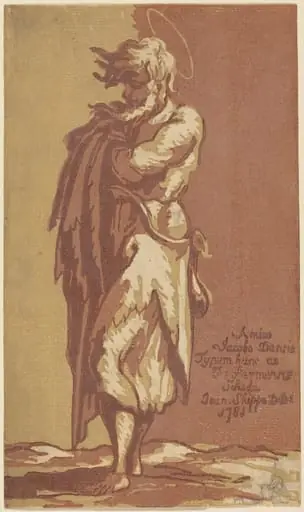
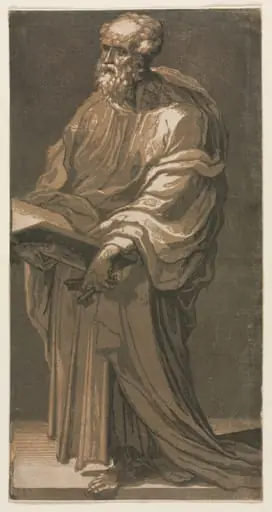
Male Saint Standing, with Folded Arms, Facing to the Left
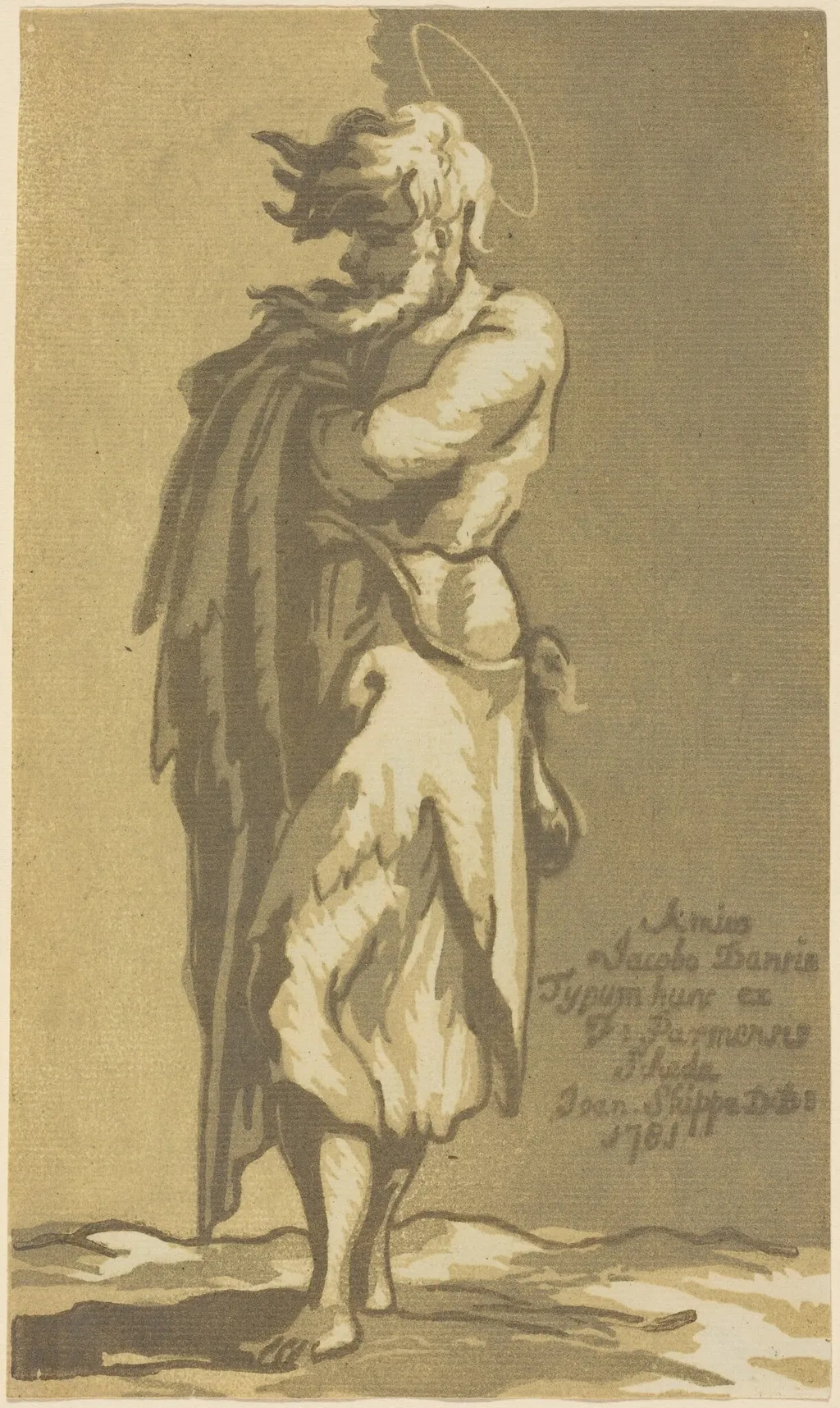
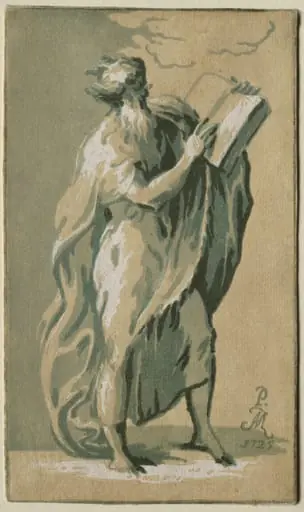
Male Saint Standing, with Folded Arms, Facing to the Left is an ink print by the Romanticist artist John Skippe. It dates from 1781 and is held in the collection of the National Gallery of Art.
About this work
Overview
The saint’s posture and attire suggest spiritual stillness, while the muted palette reinforces a quiet, devotional atmosphere.
Created in 1781 by John Skippe, this chiaroscuro woodcut depicts a male saint in a static, contemplative pose. Rendered in ochre and olive green, the print employs layered tonal contrasts to model form without color. The technique, rooted in Renaissance printmaking traditions, emphasizes volume through light and shadow rather than line. The saint’s posture and attire suggest spiritual stillness, while the muted palette reinforces a quiet, devotional atmosphere.
Subject & Meaning
The figure is identified as a saint through the halo and solemn demeanor, though his specific identity remains unrecorded. Folded arms and a downward gaze imply prayer or inner reflection, common iconographic cues for saints in moments of divine communion. The wind-swept robe introduces motion into an otherwise still composition, possibly symbolizing the presence of the divine or the soul’s movement beyond earthly concerns.
Technique & Style
Skippe used the chiaroscuro woodcut method, carving separate blocks for each tone to build depth through overlapping layers of ochre and olive green. The absence of sharp outlines and the soft gradations between light and dark areas mimic the effects of ink wash drawing. This approach, rare in late 18th-century British printmaking, reflects an interest in Italian Renaissance models and a deliberate move away from linear precision.
History & Provenance
The print is one of few known works by John Skippe, a lesser-known English artist active in the late 1700s. It was likely produced for private devotion or as an academic exercise, given its technical ambition and lack of commercial distribution. No early ownership records exist, and the work remained obscure until 20th-century scholarly attention revived interest in non-mainstream British printmakers of the period.
Context
In the late 18th century, religious imagery in Britain was increasingly secularized, yet niche artists like Skippe continued exploring devotional themes through traditional techniques. Chiaroscuro woodcuts, once popular in 16th-century Italy, were nearly obsolete in England by 1781. Skippe’s use of the method signals a deliberate revival, possibly influenced by antiquarian interests or exposure to continental prints in private collections.
Legacy
Though not widely circulated in its time, this print is now recognized as a rare example of late British chiaroscuro woodcutting. It offers insight into the persistence of religious iconography and technical experimentation among minor artists during a period of artistic transition. Its survival in institutional collections underscores its value as a document of overlooked printmaking practices in Georgian England.
Artist & collection

![Study for "Greek Girls Bathing" [recto], by Elihu Vedder](https://artifactworldgallery.com/img/elihu-vedder--study-for-greek-girls-bathing-recto--19bafb603a99e598-w320.webp)