Artwork
Up the Hill
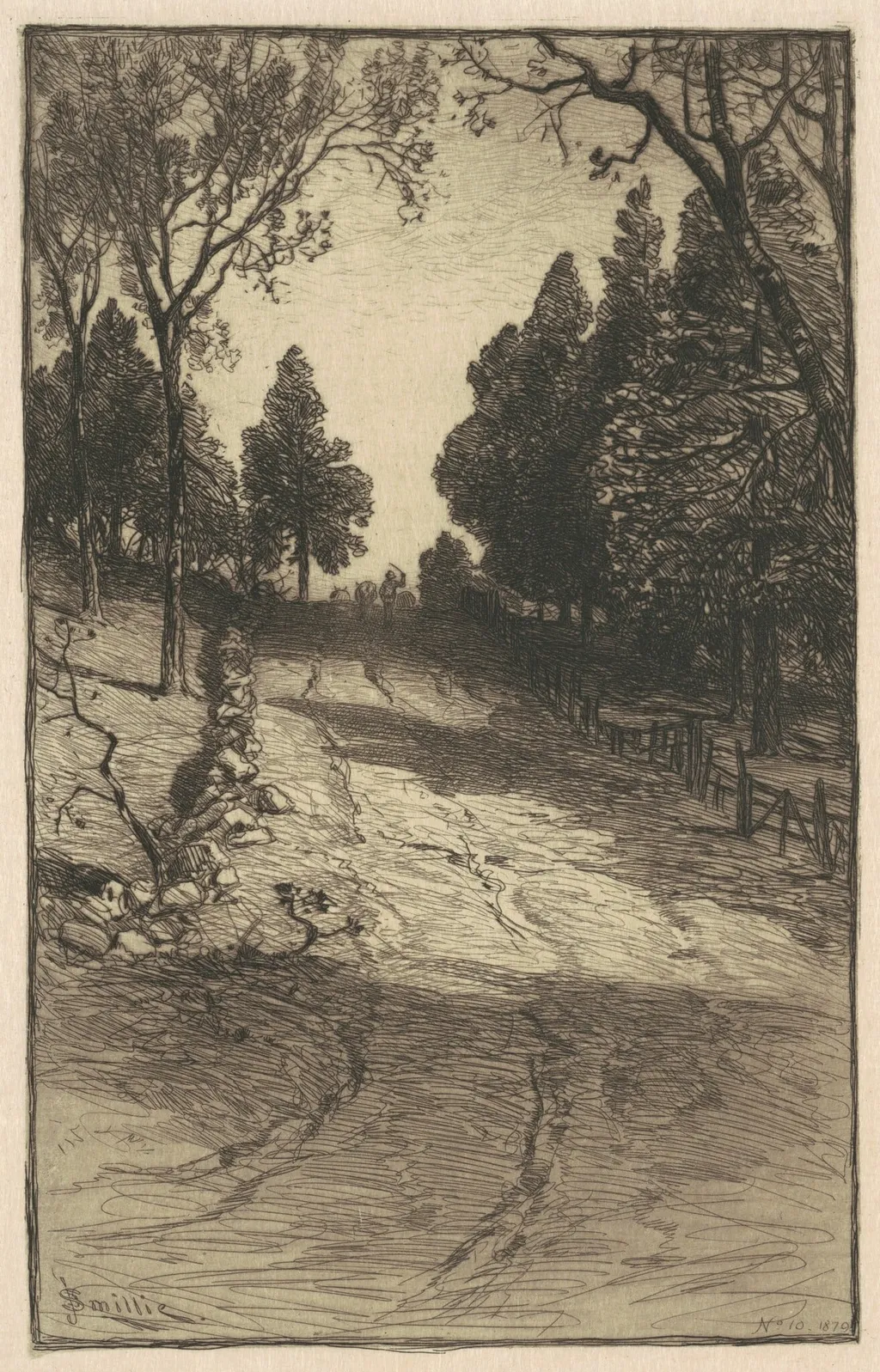
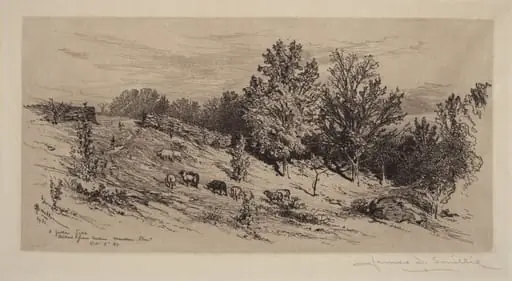
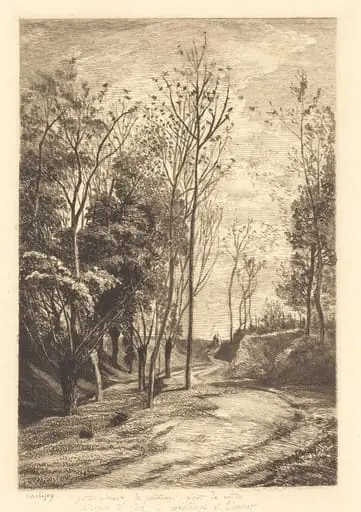
Up the Hill is an ink print by the Impressionist artist James David Smillie. It dates from 1879 and is held in the collection of the National Gallery of Art.
About this work
Overview
James David Smill’s 1879 print titled Up the Hill is an etching executed on laid paper. The work presents a modest rural scene, dominated by a gentle rise and a scattering of trees, rendered in stark black lines that emphasize form and space.
Subject & Meaning
The composition focuses on a solitary hill that ascends within the picture plane, flanked by a few silhouetted trees. The sparse arrangement suggests a quiet, contemplative landscape, inviting viewers to consider the simplicity of the natural environment and the subtle variations of light and shadow across the terrain.
Technique & Style
Created through the traditional etching process, Smill incised his design onto a metal plate, allowing the acid to bite the lines that would later hold ink. This method yields fine, controlled lines and rich textures, which the artist exploits to convey depth and the tactile quality of foliage and ground.
History & Provenance
The print was produced in 1879, during a period when etching experienced renewed interest among British artists. While specific ownership records are limited, the work is documented as part of Smill’s broader output of landscape prints, reflecting his engagement with the medium at the close of the 19th century.
Own this work as a print
Artist & collection

Artist
James David Smillie was an American artist, cofounder of the American Watercolor Society and New York Etching Club. His brother was painter George Henry Smillie.

 Little Birds (Les Petits oiseaux)
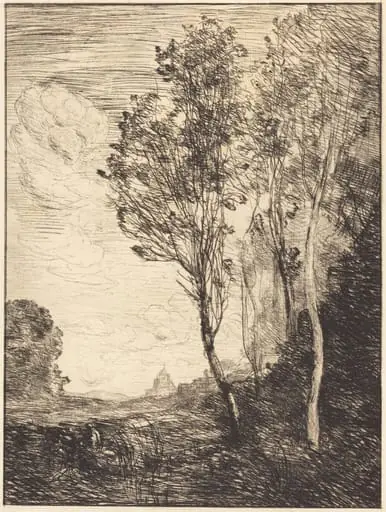 Souvenir of Italy (Souvenir d'Italie)
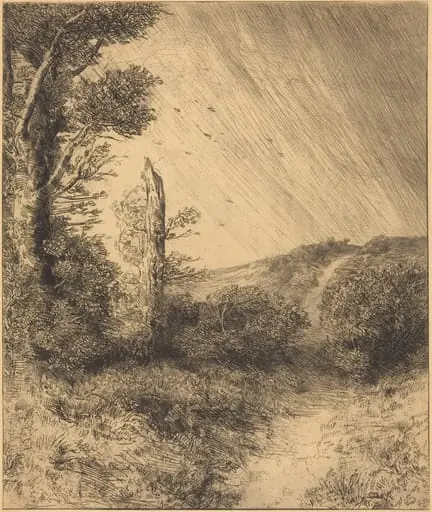 Gust of Wind (Le coup de vent)
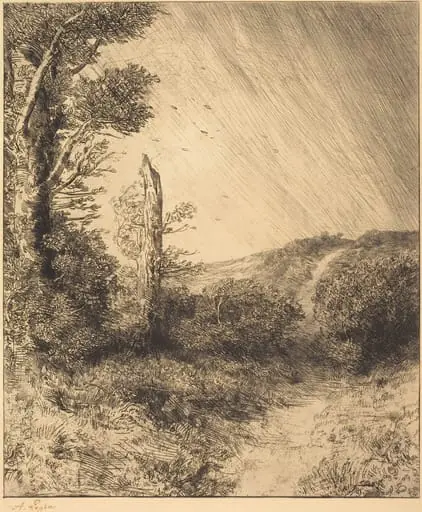 Gust of Wind (Le coup de vent)
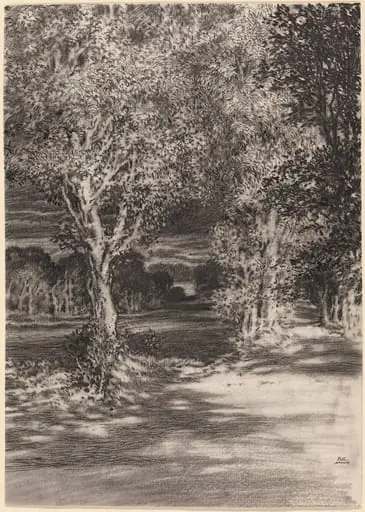 Sunset and Moonrise at Cilian-Aeron
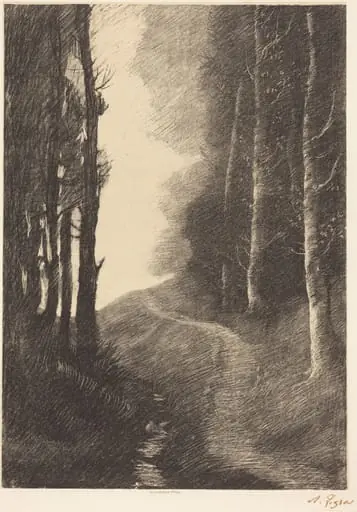 Landscape with Birch Trees (Le paysage aux bouleaux)
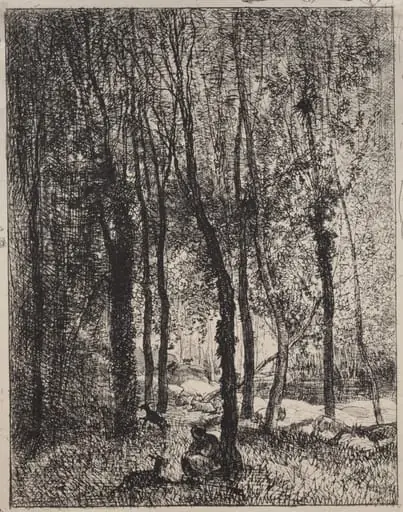 The Goatherd Girl
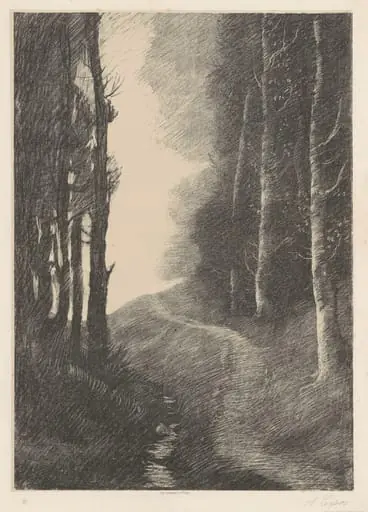 Landscape with Birch Trees (Le Paysage aux Bouleaux)
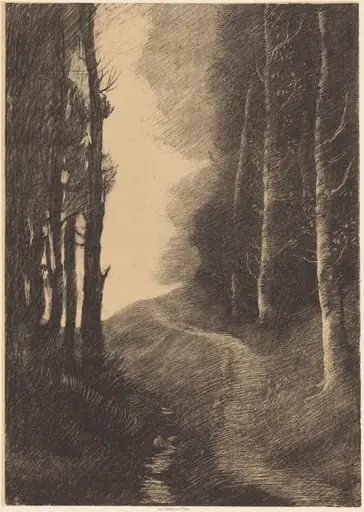 Landscape with Birch Trees (Le paysage aux bouleaux)
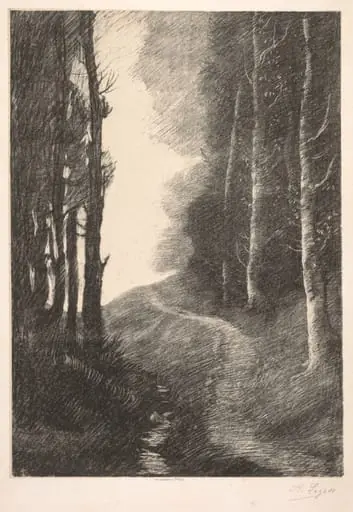 Landscape at Bouleaux
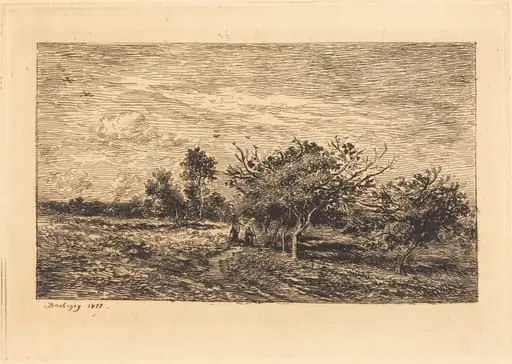 Apple Trees in Auvers (Pommiers a Auvers)