Artwork
La Gitana.
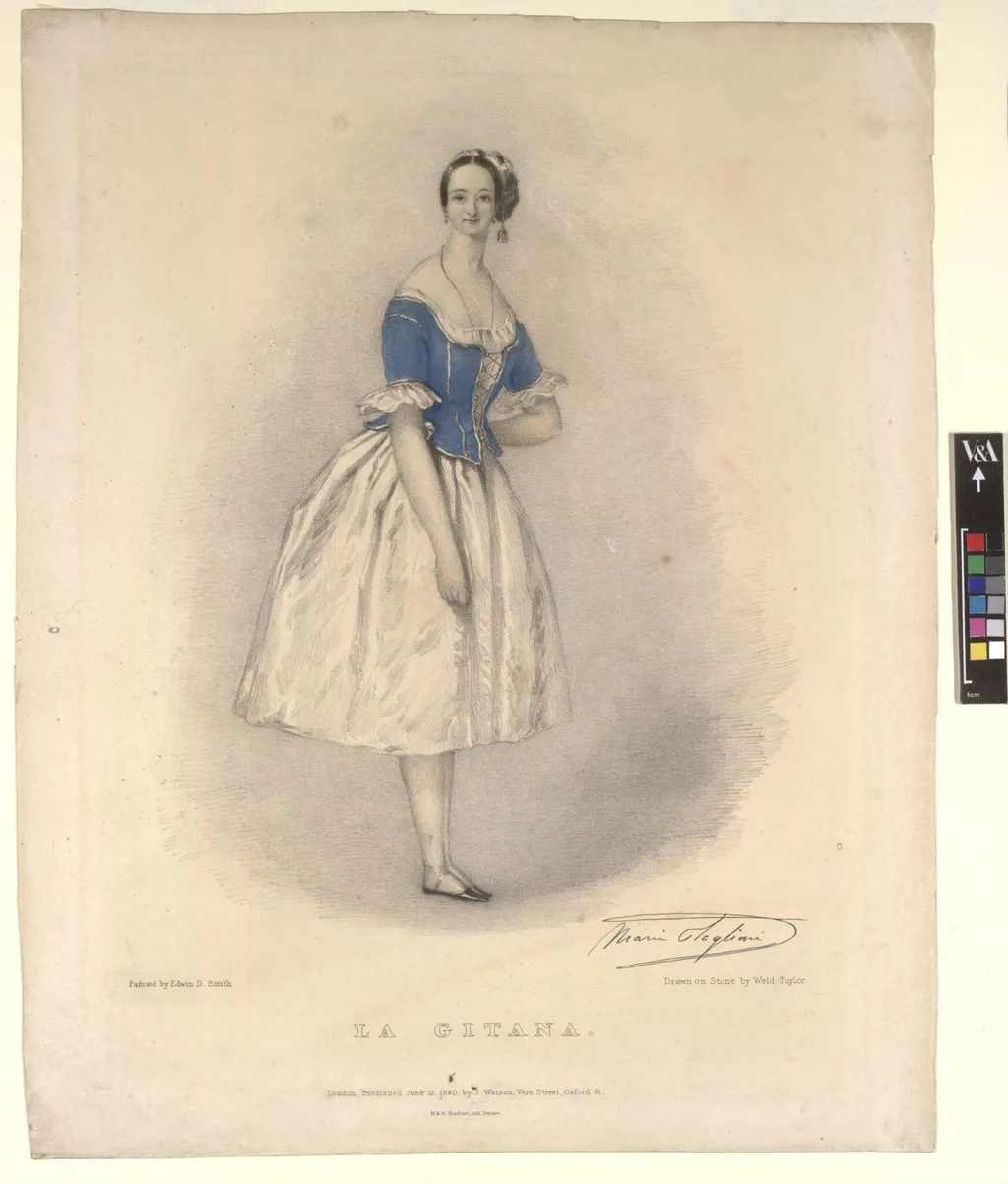
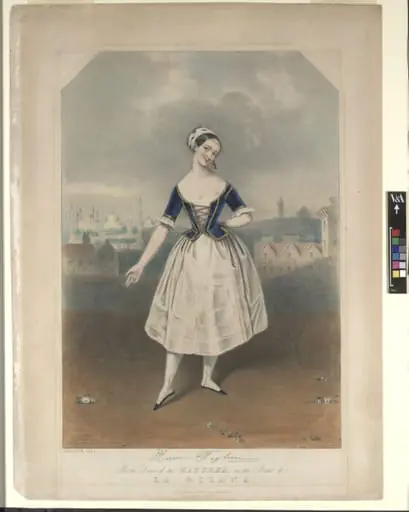
La Gitana. is a print by the Romanticist artist Edwin Dalton Smith. It dates from 1840 and is held in the collection of the Victoria and Albert Museum.
About this work
Overview
Though best known for ethereal roles, Taglioni’s versatility allowed her to embody more grounded, narrative-driven characters like the gypsy heroine.
This print captures Marie Taglioni in character for the 1838 ballet La Gitana, created by artist Edwin Dalton Smith. It reflects the visual language of mid-19th-century theatrical portraiture, preserving the dancer’s stage appearance at the height of her fame. Though best known for ethereal roles, Taglioni’s versatility allowed her to embody more grounded, narrative-driven characters like the gypsy heroine.
Subject & Meaning
La Gitana tells the story of a noble child raised among Romani people, later reclaimed by her birth family — a common Romantic trope blending social displacement with emotional redemption. Taglioni’s portrayal emphasized both the wildness of her upbringing and the grace of her aristocratic origins, using movement and costume to bridge two worlds, reflecting contemporary fascination with identity and class.
Technique & Style
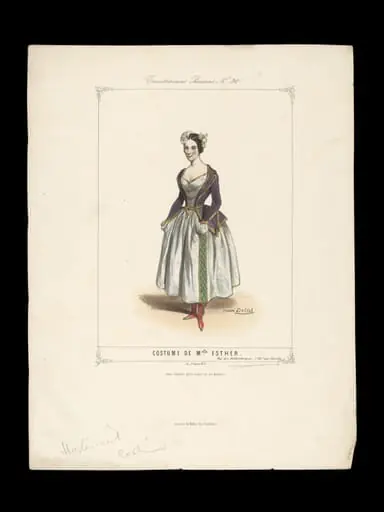
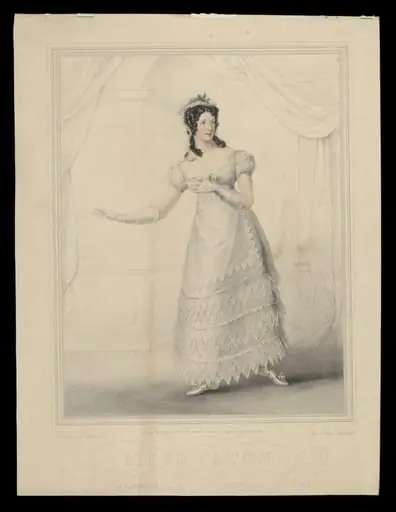
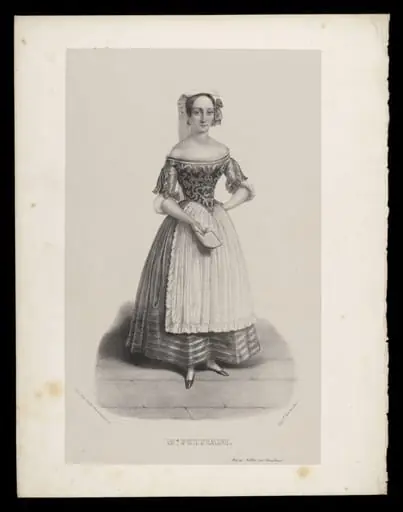
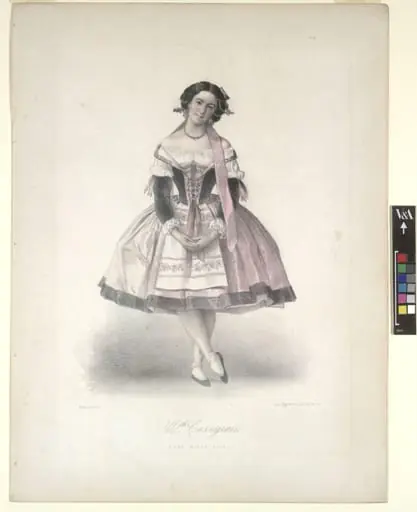
The print reproduces the layered costume typical of Romantic ballet: a fitted bodice, delicate blouse, and a skirt of tarlatan with translucent upper layers creating volume and lightness. Details like embroidery or draping suggest cultural specificity without literal realism. Smith’s linework renders fabric texture and posture with precision, prioritizing theatrical authenticity over individualized facial expression.
History & Provenance
Created in the 1840s, the print was produced during Taglioni’s active years and circulated as a keepsake for admirers. It derives from stage observations, likely based on sketches made during performances. The facsimile signature suggests an authorized reproduction, aligning with the growing market for celebrity imagery in the age of print media and rising public interest in ballet.
Context
La Gitana emerged during a period when ballet increasingly drew from folk and exotic themes to evoke emotional depth. Romani characters, though often stereotyped, provided dramatic contrast to aristocratic ideals. Taglioni’s performances helped elevate ballet from spectacle to narrative art, and prints like this one extended its reach beyond the theater, shaping public perception of dance as refined cultural expression.
Legacy
The print preserves a moment when ballet costume became a coded language of character and class. Taglioni’s influence on stage aesthetics endured beyond her retirement, and reproductions like this helped standardize the Romantic ballet look for later generations. It remains a document of how performance, fashion, and print culture intersected in 19th-century Europe.
Artist & collection
Artist
English portrait printmaker Edwin Dalton Smith carved crisp, black-and-white likenesses of sitters and stage stars in the 1840s.

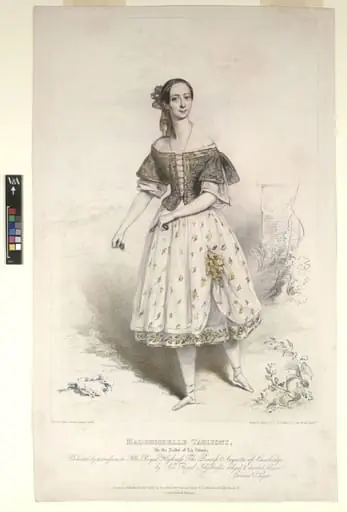 MADEMOISELLE TAGLIONI,
 Marie Taglioni (facsimile signature)
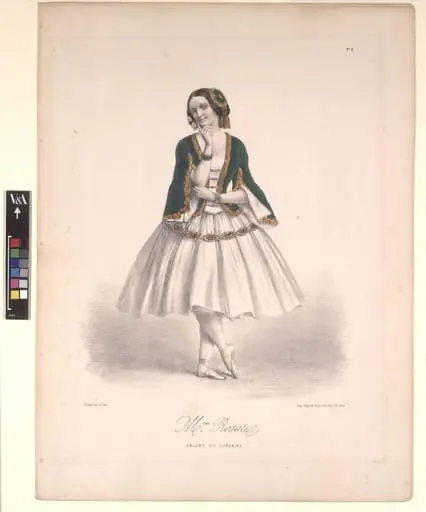 Mme Rosati,
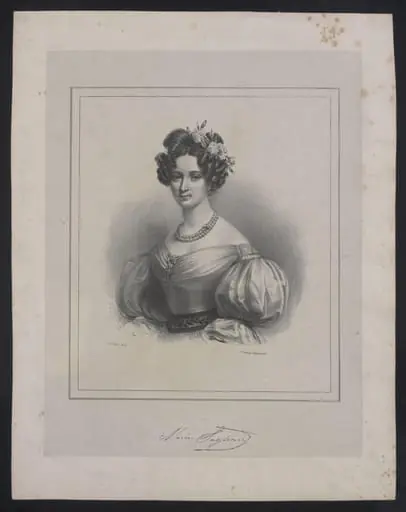 'Marie Taglioni'
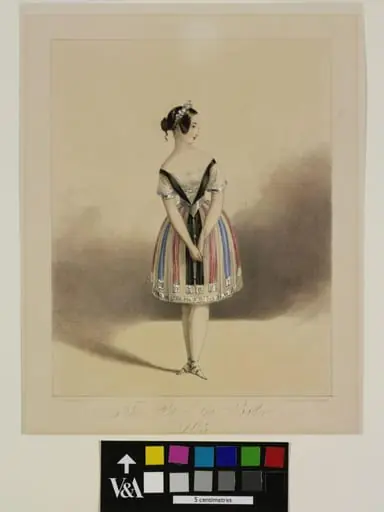 The Pet of the Ballet.
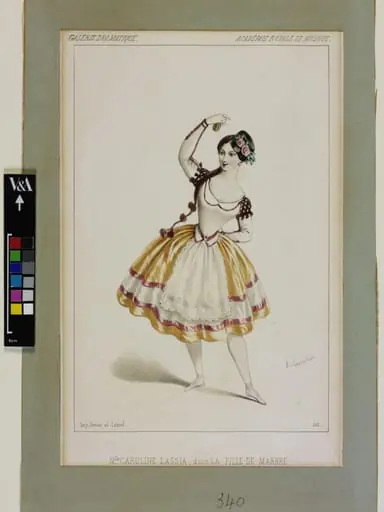 Mlle Caroline Lassia, dans La Fille de marbre. (sic)
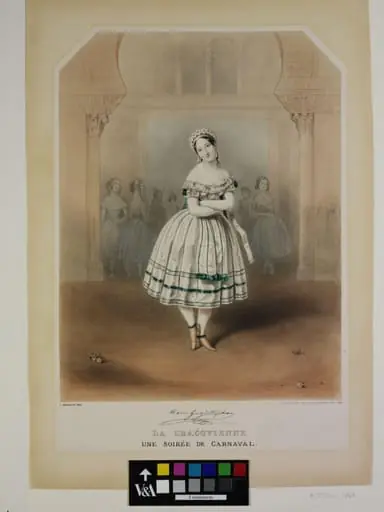 Marie Guy Stephan (facsimile signature)
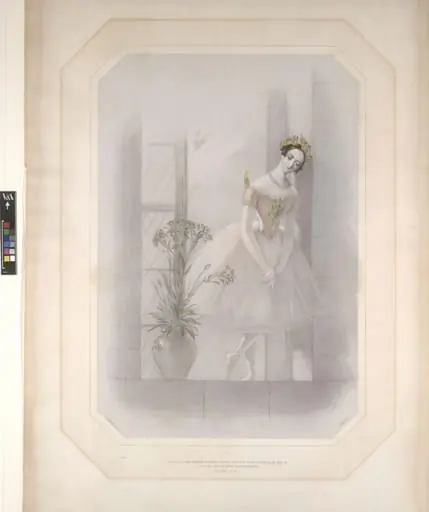 Marie Taglioni in La Sylphide (Souvenir d'adieu, No. 2)
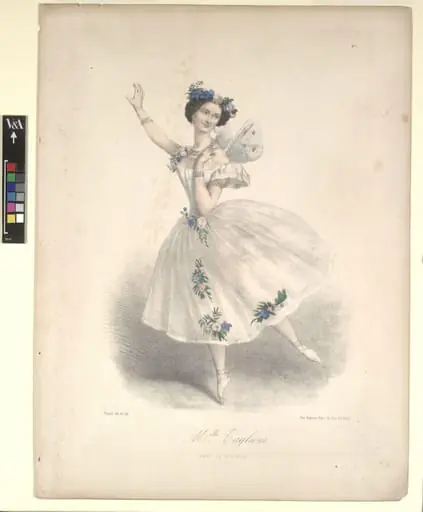 Melle Taglioni
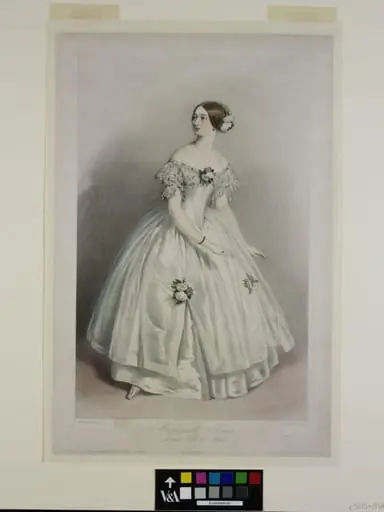 Mademoiselle Fleury.
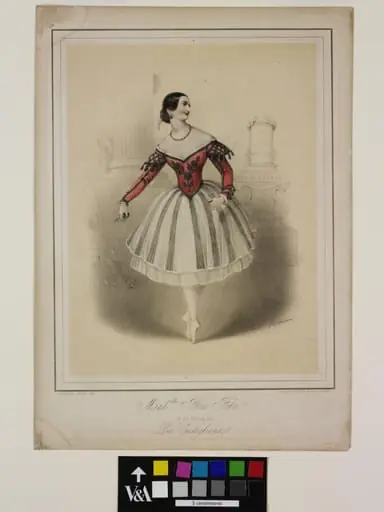 Madlle Flora Fabri,(sic)