Artwork
Concert. Cawnpoor
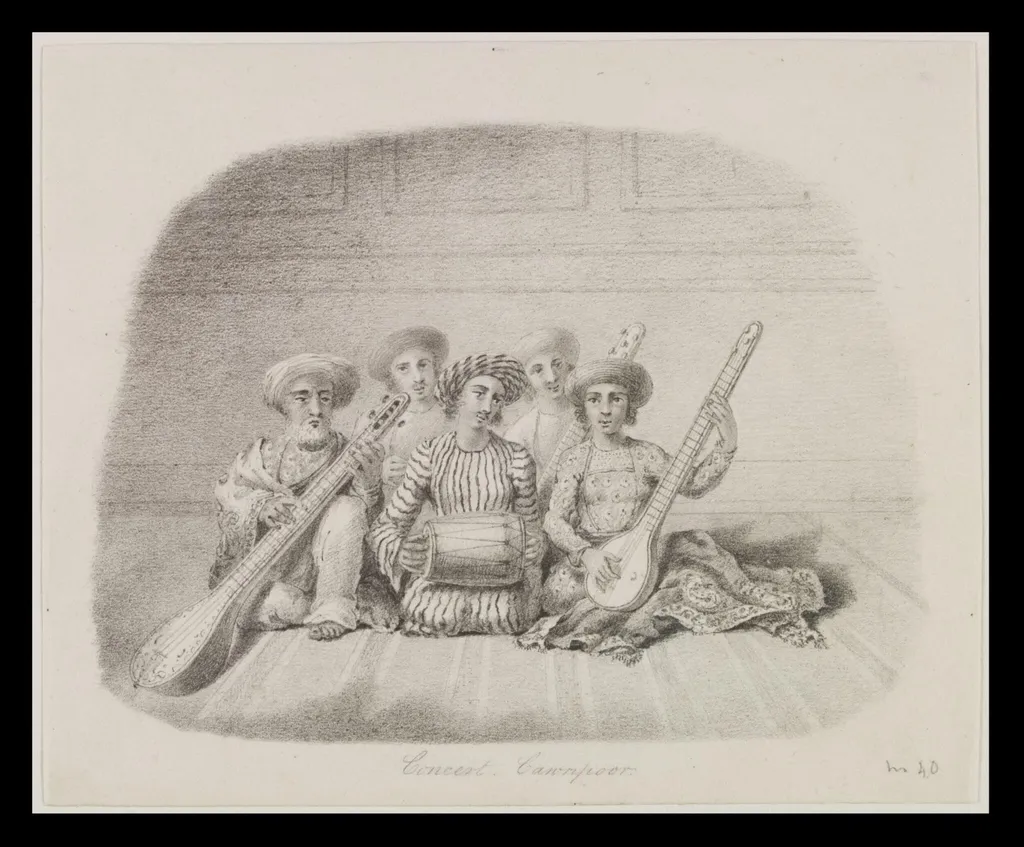
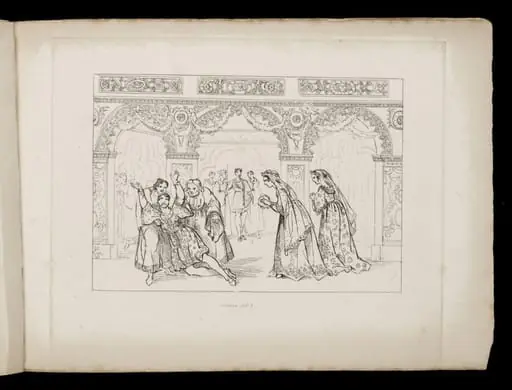
Concert. Cawnpoor is a drawing by the Romanticist artist Robert Captain Smith. It dates from 1845 and is held in the collection of the Victoria and Albert Museum. This pencil drawing, titled "Concert.
About this work
Concert. Cawnpoor is a drawing by Robert Captain Smith. It's from around 1845.
The artist was a military man who traveled extensively. He served in Italy, Sicily, and the USA, and was even wounded in New Orleans. He also visited India, where this drawing was likely made.
To learn more about the style of this period, look up the movement: Romanticism.
Overview
Cawnpoor," dates to circa 1845 and records a musical gathering in the Indian city of Cawnpore (now Kanpur).
This pencil drawing, titled "Concert. Cawnpoor," dates to circa 1845 and records a musical gathering in the Indian city of Cawnpore (now Kanpur). Executed by Captain Robert Smith, the work captures five musicians performing for an assembled audience during a nautch, a social entertainment common in the region. The piece is part of a larger visual record of Smith’s travels in Hindustan between 1828 and 1833.
Subject & Meaning
The scene portrays a small ensemble of Indian musicians, likely playing traditional instruments, while guests observe the performance. The gathering reflects the cultural practice of nautch parties, where music and dance were central to social interaction. By documenting this moment, the drawing offers insight into everyday leisure activities among colonial and native audiences during the early nineteenth century.
Technique & Style
Rendered in fine pencil lines, the drawing emphasizes delicate contour and subtle shading to suggest texture and depth. The composition balances the figures against a modest interior setting, allowing the viewer to focus on the interaction between performers and listeners. The work aligns with Romantic-era interests in exotic subjects, employing a documentary precision that coexists with a lyrical observation of the scene.
History & Provenance
Robert Smith (1792–1882) was an Irish-born British officer who served in Europe, the United States, and India. During his second posting in India, he produced a series of sketches that later formed an unpublished two‑volume "Pictorial Journal of Travels in Hindustan" covering 1828–1833. This particular drawing survived as part of that collection, later entering museum holdings where it is displayed as a representative example of his travel art.
Context
The drawing emerges from a period when British military officers often recorded their overseas experiences through art, contributing to the visual knowledge of distant lands. Cawnpore, a strategic garrison town, was a focal point for British presence in northern India. Smith’s work reflects both his personal interest in drawing and the broader Romantic fascination with the ‘exotic’ cultures encountered during colonial expansion.
Artist & collection

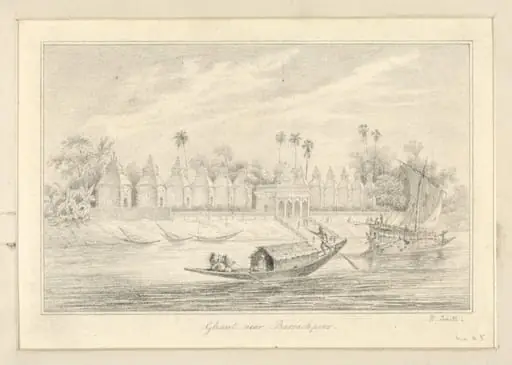
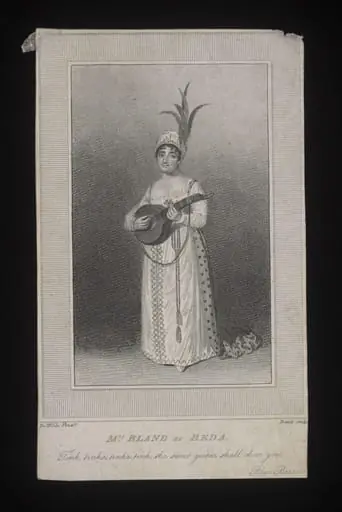 H Beard Print Collection
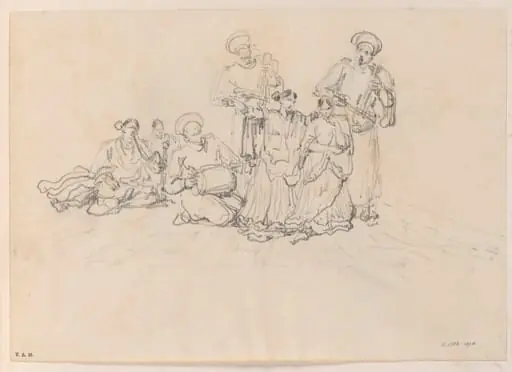 A group of Indian musicians and dancers
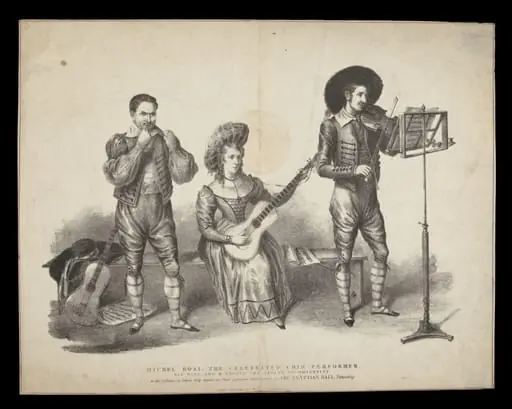 H Beard Print Collection
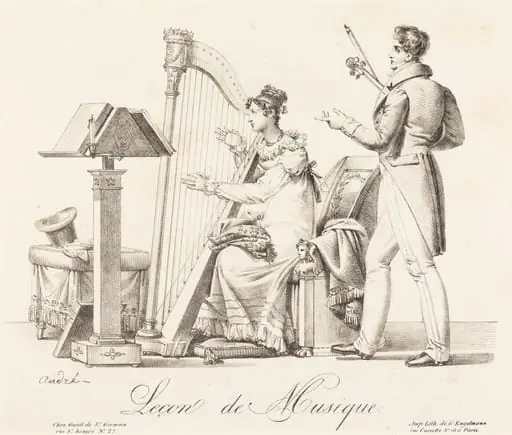 Leçon de Musique (Music Lesson)
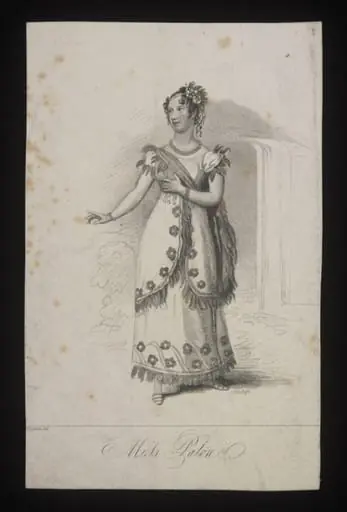 'Miss Paton'
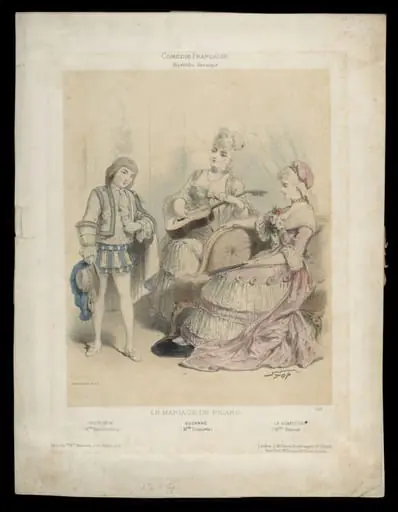 H Beard Print Collection
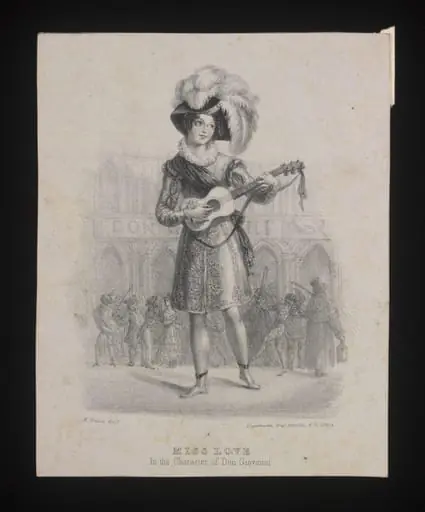 Miss Love in the character of Don Giovanni
 H Beard Print Collection
 H Beard Print Collection
 H Beard Print Collection
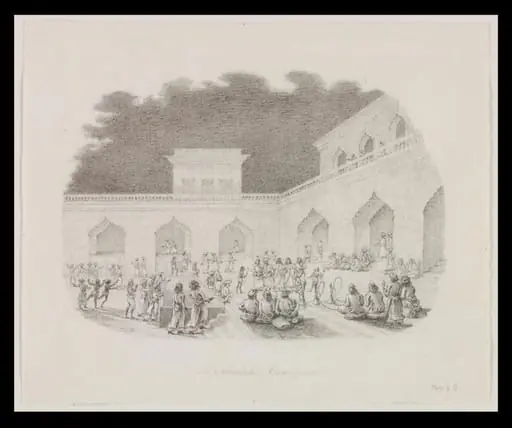 A Nautch, Cawnpoor
 H Beard Print Collection