Artwork
"Funeral of a Moosulmaun of rank".
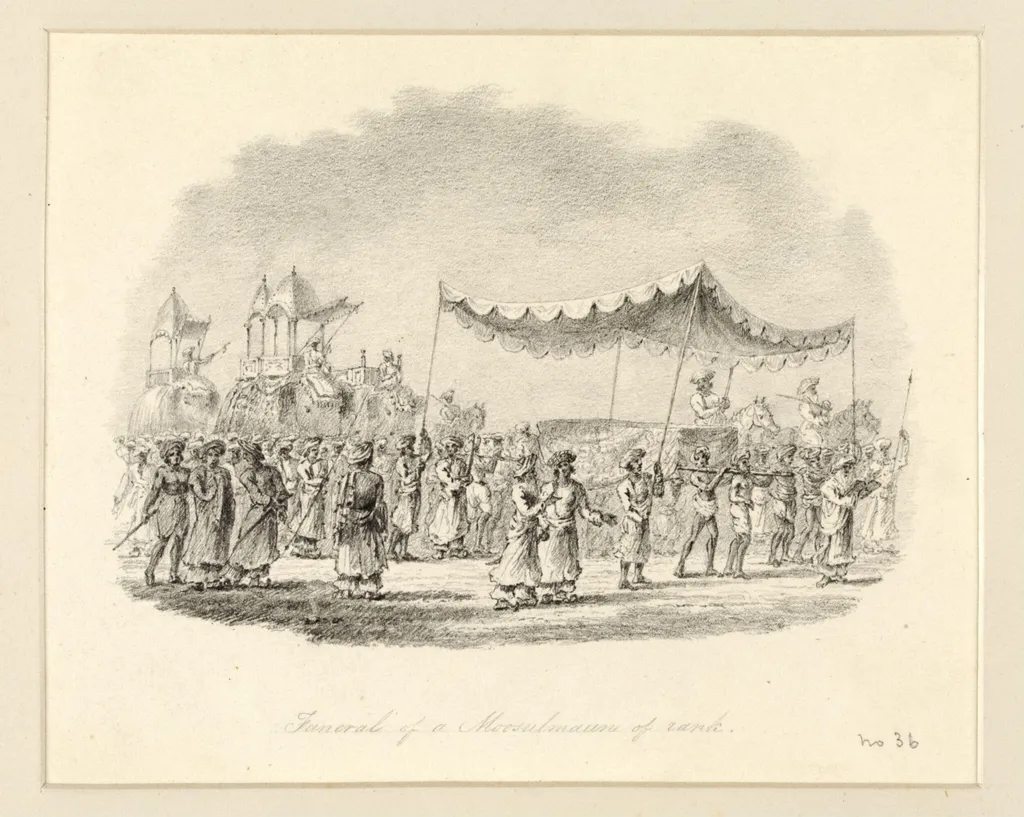
"Funeral of a Moosulmaun of rank". is a drawing by the Romanticist artist Robert Captain Smith. It dates from 1830 and is held in the collection of the Victoria and Albert Museum.
About this work
Overview
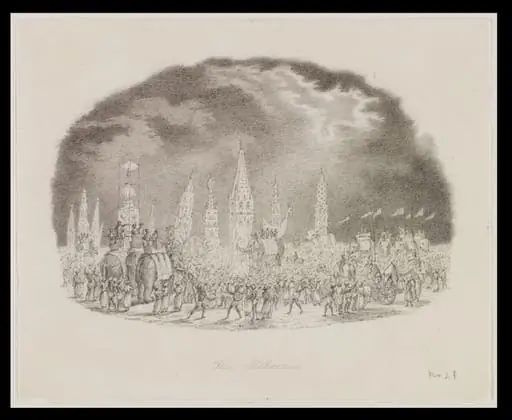
This pencil drawing records a ceremonial procession marking the burial of a distinguished Muslim individual, identified as a "Moosulmaun of rank.
This pencil drawing records a ceremonial procession marking the burial of a distinguished Muslim individual, identified as a "Moosulmaun of rank." Executed by Captain Robert Smith in 1830, the work forms part of a larger visual diary of his travels along the Ganges and through northern Indian cities between 1828 and 1832. The scene captures a linear crowd, flags, and a decorated wagon bearing a small tower and umbrella.
Subject & Meaning
The composition reflects the customs surrounding elite funerary rites in early nineteenth‑century India, emphasizing communal participation and the display of status through ornate transport and attire. The presence of long coats, hats, and ceremonial flags suggests a blending of local tradition with colonial observation, offering insight into how British officers documented indigenous rituals.
Technique & Style
Rendered swiftly with cross‑hatching, the drawing relies on intersecting lines to model volume and suggest atmospheric light. The sketchy, economical strokes convey movement within the procession while the lightly erased sky provides a muted backdrop. The use of a small tower and umbrella atop the wagon adds a focal point, rendered with finer detailing amid broader gestural marks.
History & Provenance
Smith continued to refine the illustration until 1845 after retiring to Ireland in 1833, and it later appeared among 65 detached, mounted sheets from his unpublished manuscript. The museum acquired the piece in 1915 from collector W. M. Biden of Hampton‑on‑Thames; its provenance was revisited during a 2023 research project, confirming its entry into the collection.
Artist & collection

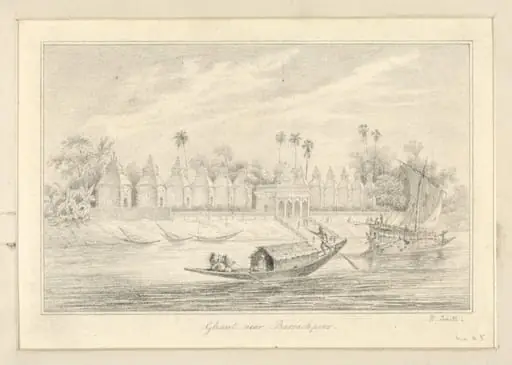
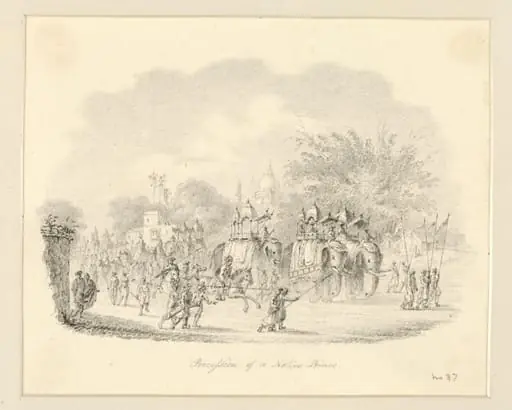 Reception of a Native Prince
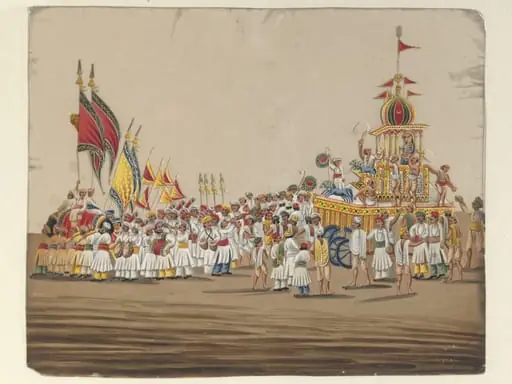 One of two drawings depicting procession scenes in Patna.
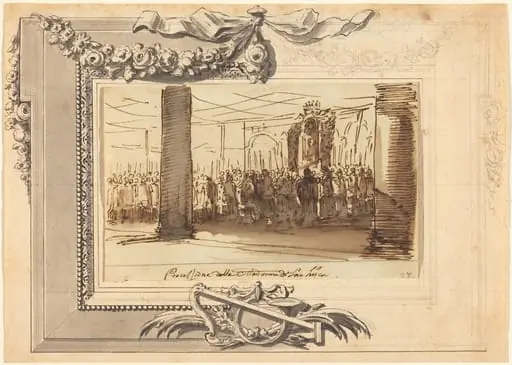 A Procession of the Madonna di San Luca
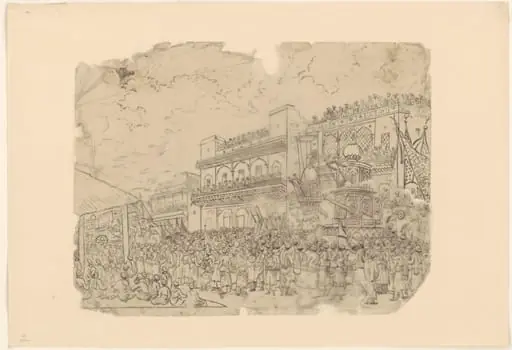 One of Thirty-two paintings depicting festivals, ceremonies and occupations.
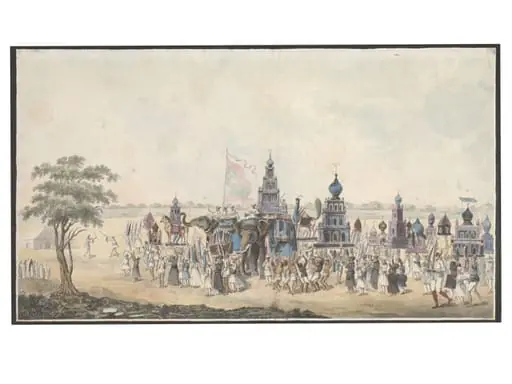 The Muharram procession
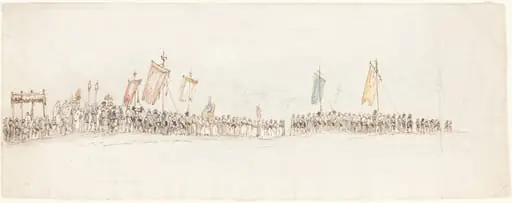 Religious Procession in Landeck
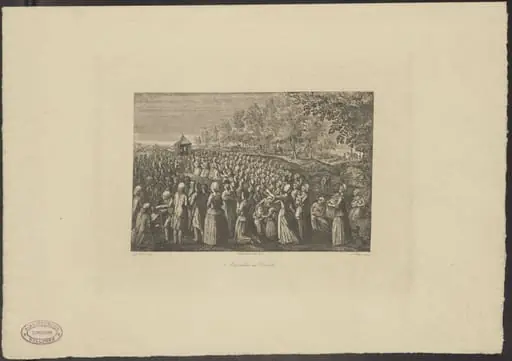 History print: congregation in the desert
 Promenaders in St. James' Park
 Brook Green Fair
 The Great Square before the Factories, Canton