Artwork
The Mohorum
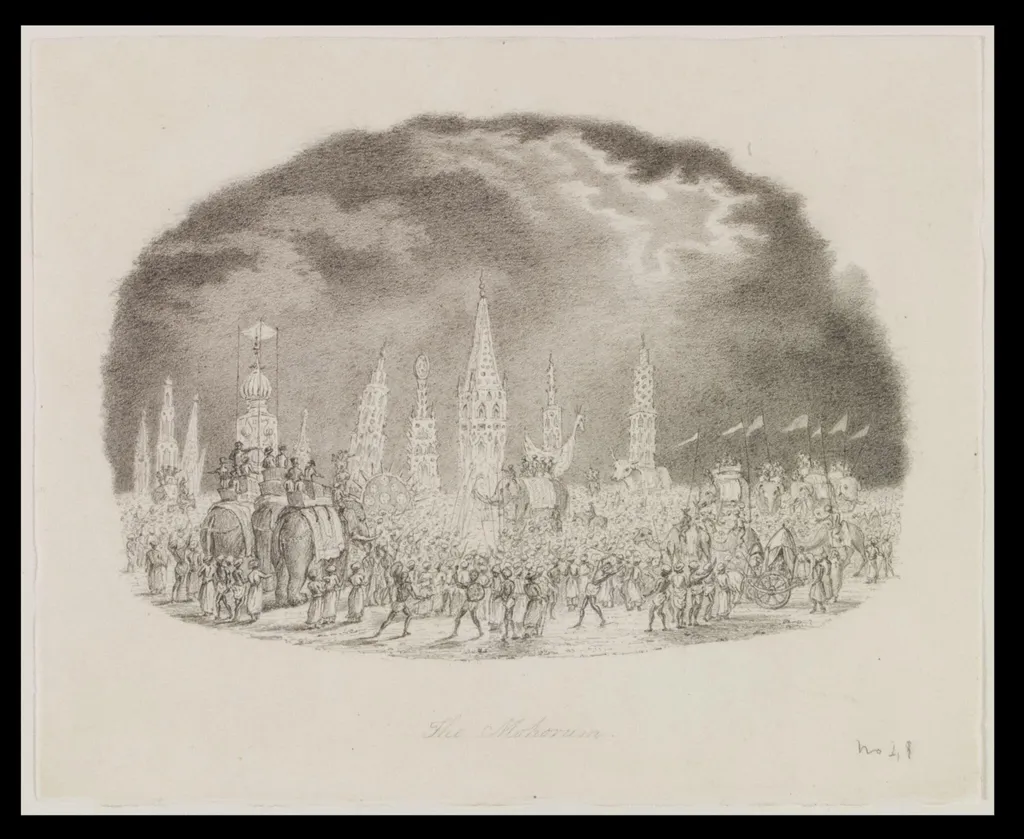
The Mohorum is a drawing by the Romanticist artist Robert Captain Smith. It dates from 1830 and is held in the collection of the Victoria and Albert Museum.
About this work
Overview
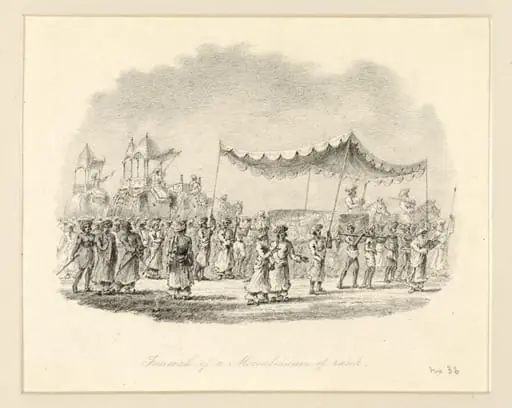
The Mohorum is a pencil drawing depicting a vibrant Muslim Festival of Muharrum scene, characterized by a dense crowd, elephants, camels, and a dramatic, stormy sky. It is one of 65 illustrations from Captain Robert Smith’s travels in Hindustan (1828–1833).
Subject & Meaning
The drawing captures the festivities of Muharrum, showcasing a procession with participants on horseback, musicians, and flag-bearers, set against a backdrop of tall, spired buildings. The scene conveys a sense of orderly commotion, highlighting the diversity of attendees, including soldiers and spectators.
Technique & Style
Executed in quick, sketchy pencil lines, the work emphasizes movement and mood. The prominent, dark sky and dramatic lighting reflect the early 19th-century aesthetic inclination towards emotional and expansive scenes.
History & Provenance
Created during Smith’s Indian travels, the drawing remained part of his unpublished manuscript until his retirement in Ireland (until 1845). It was acquired by the museum in 1915 from W. M. Biden, Hampton-on-Thames.
Context
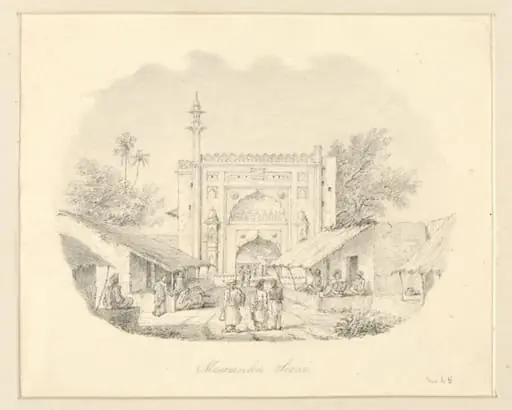
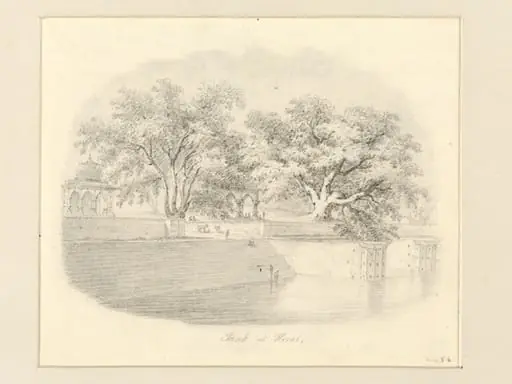
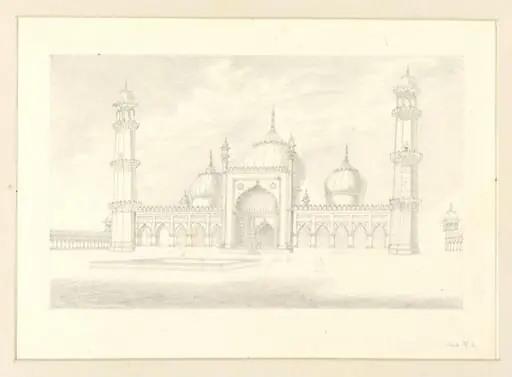
Part of a broader collection documenting Smith’s journeys along the Ganges and visits to key Indian cities (Cawnpore, Delhi, Agra, Lucknow), The Mohorum offers a glimpse into early 19th-century Hindustan’s cultural and urban landscapes.
Legacy
Now part of a museum collection (acquired 1915), The Mohorum contributes to the historical and artistic record of British observations of Indian festivals during the colonial era.
Artist & collection

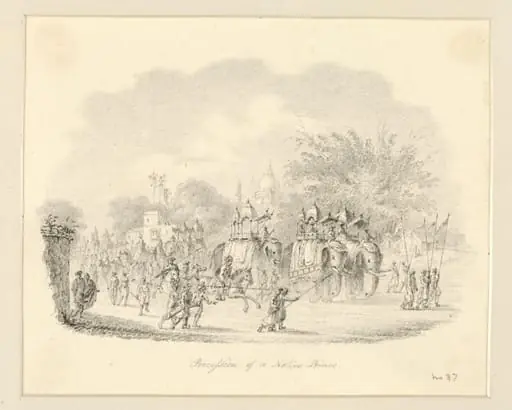 Reception of a Native Prince
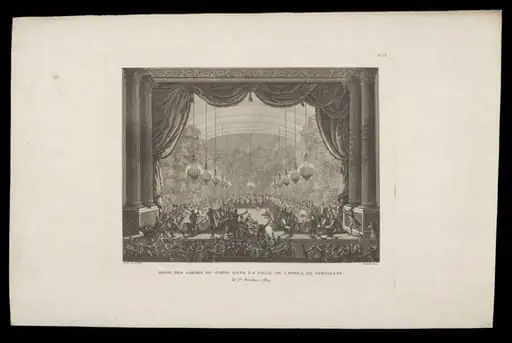 H Beard Print Collection
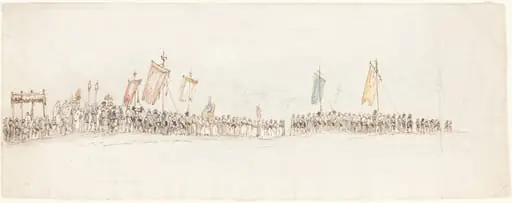 Religious Procession in Landeck
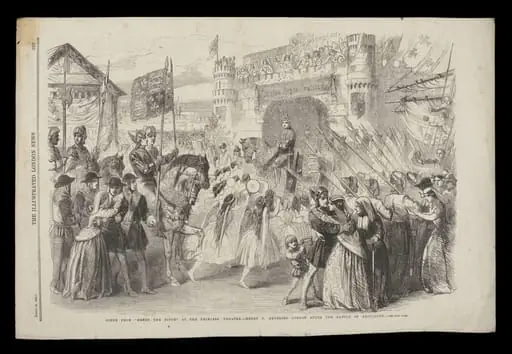 H Beard Print Collection
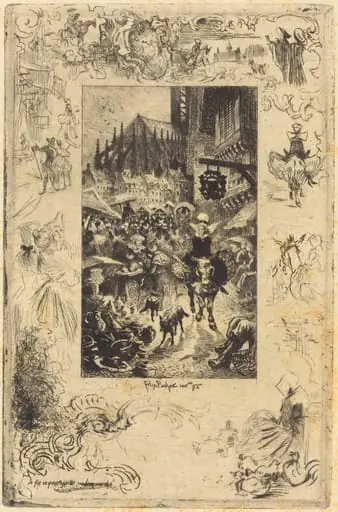 Je fis ce qu'on appelle un bon marché (I made what I would call a good bargain)
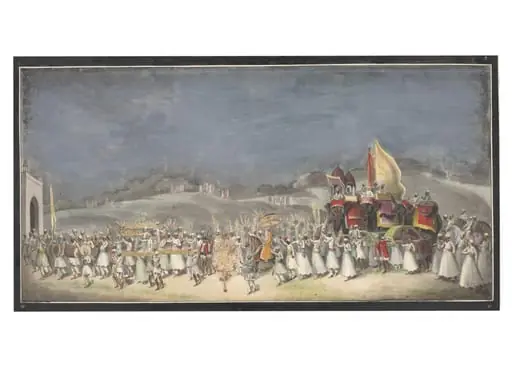 A Muslim wedding
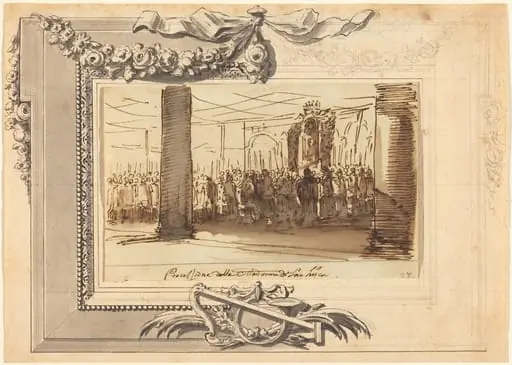 A Procession of the Madonna di San Luca
 Untitled
 Return of the Mahmal from Mecca
 The Camberwell Carnival in Rye Lane
 Untitled