Artwork
Meerunha Serai
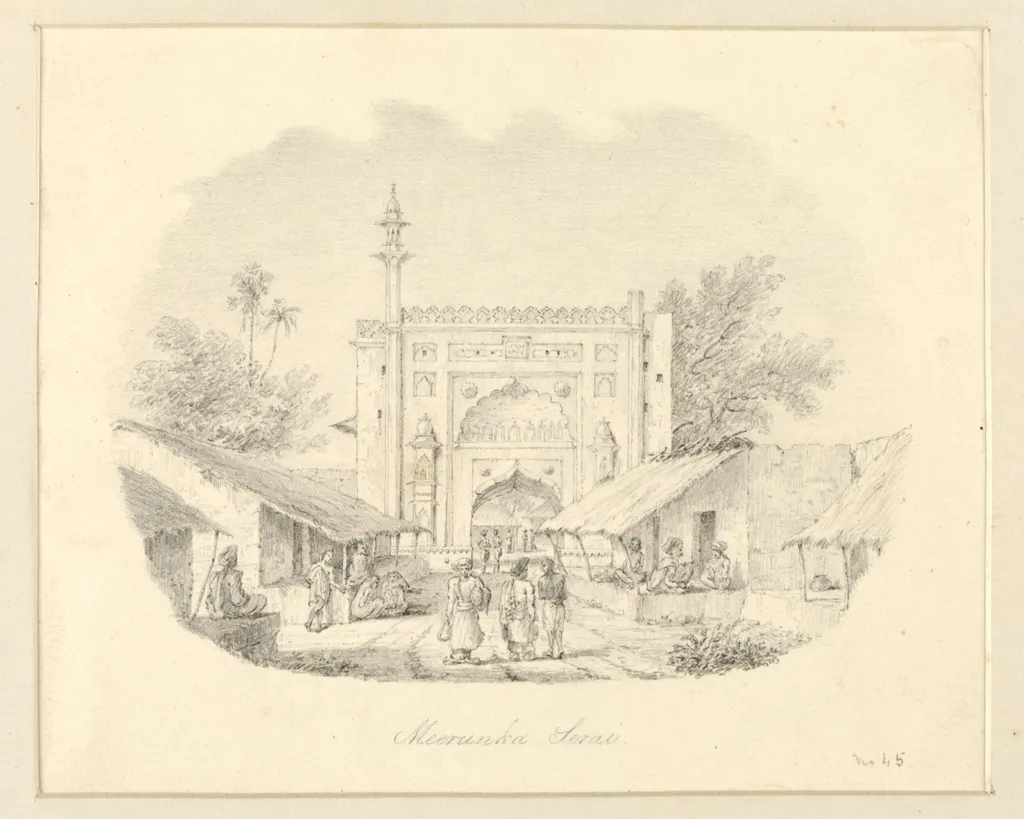
Meerunha Serai is a drawing by the Romanticist artist Robert Captain Smith. It dates from 1830 and is held in the collection of the Victoria and Albert Museum. This pencil drawing captures a gateway within a bustling courtyard, part of a larger series of 65 mounted illustrations.
About this work
Overview
The sketch reflects Smith’s observations of architecture and daily life, rendered with delicate linework and subtle shading.
This pencil drawing captures a gateway within a bustling courtyard, part of a larger series of 65 mounted illustrations. Created by Captain Robert Smith, a British military officer, the work originates from a travel journal documenting his journeys across northern India between 1828 and 1833. The sketch reflects Smith’s observations of architecture and daily life, rendered with delicate linework and subtle shading.
Subject & Meaning
The scene portrays an ornate structure, likely a serai or rest stop, characterized by arched doorways, intricate carvings, and a slender spire. Figures in loose garments populate the courtyard, some seated beneath thatched stalls while others move through the space. Palm trees frame the composition, suggesting a marketplace or communal gathering place. The drawing preserves a moment of transient activity, blending architectural grandeur with everyday routine.
Technique & Style
Executed in pencil, the drawing employs fine, controlled strokes to define forms and textures. Smith’s shading relies on light cross-hatching and varying line weight, creating depth without heavy contrast. The soft, sketch-like quality conveys immediacy, as if recording impressions directly from observation. Details such as the thatched roofs and carved stonework demonstrate a focus on both structural precision and atmospheric effect.
History & Provenance
The drawing belongs to a travel journal compiled by Smith during and after his service in India, completed in 1845 following his retirement to Ireland. The series documents voyages along the Ganges and visits to cities including Delhi, Agra, and Lucknow. In 1915, the journal entered the collection as a donation from W. M. Biden of Hampton-on-Thames, securing its preservation alongside other works from the period.
Context
Created during British colonial rule, the drawing reflects European interest in Indian architecture and culture. Smith, an officer in the 44th Regiment, traveled extensively, capturing sites of military and commercial significance. Such sketches served both as personal records and as visual documentation for audiences unfamiliar with the region. The serai depicted exemplifies the Mughal-influenced structures common in 19th-century northern India.
Artist & collection

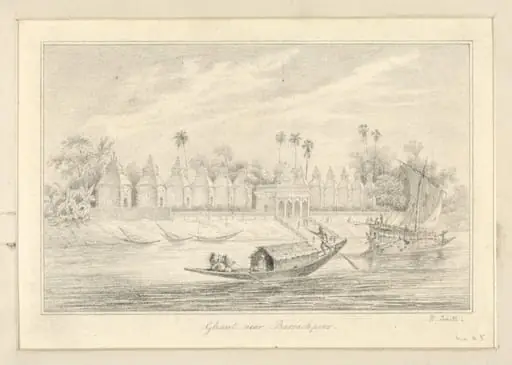
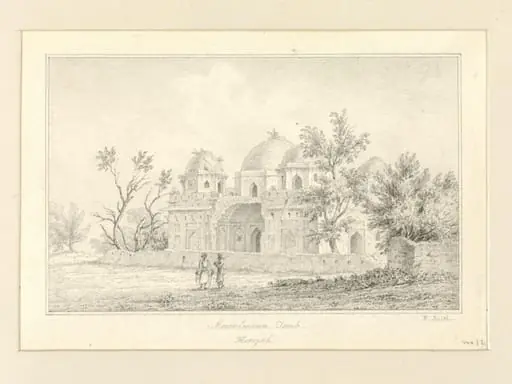 Moosulmaun Tomb, Hoorjah
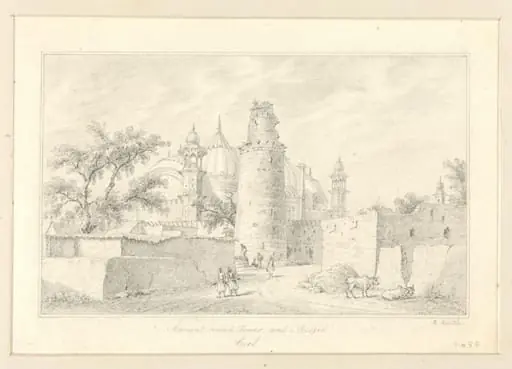 Ancient round tower and Musjid, Coel.
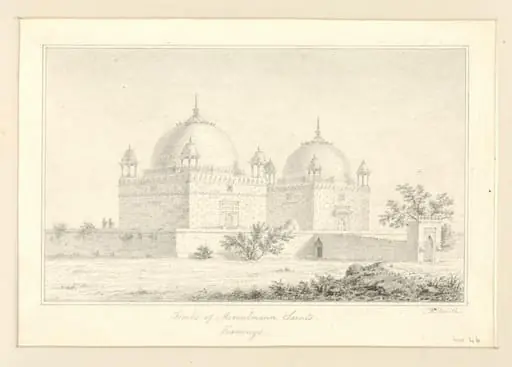 Tombs of Moosulman Saints, Kanouge
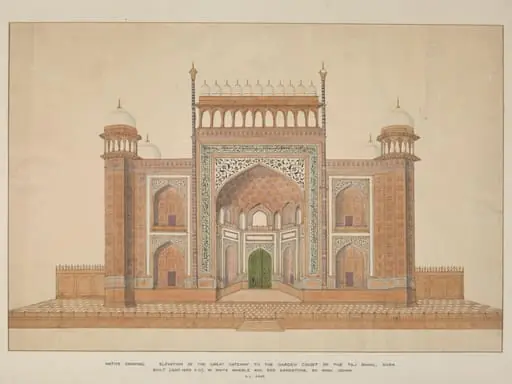 Gateway to the Taj Mahal
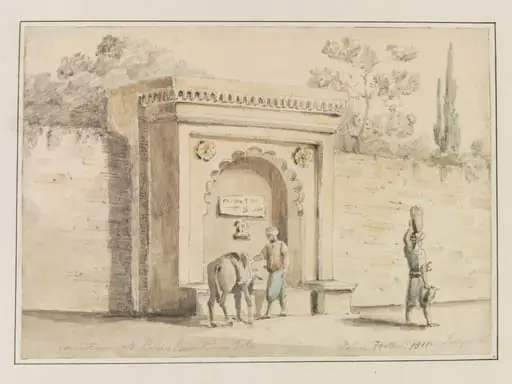 Fountain At Constantinople
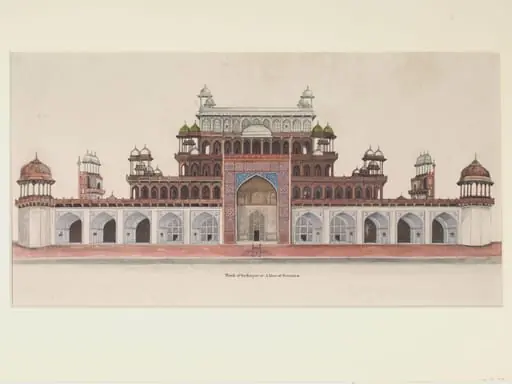 Elevation of the front of the mausoleum of the Emperor Akbar at Sikandra near Agra
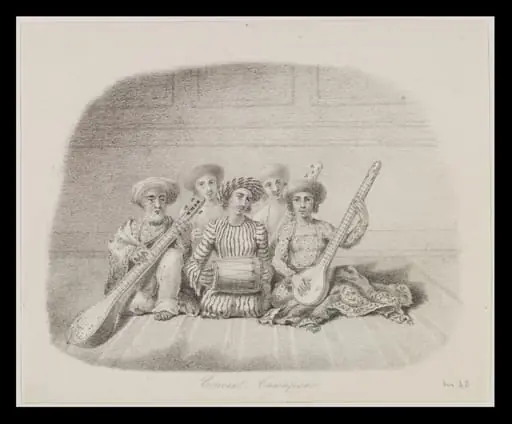
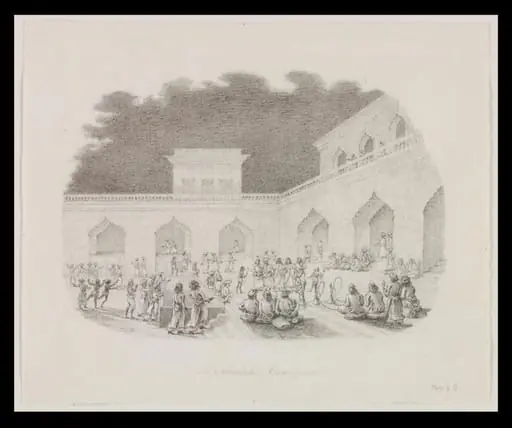 A Nautch, Cawnpoor
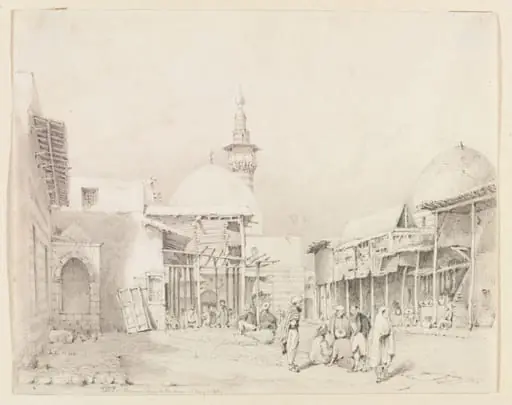 Damas. dans le Madan
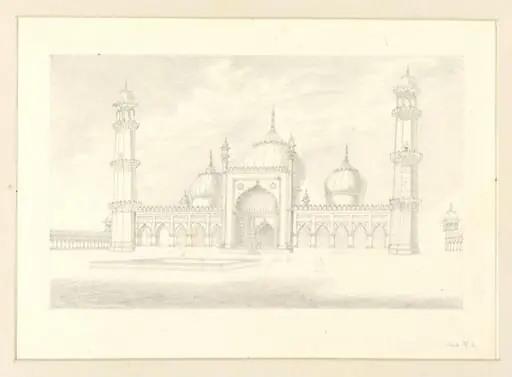
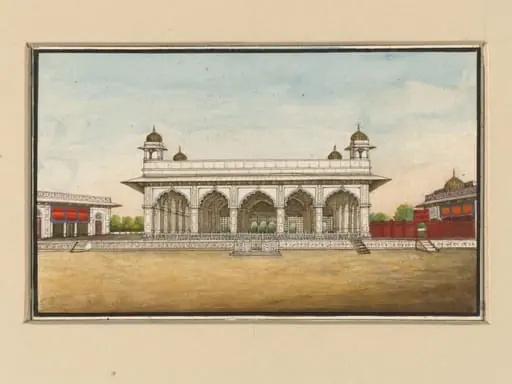 One of four drawings of Mughal architecture.
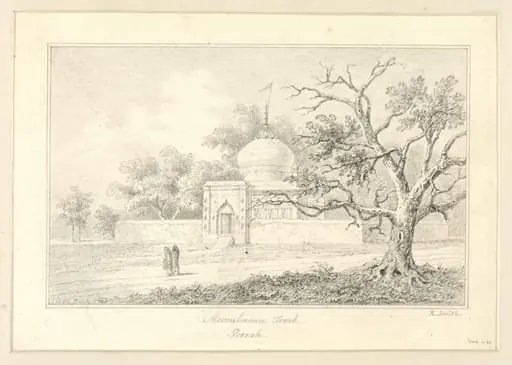 Moosulmaun Tomb, Poorah.
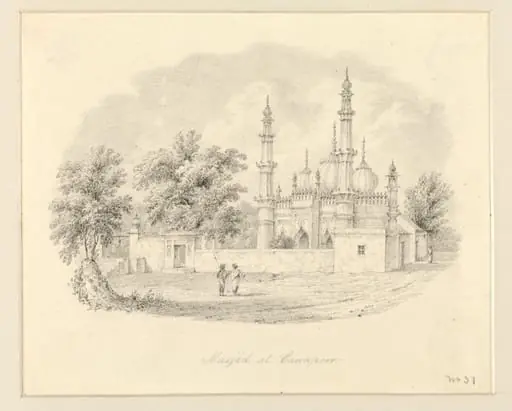 Masjid at Cawpoor