Artwork
Pagoda at Hoorjah
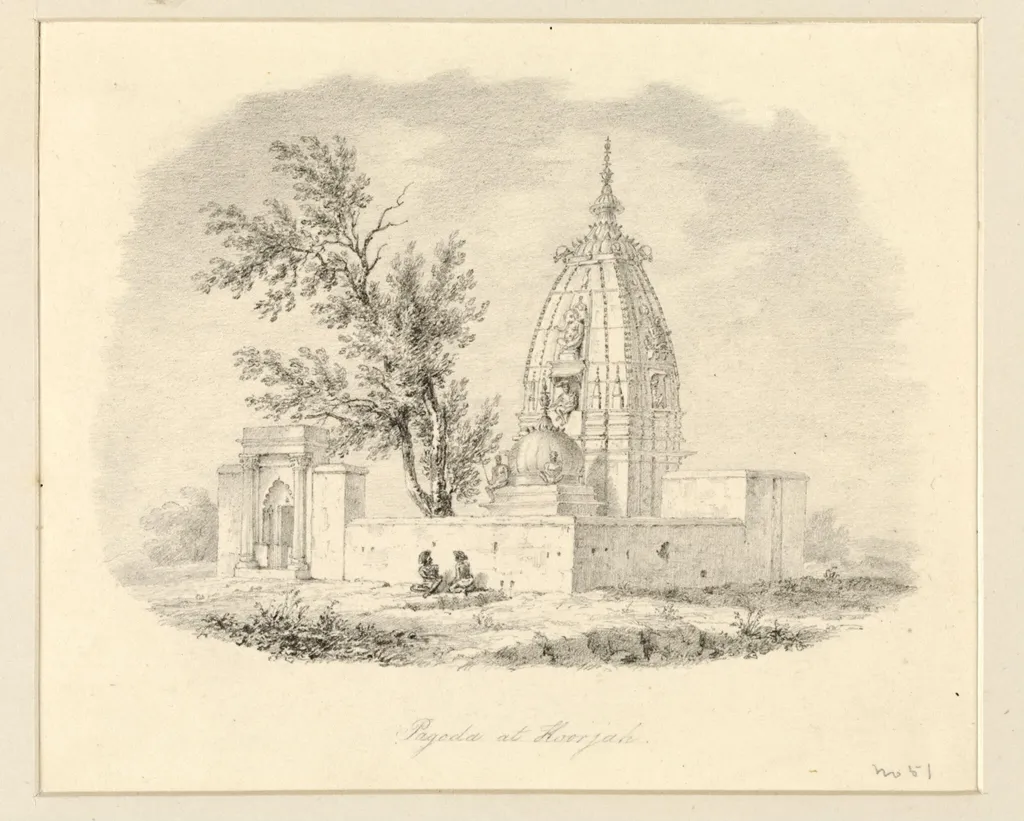
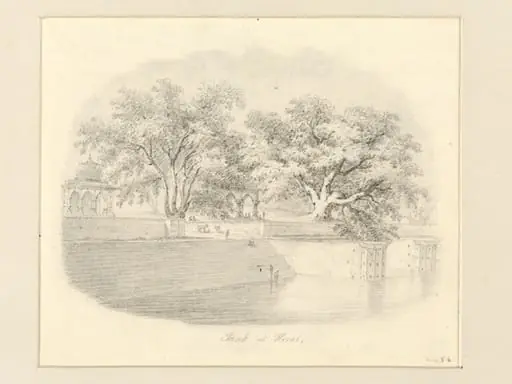
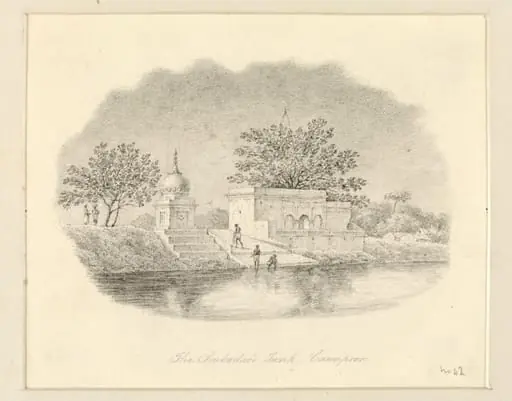
Pagoda at Hoorjah is a drawing by the Romanticist artist Robert Captain Smith. It dates from 1830 and is held in the collection of the Victoria and Albert Museum. This pencil drawing records a modest pagoda, rendered in fine line work and subtle shading.
About this work
Overview
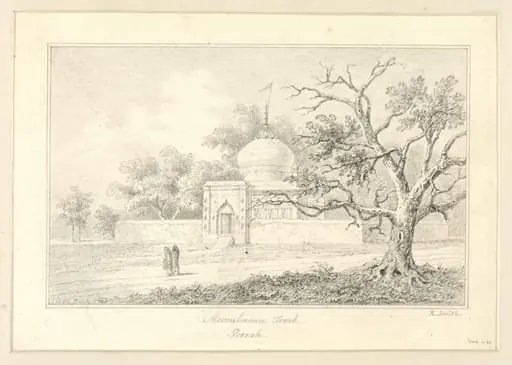
The composition includes two figures seated on a low wall before the structure, with a barren tree nearby, creating a tranquil, almost documentary atmosphere.
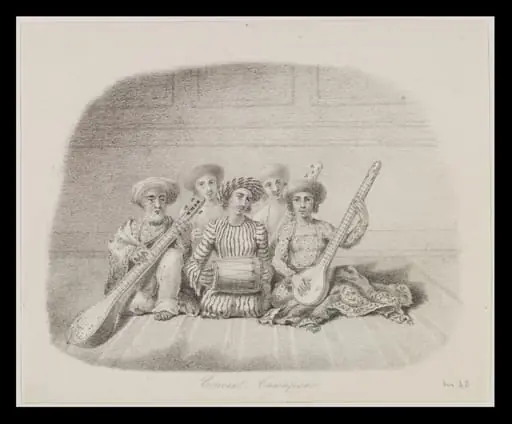
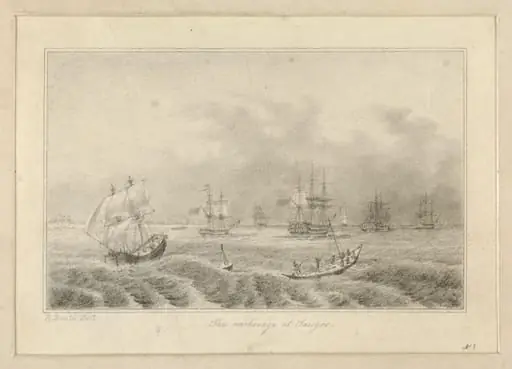
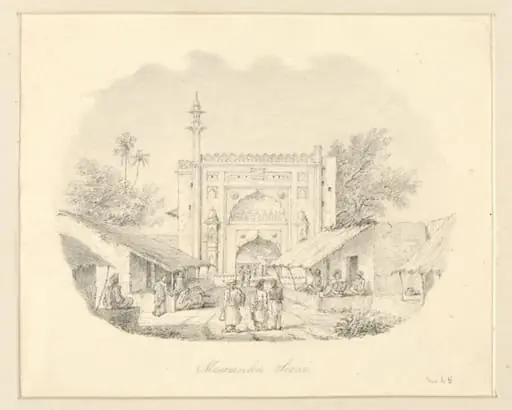
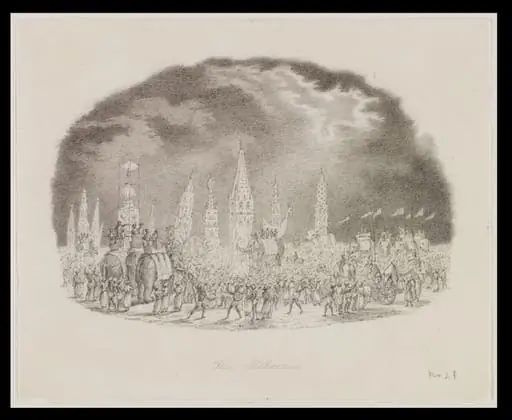
This pencil drawing records a modest pagoda, rendered in fine line work and subtle shading. The composition includes two figures seated on a low wall before the structure, with a barren tree nearby, creating a tranquil, almost documentary atmosphere. The work is one of sixty‑five separate illustrations that were mounted and compiled by Captain Robert Smith as part of his travel journal documenting journeys across northern India in the early 19th century.
Subject & Meaning
The central motif is a small, temple‑like edifice with a sharply pointed roof and intricate carved details, identifiable as a pagoda—a form common in Asian religious architecture. The presence of seated travelers suggests a moment of rest or observation, emphasizing the structure’s role as a landmark within the surrounding landscape rather than a purely devotional space.
Technique & Style
Executed in graphite, the drawing relies on cross‑hatching and varied line density to model light and shadow, giving the stone surfaces a sense of depth. The artist’s hand is precise, capturing architectural ornamentation without resort to colour, reflecting the documentary intent of field sketches made during travel.
History & Provenance
Captain Robert Smith, formerly of the 44th Regiment, compiled the illustration into his *Pictorial Journal of Travels in Hindustan from 1828 to 1833*, a diary‑style record later refined until 1845 after his retirement to Ireland. The museum acquired the drawing in 1915, as noted in the Asia Department acquisition registers.
Context
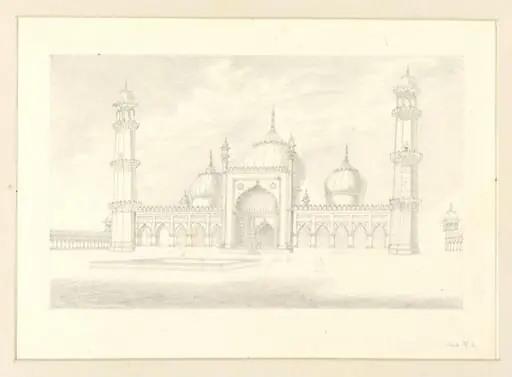
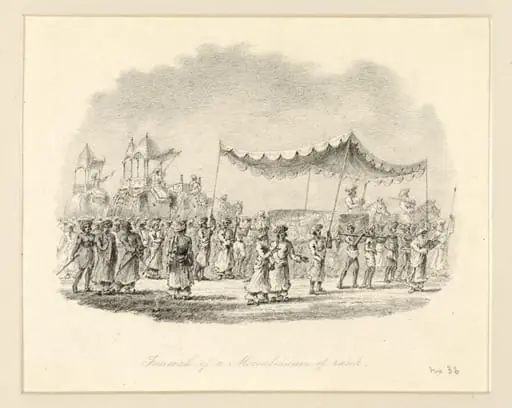
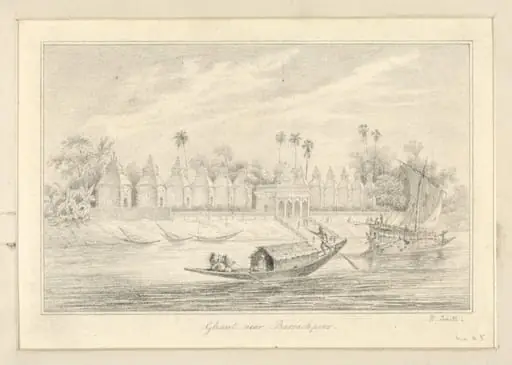
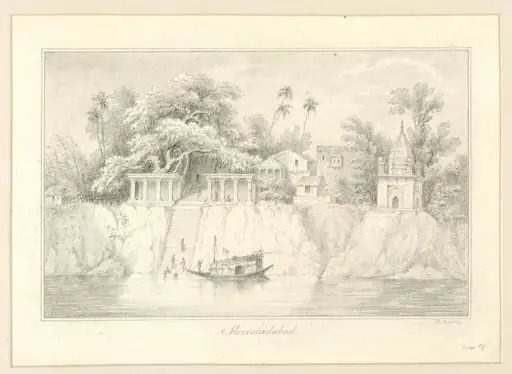
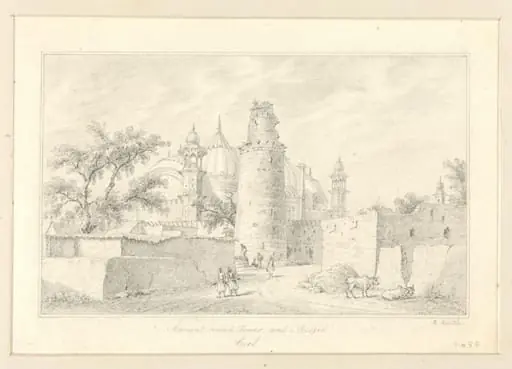
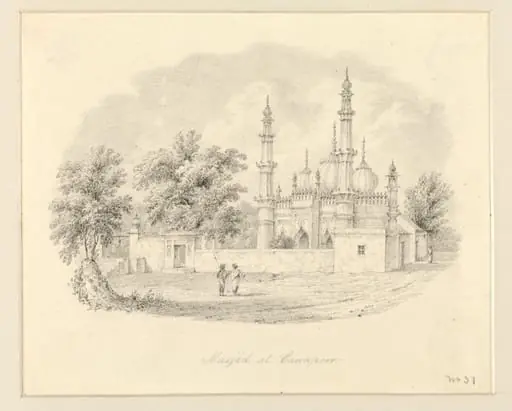
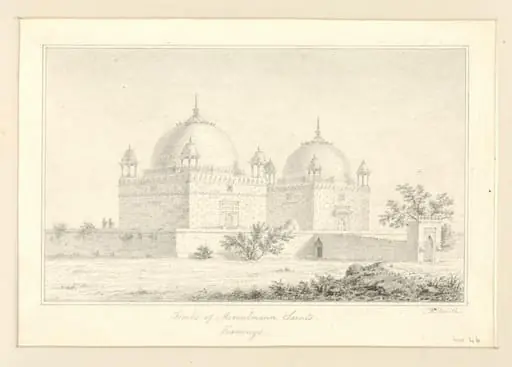
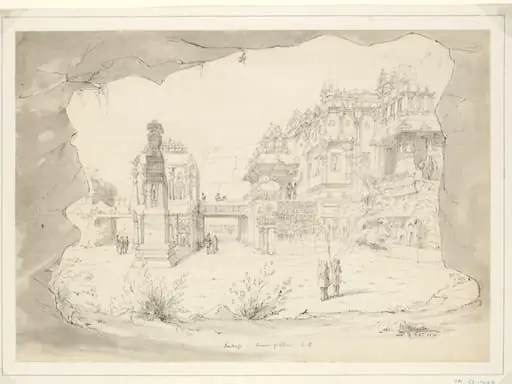
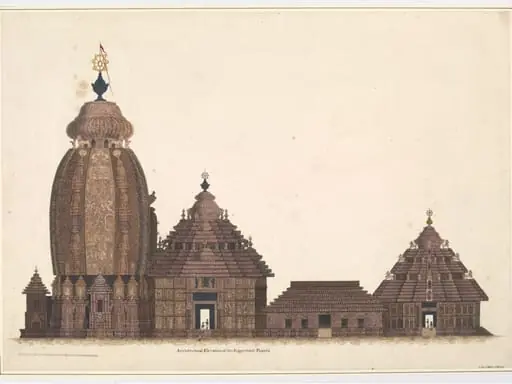
The sketch belongs to a broader series documenting Smith’s voyages along the Ganges corridor—from Calcutta to Cawnpore—and his visits to major northern cities such as Delhi, Agra, and Lucknow. Within this corpus, the pagoda image illustrates the variety of architectural forms encountered during his expedition.
Artist & collection