Artwork
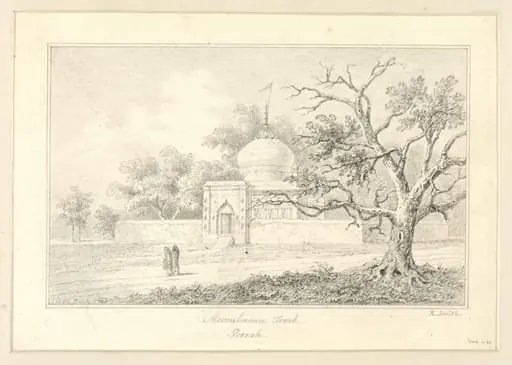
Moosulmaun Tomb, Hoorjah
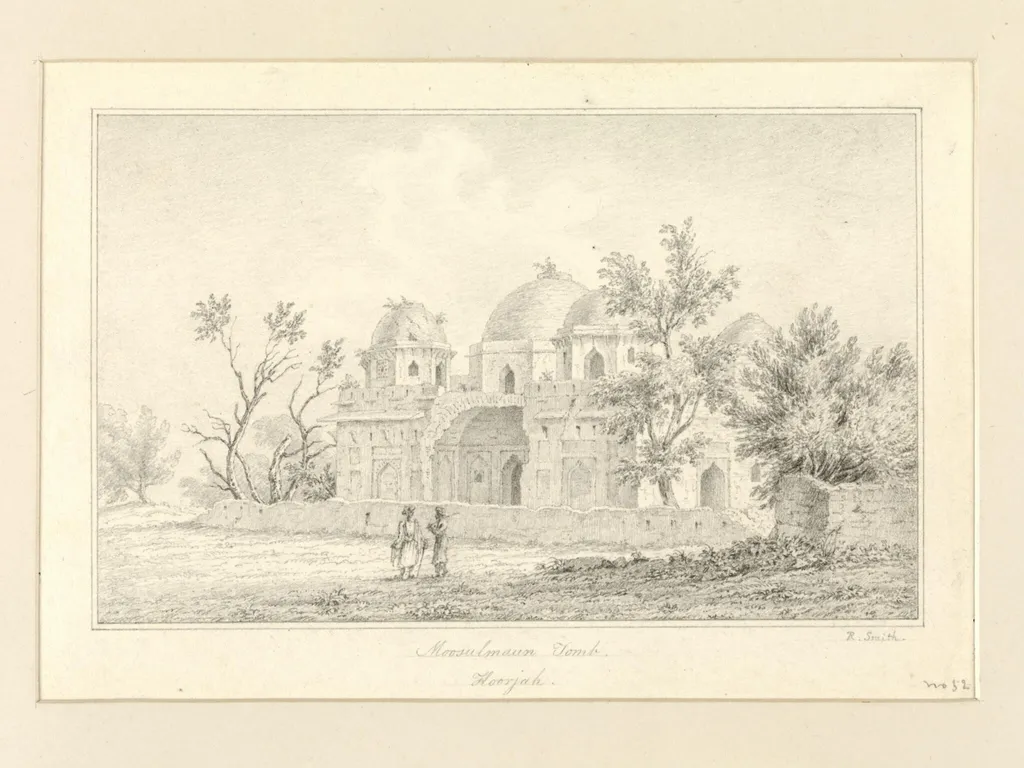
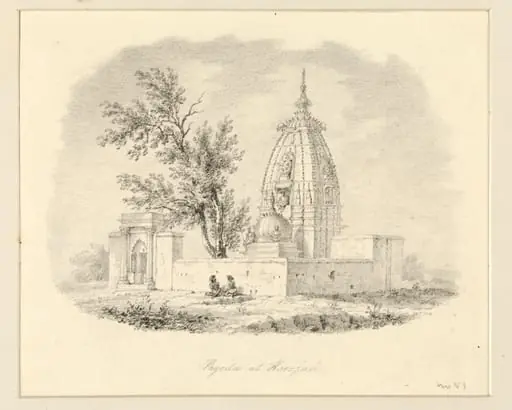
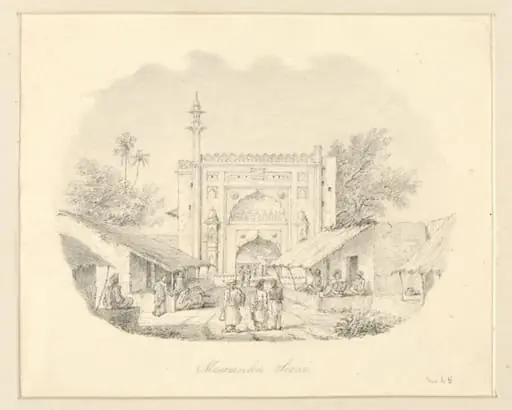
Moosulmaun Tomb, Hoorjah is a drawing by the Romanticist artist Robert Captain Smith. It dates from 1830 and is held in the collection of the Victoria and Albert Museum. The drawing records a Muslim tomb set within a modest landscape, rendered in monochrome pencil.
About this work
Overview
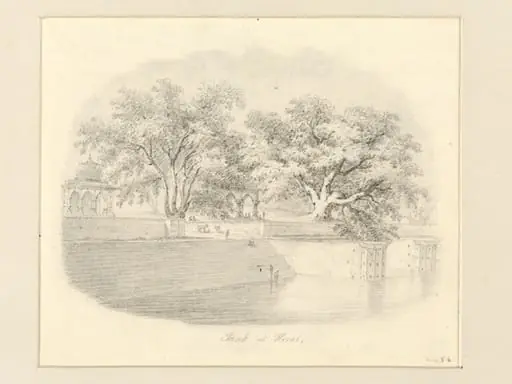
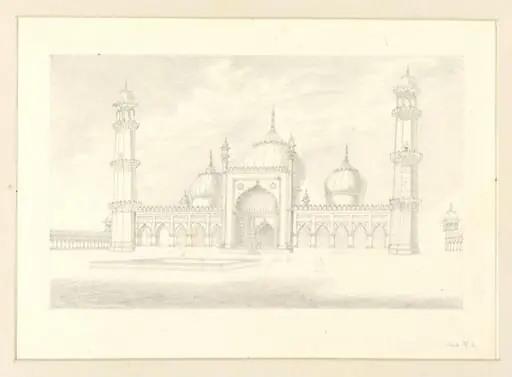
The drawing records a Muslim tomb set within a modest landscape, rendered in monochrome pencil. A dome‑capped structure rises amid trees and a grassy foreground, with two diminutive figures positioned before it, gazing toward the edifice. The composition is executed with precise line work, employing a range of gray tones to convey form and depth.
Subject & Meaning
Identified by the artist as the "Moosulmaun Tomb, Hoorjah," the building appears to be a funerary monument typical of North Indian Islamic architecture. The presence of the two small figures suggests a narrative of travelers encountering the site, emphasizing the tomb’s role as a landmark within the surrounding environment.
Technique & Style
Created with mounted pencil, the illustration relies on fine cross‑hatching and controlled shading to model the architecture and foliage. The linear accuracy and tonal modulation reflect the disciplined drawing practices of early nineteenth‑century military officers tasked with documenting foreign locales.
History & Provenance
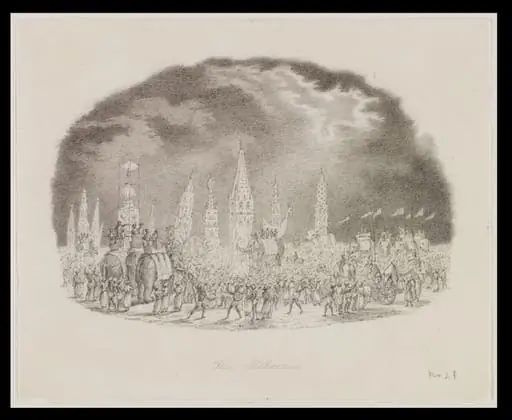
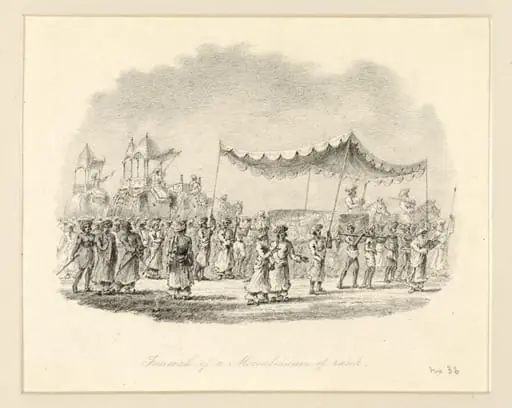
The work is one of sixty‑five sketches compiled by Captain Robert Smith of the 44th Regiment during his Indian tours between 1828 and 1833. After retiring, Smith assembled the images into his "Pictorial Journal of Travels in Hindustan" while in Ireland. The museum acquired the piece in 1915 from the collector W. M. Biden of Hampton‑on‑Thames.
Artist & collection