Artwork
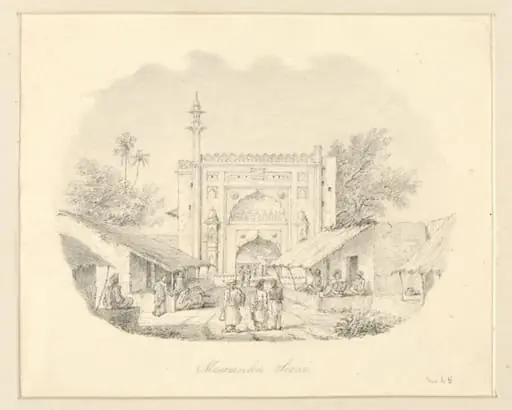
Moosulmaun Tomb, Secundra
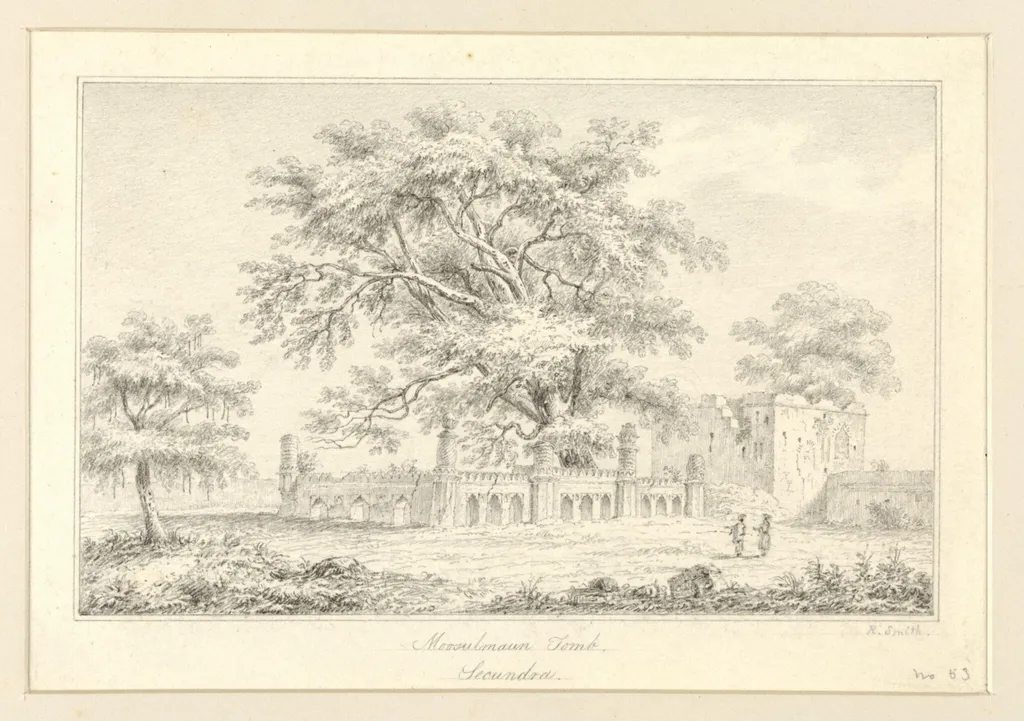
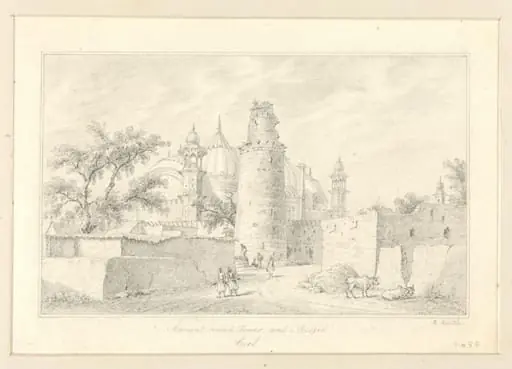
Moosulmaun Tomb, Secundra is a drawing by the Romanticist artist Robert Captain Smith. It dates from 1830 and is held in the collection of the Victoria and Albert Museum.
About this work
Overview
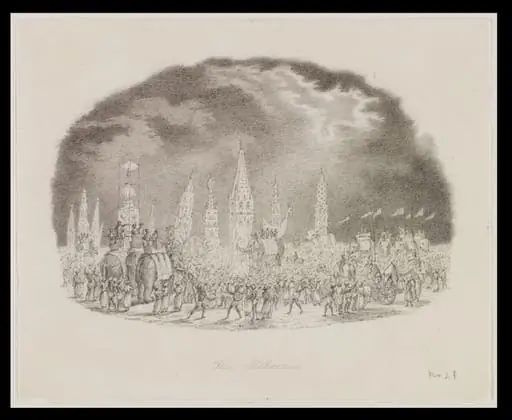
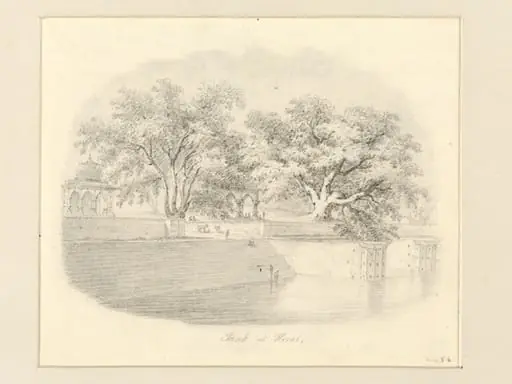
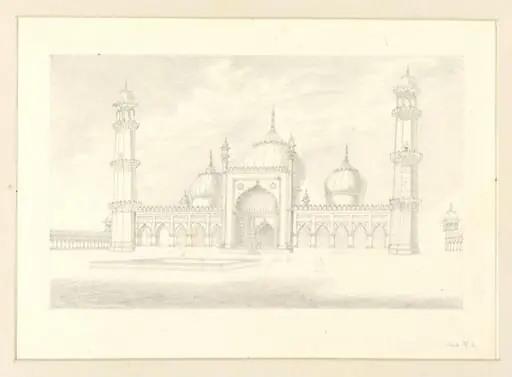
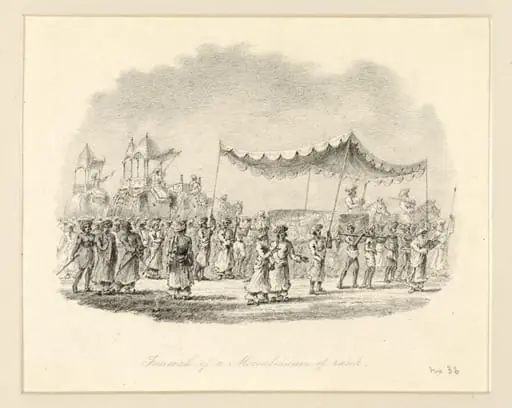
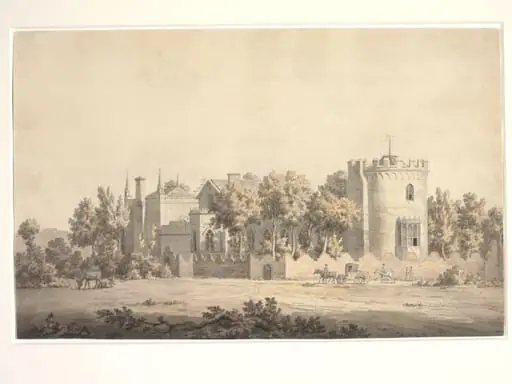
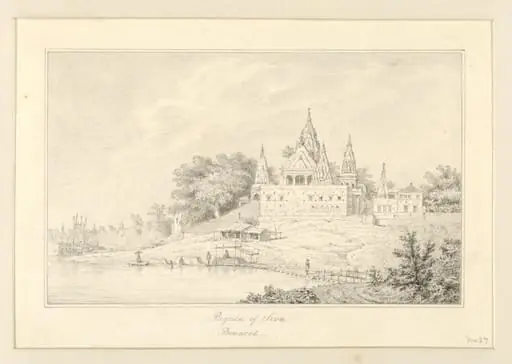
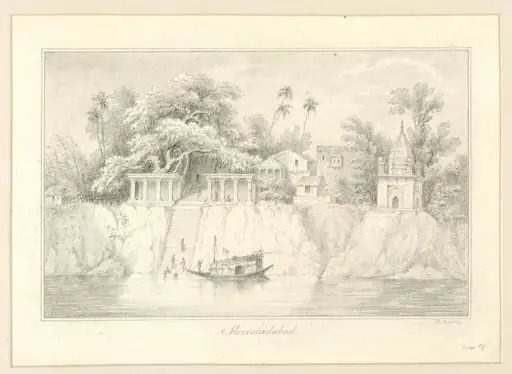
The Moosulmaun Tomb, Secundra drawing is a pencil work from a 19th-century travel journal, depicting a tomb with a prominent tree and figures, created by British Army officer Captain Robert Smith during his Indian voyages.
Subject & Meaning
The subject is the tomb of Moosulmaun, a Muslim figure, set amidst a natural scene. The inclusion of people and a detailed tree may symbolize the coexistence of human legacy and nature, though the figure's specific significance is not detailed in the drawing's context.
Technique & Style
Executed in a detailed, realistic style with emphasis on texture and shading, the drawing showcases Smith's skill in capturing depth and atmosphere. While rooted in realism, its emphasis on natural beauty aligns with broader Romantic-era artistic sensibilities.
History & Provenance
Created in the 1830s as part of Smith's Ganges voyage journal, the drawing remained with him until his retirement in Ireland (by 1845). It was later donated by W. M. Biden to a collection in the early 20th century.
Context
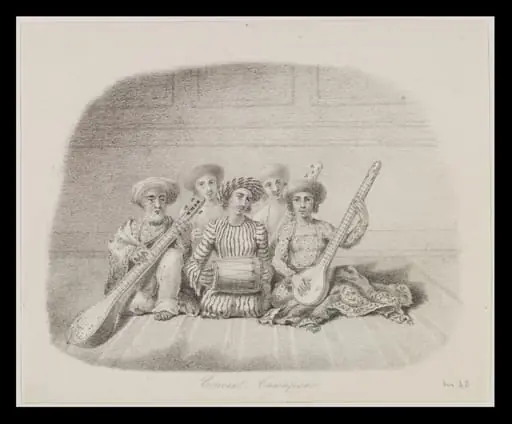
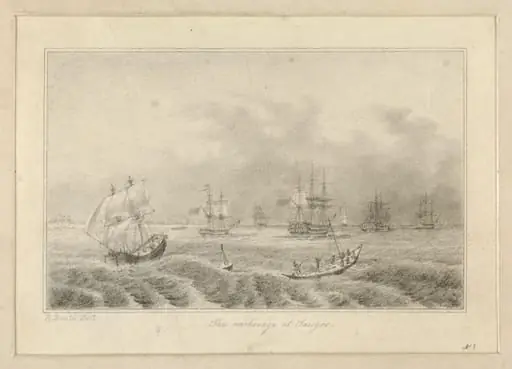
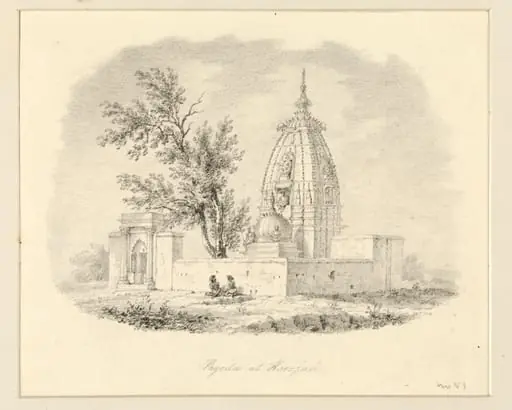
Part of a series of 65 drawings documenting Smith's travels along the Ganges and visits to key Indian cities (Delhi, Agra, Lucknow), this work reflects British military officers' 19th-century interests in Indian architecture and culture.
Legacy
Though unpublished during Smith's active career, the drawing's eventual donation to a collection ensures its preservation as a historical and artistic record of 19th-century India through a British colonial lens.
Artist & collection