Artwork
The Chateesetoon, Ghazipoor
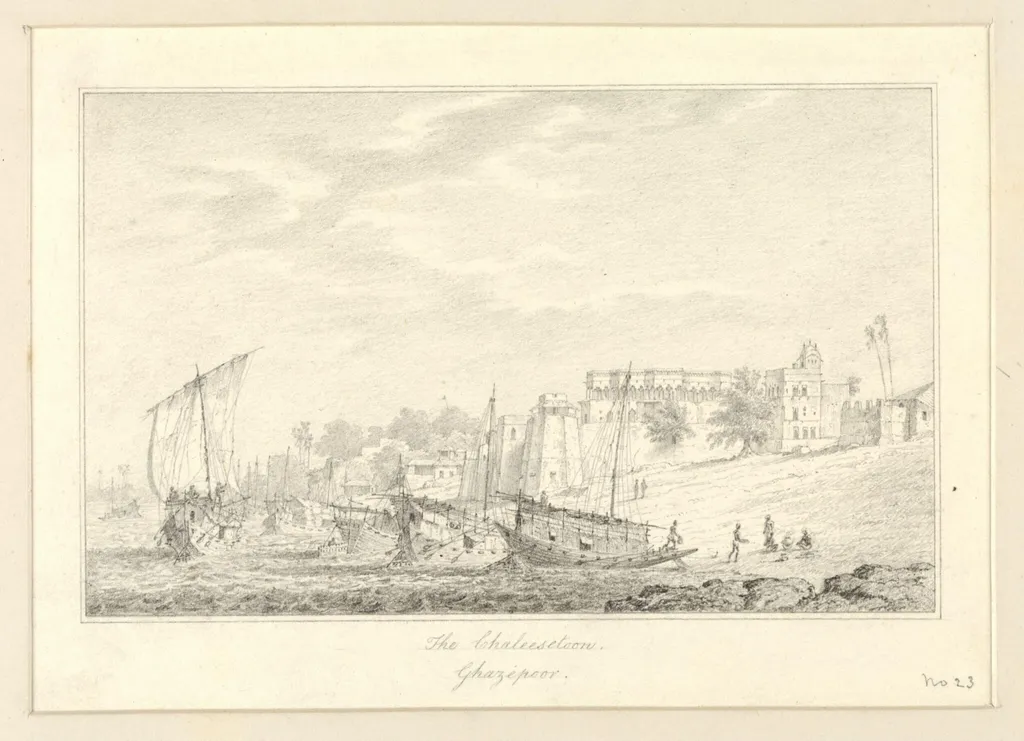
The Chateesetoon, Ghazipoor is a drawing by the Romanticist artist Robert Captain Smith. It dates from 1830 and is held in the collection of the Victoria and Albert Museum.
About this work
Overview
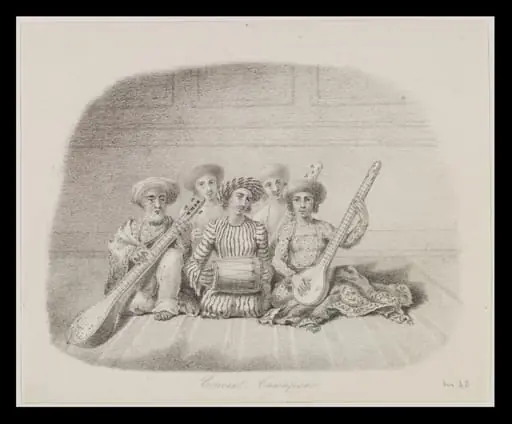
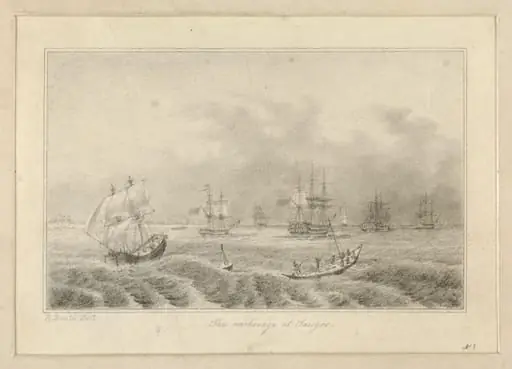
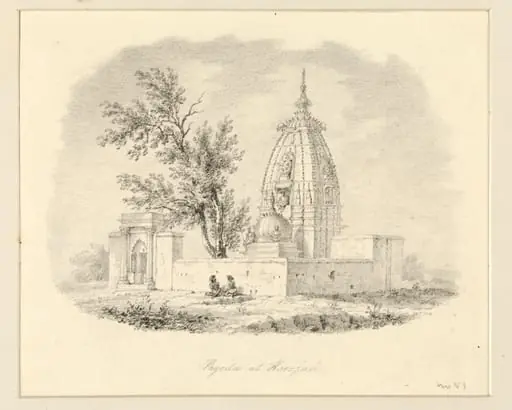
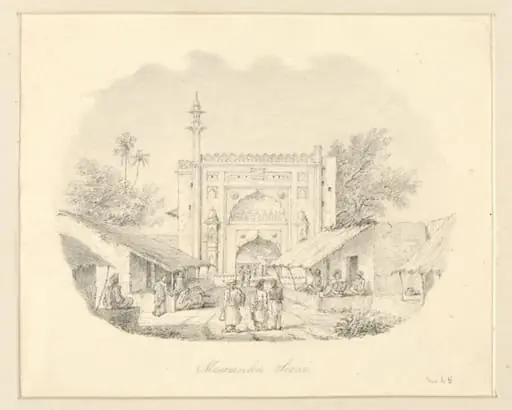
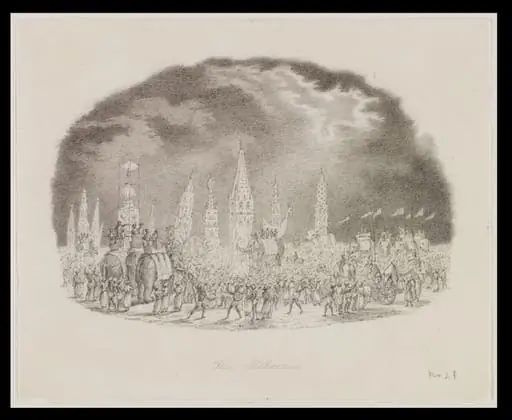
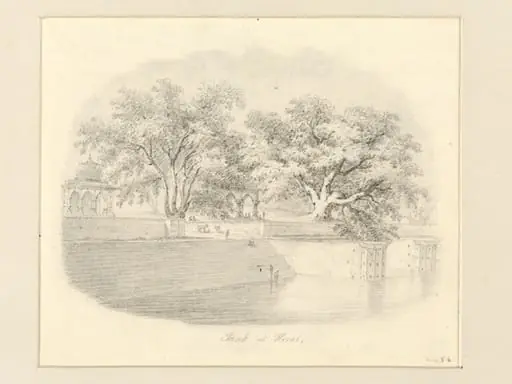
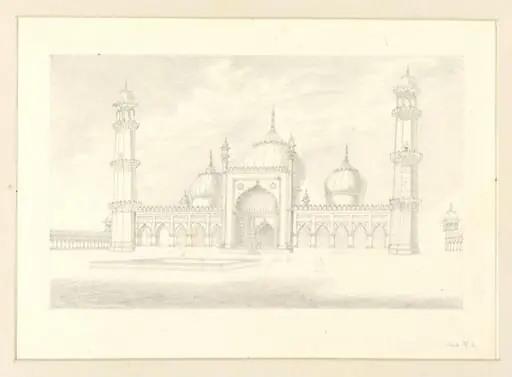
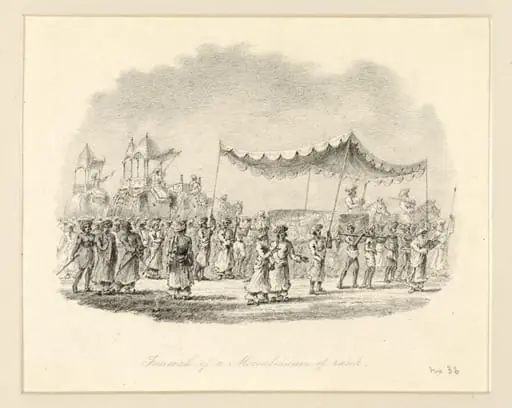
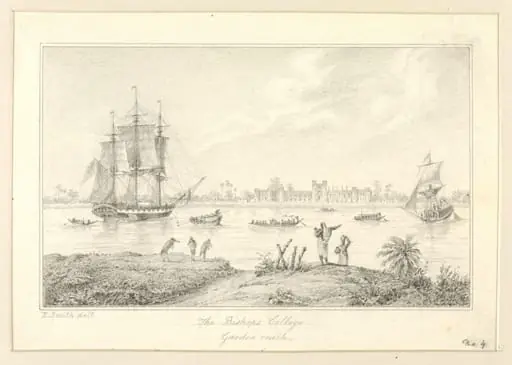
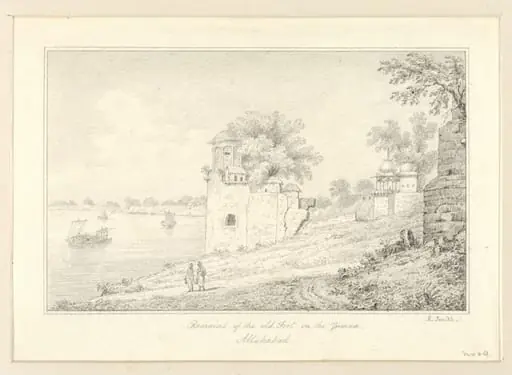
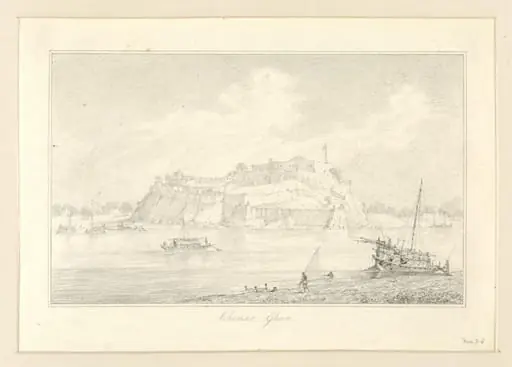
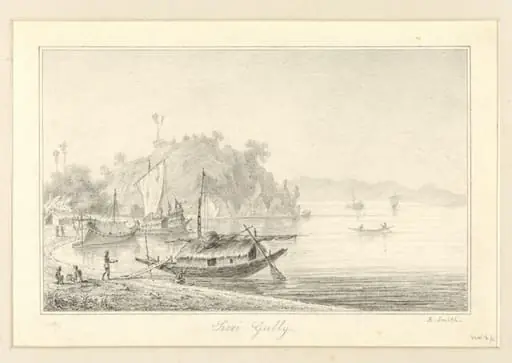
The Chateesetoon, Ghazipoor is a pencil drawing by Captain Robert Smith, part of his *Pictorial Journal of Travels in Hindustan* (1828–1833), depicting a bustling riverside scene with anchored ships, pedestrians, and varied architecture.
Subject & Meaning
The drawing captures daily life in a significant trade or travel hub along the Ganges, emphasizing functionality over ornateness, with ships at readiness and a mix of grand and simple buildings.
Technique & Style
Executed in black lines without color, the piece likely employs techniques such as cross-hatching to achieve depth, characteristic of detailed, observant diary-style illustrations.
History & Provenance
Completed in 1845 after Smith’s retirement to Ireland, the journal was donated to the collection by W. M. Biden in 1915, as part of a set of 65 mounted pencil illustrations.
Context
Created during Smith’s voyages along the Ganges, visiting major cities like Delhi, Agra, and Lucknow, the work reflects 19th-century British observational art of Indian landscapes and daily life.
Legacy
As part of the *Pictorial Journal*, it contributes to historical and artistic records of 19th-century Hindustan, offering insights into both the region’s appearance and British colonial-era perspectives.
Artist & collection