Artwork
Judgment of Paris
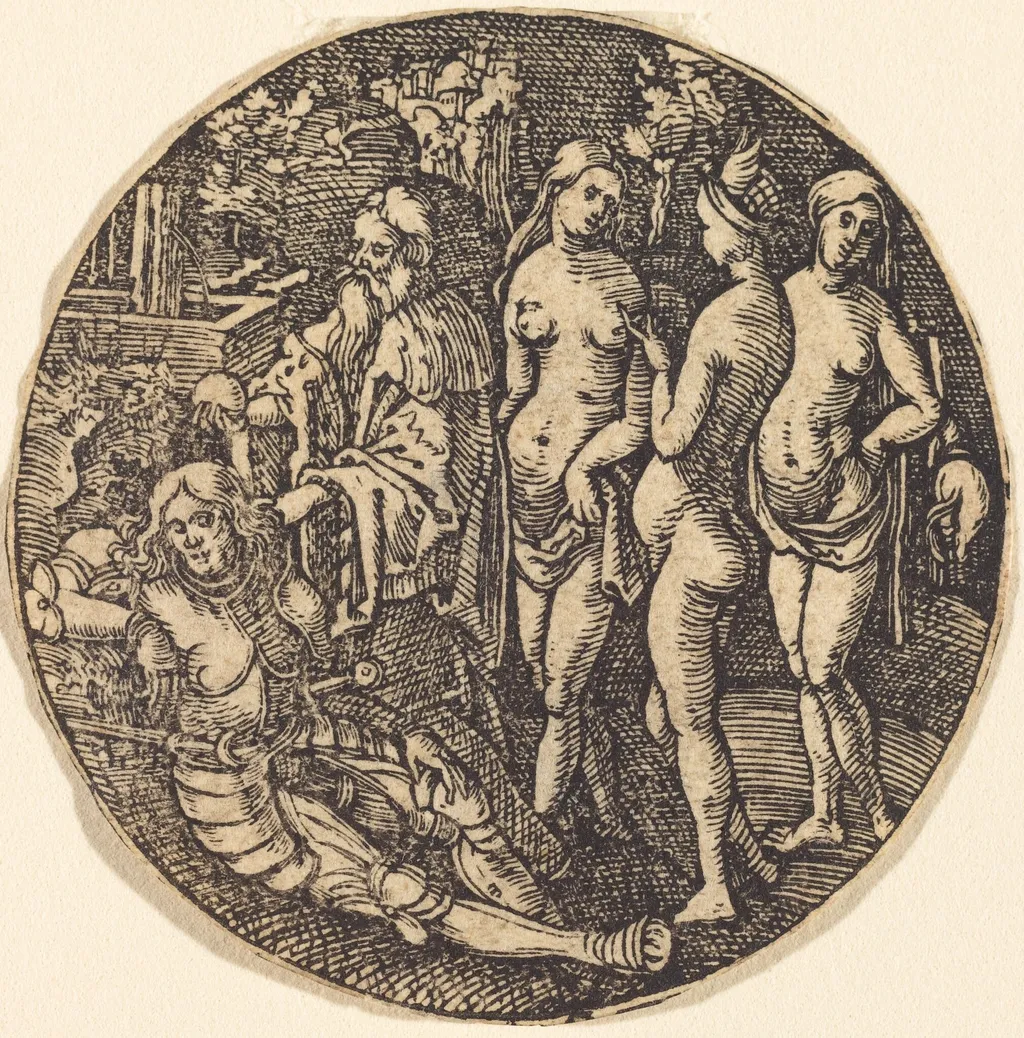
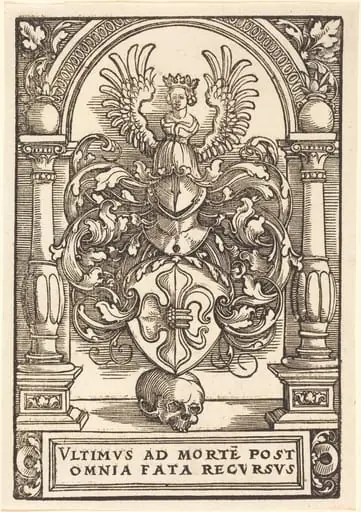
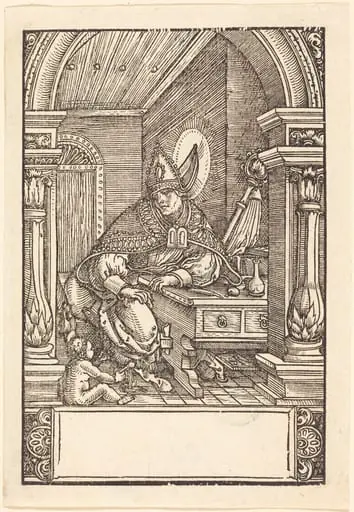
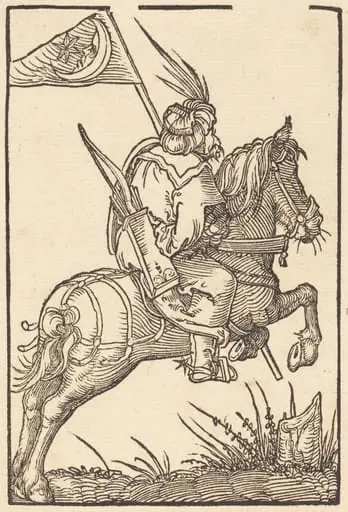
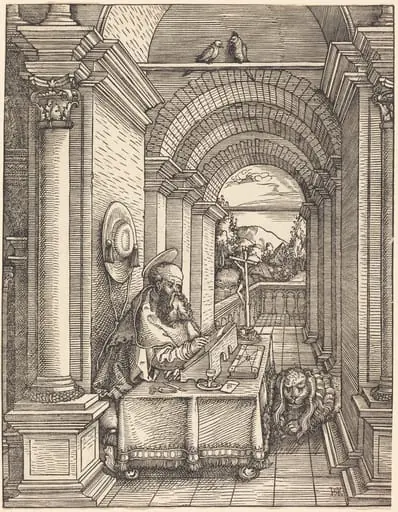
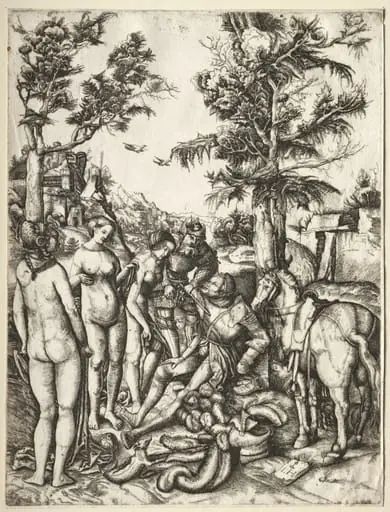
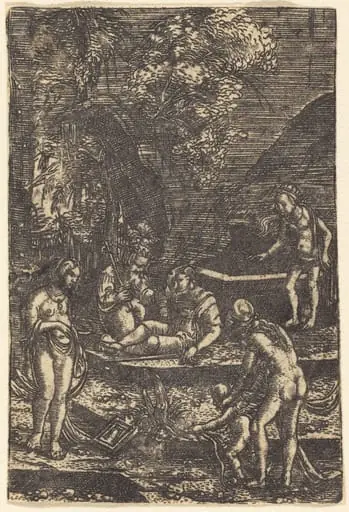
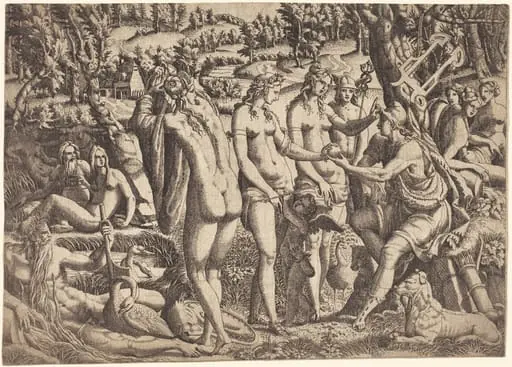
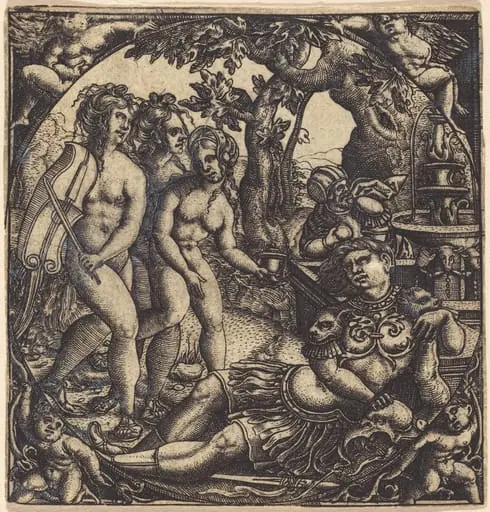
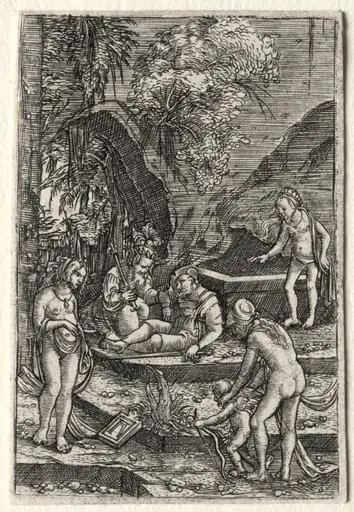
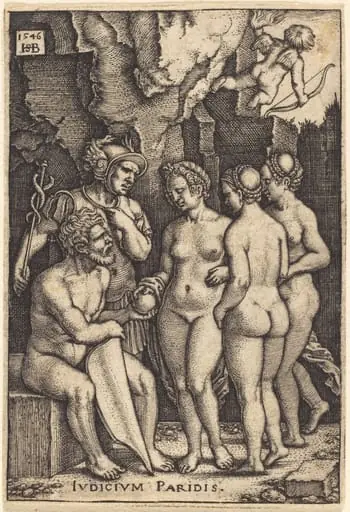
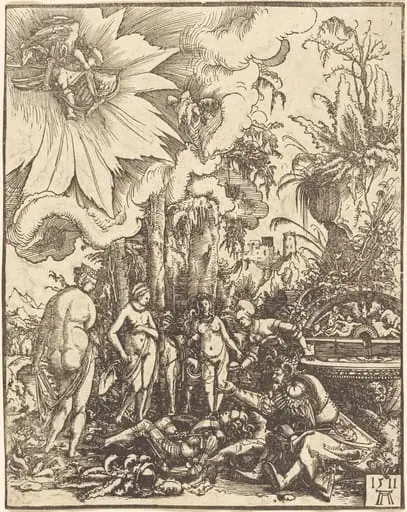
Judgment of Paris is an ink print by the Renaissance artist Hans Springinklee. It dates from 1507 and is held in the collection of the National Gallery of Art.
About this work
Overview
Created in 1507, Hans Springinklee’s *Judgment of Paris* is a black-and-white woodcut produced in Nuremberg during the German Renaissance.
Created in 1507, Hans Springinklee’s *Judgment of Paris* is a black-and-white woodcut produced in Nuremberg during the German Renaissance. As a student of Albrecht Dürer, Springinklee applied the precision of woodcut engraving to classical themes. The print captures a moment from Greek myth without color or shading, relying solely on incised lines to define form and space. Its composition is tightly structured, balancing narrative clarity with decorative detail.
Subject & Meaning
The scene illustrates the myth in which Paris, a Trojan prince, is tasked with choosing the most beautiful goddess among Hera, Athena, and Aphrodite. Each figure is rendered with subtle distinctions: one holds the golden apple, another rests against a tree, and the third turns away. Mercury, the messenger, observes silently. The work condenses the myth’s moral weight—the consequences of vanity and choice—into a quiet, contemplative moment.
Technique & Style
Springinklee employed the woodcut method, carving lines into a wooden block to create a relief print. The image is defined by sharp, clean contours and rhythmic hatching, with no tonal gradations. Background elements like foliage and rocks are rendered with dense, fine lines, contrasting with the smoother forms of the figures. The absence of color emphasizes the graphic nature of the medium, highlighting craftsmanship over illusion.
History & Provenance
The print was made during Springinklee’s active years in Nuremberg, a center of Northern European printmaking. Though few of his works survive, this piece is documented in early 16th-century collections. Its survival suggests it was circulated among collectors and artists familiar with Dürer’s circle. No known original block remains, but multiple impressions exist in European museum holdings.
Context
In early 16th-century Germany, classical mythology was increasingly adopted by artists as subjects for prints, appealing to humanist tastes. Springinklee’s work reflects this trend, aligning with the broader revival of antiquity in Northern art. Unlike Italian depictions, his version avoids grandeur, favoring intimate scale and restrained composition—characteristic of Nuremberg’s print culture.
Legacy
Springinklee’s *Judgment of Paris* exemplifies the potential of woodcut to convey complex narratives with minimal means. While not widely known today, it influenced later German printmakers who valued clarity and line over painterly effects. The work remains a reference point for understanding how classical myths were adapted in Northern Renaissance printmaking beyond the shadow of Dürer.
Artist & collection

Artist
Hans Springinklee (c.1490/c.1495 – c.1540) was a German artist from Nuremberg, best known for his woodcuts. He was a pupil of Albrecht Dürer.