Artwork
「文齊側五行火 花街細見合」|Courtesan by a Lantern, “Fire,” from the series Five Elements for the Bunsai Poetry Group, a Guide to the Yoshiwara Pleasure Quarters
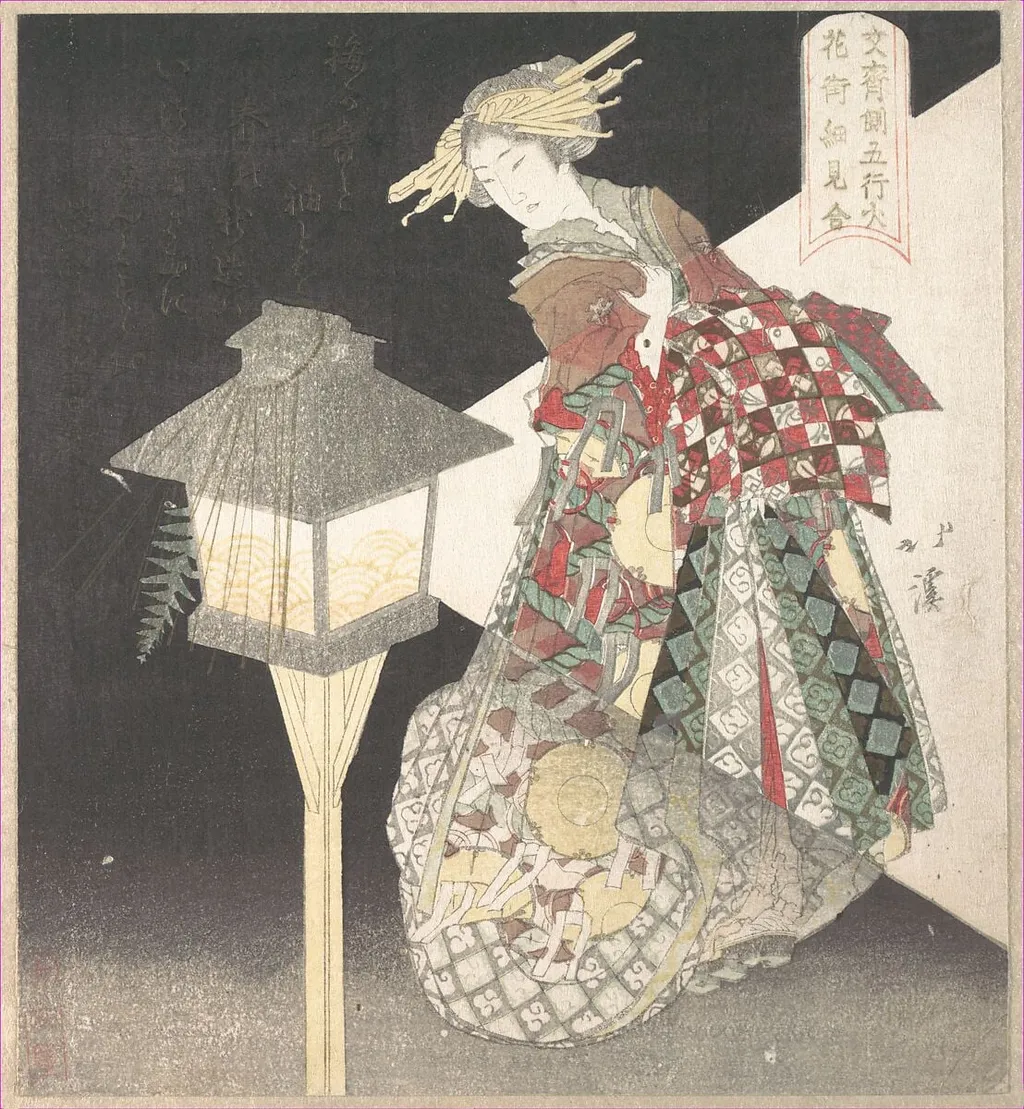
「文齊側五行火 花街細見合」|Courtesan by a Lantern, “Fire,” from the series Five Elements for the Bunsai Poetry Group, a Guide to the Yoshiwara Pleasure Quarters is an ink print by the Romanticist artist Totoya Hokkei. It dates from 1820 and is held in the collection of the Metropolitan Museum of Art.
About this work
Overview
This woodblock print, created around 1820 by Totoya Hokkei, is part of a small series commissioned by the Bunsai Poetry Group.
This woodblock print, created around 1820 by Totoya Hokkei, is part of a small series commissioned by the Bunsai Poetry Group. Designed as a surimono—a luxury print often circulated among literary circles—it illustrates the element of fire within a symbolic framework tied to the Yoshiwara pleasure district. The composition centers on a courtesan beside a lantern, blending poetic allusion with visual restraint.
Subject & Meaning
The figure, a courtesan of Yoshiwara, stands in quiet contemplation beside a lantern shaped like a miniature pavilion. Her downward gaze and still posture evoke introspection, aligning the image with the poetic theme of fire—not as flame, but as warmth, transience, and inner light. The lantern, a common metaphor in Edo-period verse, suggests both illumination and the fleeting nature of pleasure.
Technique & Style
Executed in fine woodblock printing, the image uses delicate ink lines and subtle color gradations in red, green, and white to render the kimono’s pattern. The dark background enhances the luminous quality of the lantern and the figure’s form. Surimono techniques allowed for refined details, including embossing and metallic pigments, though this piece emphasizes tonal harmony over ornamentation.
History & Provenance
Commissioned by the Bunsai Poetry Group, the print was likely distributed to members as a seasonal or thematic keepsake. It entered The Metropolitan Museum of Art’s collection through established channels of early 20th-century Japanese art acquisition. Its survival as a single print from a limited series underscores its rarity and the niche audience for such poetic prints.
Context
In early 19th-century Edo, surimono served as intimate artistic exchanges among poets and patrons, often referencing classical literature or the five elements. Yoshiwara, though a center of entertainment, was also a cultural hub where art, poetry, and fashion converged. This print reflects how elite literary circles reimagined the pleasure quarters through symbolic, rather than literal, representation.
Legacy
Though not widely known outside specialist circles, Hokkei’s work exemplifies the fusion of poetry and print culture in late Edo Japan. This print, like others in the series, demonstrates how visual art could convey abstract philosophical ideas through restrained composition. It remains a quiet testament to the intellectual depth embedded in Edo-period popular aesthetics.
Artist & collection
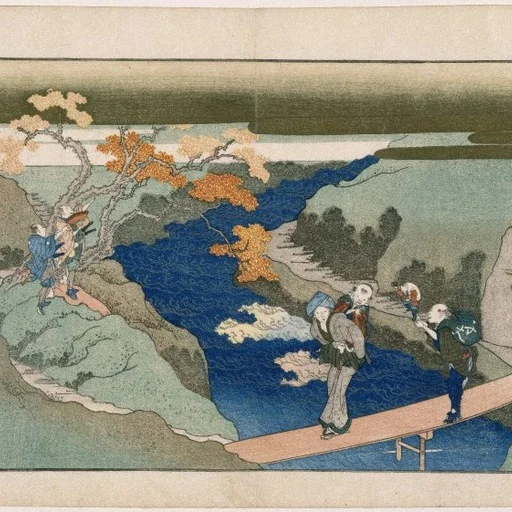

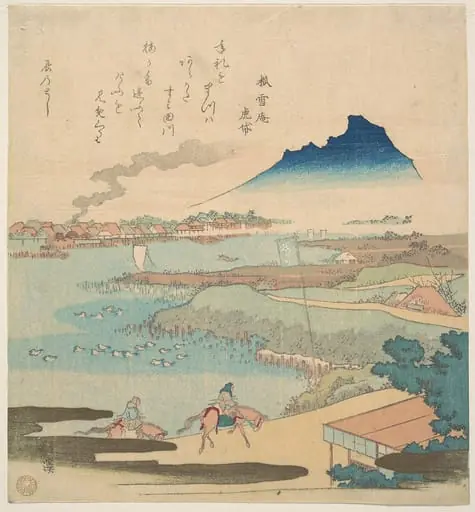 Sumidagawa|Sumida River
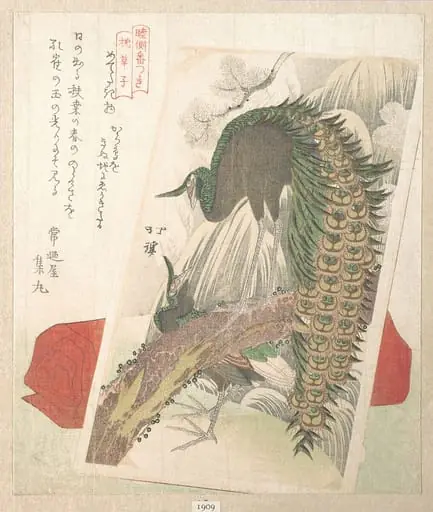 松・滝に孔雀図と緋毛氈|Painting of Peacocks, Pines, a Waterfall, and a Roll of Red Fabric
 Untitled
 Untitled
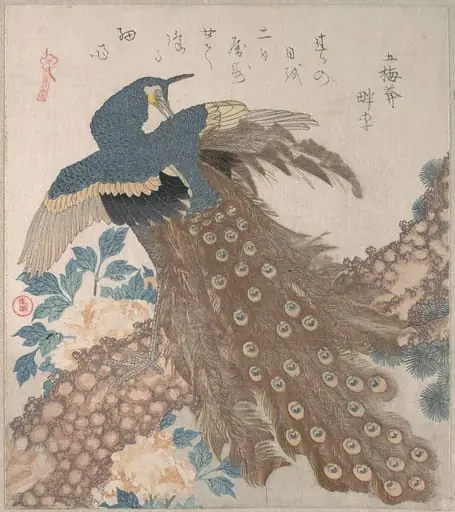 「三ひらの内」松・牡丹に孔雀|Peacock on Pine Tree and Peonies, from the series Three Sheets (Mihira no uchi)
 Untitled
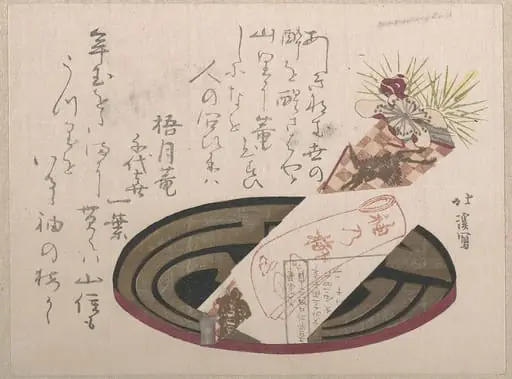 Untitled
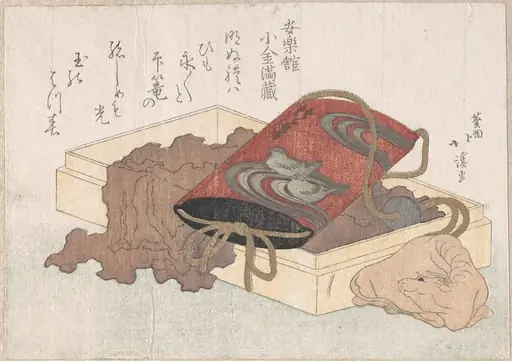 印籠と牛根付『春雨集』 摺物帖|Lacquer Inrō with Waterbirds and Ox-shaped Netsuke in a BoxFrom the Spring Rain Collection (Harusame shū), vol. 3
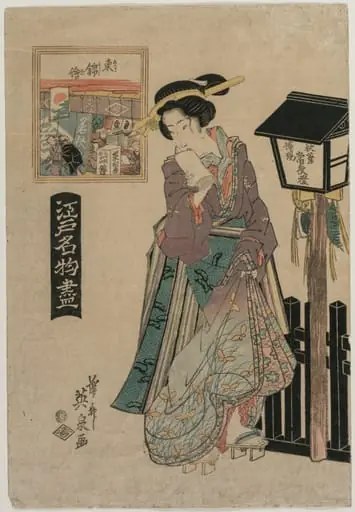 Pictures of Eastern Brocade (from the series Famous Products of Edo)
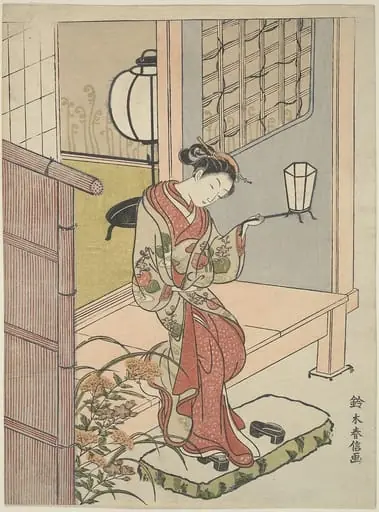 Untitled
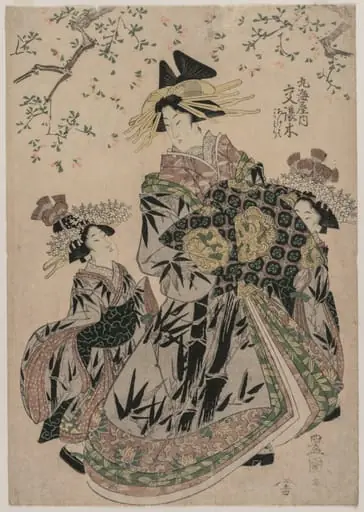 The Courtesan Katakoshigi (?) of Maruebiya with her Kamuro Ageha and Midori
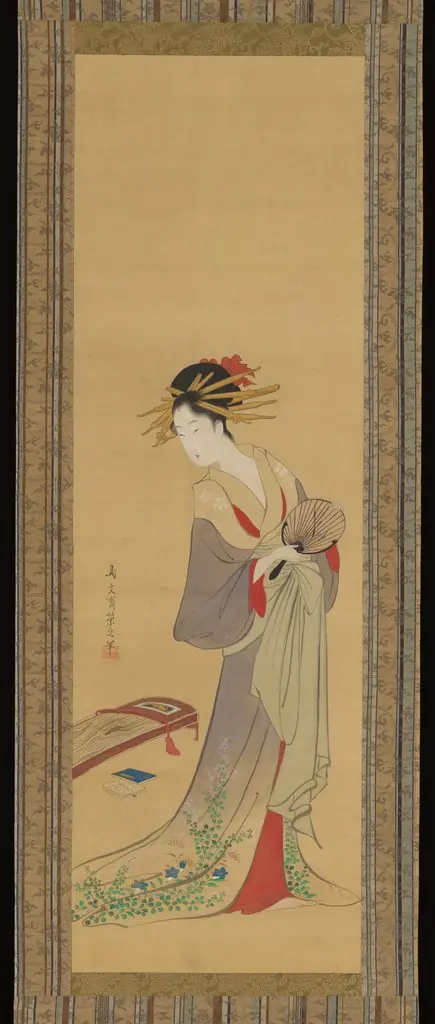 Courtesan with Fan and Koto
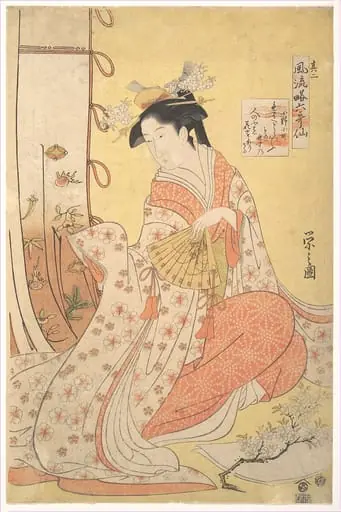 鳥文斎栄之画 「風流略六哥仙 其の二」小野小町|Ono no Komachi: Number Two (Sono ni), from the series Stylish Parodies of the Six Poetic Immortals (Fūryū yatsushi rokkasen)
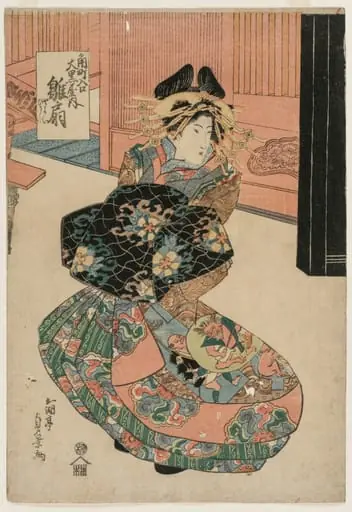 The Courtesan Hinaogi of the Daikokuya at the Entrance of Kadomachi
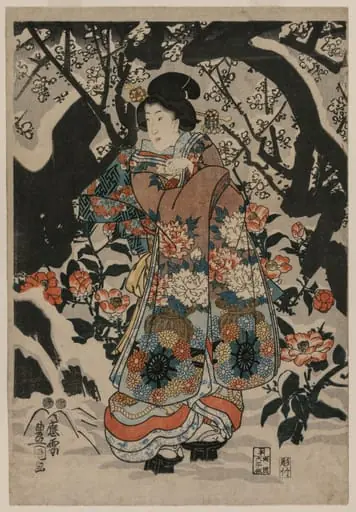 Woman Standing Beside a Plum Tree
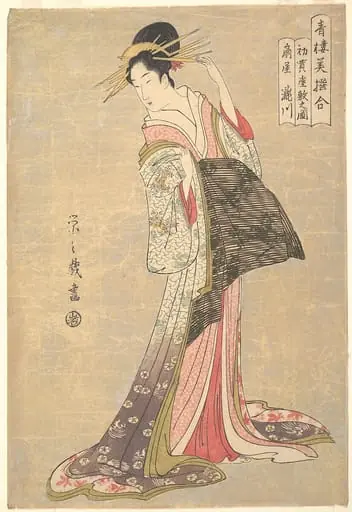 鳥文斎栄之画 「青楼美撰合 初売座敷之図 扇屋滝川」|Takigawa of the Ōgiya Brothel: The First Reception Room Appointment of the New Year (Hatsu-uri zashiki no zu: Ōgiya Takigawa), from the series A Comparison of Selected Beauties of the Pleasure Quarters (Seirō bisen awase)
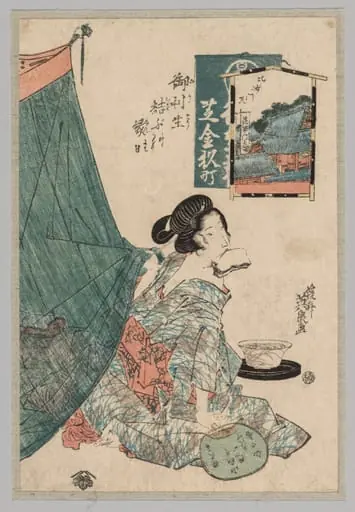 Woman with Papers in Mouth and Fan in Hand
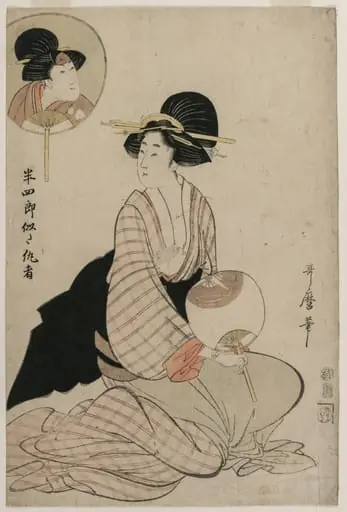 An Attractive Woman Who Looks Like the Actor Iwai Hanshiro V
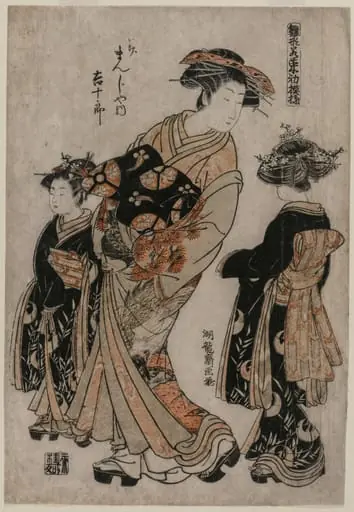 The Courtesan Kichijuro of Kage Manjiya with Two Kamuro (from the series Models for Fashions: New Designs as Fresh as Young Leaves)
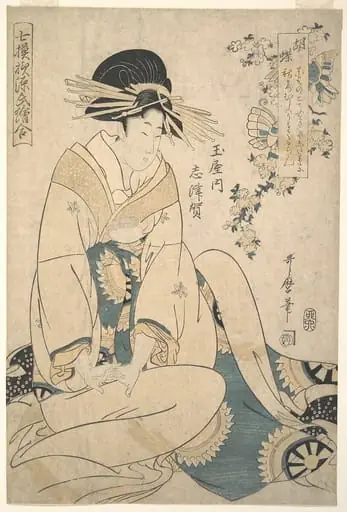 玉屋内 志津賀|A Courtesan