Artwork
鈴木春信画 覗き絡繰り・「高野の玉川 弘法大師」|A Teenage Boy and Girl with a Viewer for an Optique Picture (Nozoki-karakuri); Kōbō Daishi’s Poem on the Jewel River of Kōya (Kōya no Tamagawa: Kōbō Daishi)
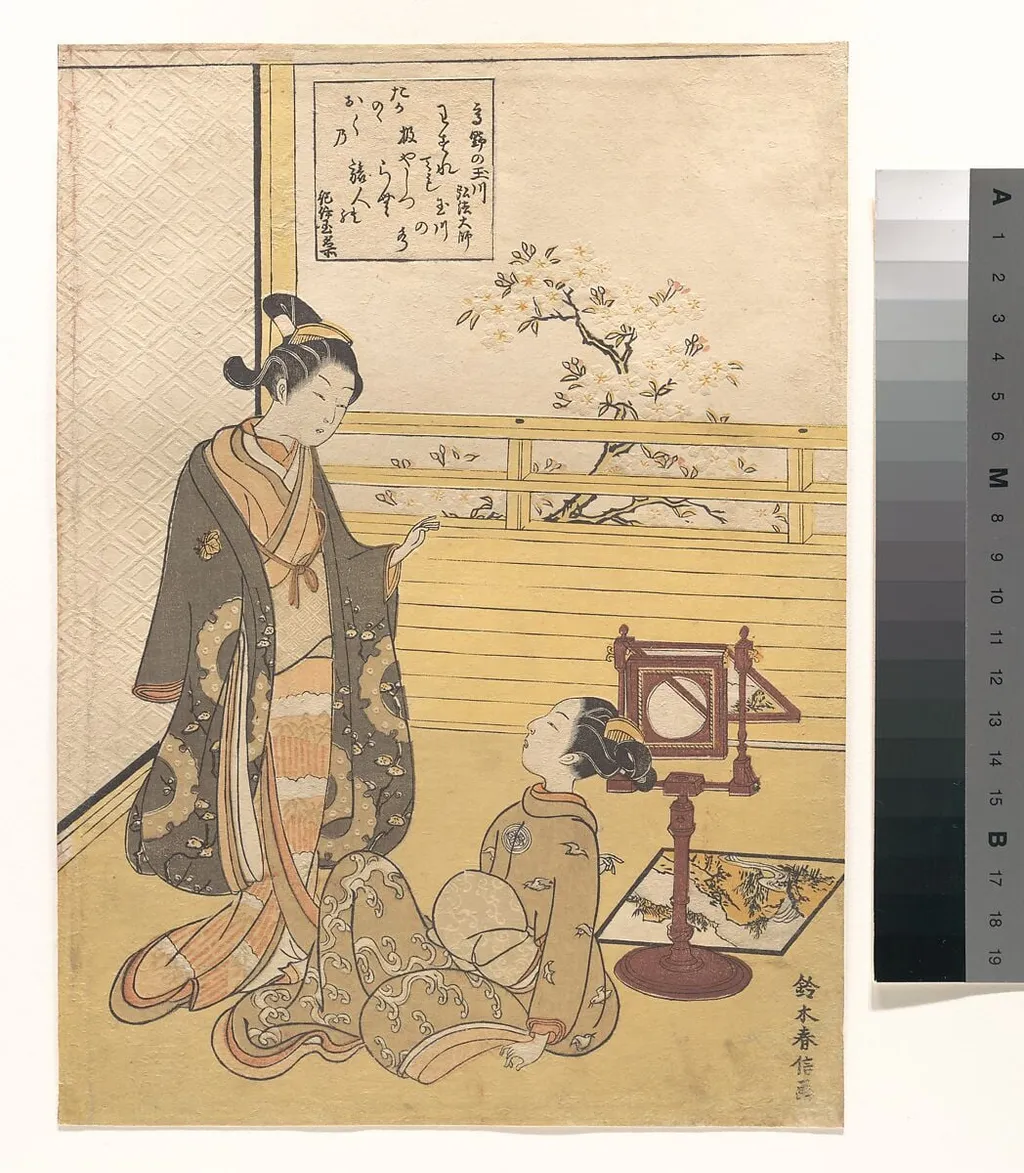
鈴木春信画 覗き絡繰り・「高野の玉川 弘法大師」|A Teenage Boy and Girl with a Viewer for an Optique Picture (Nozoki-karakuri); Kōbō Daishi’s Poem on the Jewel River of Kōya (Kōya no Tamagawa: Kōbō Daishi) is an ink print by the Romanticist artist Suzuki Harunobu. It is held in the collection of the Metropolitan Museum of Art.
About this work
Overview
This woodblock print, created by Suzuki Harunobu around 1760s-70s, is a nuanced example of Japanese ukiyo-e art. It is held at The Metropolitan Museum of Art.
Subject & Meaning
The print depicts a boy and girl examining an optical device, possibly a precursor to modern viewing technologies. The scene is tranquil, with the pair lost in contemplation. The image is accompanied by a reference to Kōbō Daishi’s poem on the Jewel River of Kōya.
Technique & Style
The print is characterized by muted earth tones and soft pastels, showcasing Harunobu's subtle color palette. The use of ink and color on paper is typical of ukiyo-e woodblock printing.
Context
The work reflects the Edo period's fascination with optical devices and entertainment. It also alludes to classical Japanese literature through its reference to Kōbō Daishi's poem.
Artist & collection

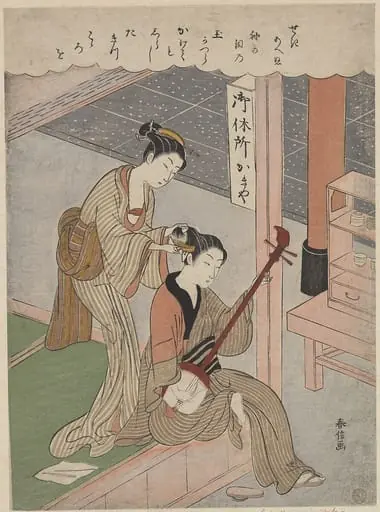
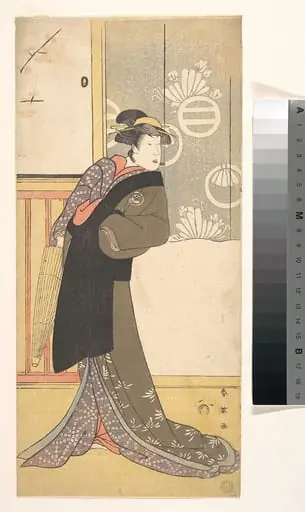 Untitled
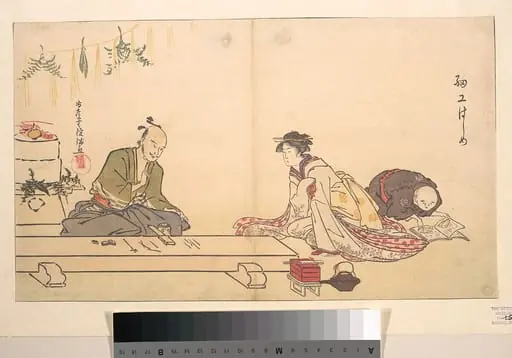 Untitled
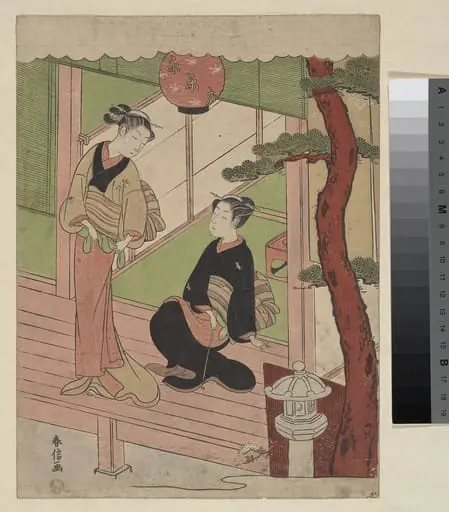
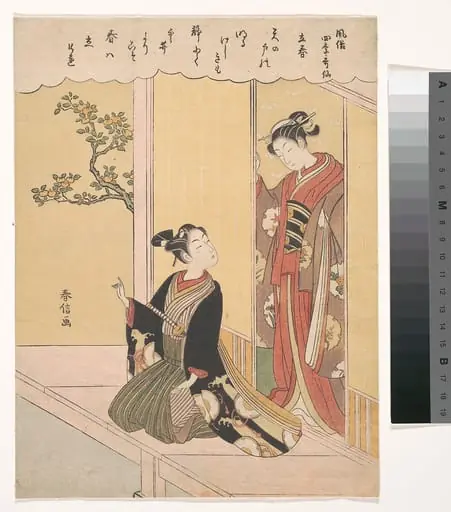 鈴木春信画「風俗四季歌仙 立春」|The First Day of Spring (Risshun), from the series Fashionable Poetic Immortals of the Four Seasons (Fūzoku shiki Kasen)
 Untitled
 Untitled
 Untitled
 Untitled
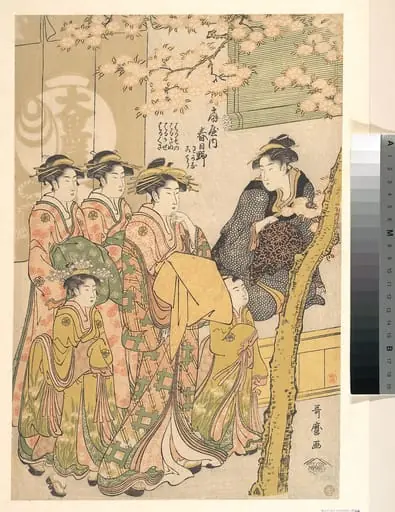 扇屋内春日野|The Oiran Kasugano of Ogiya on Parade under Blossoming Cherry Trees
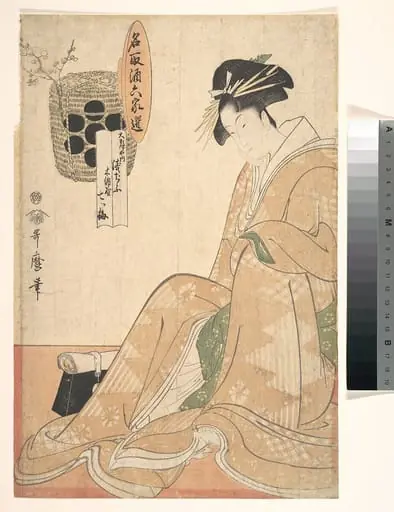 名取酒六家選 大もんぢや内浅じふ 木綿屋七ッ梅|A Courtesan
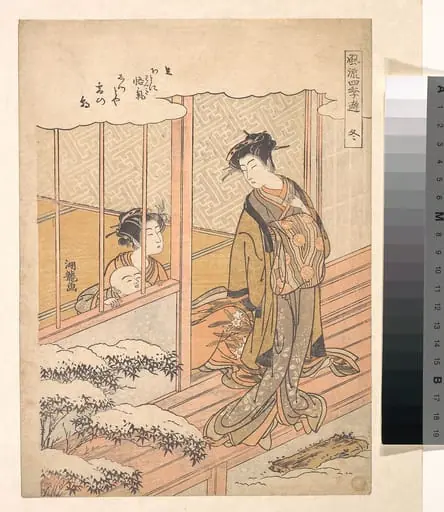 Untitled
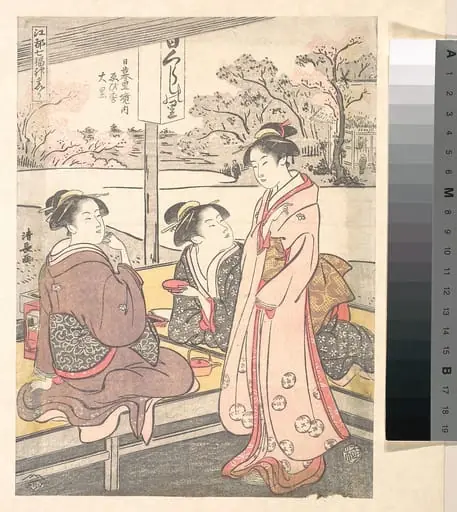 Untitled
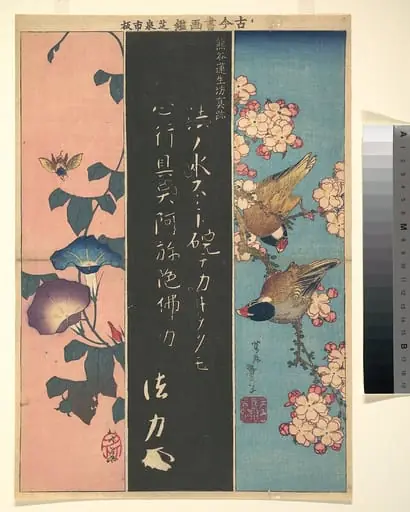 古今書画鑑 熊谷蓮生坊真跡|Bird-and-Flower Paintings