Artwork
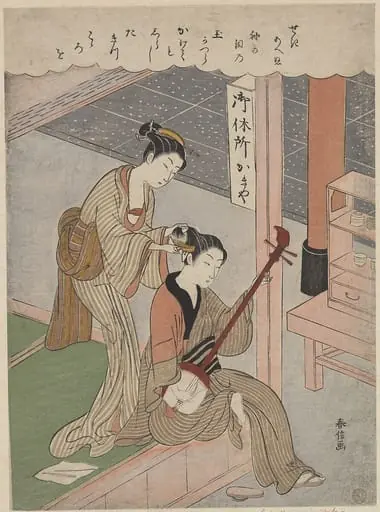
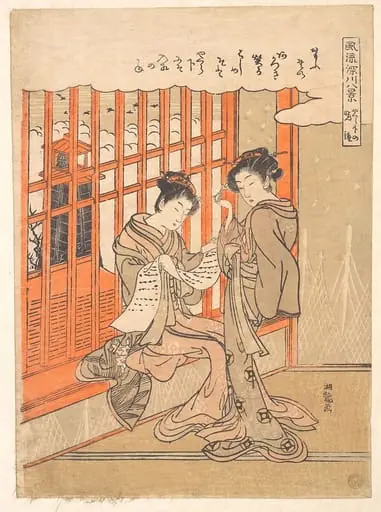
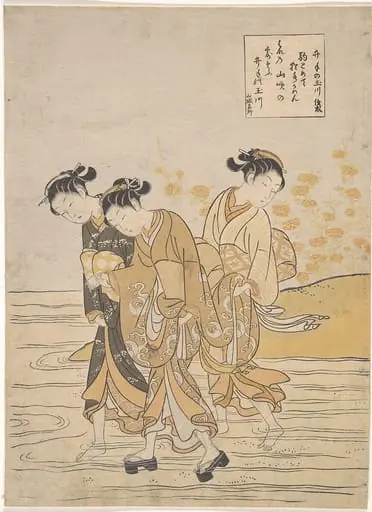
鈴木春信画 六玉川 「壔衣の玉川 摂津の名所」|Kōromō Uchi Tamagawa|The Cloth-Fulling Jewel River, a Famous Place in Settsu Province (Tōi no Tamagawa, Settsu no meisho), from an untitled series of Six Jewel Rivers (Mu Tamagawa)
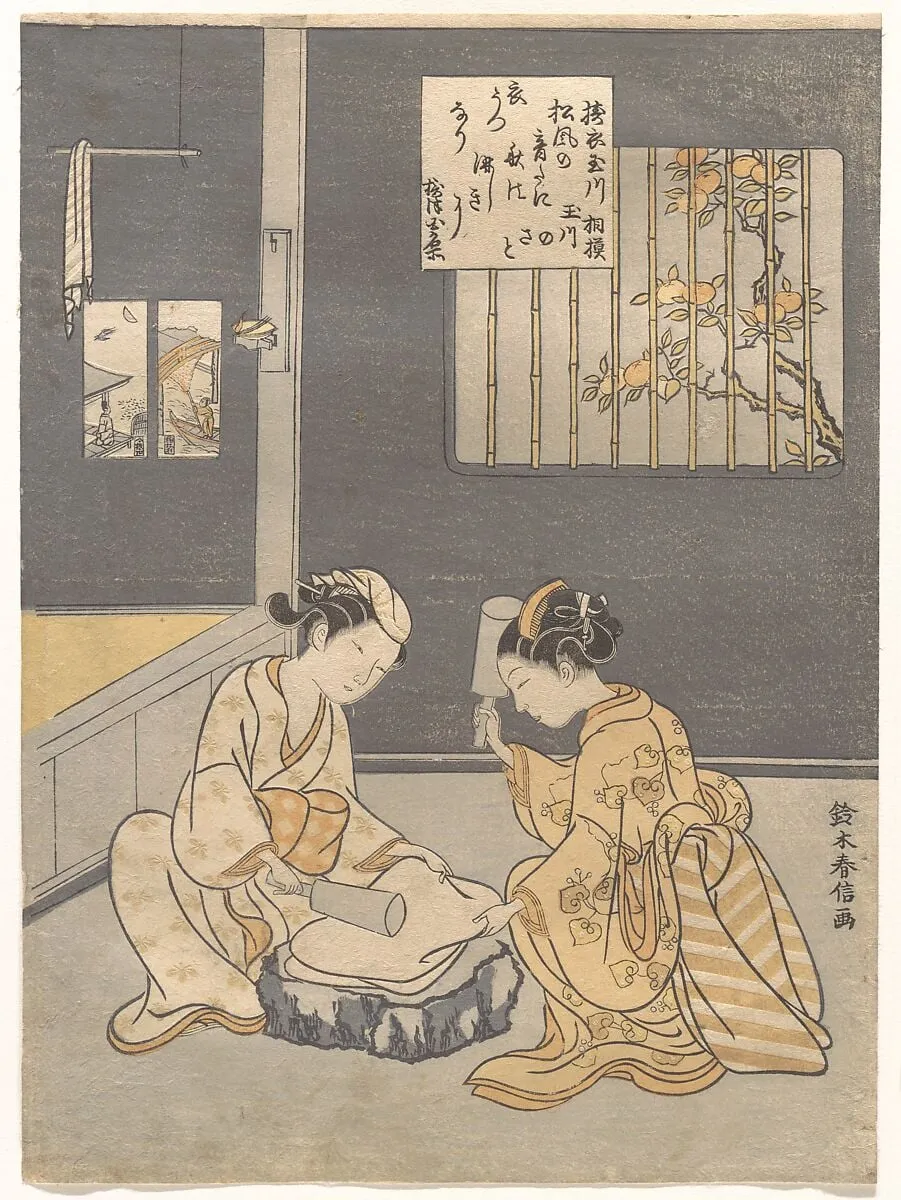
鈴木春信画 六玉川 「壔衣の玉川 摂津の名所」|Kōromō Uchi Tamagawa|The Cloth-Fulling Jewel River, a Famous Place in Settsu Province (Tōi no Tamagawa, Settsu no meisho), from an untitled series of Six Jewel Rivers (Mu Tamagawa) is an ink print by the Romanticist artist Suzuki Harunobu. It dates from 1766 and is held in the collection of the Metropolitan Museum of Art.
About this work
Overview
Created around 1766 by Suzuki Harunobu, this nishiki-e woodblock print depicts a quiet domestic scene in a modest interior. Two women are engaged in the ritual of washing cloth: one kneels with a long wooden implement, the other pours water from a jug. The composition is rendered in soft, muted hues, and the figures are set against a dark wall featuring a small window and a hanging scroll.
Subject & Meaning
The work captures a moment of everyday labor, emphasizing the careful attention given to the task of cleansing fabric. The juxtaposition of the splashing water and the neatly folded cloth highlights the transition from impurity to purity, a theme often associated with domestic virtue in Edo‑period visual culture.
Technique & Style
Harunobu employs the multi‑color nishiki-e process, layering inks to achieve subtle tonal variations. Fine cross‑hatching creates delicate shadows, while the use of line delineates the texture of the women’s robes and the wooden floor. The restrained palette and precise detailing reflect the artist’s mastery of both color printing and line work.
History & Provenance
The print belongs to an untitled series known as the Six Jewel Rivers, each illustrating a different locale celebrated for its scenic or cultural significance. This particular image references the "Cloth‑Fulling Jewel River," a renowned spot in Settsu Province. The piece entered the collection of the Metropolitan Museum of Art, where it is currently held.
Context
Produced during the mid‑eighteenth century, the image aligns with the ukiyo‑e trend of portraying ordinary life and regional landmarks. Harunobu’s focus on intimate, interior scenes contrasts with the more flamboyant depictions of courtesans and actors that dominated earlier prints, reflecting a shift toward refined, genre‑type subjects.
Artist & collection

 Untitled
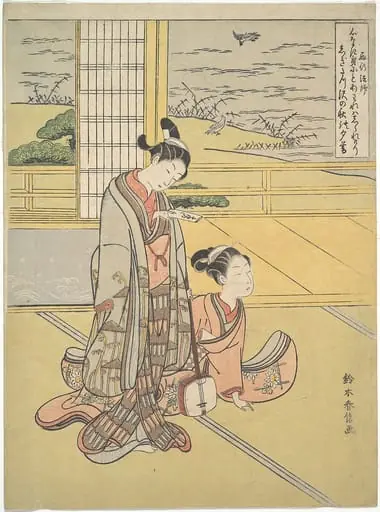 鈴木春信画 見立三夕 「西行法師」|A Young Man and Woman with a Shamisen; Monk Saigyō, from a series alluding to the Three Evening Poems (Sanseki waka)
 Untitled
 Untitled
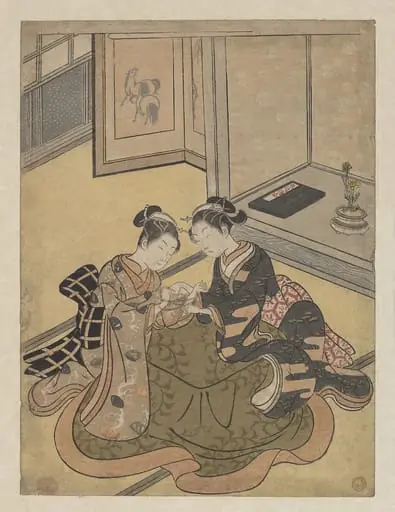 鈴木春信画 あやとり|Young Women Playing Cat’s Cradle (Ayatori)
 Untitled
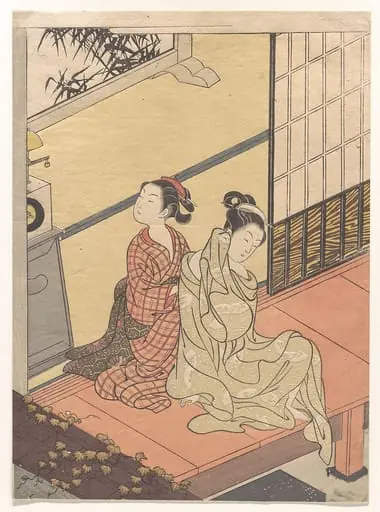 鈴木春信画 坐鋪八景 とけひの晩鐘|Evening Chime of the Clock (Tokei no banshō), from the series “Eight Parlor Views” (Zashiki hakkei)
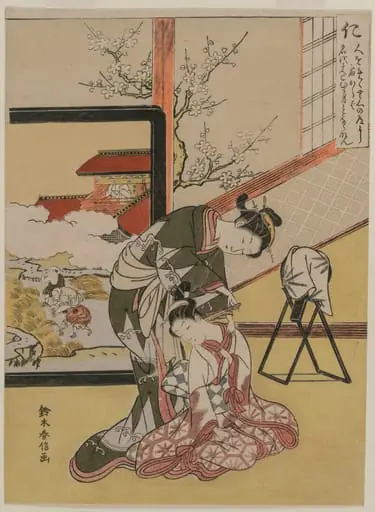 Benevolence, from The Five Virtues
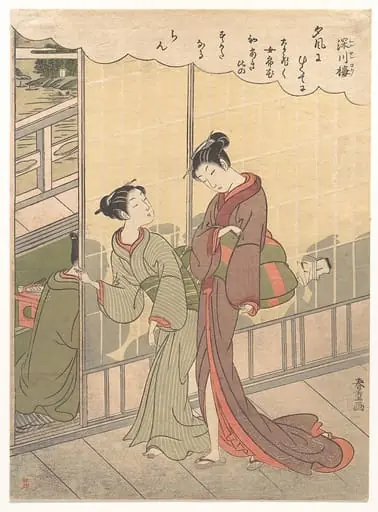 Untitled
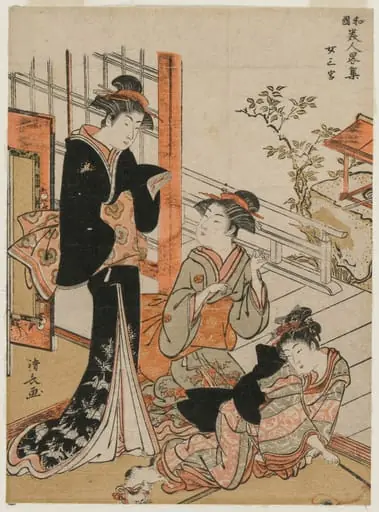 Three Women (from the series A Brief Collection of Japanese Beauties)
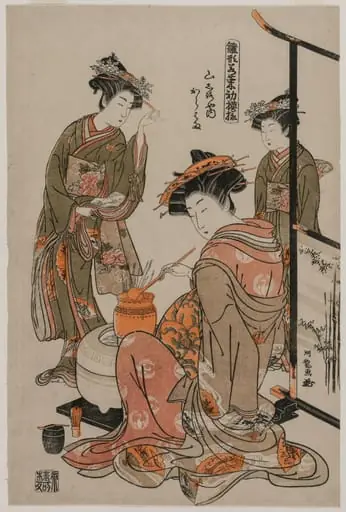 The Courtesan Karahama of Yamashiroya Performing the Tea Ceremony (from the series Models for Fahions: New Designs as Fresh as Young Leaves)
 井手の玉川|Jewel River at Ide (Ide no Tamagawa)