Artwork
The Courtesan Tsukioka of Hyogoya Rolling a Letter (from the series A Selection of Six Authors in the Green Houses)
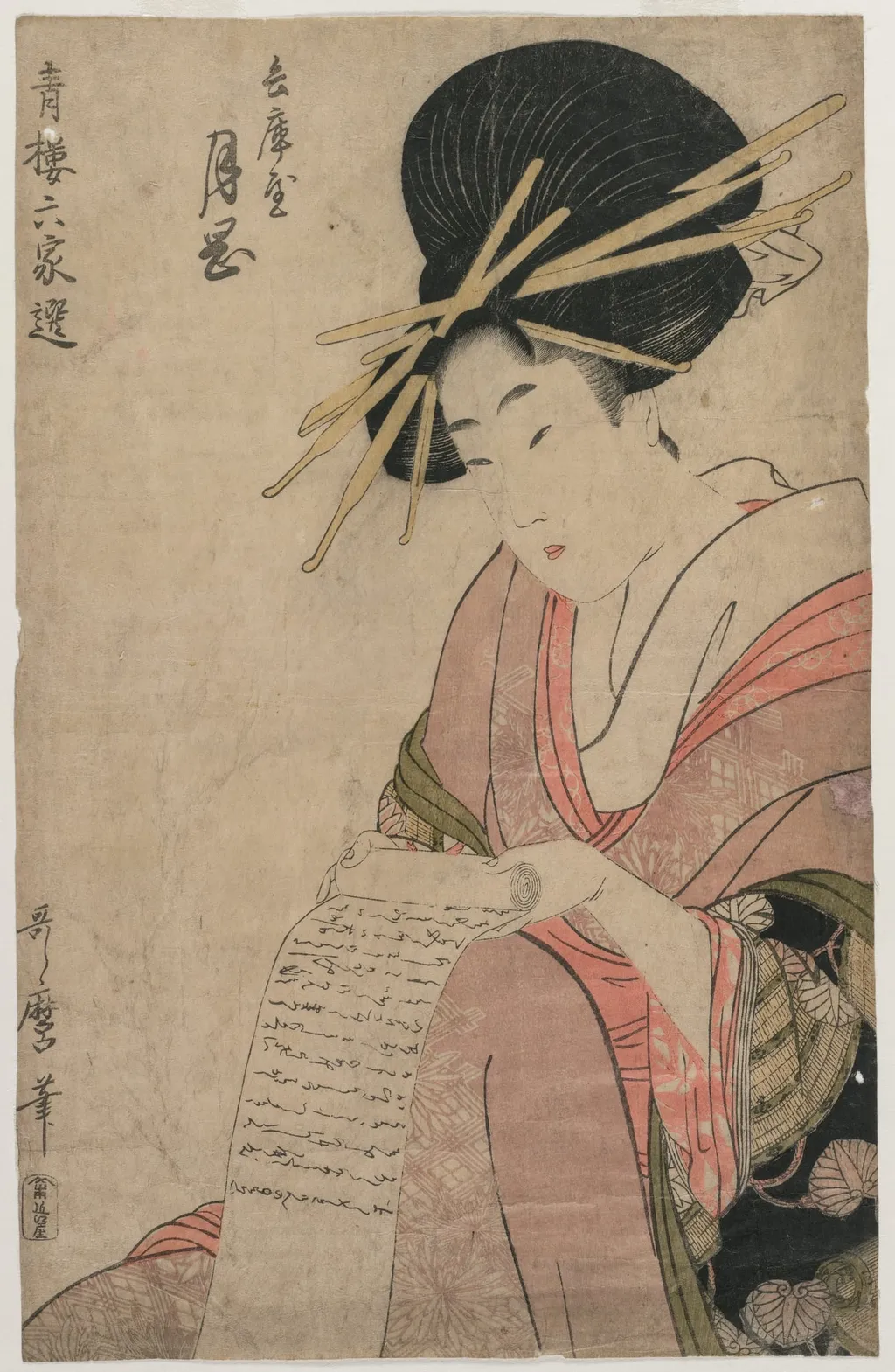
The Courtesan Tsukioka of Hyogoya Rolling a Letter (from the series A Selection of Six Authors in the Green Houses) is a print by the Romanticist artist Kitagawa Utamaro. It dates from 1794 and is held in the collection of the Cleveland Museum of Art.
About this work
This painting shows a woman in a traditional Japanese kimono, sitting with her head bowed and her hands holding a long, rolled-up piece of paper.
This painting shows a woman in a traditional Japanese kimono, sitting with her head bowed and her hands holding a long, rolled-up piece of paper. She has a black hair bun adorned with long, thin sticks, and her kimono is a mix of pink, green, and white patterns. The background is a light brown color.
The woman's kimono has a floral pattern, and she is sitting in a relaxed position, with her legs tucked under her. The rolled-up paper in her hands appears to be a letter, and she seems to be reading it or preparing to send it.
The painting is a beautiful example of Japanese art from the late 18th century. If you're interested in learning more about the artist who created this piece, you might want to look up Kitagawa Utamaro.
Overview
This woodblock print, created around 1794 by Kitagawa Utamaro, is part of a series depicting six literary figures associated with courtesans in Edo’s pleasure quarters. It portrays Tsukioka of Hyogoya, a celebrated courtesan, in a quiet, intimate moment. The composition emphasizes stillness and subtlety, contrasting with the more dynamic scenes common in ukiyo-e. The print is held in the collection of The Cleveland Museum of Art.
Subject & Meaning
The figure is shown engaged with a rolled letter, suggesting private correspondence—perhaps a message from a patron or lover. This gesture evokes the emotional undercurrents of courtesan life, where letters were vital links to the outside world. The bowed head and folded posture convey introspection rather than performance, hinting at the solitude beneath the social role. The subject is not merely a beauty but a person with inner life.
Technique & Style
Utamaro employs fine linework and delicate color gradations typical of his mature period. The kimono’s floral pattern, rendered in soft pinks, greens, and whites, is printed with precision, while the background’s muted brown enhances the figure’s presence. The hairpin details and fabric folds are rendered with subtle texture, reflecting the artist’s mastery of bijin-ga—portraits of beautiful women—through restraint and nuance rather than ornamentation.
History & Provenance
The print originates from a limited series commissioned during the height of Utamaro’s popularity in the 1790s. Though specific early ownership records are sparse, the work entered The Cleveland Museum of Art’s collection through established channels of Japanese print acquisition in the early 20th century. Its preservation reflects growing Western interest in ukiyo-e as fine art rather than ephemeral decoration.
Context
Produced during the Kansei Reforms, when sumptuary laws curtailed overt displays of luxury, this print subtly navigates censorship by focusing on quiet domesticity. Courtesans remained cultural icons, and their association with poets and writers lent literary prestige to their images. Utamaro’s series tapped into this literary-romantic ideal, transforming courtesans into figures of refined emotion rather than mere entertainers.
Legacy
Utamaro’s portrayal of Tsukioka exemplifies a shift in ukiyo-e toward psychological depth and intimate observation. The print influenced later artists in Japan and abroad, contributing to the global appreciation of Japanese printmaking. Its quiet dignity helped redefine the courtesan as a subject worthy of contemplation, not just spectacle, shaping modern perceptions of Edo-period visual culture.
Artist & collection


 Untitled
 Untitled
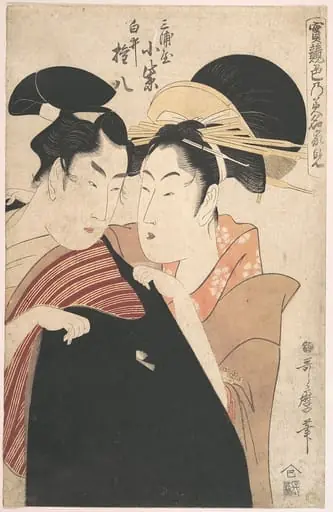 実競色乃美名家見 三浦屋小紫 白井権八|The Lovers Miura-ya Komurasaki and Shirai Gonpachi.
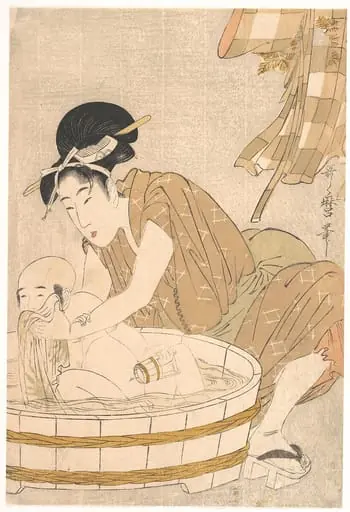 行水|Bathtime (Gyōzui)
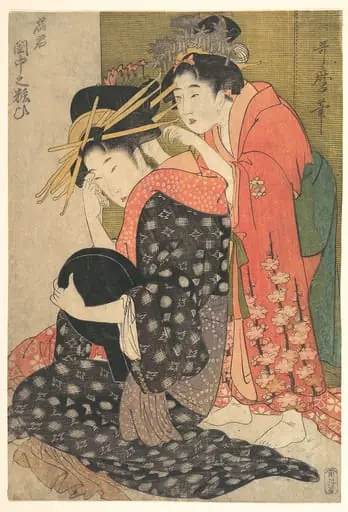 名君 閨中の粧ひ|The Oiran Yoso-oi Seated at Her Toilet
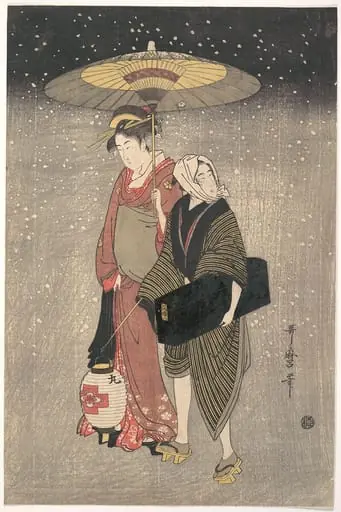 Untitled
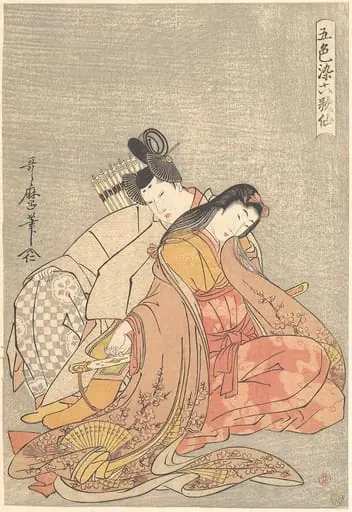 『五色染六歌仙』 在原業平と小野小町|“The Poet Ariwara no Narihira (825–880) and Ono no Komachi,” from the series Five Colors of Love for the Six Poetic Immortals (Goshiki-zome rokkasen)
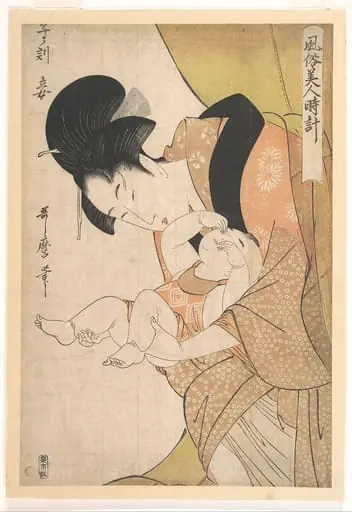 風俗美人時計 子ノ刻 妾|Midnight: Mother and Sleepy Child
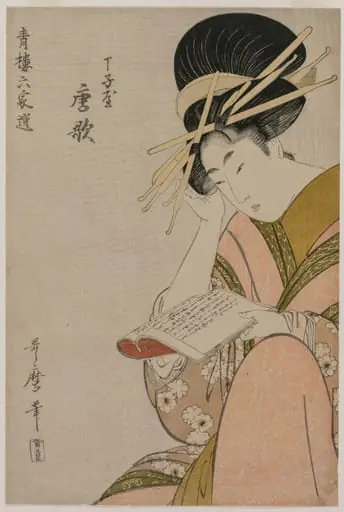 The Courtesan Karauta of Chojiya Reading a Book (from the series Six Authors of the Green Houses)
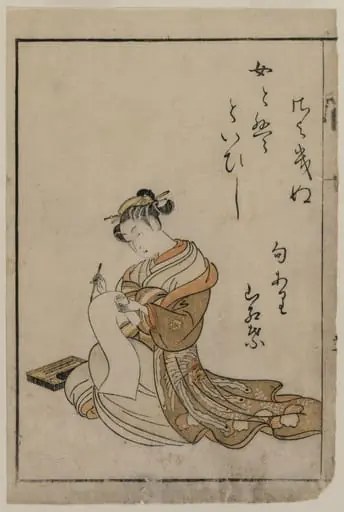 The Courtesan Writing from a Book from the series A Collection of Beautiful Women of the Yoshiwara
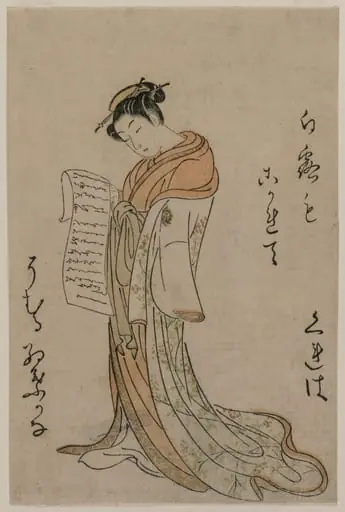 Kureha of Gakuiseya, from Selection of Beauties from the Pleasure Quarters
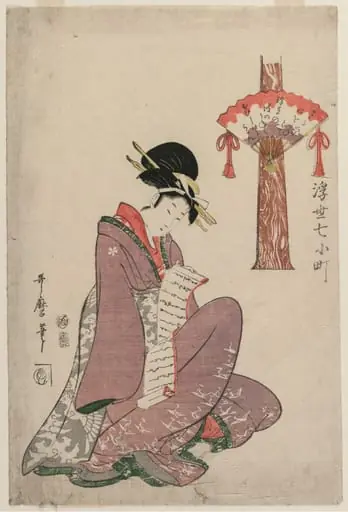 Woman Reading a Letter (from the series Seven Episodes in the Life of Komachi in the Floating World)
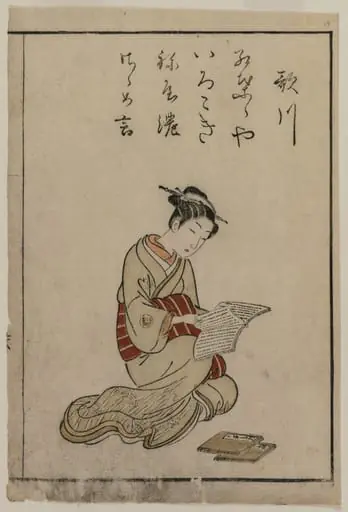 The Courtesan (From A Collection of Beautiful Women of the Yoshiwara)
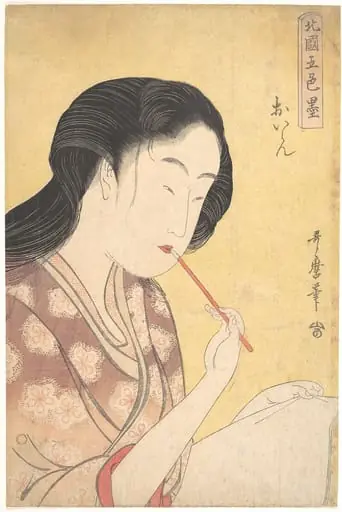 『北国五色墨』「おいらん」|“High-Ranking Courtesan” (Oiran), from the series Five Shades of Ink in the Northern Quarter (Hokkoku goshiki-zumi),
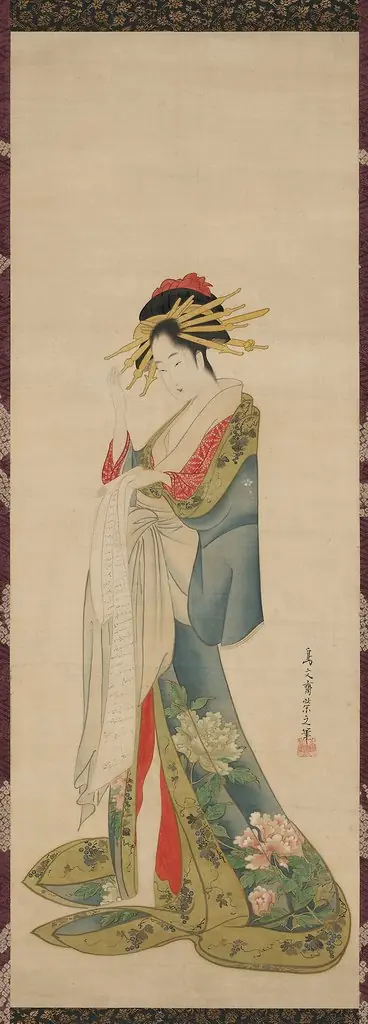 A Courtesan Reading a Letter
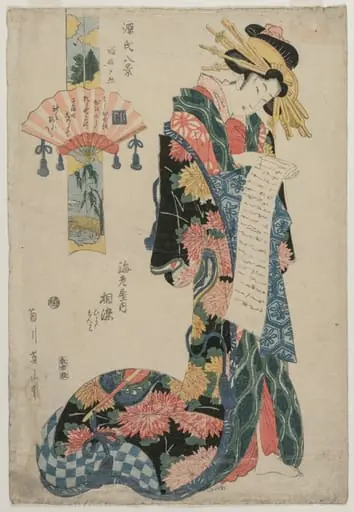 The Courtesan Aizome of the Ebiya (From the series Eight Views of the Tale of Genji)
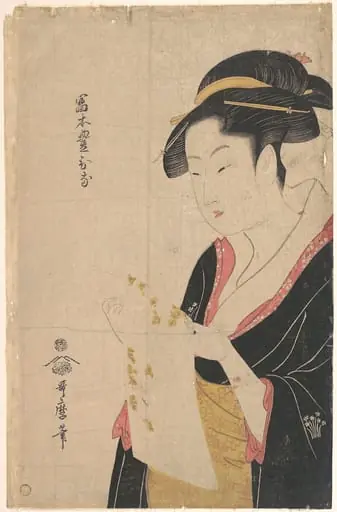 富本豊ひな|The Lady Tomimoto Toyohina Reading a Letter
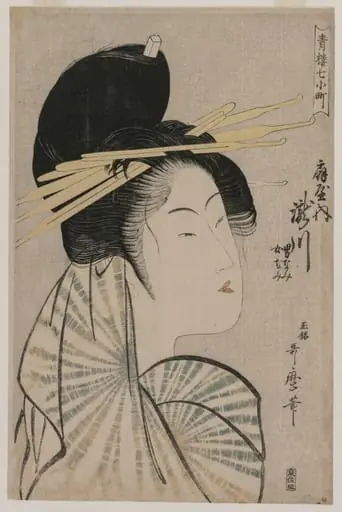 The Courtesan Takigawa of Ogiya (from the series Seven Aspects of Komachi in the Green Houses)
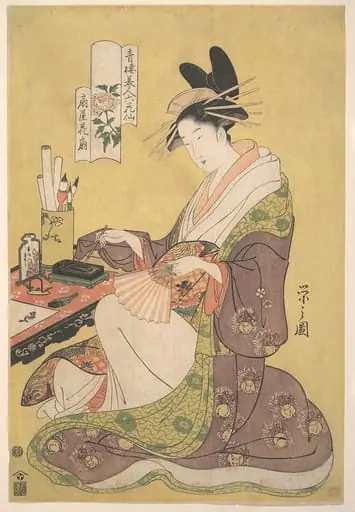 「青楼美人六花仙 扇屋花扇」|The Courtesan Hanaōgi of the Ōgiya Brothel (Ōgiya Hanaōgi), from the series Beauties of the Pleasure Quarters as Six Floral Immortals (Seirō bijin rokkasen)