Artwork
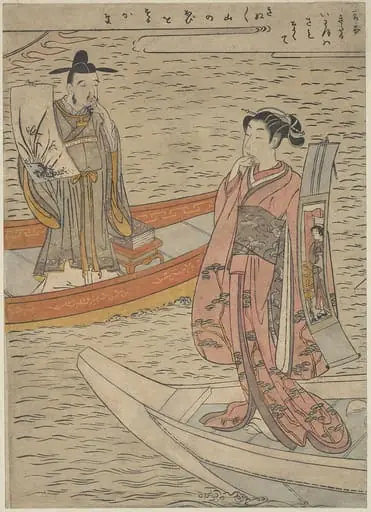
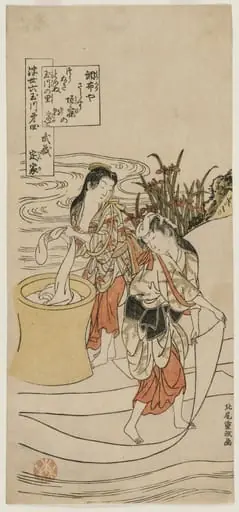
The Priest Kukai by the Tama River at Mt. Koya (From the Series The Six Tama Rivers in Everyday Life)

The Priest Kukai by the Tama River at Mt. Koya (From the Series The Six Tama Rivers in Everyday Life) is a print by the Romanticist artist Suzuki Harunobu. It dates from 1764 and is held in the collection of the Cleveland Museum of Art.
About this work
Overview
This 1764 woodblock print by Suzuki Harunobu, part of 'The Six Tama Rivers in Everyday Life' series, combines a serene female figure with a distant landscape, held in The Cleveland Museum of Art's collection.
Subject & Meaning
The print juxtaposes two scenes: a poised woman in a patterned robe, holding a fan and looking calm, alongside a miniature depiction of the monk Kukai by the Tama River at Mt. Koya, evoking a contrast between everyday life and spiritual retreat.
Technique & Style
Characterized by subtle patterns on the woman's robe and intricate Japanese text in the background, the print showcases Harunobu's mastery of ukiyo-e techniques, blending delicate composition with nuanced detail.
History & Provenance
Created around 1764, the work is now part of The Cleveland Museum of Art's holdings, with its provenance reflecting the global circulation of Japanese woodblock prints in later centuries.
Context
As part of 'The Six Tama Rivers in Everyday Life', this print highlights Harunobu's exploration of the intersection between daily urban life and revered natural/spiritual landscapes of Japan.
Legacy
This work contributes to Harunobu's reputation as a pivotal ukiyo-e artist, influencing later generations with his innovative compositions that layered contemporary life with traditional themes.
Artist & collection

 風俗六玉川|A Young Komuso
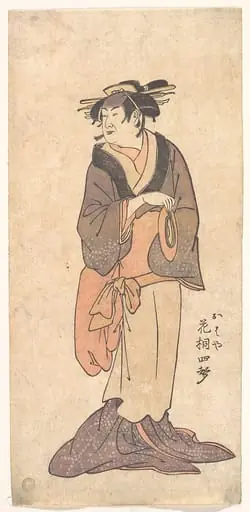 「おはや 花桐四声」(三代目豊松)|The Onnagata Actor Hanagiri Toyomatsu (Shisei) III as Ohaya
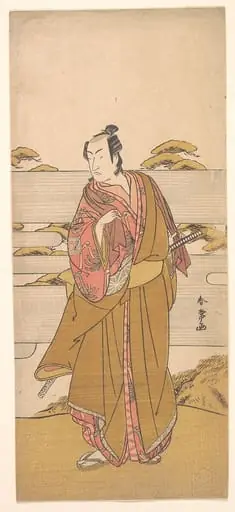 Untitled
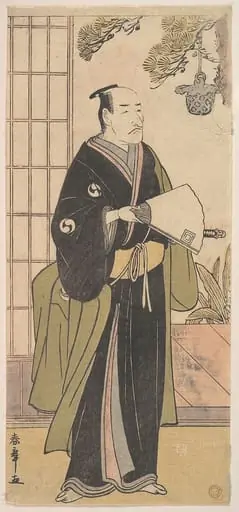 Untitled
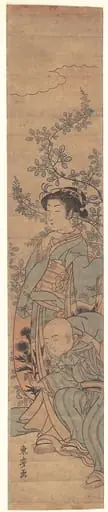 Untitled
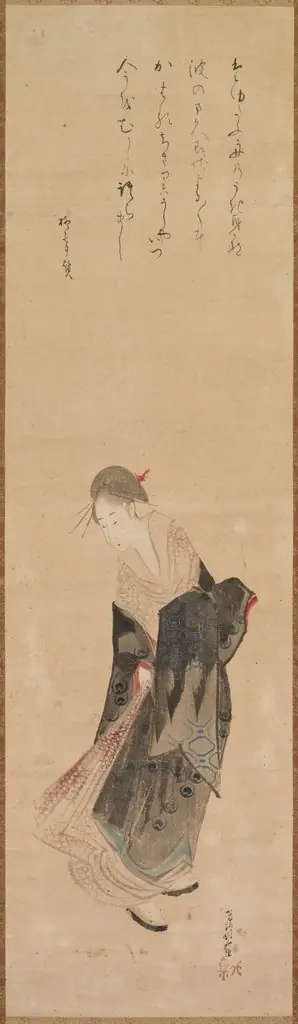 Beauty (Bijin)
 Untitled
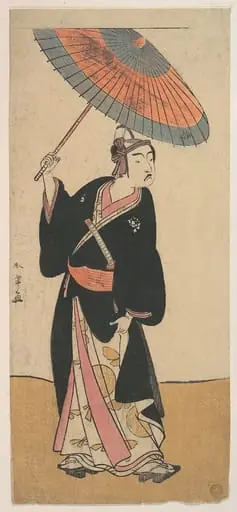 Untitled
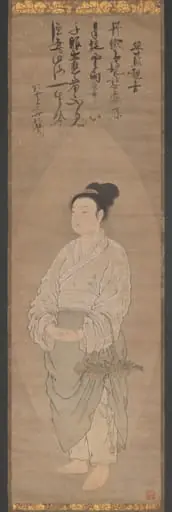 Fish Basket Kannon (Gyoran Kannon)
 Beauty (Bijin)
 Ichikawa Raizo as Abe no Seimei
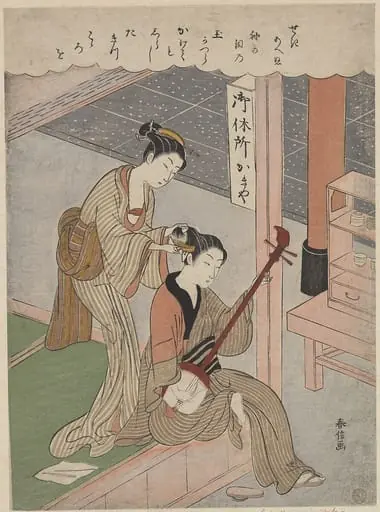
 The Chofu Tama River in Musashi Province (from the series The Six Tama Rivers of the Floating World)