Artwork
Untitled

Untitled is an ink print by the Romanticist artist Okumura Masanobu. It dates from 1763 and is held in the collection of the Metropolitan Museum of Art.
About this work
Overview
This woodblock print, dated around 1763, is attributed to Okumura Masanobu, a prominent artist of the Edo period. Executed in ink and color on paper, it belongs to the ukiyo-e tradition of Japanese printmaking. The work is part of the collection at The Metropolitan Museum of Art, where it is cataloged as an example of mid-18th-century civilian portraiture in print form.
Subject & Meaning
Her downcast gaze and still posture convey quiet introspection, aligning with aesthetic ideals of restraint and dignity in everyday life during the Edo period.
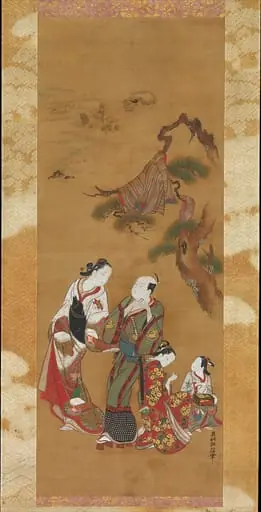
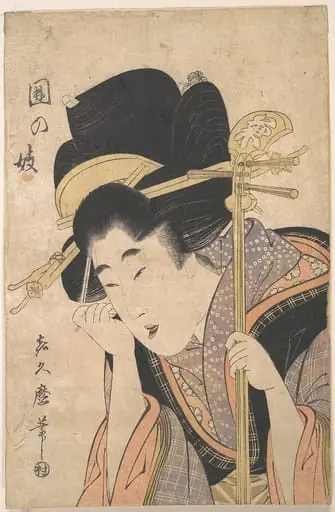
The print depicts a woman in formal attire, standing before a structure with a red-tiled roof. She holds a parasol and wears a black hat, suggesting she is of modest social standing, perhaps a merchant’s wife or a courtesan in a private moment. Her downcast gaze and still posture convey quiet introspection, aligning with aesthetic ideals of restraint and dignity in everyday life during the Edo period.
Technique & Style
Masanobu employed the woodblock printing method, layering ink and pigments to achieve subtle gradations and intricate patterns on the kimono. The background uses muted tones to emphasize the figure, while the garment’s detailed motifs are rendered with precision. Lines are clean and deliberate, characteristic of early ukiyo-e, where composition prioritizes harmony over dramatic contrast.
History & Provenance
The print was produced during a period when ukiyo-e prints became widely accessible to urban merchants and artisans. Masanobu, active in Edo, was known for blending narrative elements with portraiture. The work entered The Metropolitan Museum of Art’s collection through established acquisition channels in the 20th century, though its earlier ownership history remains undocumented.
Context
Created in the 1760s, this print reflects the flourishing of civilian imagery in Edo-period Japan, where depictions of daily life and fashion replaced earlier religious or mythological themes. Unlike Western Romanticism, which emphasized emotion and nature, Japanese prints of this era focused on composure, social roles, and the beauty of the mundane.
Legacy
Masanobu’s work contributed to the evolution of ukiyo-e as a distinct visual language. While less celebrated than later artists like Hokusai or Hiroshige, his early experiments in composition and color influenced the genre’s development. This print remains a quiet testament to the refinement of everyday representation in Japanese print culture.
Artist & collection
Artist
Okumura Masanobu lived in Edo (now Tokyo) when the city was a flashy, fast-growing hub of theater, gossip, and new ideas.

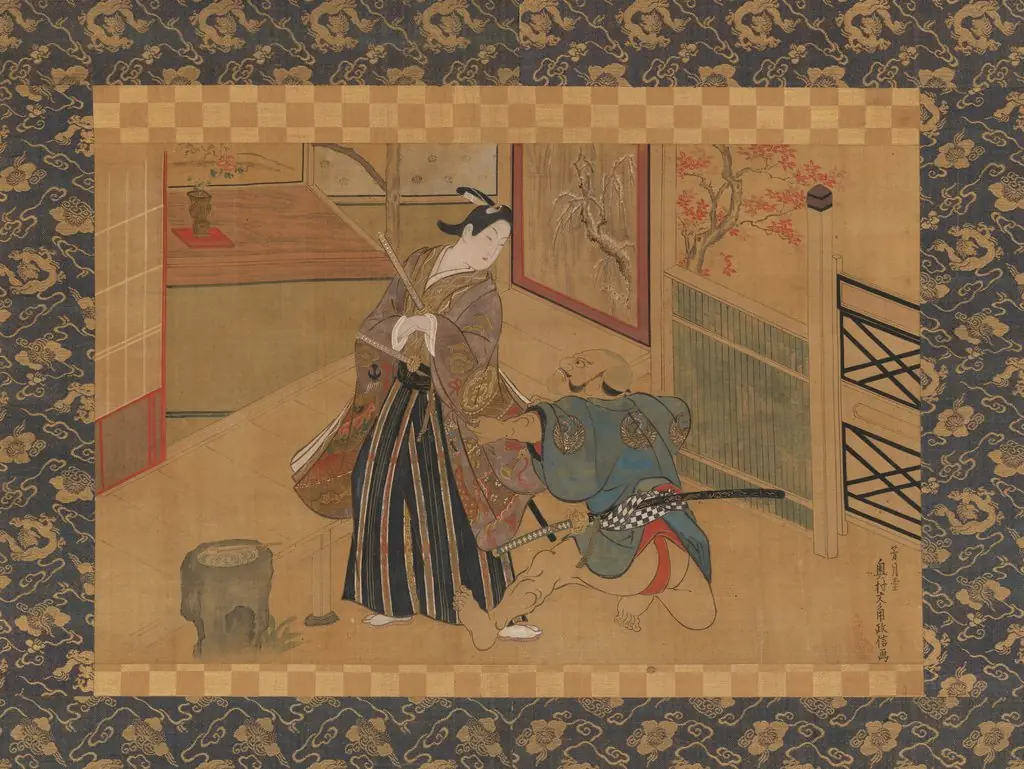 Kabuki Play Kusazuribiki from the Tales of Soga (Soga monogatari)
 Untitled
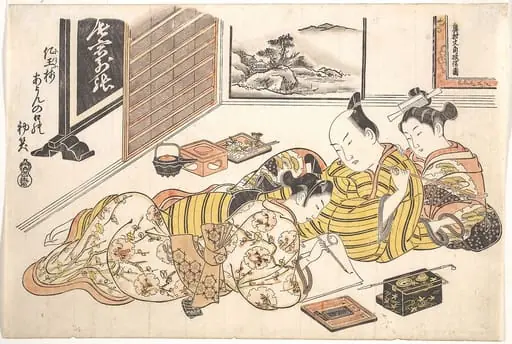 『閨の雛形』 正月|Plate from the Erotic Book Mounds of Dyed Colors: A Pattern Book for the Boudoir (Someiro no yama neya no hinagata), First Month
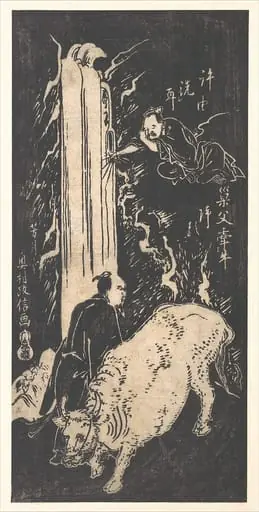 Untitled
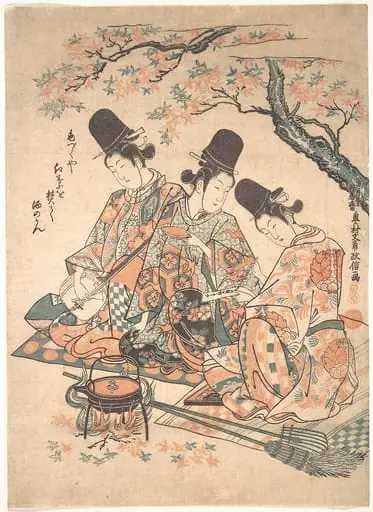 見立『平家物語』 紅葉焚図|Parody of Palace Servants Heating Sake over a Fire of Maple Leaves
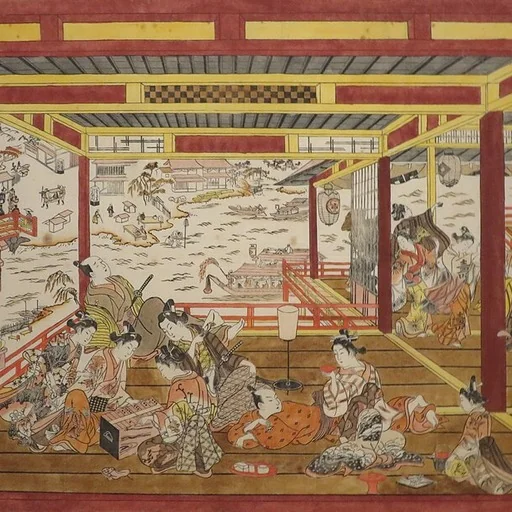
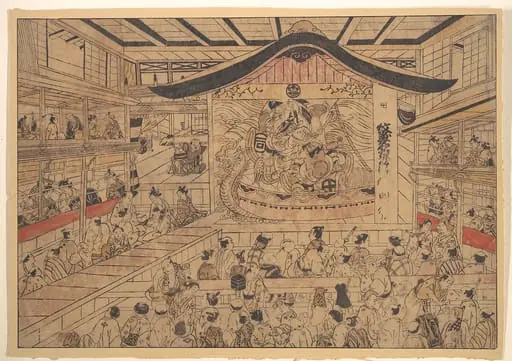 浮絵 「紋尽名古屋曽我」|Perpsective View (uki-e) of a Kabuki Theatre, with a Performance of The Crest Patterns of the Soga Brothers and Nagoya Sanza (Mon-zukushi Nagoya Soga)
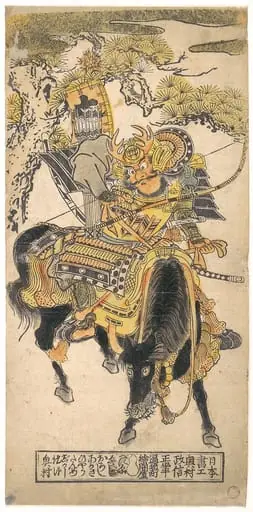 Untitled
 Untitled
 Untitled
 Untitled
 Untitled
 The Priest Kukai by the Tama River at Mt. Koya (From the Series The Six Tama Rivers in Everyday Life)
 Untitled
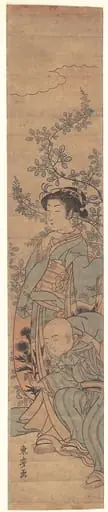 Untitled
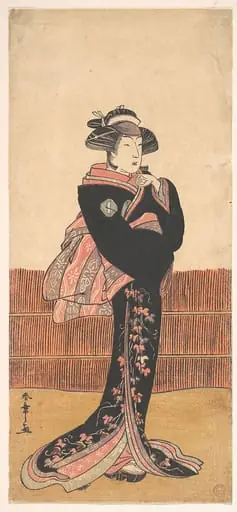 勝川春章画 三代目吾妻藤蔵|Kabuki Actor Azuma Tōzō III
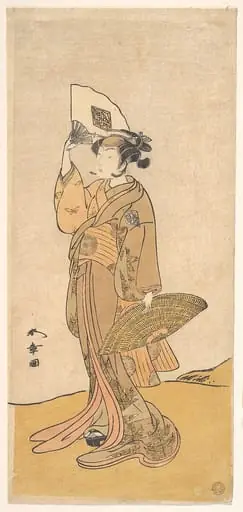 初代中村松江|Kabuki Actor Nakamura Matsue
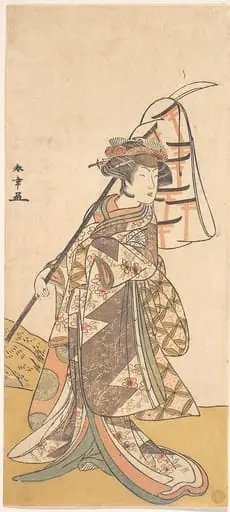 勝川春章画 三代目瀬川菊之丞|Kabuki Actor Segawa Kikunojō III
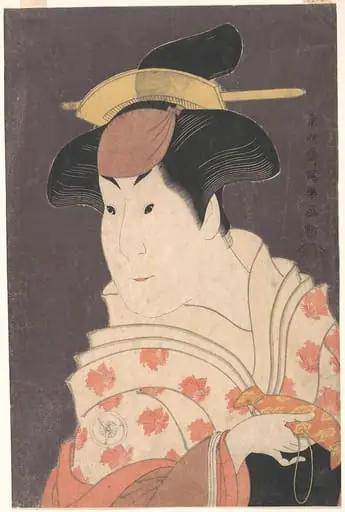 東洲斎写楽画 四代岩井半四郎の重の井 『恋女房染分手綱』|Iwai Hanshirō IV as Shigenoi in the Play "Koinyōbō Somewake Tazuna"
 Untitled
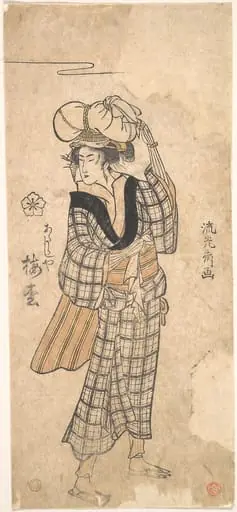 「あたらしや梅松」|The Courtesan Umematsu of the Atarashiya Brothel Costumed as an Ohara Maiden