Artwork
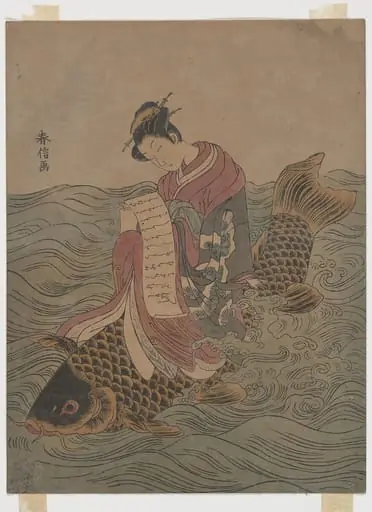
青楼美人合|The Courtesan Kasugano Writing a Letter
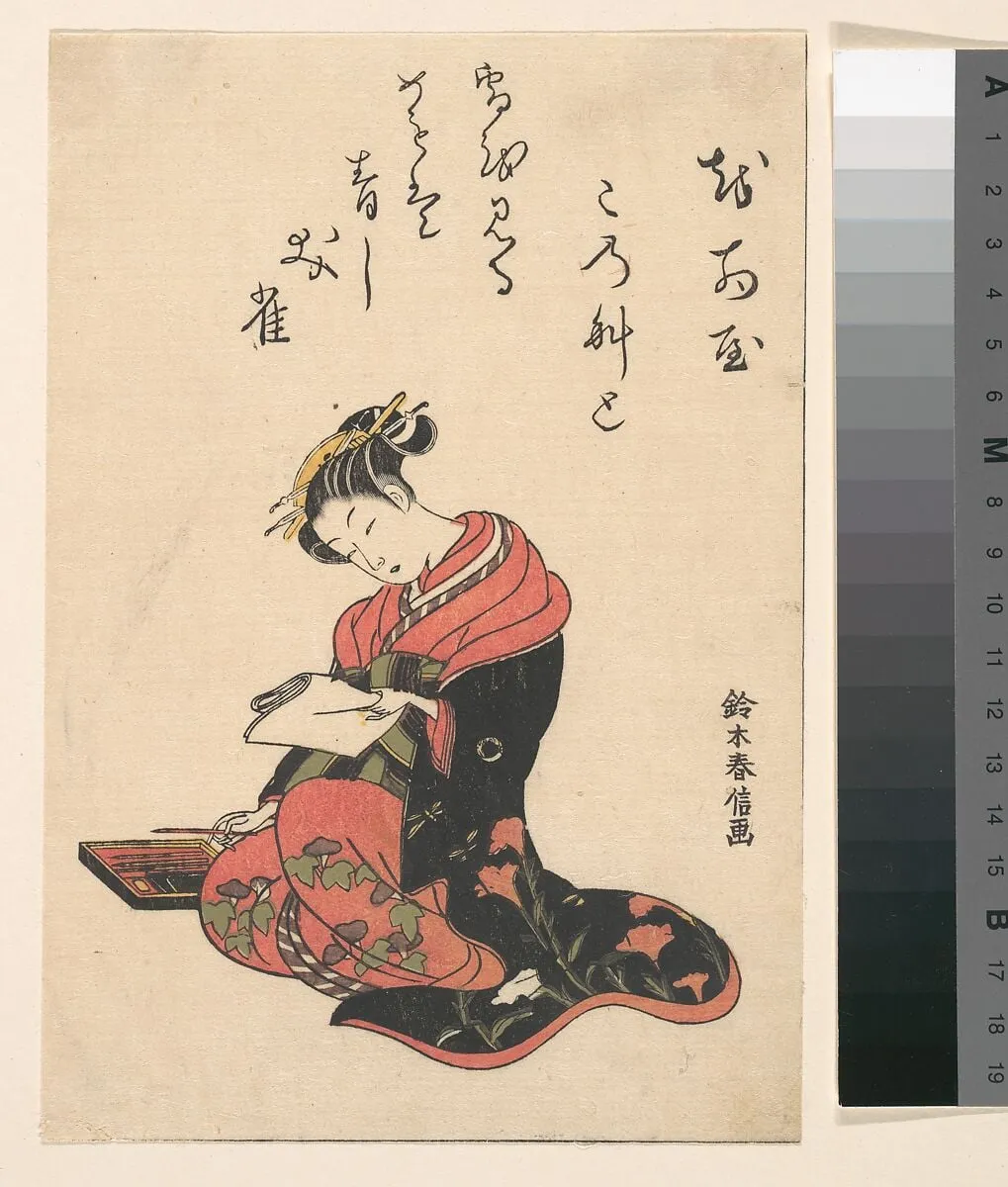
青楼美人合|The Courtesan Kasugano Writing a Letter is an ink print by the Romanticist artist Suzuki Harunobu. It dates from 1765 and is held in the collection of the Metropolitan Museum of Art.
About this work
Overview
The print is part of a series titled 'The Courtesans of the Pleasure Quarters' and is currently held in the collection of The Metropolitan Museum of Art.
Created around 1765, this woodblock print by Suzuki Harunobu depicts a courtesan engaged in the quiet act of writing a letter. Executed in yonkyokuban format, it uses ink and color on paper, reflecting the refined aesthetic of mid-Edo period ukiyo-e. The print is part of a series titled 'The Courtesans of the Pleasure Quarters' and is currently held in the collection of The Metropolitan Museum of Art.
Subject & Meaning
The figure, identified as Kasugano, is portrayed in a moment of private introspection, emphasizing the emotional subtlety of courtesan life. Her posture and focused gaze suggest intimacy and restraint, contrasting with the public spectacle often associated with her profession. The act of letter-writing implies personal connection, hinting at relationships beyond the pleasure quarters, adding layers of psychological depth to the scene.
Technique & Style
Harunobu employs delicate lines and flat areas of bold color, characteristic of his early polychrome prints. The red robes are accented with subtle green leaf patterns, while the composition avoids clutter, focusing attention on the figure and her actions. The use of fine detail in the hairpiece and fan, alongside minimal background elements, creates a sense of calm elegance and spatial harmony.
History & Provenance
The print was produced during a period when Harunobu pioneered full-color printing in ukiyo-e, revolutionizing the medium. It was likely distributed as part of a limited series for elite patrons. The work entered The Metropolitan Museum of Art’s collection in the 20th century, preserved as an exemplar of Edo-period printmaking and the evolving portrayal of women in urban culture.
Context
In mid-18th century Edo, courtesans were both cultural icons and commodities, their lives governed by strict social codes. Harunobu’s depiction moves beyond mere ornamentation, capturing moments of solitude that humanize these women. The inclusion of Japanese text at the top reflects the literary culture of the time, where poetry and correspondence were integral to courtly interaction.
Legacy
Harunobu’s work helped elevate ukiyo-e from commercial prints to respected art forms. This print exemplifies his ability to convey emotional nuance through restrained composition and color. Later artists drew from his intimate portrayals of daily life, influencing the development of genre scenes in Japanese printmaking well into the 19th century.
Artist & collection

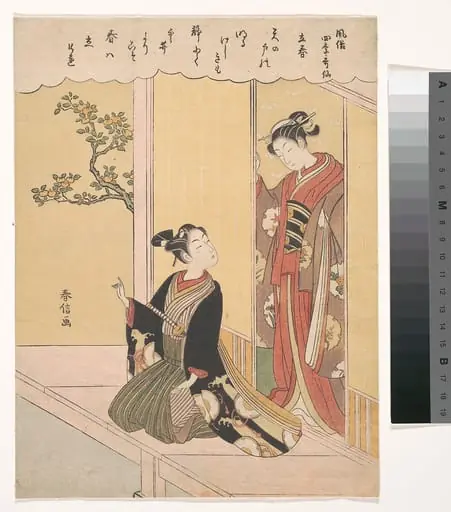 鈴木春信画「風俗四季歌仙 立春」|The First Day of Spring (Risshun), from the series Fashionable Poetic Immortals of the Four Seasons (Fūzoku shiki Kasen)
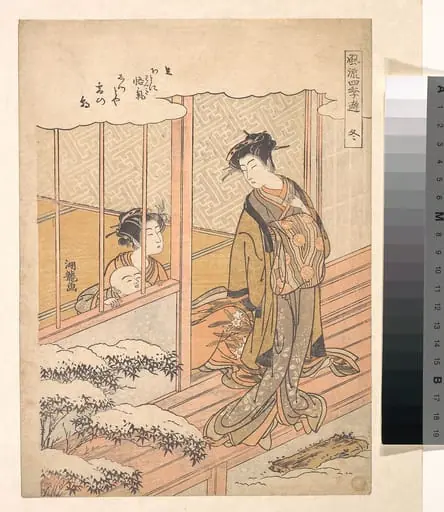 Untitled
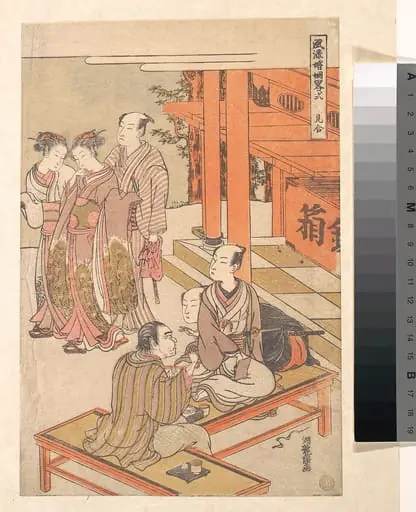 Untitled
 Untitled
 Untitled
 Untitled
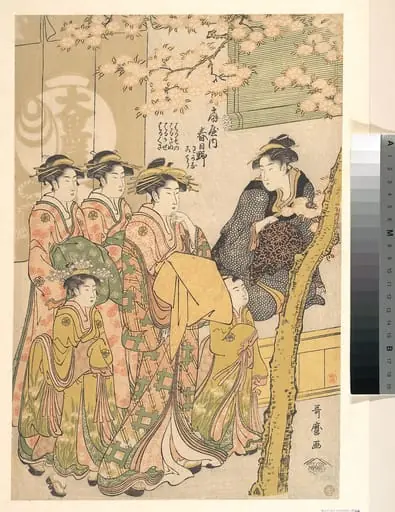 扇屋内春日野|The Oiran Kasugano of Ogiya on Parade under Blossoming Cherry Trees
 Untitled
 Untitled
 百人一首 天智天皇|Sympathy
 Untitled
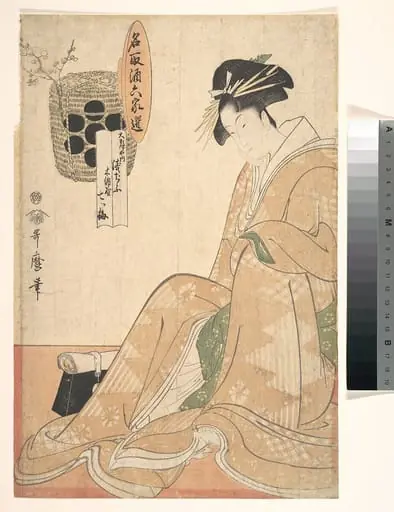 名取酒六家選 大もんぢや内浅じふ 木綿屋七ッ梅|A Courtesan